

Motmot

ハマヒバリ 対 モリヒバリ

Eremophila alpestris 対 Lullula arborea

ハマヒバリとモリヒバリのクイズ
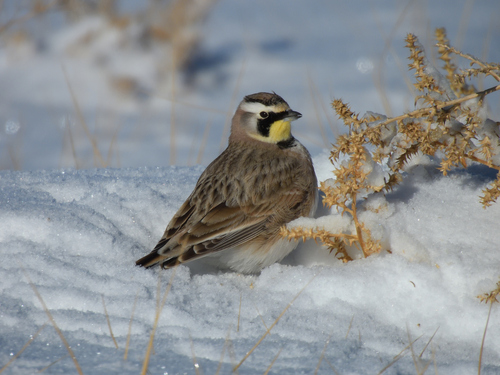
ハマヒバリ (Eremophila alpestris) ハマヒバリ
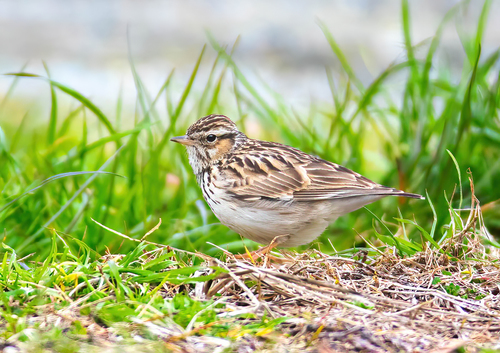
モリヒバリ (Lullula arborea) モリヒバリ

メディア

読み込み中…

要点

ハマヒバリとモリヒバリを区別する最も信頼できるフィールドマークは、ハマヒバリの大胆で対照的な黒と黄色(または白)の顔のパターンで、特に夏の成鳥オスの黒い「角」はモリヒバリには見られません。飛行中、ハマヒバリは中央の羽が淡いほぼ黒い尾を示し、モリヒバリは白い先端の短い尾を持ちますが、強い尾のコントラストはありません。モリヒバリは小さく、よりコンパクトで短い尾の外観を持ち、ハマヒバリの目を引く顔のパターンとは異なり、後頭部で出会う微妙な白い眉斑があります。両種は上面が茶色で下面が淡いですが、顔と尾のパターンはすべての羽衣において重要です。声と生息地も役立ちますが、羽衣と構造が最も決定的です。

識別のコツ

  1. Face pattern (all ages): ハマヒバリは常に黒と黄色(または白)の要素を含む大胆な顔のパターンを示し、黒いマスクと、オスには黒い「角」があります。モリヒバリは後頭部で出会う白い眉斑を持つ平坦な顔をしており、淡い「カラー」を形成しますが、黒いマスクや角は決してありません。
  2. Tail pattern in flight: ハマヒバリは淡い中央の羽を持つほぼ黒い尾を持ち、上からまたは下から見ても強いコントラストを作り出します。モリヒバリの尾は短く、白い先端がありますが、強い黒い側面や中央のコントラストはありません。
  3. Size and shape: ハマヒバリは大きくて長く、特に飛行中はより細長い外観を持っています。モリヒバリは小さく、よりコンパクトで、明らかに短い尾と広い翼を持っています。
  4. Crest: モリヒバリは小さく、しばしば目立たない冠羽を持っていますが、ハマヒバリの「角」(繁殖期のオス)は立っている羽の房で、真の冠羽ではありません。雌や幼鳥は明らかな角を欠くことがありますが、顔のコントラストは示します。
  5. Upperparts: 両種は上面が茶色ですが、ハマヒバリは灰色がかって見えることがあります(特に南部の亜種)、モリヒバリはより均一に茶色です。
  6. Underparts: 両種は下面が淡いですが、診断には役立ちません。
  7. Perched jizz: ハマヒバリは長くて直立して見え、目を引く顔を持っています。モリヒバリはずんぐりしており、頭が丸く、コントラストが少ないです。
  8. Flight style: ハマヒバリの飛行はより直接的で細長いです。モリヒバリの飛行はひらひらしており、螺旋状で、頻繁に歌いながら飛びます。
  9. Song: ハマヒバリの歌は弱く、高音で、チリンチリンとした音で、しばしばうねるトリルを伴います。モリヒバリの歌は豊かで、フルートのような繰り返しの「ルー・ルー・ルー」で、より音楽的で経験によって容易に区別できます。
  10. Habitat: ハマヒバリは開けた裸地や海岸を好み(特に冬のヨーロッパ)、モリヒバリはヒース地、クリアリング、開けた森林を好みます。
  11. Seasonal context: ハマヒバリは冬に海岸にいる可能性が高く、モリヒバリは西ヨーロッパの森林やヒースに年間を通じて生息しています。
  12. Bill: 明確に診断的ではありませんが、両種は典型的なヒバリのくちばしを持っています。構造がより有用です。
  13. Sex/age pitfalls: 幼鳥や雌のハマヒバリは完全な角を欠くことがありますが、顔のコントラストは示します。すべての年齢のモリヒバリは強い顔のパターンを欠きます。
  14. Tail length on perched birds: モリヒバリの尾は明らかに短く、ずんぐりして見えることがあります。ハマヒバリの尾は長く、より尖っています。
  15. Local abundance: 南イングランドでは、モリヒバリはヒースや松のクリアリングにいる可能性が高く、ハマヒバリは珍しく、通常は冬に海岸にのみ見られます。

大きさ

ハマヒバリは明らかに大きく、長さは16〜20 cm、体重は28〜48 g、翼幅は30〜34 cmです [avonet]。モリヒバリは小さく、長さは13.5〜15 cmで、スカイラルクより約20%短いです [wikipedia]。フィールドでは、モリヒバリはよりコンパクトで短い尾に見え、ハマヒバリは長く、特に飛行中はより細長く見えます。

羽色

行動

両種は飛行中に歌いますが、そのディスプレイは異なります:ハマヒバリのオスは雌の上で円形の飛行を行い、その後急降下しますが、モリヒバリのオスはひらひらと上昇し、一定の高さで円を描きます。モリヒバリはしばしば止まり木や地面から歌います。ハマヒバリは開けた地面や海岸で見られる可能性が高く、モリヒバリはクリアリングや開けた森林を好みます。ハマヒバリの飛行はより直接的で細長いですが、モリヒバリは空中でよりひらひらしてコンパクトに見えます。

生息環境

ハマヒバリは開けた地面、しばしば裸またはまばらに植生のある場所に生息し、ヨーロッパでは冬に海岸と関連しています。モリヒバリはヒース地、松林のクリアリング、散在する木々のある開けた場所を好み、真の海岸にはめったに出かけません。松のクリアリングやヒースで見られた場合、モリヒバリの可能性が高く、風にさらされた海岸や裸の野原ではハマヒバリが期待されます。

声

ハマヒバリの鳴き声は高音で、舌足らずでチリンチリンとした音で、弱いです。その歌は数回のチップの後にうねる上昇トリルが続き、通常は飛行中に届けられます。モリヒバリの歌はメロディックで繰り返しのうねりで、しばしば「ルー・ルー・ルー」や「トゥールーイート」と表現され、ハマヒバリのものよりも音楽的でフルートのようです。モリヒバリは飛行中や止まり木や地面から歌い、シーズンの初め(イギリスでは2月から)に始まります。

より良い説明を送る

比較と同じ項目を使ってください。文章はすぐに公開されます。

The most reliable field mark to separate Shore Lark from Woodlark is the bold, contrasting black and yellow (or white) face pattern of the Shore Lark, especially the black 'horns' on adult males in summer, which Woodlark never shows. In flight, Shore Lark displays a mostly black tail with pale central feathers, while Woodlark has a short tail tipped with white but lacks strong tail contrast. Woodlark is smaller, with a more compact, short-tailed appearance and a subtle white supercilium meeting at the nape, unlike the Shore Lark’s striking facial pattern. Both species are brown above and pale below, but their face and tail patterns are key in all plumages. Voice and habitat can help, but plumage and structure are most decisive.

  1. Face pattern (all ages): Shore Lark always shows a bold face pattern with black and yellow (or white) elements, including a black mask and, in males, black 'horns'. Woodlark has a plain face with a white supercilium meeting at the nape, forming a pale 'collar', but never any black mask or horns.
  2. Tail pattern in flight: Shore Lark has a mostly black tail with pale central feathers, creating a strong contrast visible from above or below. Woodlark’s tail is short, tipped with white, but lacks strong black sides or central contrast.
  3. Size and shape: Shore Lark is larger and longer, with a more elongated appearance, especially in flight. Woodlark is smaller, more compact, and has a noticeably shorter tail and broader wings.
  4. Crest: Woodlark has a small, often inconspicuous crest, while Shore Lark’s 'horns' (in breeding males) are upright feather tufts, not a true crest. Females and immatures may lack obvious horns but still show facial contrast.
  5. Upperparts: Both are brown above, but Shore Lark may appear greyer (especially in southern races), while Woodlark is more uniformly brown.
  6. Underparts: Both are pale below, not diagnostic.
  7. Perched jizz: Shore Lark appears longer and more upright, with a striking face; Woodlark is dumpier, with a rounder head and less contrast.
  8. Flight style: Shore Lark’s flight is more direct and elongated; Woodlark’s is fluttery and spiraling, with frequent song flights.
  9. Song: Shore Lark’s song is weak, high-pitched, and tinkling, often with a warbling trill. Woodlark’s is a rich, fluting, repetitive 'lu-lu-lu', more musical and easily distinguished with experience.
  10. Habitat: Shore Lark favors open, bare ground and shorelines (in Europe, especially in winter); Woodlark prefers heathland, clearings, and open woodland.
  11. Seasonal context: Shore Lark is more likely on shorelines in winter, Woodlark is resident in woodlands and heaths year-round in western Europe.
  12. Bill: Not strongly diagnostic, but both have typical lark bills; structure is more useful.
  13. Sex/age pitfalls: Immature and female Shore Larks may lack full horns but still show facial contrast; Woodlark of all ages lacks strong face pattern.
  14. Tail length on perched birds: Woodlark’s tail is noticeably short and may look stubby; Shore Lark’s is longer and more pointed.
  15. Local abundance: In southern England, Woodlark is more likely in heath and pine clearings; Shore Lark is rare and usually only in winter on coasts.

Shore Lark is distinctly larger: 16–20 cm in length, 28–48 g in weight, and a wingspan of 30–34 cm [avonet]. Woodlark is smaller, at 13.5–15 cm long, and is about 20% shorter than a Skylark [wikipedia]. In the field, Woodlark appears more compact and short-tailed, while Shore Lark is longer and more elongated, especially in flight.

  • Juvenile/immature/flight views: Shore Lark of all ages shows a mostly black tail with pale central feathers, creating a strong contrast in flight. Woodlark’s tail is short and tipped with white, but lacks the broad black tail sides of Shore Lark. Woodlark does not show a strong tail contrast or any black 'horns' at any age.

  • Adult breeding male Shore Lark: Shows bold black 'horns' (tufts), a black mask, and a yellow (or white in some races) face. Woodlark never shows horns or such a bold face pattern; instead, it has a subtle white supercilium that meets at the nape, forming a pale 'collar'.

  • Adult female/immature Shore Lark: Still shows some facial contrast, though less intense than males. Woodlark remains plain-faced with only the supercilium as a mark.

  • Upperparts: Both species are brown above and pale below, but Shore Lark is often greyer (especially southern European races) and Woodlark is more uniformly brown.

  • Perched: Shore Lark’s face pattern is always more striking; Woodlark’s crest is small and usually inconspicuous.

Both species sing in flight, but their display differs: Shore Lark males perform circular flights above the female, then dive steeply, while Woodlark males flutter and spiral upwards, circling at a constant height. Woodlark often sings from a perch or the ground as well. Shore Lark is more likely to be seen on open ground or shorelines, while Woodlark prefers clearings and open woodland. Shore Lark’s flight is more direct and elongated, while Woodlark appears more fluttery and compact in the air.

Shore Lark is found on open ground, often bare or sparsely vegetated, and in Europe is associated with shorelines in winter. Woodlark prefers heathland, clearings in pine forests, and open spaces with scattered trees, rarely venturing to true shorelines. If seen in a pine clearing or heath, Woodlark is more likely; on a windswept shore or bare field, Shore Lark is expected.

Shore Lark’s calls are high-pitched, lisping or tinkling, and weak. Its song is a few chips followed by a warbling, ascending trill, usually delivered in flight. Woodlark’s song is a melodious, repetitive warble, often described as 'lu-lu-lu' or 'toolooeet', and is more musical and fluting than Shore Lark’s. Woodlark sings both in flight and from perches or the ground, starting early in the season (from February in Britain).

変更を破棄しますか?

保存していない編集があります。今離れると失われます。

ハマヒバリ · モリヒバリ · 苦手な鳥