

Motmot

アシボソハイタカ 対 クーパーハイタカ

Accipiter striatus 対 Astur cooperii

アシボソハイタカとクーパーハイタカのクイズ
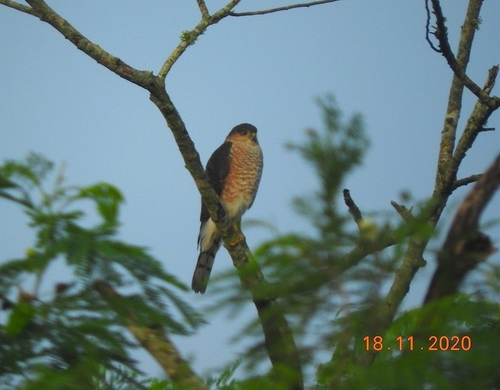
アシボソハイタカ (Accipiter striatus) アシボソハイタカ
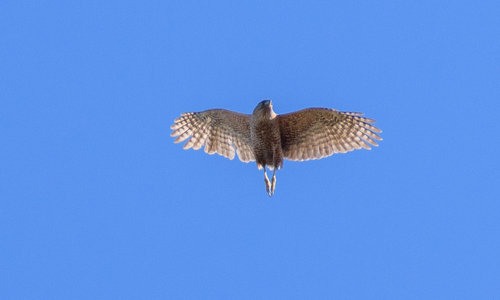
クーパーハイタカ (Astur cooperii) クーパーハイタカ

メディア

読み込み中…

要点

The most reliable field mark between Sharp-shinned Hawk and Cooper's Hawk is structural: Sharp-shinned is noticeably smaller, with a petite, round head that barely projects beyond the wings in flight, and very thin, spindly legs. Cooper's Hawk is larger, with a blockier, squarish head that juts well beyond the wings, a bulkier body, and thicker legs. Juvenile plumage is similar, but Cooper's typically shows a more hooded look with a pale nuchal band, while Sharp-shinned juveniles appear capped and more scaly above. Tail shape and size, as well as the proportion of wing to tail when perched, are also key. Both species can be confused in the field, especially when seen overhead or at a distance, but careful attention to structure and subtle plumage differences can separate them.

識別のコツ

  1. Head projection in flight: Sharp-shinned Hawk's small, rounded head barely extends beyond the leading edge of the wings, while Cooper's Hawk's blocky, squarish head juts well forward. This is one of the most reliable marks, especially in gliding or soaring birds.
  2. Leg thickness: Sharp-shinned Hawk has extremely thin, pencil-like legs; Cooper's Hawk's legs are noticeably thicker and more robust. This can be seen on perched birds, especially if the legs are exposed.
  3. Tail shape: Sharp-shinned's tail is shorter, more squared-off or slightly notched at the tip, sometimes with a narrow white tip. Cooper's Hawk's tail is longer, often rounded or wedge-shaped, with a broader and more conspicuous white tip. Tail shape is best judged when the bird is perched or fanned in flight.
  4. Size: Sharp-shinned is much smaller overall, but beware overlap between large female Sharp-shinned and small male Cooper's. Use size only with a known reference or in direct comparison.
  5. Wing-to-tail proportion when perched: On a perched Sharp-shinned Hawk, the wingtips usually reach only about halfway down the tail. On Cooper's Hawk, the wingtips often cover less than one-third of the tail, sometimes barely reaching the coverts.
  6. Juvenile upperparts: Juvenile Sharp-shinned shows a scaly look above with rufous-edged feathers; Cooper's juvenile is more uniformly brown above, sometimes with rufous or cinnamon edges, but often with a hooded appearance and a pale nuchal band.
  7. Juvenile underparts: Sharp-shinned juveniles have dense brown or reddish streaking below, often with reddish barring on the sides. Cooper's juveniles have sharper, more teardrop-shaped streaks, usually confined to the upper breast and belly, with less barring on the sides.
  8. Adult head pattern: Adult Cooper's Hawk has a dark blackish crown contrasting with a paler nape (giving a capped look), while Sharp-shinned's cap is less distinct from the rest of the head.
  9. Cheek color: Sharp-shinned adults have rufous-tinged cheeks, sometimes faint; Cooper's adults have rufous cheeks but with a more sharply defined crown and nape contrast.
  10. Crissum (undertail coverts): Both have white crissum, but it is more conspicuous on Cooper's Hawk due to the contrast with the richer underparts.
  11. Flight style: Sharp-shinned Hawk shows quick, flickering wingbeats and a more fluttery, buoyant flight. Cooper's Hawk is steadier, with slower, more powerful wingbeats and a straighter glide.
  12. Perched posture: Sharp-shinned appears slimmer, more hunched, and nervous; Cooper's is bulkier, more upright, and often seems more relaxed.
  13. Bill size: Cooper's Hawk has a relatively short but robust bill; Sharp-shinned's bill is smaller and more delicate.
  14. Habitat context: In dense forest, especially away from urban areas, Sharp-shinned is more likely; in open woods, suburbs, or cities, especially in winter, Cooper's is more likely.
  15. Pitfalls: Beware overlap in size between large female Sharp-shinned and small male Cooper's; use multiple marks in combination, especially structure and tail/head shape, rather than relying on a single field mark.

大きさ

Sharp-shinned Hawk is the smallest North American Accipiter: males are 23–30 cm long with a wingspan of 42–58 cm and weigh 82–115 g; females are 29–37 cm, wingspan 58–68 cm, weight 150–219 g [wikipedia]. Cooper's Hawk is distinctly larger: males and females both average longer and heavier, with a bulkier build and proportionally larger head and feet [wikipedia]. In hand or with a clear size reference, the difference is striking, but beware overlap between large female Sharp-shinned and small male Cooper's, especially in the field.

羽色

Juveniles of both species are brown above with pale streaked underparts, but Sharp-shinned juveniles have a more scaly look above due to rufous-edged feathers, a brown capped head with whitish streaks, and dense brown or reddish streaking below, often with reddish barring on the sides [wikipedia]. Cooper's Hawk juveniles are also brown above, but often show a hooded look with a pale nuchal band, more sharply defined streaks on the underparts, and a tendency for the streaks to be thinner and more teardrop-shaped. The tail of Cooper's is longer, often wedge-shaped or rounded, with broader, more even dark bands and a conspicuous white tip; Sharp-shinned's tail is shorter, more square or slightly notched, with narrower bands and a less prominent white tip. Adults of both are blue-gray above with rufous-barred underparts, but Cooper's shows a blackish crown contrasting with a paler nape, while Sharp-shinned's cap is less distinct. Both have white crissum, but Cooper's is more conspicuous. Leg color is yellow in both, but Sharp-shinned's legs are much thinner.

行動

Both species are secretive woodland hawks, but Cooper's Hawk is more likely to perch in the open, especially in winter or in the West, and often uses exposed perches like utility poles or stumps [wikipedia]. Sharp-shinned Hawk tends to stay deeper in cover and appears more nervous or darting when flushed. In flight, Sharp-shinned is snappier and more buoyant, with quick, flickering wingbeats and a fluttery jizz, while Cooper's is steadier, with slower, more powerful wingbeats and a straighter glide. When perched, Cooper's appears more upright and robust, while Sharp-shinned looks slimmer and more hunched.

生息環境

Both species overlap widely in wooded habitats across North America, but Cooper's Hawk is more adaptable to open woodlands, suburban areas, and even urban parks, especially in winter [wikipedia]. Sharp-shinned Hawk prefers denser forests and is less likely to be seen in open or highly urbanized settings. During migration, both can be seen at hawk watches, but Cooper's is more likely to be seen in a wider range of habitats.

より良い説明を送る

比較と同じ項目を使ってください。文章はすぐに公開されます。

The most reliable field mark between Sharp-shinned Hawk and Cooper's Hawk is structural: Sharp-shinned is noticeably smaller, with a petite, round head that barely projects beyond the wings in flight, and very thin, spindly legs. Cooper's Hawk is larger, with a blockier, squarish head that juts well beyond the wings, a bulkier body, and thicker legs. Juvenile plumage is similar, but Cooper's typically shows a more hooded look with a pale nuchal band, while Sharp-shinned juveniles appear capped and more scaly above. Tail shape and size, as well as the proportion of wing to tail when perched, are also key. Both species can be confused in the field, especially when seen overhead or at a distance, but careful attention to structure and subtle plumage differences can separate them.

  1. Head projection in flight: Sharp-shinned Hawk's small, rounded head barely extends beyond the leading edge of the wings, while Cooper's Hawk's blocky, squarish head juts well forward. This is one of the most reliable marks, especially in gliding or soaring birds.
  2. Leg thickness: Sharp-shinned Hawk has extremely thin, pencil-like legs; Cooper's Hawk's legs are noticeably thicker and more robust. This can be seen on perched birds, especially if the legs are exposed.
  3. Tail shape: Sharp-shinned's tail is shorter, more squared-off or slightly notched at the tip, sometimes with a narrow white tip. Cooper's Hawk's tail is longer, often rounded or wedge-shaped, with a broader and more conspicuous white tip. Tail shape is best judged when the bird is perched or fanned in flight.
  4. Size: Sharp-shinned is much smaller overall, but beware overlap between large female Sharp-shinned and small male Cooper's. Use size only with a known reference or in direct comparison.
  5. Wing-to-tail proportion when perched: On a perched Sharp-shinned Hawk, the wingtips usually reach only about halfway down the tail. On Cooper's Hawk, the wingtips often cover less than one-third of the tail, sometimes barely reaching the coverts.
  6. Juvenile upperparts: Juvenile Sharp-shinned shows a scaly look above with rufous-edged feathers; Cooper's juvenile is more uniformly brown above, sometimes with rufous or cinnamon edges, but often with a hooded appearance and a pale nuchal band.
  7. Juvenile underparts: Sharp-shinned juveniles have dense brown or reddish streaking below, often with reddish barring on the sides. Cooper's juveniles have sharper, more teardrop-shaped streaks, usually confined to the upper breast and belly, with less barring on the sides.
  8. Adult head pattern: Adult Cooper's Hawk has a dark blackish crown contrasting with a paler nape (giving a capped look), while Sharp-shinned's cap is less distinct from the rest of the head.
  9. Cheek color: Sharp-shinned adults have rufous-tinged cheeks, sometimes faint; Cooper's adults have rufous cheeks but with a more sharply defined crown and nape contrast.
  10. Crissum (undertail coverts): Both have white crissum, but it is more conspicuous on Cooper's Hawk due to the contrast with the richer underparts.
  11. Flight style: Sharp-shinned Hawk shows quick, flickering wingbeats and a more fluttery, buoyant flight. Cooper's Hawk is steadier, with slower, more powerful wingbeats and a straighter glide.
  12. Perched posture: Sharp-shinned appears slimmer, more hunched, and nervous; Cooper's is bulkier, more upright, and often seems more relaxed.
  13. Bill size: Cooper's Hawk has a relatively short but robust bill; Sharp-shinned's bill is smaller and more delicate.
  14. Habitat context: In dense forest, especially away from urban areas, Sharp-shinned is more likely; in open woods, suburbs, or cities, especially in winter, Cooper's is more likely.
  15. Pitfalls: Beware overlap in size between large female Sharp-shinned and small male Cooper's; use multiple marks in combination, especially structure and tail/head shape, rather than relying on a single field mark.

Sharp-shinned Hawk is the smallest North American Accipiter: males are 23–30 cm long with a wingspan of 42–58 cm and weigh 82–115 g; females are 29–37 cm, wingspan 58–68 cm, weight 150–219 g [wikipedia]. Cooper's Hawk is distinctly larger: males and females both average longer and heavier, with a bulkier build and proportionally larger head and feet [wikipedia]. In hand or with a clear size reference, the difference is striking, but beware overlap between large female Sharp-shinned and small male Cooper's, especially in the field.

Juveniles of both species are brown above with pale streaked underparts, but Sharp-shinned juveniles have a more scaly look above due to rufous-edged feathers, a brown capped head with whitish streaks, and dense brown or reddish streaking below, often with reddish barring on the sides [wikipedia]. Cooper's Hawk juveniles are also brown above, but often show a hooded look with a pale nuchal band, more sharply defined streaks on the underparts, and a tendency for the streaks to be thinner and more teardrop-shaped. The tail of Cooper's is longer, often wedge-shaped or rounded, with broader, more even dark bands and a conspicuous white tip; Sharp-shinned's tail is shorter, more square or slightly notched, with narrower bands and a less prominent white tip. Adults of both are blue-gray above with rufous-barred underparts, but Cooper's shows a blackish crown contrasting with a paler nape, while Sharp-shinned's cap is less distinct. Both have white crissum, but Cooper's is more conspicuous. Leg color is yellow in both, but Sharp-shinned's legs are much thinner.

Both species are secretive woodland hawks, but Cooper's Hawk is more likely to perch in the open, especially in winter or in the West, and often uses exposed perches like utility poles or stumps [wikipedia]. Sharp-shinned Hawk tends to stay deeper in cover and appears more nervous or darting when flushed. In flight, Sharp-shinned is snappier and more buoyant, with quick, flickering wingbeats and a fluttery jizz, while Cooper's is steadier, with slower, more powerful wingbeats and a straighter glide. When perched, Cooper's appears more upright and robust, while Sharp-shinned looks slimmer and more hunched.

Both species overlap widely in wooded habitats across North America, but Cooper's Hawk is more adaptable to open woodlands, suburban areas, and even urban parks, especially in winter [wikipedia]. Sharp-shinned Hawk prefers denser forests and is less likely to be seen in open or highly urbanized settings. During migration, both can be seen at hawk watches, but Cooper's is more likely to be seen in a wider range of habitats.

変更を破棄しますか?

保存していない編集があります。今離れると失われます。

アシボソハイタカ · クーパーハイタカ · 苦手な鳥