

Sharp-shinned Hawk vs Cooper's Hawk
Accipiter striatus contro Astur cooperii
Fai un quiz con Sharp-shinned Hawk e Cooper's Hawk
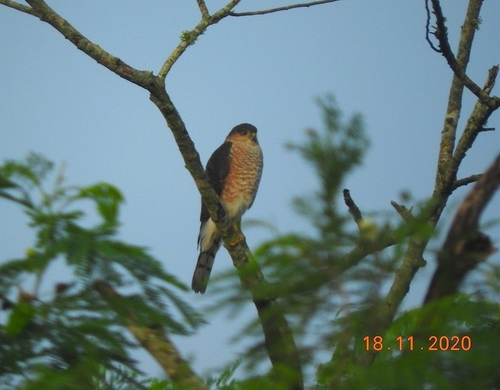 Sharp-shinned Hawk
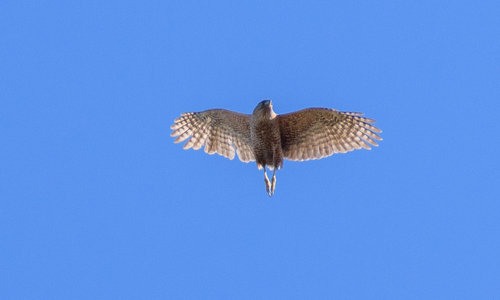 Cooper's Hawk
In breve
Il segno di campo più affidabile tra Sharp-shinned Hawk e Cooper's Hawk è strutturale: Sharp-shinned è notevolmente più piccolo, con una testa piccola e rotonda che sporge appena oltre le ali in volo, e gambe molto sottili e esili. Cooper's Hawk è più grande, con una testa più squadrata che sporge bene oltre le ali, un corpo più robusto e gambe più spesse. Il piumaggio giovanile è simile, ma Cooper's mostra tipicamente un aspetto più incappucciato con una banda nucale chiara, mentre i giovani Sharp-shinned appaiono con un cappuccio e più squamosi sopra. La forma e la dimensione della coda, così come la proporzione tra ala e coda quando posati, sono anche chiave. Entrambe le specie possono essere confuse sul campo, specialmente quando viste dall'alto o a distanza, ma un'attenta attenzione alla struttura e alle sottili differenze nel piumaggio può separarle.
Consigli di identificazione
- Proiezione della testa in volo: La testa piccola e arrotondata di Sharp-shinned Hawk sporge appena oltre il bordo anteriore delle ali, mentre la testa squadrata di Cooper's Hawk sporge bene in avanti. Questo è uno dei segni più affidabili, specialmente in uccelli che planano o volano in alto.
- Spessore delle gambe: Sharp-shinned Hawk ha gambe estremamente sottili, simili a matite; le gambe di Cooper's Hawk sono visibilmente più spesse e robuste. Questo può essere visto sugli uccelli posati, specialmente se le gambe sono esposte.
- Forma della coda: La coda di Sharp-shinned è più corta, più squadrata o leggermente incisa all'estremità, a volte con una punta bianca stretta. La coda di Cooper's Hawk è più lunga, spesso arrotondata o a forma di cuneo, con una punta bianca più ampia e più evidente. La forma della coda è meglio giudicata quando l'uccello è posato o aperto in volo.
- Dimensione: Sharp-shinned è molto più piccolo nel complesso, ma fare attenzione alla sovrapposizione tra grandi femmine di Sharp-shinned e piccoli maschi di Cooper's. Utilizzare la dimensione solo con un riferimento noto o in confronto diretto.
- Proporzione ala-coda quando posato: Su un Sharp-shinned Hawk posato, le punte delle ali di solito raggiungono solo circa metà della coda. Su Cooper's Hawk, le punte delle ali coprono spesso meno di un terzo della coda, a volte raggiungendo a malapena le coperture.
- Parte superiore giovanile: Il giovane Sharp-shinned mostra un aspetto squamoso sopra con piume bordate di ruggine; il giovane di Cooper's è più uniformemente marrone sopra, a volte con bordi rugginosi o cannella, ma spesso con un aspetto incappucciato e una banda nucale chiara.
- Parte inferiore giovanile: I giovani Sharp-shinned hanno striature dense marroni o rossastre sotto, spesso con barrature rossastre sui lati. I giovani di Cooper's hanno striature più nette e a forma di goccia, di solito confinate alla parte superiore del petto e della pancia, con meno barrature sui lati.
- Schema della testa adulta: L'adulto Cooper's Hawk ha una corona nera scura che contrasta con una nuca più chiara (dando un aspetto incappucciato), mentre il cappuccio di Sharp-shinned è meno distinto rispetto al resto della testa.
- Colore delle guance: Gli adulti di Sharp-shinned hanno guance con sfumature rugginose, a volte deboli; gli adulti di Cooper's hanno guance rugginose ma con un contrasto più nettamente definito tra corona e nuca.
- Crissum (coperture della coda): Entrambi hanno un crissum bianco, ma è più evidente su Cooper's Hawk a causa del contrasto con le parti inferiori più ricche.
- Stile di volo: Sharp-shinned Hawk mostra battiti d'ali rapidi e flickering e un volo più fluttuante e leggero. Cooper's Hawk è più stabile, con battiti d'ali più lenti e potenti e un volo più dritto.
- Postura posata: Sharp-shinned appare più snello, più curvo e nervoso; Cooper's è più robusto, più eretto e spesso sembra più rilassato.
- Dimensione del becco: Cooper's Hawk ha un becco relativamente corto ma robusto; il becco di Sharp-shinned è più piccolo e più delicato.
- Contesto dell'habitat: In foreste dense, specialmente lontano dalle aree urbane, è più probabile trovare Sharp-shinned; in boschi aperti, sobborghi o città, specialmente in inverno, è più probabile trovare Cooper's.
- Trappole: Fare attenzione alla sovrapposizione di dimensioni tra grandi femmine di Sharp-shinned e piccoli maschi di Cooper's; utilizzare più segni in combinazione, specialmente struttura e forma della coda/testa, piuttosto che fare affidamento su un singolo segno di campo.
Taglia
Sharp-shinned Hawk è il più piccolo Accipiter nordamericano: i maschi misurano 23–30 cm di lunghezza con un'apertura alare di 42–58 cm e pesano 82–115 g; le femmine misurano 29–37 cm, apertura alare 58–68 cm, peso 150–219 g [wikipedia]. Cooper's Hawk è decisamente più grande: maschi e femmine sono entrambi mediamente più lunghi e pesanti, con una corporatura più robusta e una testa e piedi proporzionalmente più grandi [wikipedia]. In mano o con un chiaro riferimento di dimensione, la differenza è sorprendente, ma fare attenzione alla sovrapposizione tra grandi femmine di Sharp-shinned e piccoli maschi di Cooper's, specialmente sul campo.
Piumaggio
I giovani di entrambe le specie sono marroni sopra con parti inferiori striate chiare, ma i giovani Sharp-shinned hanno un aspetto più squamoso sopra a causa delle piume bordate di ruggine, una testa marrone con cappuccio e striature bianche, e dense striature marroni o rossastre sotto, spesso con barrature rossastre sui lati [wikipedia]. I giovani di Cooper's Hawk sono anch'essi marroni sopra, ma mostrano spesso un aspetto incappucciato con una banda nucale chiara, striature più nettamente definite sulle parti inferiori, e una tendenza affinché le striature siano più sottili e a forma di goccia. La coda di Cooper's è più lunga, spesso a forma di cuneo o arrotondata, con bande scure più ampie e più uniformi e una punta bianca evidente; la coda di Sharp-shinned è più corta, più quadrata o leggermente incisa, con bande più strette e una punta bianca meno prominente. Gli adulti di entrambe le specie sono blu-grigi sopra con parti inferiori barrate di ruggine, ma Cooper's mostra una corona nera che contrasta con una nuca più chiara, mentre il cappuccio di Sharp-shinned è meno distinto. Entrambi hanno un crissum bianco, ma quello di Cooper's è più evidente. Il colore delle gambe è giallo in entrambe, ma le gambe di Sharp-shinned sono molto più sottili.
Comportamento
Entrambe le specie sono falchi boschivi riservati, ma Cooper's Hawk è più propenso a posarsi in aree aperte, specialmente in inverno o ad Ovest, e spesso utilizza posatoi esposti come pali della luce o ceppi [wikipedia]. Sharp-shinned Hawk tende a rimanere più in profondità nel riparo e appare più nervoso o scattante quando viene disturbato. In volo, Sharp-shinned è più scattante e più leggero, con battiti d'ali rapidi e flickering e un volo fluttuante, mentre Cooper's è più stabile, con battiti d'ali più lenti e potenti e un volo più dritto. Quando è posato, Cooper's appare più eretto e robusto, mentre Sharp-shinned appare più snello e curvo.
Habitat
Entrambe le specie si sovrappongono ampiamente in habitat boschivi in tutta Nord America, ma Cooper's Hawk è più adattabile a boschi aperti, aree suburbane e persino parchi urbani, specialmente in inverno [wikipedia]. Sharp-shinned Hawk preferisce foreste più dense ed è meno probabile che venga visto in ambienti aperti o altamente urbanizzati. Durante la migrazione, entrambe possono essere viste durante le osservazioni di falchi, ma Cooper's è più probabile che venga visto in una gamma più ampia di habitat.
Sharp-shinned Hawk · Cooper's Hawk · I miei uccelli difficili