

Motmot

スクリップスウミスズメ 対 クラベリーウミスズメ

Synthliboramphus scrippsi 対 Synthliboramphus craveri

スクリップスウミスズメとクラベリーウミスズメのクイズ
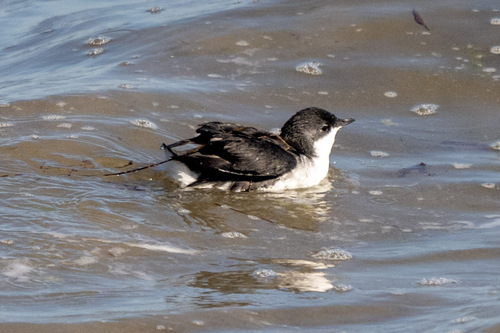
スクリップスウミスズメ (Synthliboramphus scrippsi) スクリップスウミスズメ
クラベリーウミスズメ (Synthliboramphus craveri) クラベリーウミスズメ

メディア

読み込み中…

要点

スクリップスウミスズメとクラベリーウミスズメを区別する最も信頼性の高いフィールドマークは、飛行中の翼の下の色です:スクリップスウミスズメは目を引く白い翼の下を示し、クラベリーウミスズメは明らかに暗い(灰色がかった)翼の下を持っています。静止しているとき、クラベリーウミスズメはしばしば部分的な暗い襟とより広範な黒い顔のマスクを示し、スクリップスウミスズメは襟がなく、マスクもあまり広範ではありません。クラベリーウミスズメは水面で尾を上げる傾向があり、これはスクリップスウミスズメでは見られない行動です。どちらも小さく、鋭いくちばしを持つウミスズメですが、特に海で鳥を観察する際には、これらの羽毛や行動の手がかりに注意を払うことが重要です。

識別のコツ

  1. Underwing color in flight: スクリップスウミスズメは白い翼の下を持ち、クラベリーウミスズメは暗いまたは灰色がかった翼の下を持っています。これは最も信頼性の高いフィールドマークで、すべての年齢と季節に適用されます。
  2. Partial neck collar: クラベリーウミスズメは、止まっているときや泳いでいるときに見える、下部の首に部分的な暗い襟を示します。スクリップスウミスズメはこの襟を示しません。
  3. Face mask extent: クラベリーウミスズメの黒い顔のマスクは顔の下部までさらに下がり、よりフードのような外観を与えます。スクリップスウミスズメのマスクはより制限されており、あまり下まで伸びません。
  4. Tail posture on water: クラベリーウミスズメは水面に座っているときに尾を上に傾けることが多いですが、スクリップスウミスズメは尾を平らに保ちます。これは微妙ですが、鳥が休んでいるときに役立ちます。
  5. Bill shape: 両方とも薄く鋭いくちばしを持ち、フィールドでの信頼できる違いはありません。
  6. Size and structure: 両種はサイズと形状が非常に似ており、識別にはこれを頼りにしないでください。
  7. Habitat and range: スクリップスウミスズメはカリフォルニア沿岸やチャンネル諸島の近くで見られる可能性が高く、クラベリーウミスズメはより外洋性で、特にバハの北側では岸からはめったに見られません。ただし、オフショアでは範囲の重複が発生します。
  8. Behavior at sea: 両方とも通常ペアで見られますが、クラベリーウミスズメの尾を傾ける行動は微妙な行動の手がかりです。
  9. Vocalizations: 種は声で異なりますが、フィールドで使える違いは記述されていません。ほとんどのバーダーにとって実用的な手がかりではありません。
  10. Juvenile/immature marks: 年齢特有の上翼や飛行パターンの違いは記述されていないため、すべての年齢に対して翼の下と襟/マスクに頼ってください。
  11. Plumage pitfalls: 照明や距離によって翼の下の色を判断するのが難しくなることがあります。明確な視界を得るために、鳥がバンキングやフラッピングしているのを見るようにしてください。クラベリーウミスズメの襟は薄いか、悪い光の中で隠れていることがあるため、他のマークと組み合わせて使用してください。
  12. At-sea context: カリフォルニア沿岸の近くで見られた場合、スクリップスウミスズメの可能性が高いですが、ポジティブなIDのために範囲だけを使用しないでください。
  13. Confusion with other murrelets: 両方とも互いに非常に似ており、鋭いくちばしと黒と白のパターンによって他の小さなウミスズメから最もよく区別されますが、これらの2種の間では役立ちません。
  14. Sex and season: 性別間に違いはありません。すべてのフィールドマークは年間を通じて適用されます。
  15. Summary: 最も自信を持って区別するために、飛行中の翼の下の色、首の襟、尾の姿勢を優先してください。特に困難な条件下では、可能な限り複数のマークを使用してください。

大きさ

両種はサイズと構造が非常に似ており、フィールドでの信頼できる違いはありません。利用可能な唯一の測定値は、クラベリーウミスズメの体重151gですが、これは実用的なフィールドマークではありません。どちらも小さく、コンパクトなウミスズメで、薄く尖ったくちばしを持っています。

羽色

最も診断的な羽毛の違いは、すべての年齢と季節で見られる翼の下です:スクリップスウミスズメは白い翼の下を持ち、クラベリーウミスズメは暗い(灰色がかった)翼の下を示します。さらに、クラベリーウミスズメは下部の首に部分的な暗い襟を持ち、スクリップスウミスズメにはありません。クラベリーウミスズメの黒い顔のマスクはより広範で、顔の下部までさらに下がりますが、スクリップスウミスズメのマスクはより制限されています。これらの特徴は、止まっている鳥と飛んでいる鳥の両方で見ることができますが、翼の下は飛行中に最も明らかです。どちらの種にも年齢特有の上翼パターン(例:幼鳥のパネルや後縁)に関するノートはありませんので、これらのマークはすべての年齢に適用されます。

行動

両種は翼で推進されるダイバーであり、通常海でペアで見られます。クラベリーウミスズメは水面に座っているときに尾を上に持つことで知られており、これはスクリップスウミスズメには見られない特性です。両方とも走り出すことなく水面から離陸できます。餌を取る行動や巣作りの行動は似ていますが、これらはフィールドでの区別には役立ちません。

生息環境

スクリップスウミスズメは南カリフォルニアと北バハカリフォルニアの島々で繁殖し、カリフォルニア海流システムの岸に近い場所で見られる可能性が高いです。クラベリーウミスズメはバハ半島の島々で繁殖し、太平洋とカリフォルニア湾の両方で見られ、岸からはめったに見られず、通常は海のさらに遠くで発生します。繁殖後、クラベリーウミスズメは中央カリフォルニアまで北に分散しますが、依然として陸の近くではめったに見られません。繁殖後の分散中に生息地の重複が可能ですが、スクリップスウミスズメは本土に近い場所で見られる可能性が高いです。

声

両種は声で区別できますが、利用可能なノートには特定の声の違いは記述されていません。声はほとんどの観察者にとって実用的なフィールドマークではありません。

より良い説明を送る

比較と同じ項目を使ってください。文章はすぐに公開されます。

The most reliable field mark to separate Scripps's Murrelet from Craveri's Murrelet is the underwing color in flight: Scripps's shows strikingly white underwings, while Craveri's has noticeably dusky (grayish) underwings. At rest, Craveri's often shows a partial dark collar and a more extensive black face mask, while Scripps's lacks the collar and has a less extensive mask. Craveri's also tends to hold its tail up on the water, a behavior not seen in Scripps's. Both are small, sharp-billed auks, but careful attention to these plumage and behavioral cues is key, especially when viewing birds at sea.

  1. Underwing color in flight: Scripps's Murrelet has white underwings; Craveri's has dusky or grayish underwings. This is the single most reliable field mark and works for all ages and seasons.
  2. Partial neck collar: Craveri's shows a partial dark collar across the lower neck, visible when perched or swimming; Scripps's never shows this collar.
  3. Face mask extent: Craveri's black face mask dips further down the face, giving a more hooded look. Scripps's mask is more restricted and does not extend as far down.
  4. Tail posture on water: Craveri's often holds its tail cocked upward when sitting on the water, while Scripps's keeps its tail flat. This is subtle but useful when birds are resting.
  5. Bill shape: Both have thin, sharp bills with no reliable difference in the field.
  6. Size and structure: Both species are very similar in size and shape; do not rely on this for identification.
  7. Habitat and range: Scripps's is more likely near the California coast and Channel Islands, while Craveri's is more pelagic and rarely seen from shore, especially north of Baja. However, range overlap does occur offshore.
  8. Behavior at sea: Both are usually seen in pairs, but Craveri's tail-cocking is a subtle behavioral clue.
  9. Vocalizations: While the species differ vocally, no field-usable differences are described; not a practical cue for most birders.
  10. Juvenile/immature marks: No age-specific upperwing or flight pattern differences are described, so rely on underwing and collar/mask for all ages.
  11. Plumage pitfalls: Lighting and distance can make the underwing color hard to judge. Try to see birds banking or flapping for a clear view. The collar on Craveri's can be faint or obscured in poor light, so use in combination with other marks.
  12. At-sea context: If seen close to the California coast, Scripps's is more likely, but do not use range alone for positive ID.
  13. Confusion with other murrelets: Both resemble each other closely and are best separated from other small auks by their sharp bills and black-and-white pattern, but this does not help between these two.
  14. Sex and season: No differences between sexes; all field marks apply year-round.
  15. Summary: Prioritize underwing color in flight, neck collar, and tail posture for the most confident separation. Use multiple marks whenever possible, especially in challenging conditions.

Both species are very similar in size and structure, with no reliable difference in the field. The only available measurement is a body mass of 151g for Craveri's Murrelet [wikidata], but this is not a practical field mark. Both are small, compact auks with thin, pointed bills.

The most diagnostic plumage difference, visible in all ages and seasons, is the underwing: Scripps's Murrelet has white underwings, while Craveri's Murrelet shows dusky (grayish) underwings. In addition, Craveri's has a partial dark collar across the lower neck, absent in Scripps's. The black face mask is more extensive and dips further down the face in Craveri's, while Scripps's mask is more restricted. These features are visible in both perched and flying birds, but the underwing is most obvious in flight. There are no notes on age-specific upperwing patterns (e.g., juvenile panels or trailing edges) in either species, so these marks apply to all ages.

Both species are wing-propelled divers and are usually seen in pairs at sea. Craveri's Murrelet is noted for holding its tail upward when sitting on the water, a trait not shown by Scripps's. Both can take off from the water without a running start. Feeding and nesting behaviors are similar, but these are not useful for field separation.

Scripps's Murrelet breeds on islands off southern California and northern Baja California, and is more likely to be seen closer to shore in the California Current system. Craveri's Murrelet breeds on islands off the Baja peninsula, both in the Pacific and the Gulf of California, and is rarely seen from shore, usually occurring farther out to sea. After breeding, Craveri's disperses north as far as central California, but is still rarely seen near land. Habitat overlap is possible during post-breeding dispersal, but Scripps's is more likely closer to the mainland.

Both species can be separated by voice, but no specific vocal differences are described in the available notes. Vocalizations are not a practical field mark for most observers at sea.

変更を破棄しますか?

保存していない編集があります。今離れると失われます。

スクリップスウミスズメ · クラベリーウミスズメ · 苦手な鳥