

Motmot

ウロコウズラ 対 カンムリウズラ

Callipepla squamata 対 Callipepla californica

ウロコウズラとカンムリウズラのクイズ
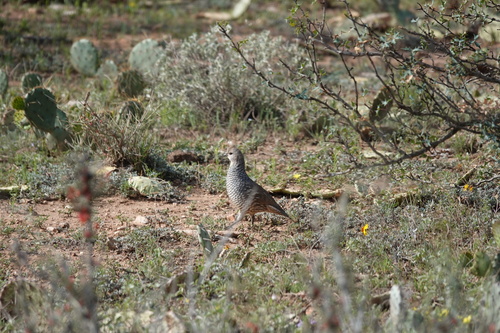
ウロコウズラ (Callipepla squamata) ウロコウズラ
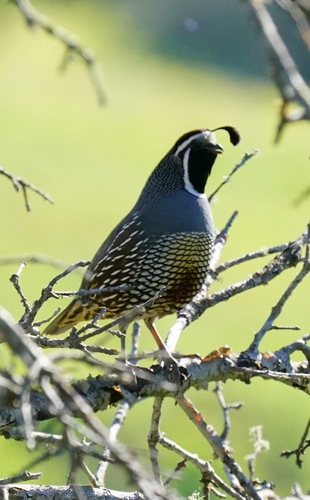
カンムリウズラ (Callipepla californica) カンムリウズラ

メディア

読み込み中…

要点

スケールウズラとカンムリウズラを区別する最も信頼できるフィールドマークは、スケールウズラの胸と背中に見られる独特のウロコ模様と、その淡い綿のような白い冠羽の組み合わせです。対照的に、カンムリウズラは前方に垂れ下がる黒いトサカ(羽毛)を持ち、オスは大胆な黒と白の顔模様を示します。メスは地味ですが、やはりウロコのような外観はありません。両種はサイズと形が似ていますが、頭の模様と体の色合いはよく見ると異なります。未熟な鳥と成鳥は、すべての季節においてこれらの特徴によって区別できます。

識別のコツ

  1. ウロコ模様: スケールウズラはすべての年齢で胸、首、背中に独特のウロコの外観を示します—これは最も優れたフィールドマークです。カンムリウズラはこの模様を示しません。
  2. 冠羽の形: スケールウズラは短くてふさふさした白い冠羽('コットントップ')を持ち、カンムリウズラは前方に垂れ下がる長い黒いカンマ形のトサカを持っています(オスは長く、メスは短い)。
  3. 頭の模様(オス): オスのカンムリウズラは白で縁取られた印象的な黒い顔を持ち、胸栗色の腹部の斑点があります。スケールウズラのオスはこれらの顔のマーキングがなく、地味で淡い顔をしています。
  4. 頭の模様(メス): メスのカンムリウズラは茶色がかっており、大胆な顔のストライプがなく、短い暗いトサカを示します。メスのスケールウズラも地味な顔をしていますが、白いコットントップとウロコの体を持っています。
  5. 体の色: スケールウズラは全体的に青灰色に見えます。カンムリウズラはより茶色がかっているか灰色がかった茶色で、オスはより豊かな栗色と灰色のトーンを示します。
  6. 腹部: スケールウズラは全体の腹部にウロコのマーキングを示します。カンムリウズラは滑らかで無地の腹部を持ちます(オスは栗色の斑点、メスは地味)。
  7. 飛行の外観: どちらの種も年齢層に関係なく、特に目立った翼や飛行パターンの違いはありません。
  8. くちばしと構造: 両方ともウズラに典型的な短くて頑丈なくちばしを持っています。構造は信頼できる区別要因ではありません。
  9. 尾: 両種とも短い尾を持ち、尾の形は診断的ではありません。
  10. 群れの行動: 両種は群れを形成しますが、カンムリウズラは特に共同での砂浴びが知られており、円形の跡を残します。
  11. 生息地: 乾燥した開けた草原やユッカとまばらな低木のある砂漠では、スケールウズラが期待されます。茂みの多いチャパラルや郊外の端では、カンムリウズラがより可能性が高いです。
  12. 地理的範囲: スケールウズラは乾燥した南西部と中央メキシコに限定されています。カンムリウズラは北アメリカ西部に広く分布し、他の地域にも導入されています。
  13. 性差: カンムリウズラのみが頭の模様とトサカの長さにおいて強い性差を示します。スケールウズラの雌雄は似ています。
  14. 幼鳥/未熟な鳥: 若いスケールウズラはすでにいくつかのウロコ模様を示しますが、鮮明さは劣ります。若いカンムリウズラは完全にウロコのマーキングがありません。
  15. 落とし穴: 照明が悪い場合や距離がある場合、両方とも灰色がかって見え、サイズが似ていることがあります。常にウロコ模様と冠羽/トサカの形や色を探して、自信を持って識別してください。

大きさ

スケールウズラとカンムリウズラはサイズが非常に近いです。スケールウズラは平均約184gの質量で、長さは25.4〜30.5cm、翼幅は約38cmです。カンムリウズラは平均してやや小さく(長さ24〜27cm、翼幅32〜37cm)、体重範囲は重なっています(140〜230g)。フィールドでは、サイズだけでは信頼できる区別要因ではありません。羽毛と頭の形に焦点を当ててください。

羽色

どちらの種についても年齢特有の翼や飛行パターンの違いは確認されていないため、体と頭の羽毛に焦点を当ててください。すべての年齢と性別のスケールウズラは、青灰色の羽毛の淡い羽の縁によって作られた胸、首、背中に独特のウロコ模様を示します。彼らの冠羽は短くてふさふさした白い房('コットントップ')であり、羽毛ではありません。カンムリウズラのオスは、白いストライプで縁取られた大胆な黒い顔、栗色の腹部の斑点、前方に垂れ下がる目立つカンマ形の黒いトサカを持っています。メスは全体的に茶色がかっており、強い顔の模様がなく、トサカ(短くて鈍い)を示します。カンムリウズラは決してスケールウズラのウロコ模様を示さず、彼らの腹部は滑らかで、ウロコではありません。

行動

両種は地面に生息し、小さな群れでよく見られます。カンムリウズラは特に社交的で、頻繁にグループで砂浴びをし、明らかな円形の砂浴びの跡を残します。両種は驚かされると急速で羽音を立てて飛び立ちますが、可能であれば徒歩で逃げることを好みます。採餌習慣は似ており、両方とも種子や昆虫を掘り起こしますが、これらの行動はフィールドでの診断には役立ちません。

生息環境

スケールウズラは、南西部のアメリカから中央メキシコの乾燥した開けた地域に生息し、まばらな草、ユッカ、散在する低木のある場所にしばしば見られます。カンムリウズラは北アメリカ西部のより広範な生息地に生息し、チャパラル、丘のふもと、郊外の端、茂みの多い地域を含みます。南西部の一部の地域では範囲が重なりますが、スケールウズラは乾燥した開けた砂漠のような環境に非常に結びついているのに対し、カンムリウズラは茂みの多い半開放的な環境や郊外の生息地に一般的です。

より良い説明を送る

比較と同じ項目を使ってください。文章はすぐに公開されます。

The most reliable field mark to separate Scaled Quail from California Quail is the unique scaly pattern on the breast and back of Scaled Quail, combined with its pale, cottony white crest. California Quail, in contrast, show a forward-drooping black topknot (plume) and, in males, a bold black-and-white facial pattern; females are plainer but still lack the scaly look. Both species are similar in size and shape, but their head patterns and body coloration are distinct when seen well. Immature and adult birds can be separated by these features in all seasons.

  1. Scaly Pattern: Scaled Quail of all ages show a distinctive scaly appearance on the breast, neck, and back—this is the single best field mark. California Quail never show this pattern.
  2. Crest Shape: Scaled Quail has a short, bushy, white crest ('cottontop'), while California Quail has a long, black, comma-shaped topknot that droops forward (longer in males, shorter in females).
  3. Head Pattern (Males): Male California Quail have a striking black face bordered by white, with a chestnut belly patch. Scaled Quail males lack these facial markings and have a plain, pale face.
  4. Head Pattern (Females): Female California Quail are brownish and lack the bold facial stripes, but still show a short, dark topknot. Female Scaled Quail are also plain-faced but have the white cottontop and scaly body.
  5. Body Color: Scaled Quail appear bluish-gray overall; California Quail are more brownish or gray-brown, with males showing richer chestnut and gray tones.
  6. Underparts: Scaled Quail show scaly markings down the entire underparts; California Quail have smooth, unmarked underparts (males with a chestnut patch, females plain).
  7. Flight Appearance: No distinctive wing or flight pattern differences are noted between these two species for any age group.
  8. Bill and Structure: Both have short, stout bills typical of quail; structure is not a reliable separator.
  9. Tail: Both species have short tails; tail shape is not diagnostic.
  10. Group Behavior: Both species form coveys, but California Quail are especially noted for communal dust bathing, leaving circular marks.
  11. Habitat: In arid, open grasslands or desert with yucca and sparse shrubs, expect Scaled Quail. In brushy, chaparral, or suburban edges, California Quail is more likely.
  12. Geographic Range: Scaled Quail are restricted to the arid Southwest and Central Mexico. California Quail are widespread in western North America and introduced elsewhere.
  13. Sex Differences: Only California Quail show strong sexual dimorphism in head pattern and topknot length; Scaled Quail sexes are similar.
  14. Juvenile/Immature Birds: Young Scaled Quail already show some scaly pattern, though less crisp; young California Quail lack scaly markings entirely.
  15. Pitfalls: In poor light or at a distance, both can appear grayish and similar in size. Always look for the scaly pattern and the shape/color of the crest/topknot for a confident ID.

Scaled Quail and California Quail are very close in size. Scaled Quail averages about 184 g in mass, with a length of 25.4–30.5 cm and a wingspan around 38 cm. California Quail is slightly smaller on average (24–27 cm in length, 32–37 cm wingspan), but with overlapping weight ranges (140–230 g). In the field, size alone is not a reliable separator; focus on plumage and head shape.

No age-specific wing or flight pattern differences are noted for either species, so focus on body and head plumage. Scaled Quail of all ages and sexes show a distinctive scaly pattern across the breast, neck, and back, created by pale feather edges on bluish-gray plumage. Their crest is a short, bushy white tuft ('cottontop'), not a plume. California Quail males have a bold black face bordered by white stripes, a chestnut belly patch, and a prominent comma-shaped black topknot that droops forward; females are brownish overall, lack the strong facial pattern, but still show the topknot (shorter and duller). California Quail never show the scaly pattern of Scaled Quail, and their underparts are smooth, not scaled.

Both species are ground-dwelling and often seen in small coveys. California Quail are especially sociable, frequently dust-bathing in groups and leaving obvious circular dust bath marks. Both species flush with rapid, whirring flight when startled, but prefer to escape on foot if possible. Foraging habits are similar, with both scratching for seeds and insects, but these behaviors are not diagnostic in the field.

Scaled Quail are found in arid, open country of the Southwestern US to Central Mexico, often in areas with sparse grass, yucca, and scattered shrubs. California Quail inhabit a wider range of habitats in western North America, including chaparral, foothills, suburban edges, and brushy areas. While ranges overlap in some southwestern areas, Scaled Quail are much more tied to dry, open, desert-like environments, whereas California Quail are common in brushy, semi-open, and even suburban habitats.

変更を破棄しますか?

保存していない編集があります。今離れると失われます。

ウロコウズラ · カンムリウズラ · 苦手な鳥