

Motmot

セアカオオツリスドリ 対 オリーブミドリオオツリスドリ

Psarocolius angustifrons 対 Psarocolius atrovirens

セアカオオツリスドリとオリーブミドリオオツリスドリのクイズ
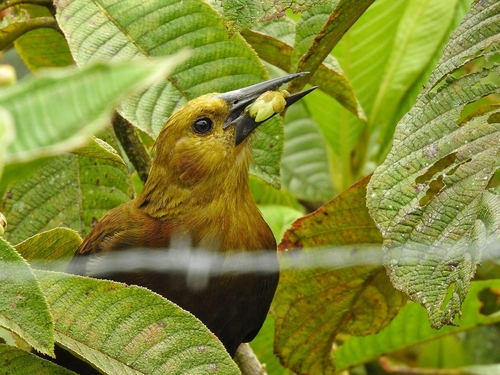
セアカオオツリスドリ (Psarocolius angustifrons) セアカオオツリスドリ
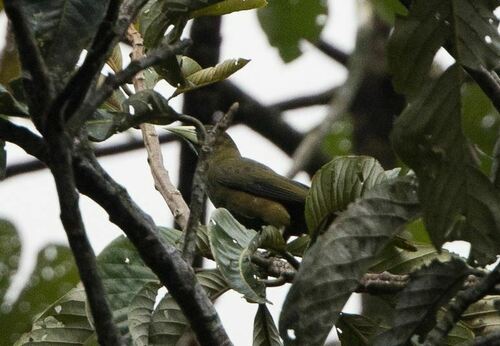
オリーブミドリオオツリスドリ (Psarocolius atrovirens) オリーブミドリオオツリスドリ

メディア

読み込み中…

要点

セアカオオツリスドリとオリーブミドリオオツリスドリの間で最も信頼できるフィールドマークは全体の色合いです:セアカオオツリスドリは明確に赤褐色または赤褐色の背中と尾を示し、しばしば黄色の額とオリーブグリーンの頭を持っていますが、オリーブミドリオオツリスドリははるかに暗く、均一な暗褐色または黒っぽい緑の体を持ち、赤褐色の尾とクルスムのみを持っています。くちばしの色も重要です:セアカオオツリスドリは通常、黒っぽいまたは暗いくちばしを持ち(いくつかの亜種を除く)、オリーブミドリオオツリスドリは淡い緑がかった白いくちばしを持っています。フィールドでは、セアカオオツリスドリはしばしば明るく、特に頭と尾の周りで対照的に見えますが、オリーブミドリオオツリスドリはより陰鬱で均一に見えます。両種はペルーとボリビアのアンデスで分布が重なっているため、これらのマークに注意を払うことが重要です。

識別のコツ

  1. Back and rump color: セアカオオツリスドリは明確な赤褐色または赤褐色の背中と尾を示し、暗い翼と体に対して際立っています。オリーブミドリオオツリスドリの背中は体と同じ暗褐色または黒っぽい緑で、尾とクルスムだけが赤褐色です。
  2. Head and forehead: 多くのセアカオオツリスドリの亜種は黄色の額とオリーブグリーンまたはオリーブ色の茶色の頭を持ち、背中と翼と対照的です。オリーブミドリオオツリスドリはこの対照を欠き、頭が暗い体に溶け込んでいます;頭にはいくつかの黄色い羽があるかもしれませんが、完全な黄色の額はありません。
  3. Bill color: ほとんどのセアカオオツリスドリは黒っぽいくちばしを持っています(象牙色またはオレンジ黄色のくちばしを持つ亜種を除く)が、オリーブミドリオオツリスドリは一貫して淡い緑がかった白いくちばしを持っています。これはしばしば遠くからでも見えます。
  4. Tail color: セアカオオツリスドリは主に黄色の尾を持ち、暗褐色またはオリーブ色の中央の羽と外側の羽の先端に茶色がかっています。オリーブミドリオオツリスドリの尾は対照が少なく、セアカオオツリスドリの明るい黄色が欠けています。
  5. Overall brightness: セアカオオツリスドリは特に頭と尾の周りで明るくカラフルに見えますが、オリーブミドリオオツリスドリは均一に暗く陰鬱です。
  6. Juvenile plumage: 幼鳥のセアカオオツリスドリはより黄色い頭と鈍い黄色の尾を持っていますが、依然として赤褐色の背中と対照的な頭を示します。オリーブミドリオオツリスドリの幼鳥は詳細に記述されていませんが、大人のように暗く均一であると予想されます。
  7. Eye color: 両種は茶色または青い目を示すことがあり、青は古い鳥に見られるかもしれませんので、これは信頼できる区別ではありません。
  8. Size and structure: 両者は大きく、長い尾を持つイケタリッドで、比率は似ています。最大のオスのセアカオオツリスドリだけがより大きく見えるかもしれませんが、これは微妙でフィールドでは信頼できません。
  9. Vocalizations: 低い音から始まりクレッシェンドに上がる歌や、特徴的な液体のトリルやカチカチ音が聞こえたら、それはおそらくセアカオオツリスドリです。オリーブミドリオオツリスドリの歌は詳細に記述されていないため、これらの呼び声がないことは診断的ではありません。
  10. Habitat: ペルーとボリビアでは、オリーブミドリオオツリスドリはより高い標高の山地の森にいる可能性が高いですが、セアカオオツリスドリはより広範囲に分布し、低地や丘陵地で見られます。しかし、両者は重なることがあるため、単独の生息地に頼らないでください。
  11. Sexual dimorphism: セアカオオツリスドリのオスは長い後頭部の羽があり、これが冠を形成しますが、これは微妙で常に見えるわけではありません。両種の雌は羽毛においてオスに似ており、サイズが主な違いです。
  12. Subspecies variation: 一部のセアカオオツリスドリの亜種(例:P. a. salmoni、P. a. neglectus)は、より淡いまたは黄色がかったくちばしや、より栗色または赤褐色のトーンを示しますが、すべてが赤褐色の背中と対照的な頭を保持しています。オリーブミドリオオツリスドリはこの組み合わせを示しません。
  13. Group behavior: 両種は社会的で、混合群れで見られることがあるため、群れを区別として使用しないでください。
  14. Pitfalls: 照明が悪い場合、オリーブミドリオオツリスドリはほぼ黒に見えることがありますが、セアカオオツリスドリは実際よりも暗く見えることがあります。常に対照的な背中と頭のトーンを探してください。
  15. Flight views: どちらの種にも特有の翼や飛行パターンのマークは記述されていないため、飛行中でも体と尾の色に頼ってください。

大きさ

両種はサイズが似ており、オスは約42〜48 cm、雌は33〜38 cmの長さです。オリーブミドリオオツリスドリの報告された平均体重は約228.5 gで、これは雌のセアカオオツリスドリの範囲内ですが、最大のオスのセアカオオツリスドリ(最大470 gに達することがある)よりも軽いです。実際には、サイズの違いは微妙で、最大のオスのセアカオオツリスドリを除いて、信頼できるフィールドマークではありません。

羽色

どちらの種にも特有の年齢別の上翼や飛行パターンのマークは記述されていないため、体と頭の色に焦点を当てます。成鳥のセアカオオツリスドリ(指名種およびほとんどの亜種)はオリーブ色の茶色の頭、赤褐色または赤褐色の背中と尾を持ち、主に茶色の体に淡い、しばしば黄色がかった尾(中央の羽を除く)を持っています。いくつかの亜種は黄色の額とオリーブグリーンの頭を示し、背中と翼と対照的です。幼鳥はより黄色い頭と鈍い黄色の尾を持っています。対照的に、すべての年齢のオリーブミドリオオツリスドリは全体的にはるかに暗く、暗褐色または黒っぽい緑の体、赤褐色の尾とクルスム、緑がかった白いくちばしを持っています。頭にはいくつかの黄色い羽があるかもしれませんが、セアカオオツリスドリの広範な黄色の額や明るいオリーブ色の頭は決してありません。尾は対照が少なく、全体的な印象ははるかに陰鬱です。オリーブミドリオオツリスドリの目の色は茶色または青(年齢に関連している可能性があります)である可能性があり、セアカオオツリスドリは通常、暗い茶色の虹彩を持ち、いくつかの亜種は青い目を示します。

行動

両種は社会的で、しばしば群れで見られ、採餌、巣作り、共同での休息を行います。フィールドで診断的な主要な行動の違いは特に見られません。

生息環境

両種はペルーとボリビアのアンデスで見られますが、オリーブミドリオオツリスドリは亜熱帯または熱帯の湿った山地の森や劣化した元の森に東側のアンデスの斜面により制限されています。セアカオオツリスドリはより広範囲に分布し、ボリビア、ブラジル、コロンビア、エクアドル、ペルー、ベネズエラの低地や丘陵地の森に生息しています。重なり合う地域では、生息地だけでは診断的ではありませんが、オリーブミドリオオツリスドリはより高い標高や山地の環境にいる可能性が高いです。

声

両種は騒がしく社会的ですが、詳細な声の記述があるのはセアカオオツリスドリだけです:その歌は通常低い音から始まり、クレッシェンドに上がり、さまざまな呼び声が液体のトリル、鋭い音、空洞のカチカチ音として記述され、地域や亜種によって異なります。オリーブミドリオオツリスドリの声は利用可能なメモに詳細に記述されていないため、セアカオオツリスドリの特徴的な歌が聞こえない限り、声は信頼できる区別ではありません。

より良い説明を送る

比較と同じ項目を使ってください。文章はすぐに公開されます。

The most reliable field mark between Russet-backed and Dusky-green Oropendolas is overall coloration: Russet-backed shows a distinctly rufous or russet-toned back and rump, often with a yellow forehead and olive-green head, while Dusky-green is much darker, with a uniform dark brownish- or blackish-green body and only a rufous-brown rump and crissum. Bill color is also key: Russet-backed typically has a blackish or dark bill (except in some subspecies), while Dusky-green has a pale greenish-white bill. In the field, Russet-backed often looks brighter and more contrasting, especially around the head and tail, whereas Dusky-green appears more somber and uniform. Both species overlap in range in the Andes of Peru and Bolivia, so careful attention to these marks is essential.

  1. Back and rump color: Russet-backed Oropendola shows a clear rufous or russet back and rump, which stands out against the darker wings and body. Dusky-green Oropendola's back is the same dark brownish- or blackish-green as its body, with only the rump and crissum being rufous-brown.
  2. Head and forehead: Many Russet-backed subspecies have a yellow forehead and an olive-green or olivaceous-brown head that contrasts with the back and wings. Dusky-green Oropendola lacks this contrast, with the head blending into the dark body; only a few yellow feathers may be present on the head, never a full yellow forehead.
  3. Bill color: Most Russet-backed Oropendolas have a blackish bill (except some subspecies with ivory or orange-yellow bills), while Dusky-green Oropendola consistently has a pale greenish-white bill. This is often visible even at a distance.
  4. Tail color: Russet-backed Oropendola has a mostly yellow tail with dusky brown or olive central feathers and brownish tips on the outermost feathers. Dusky-green's tail is less contrasting, lacking the bright yellow of Russet-backed.
  5. Overall brightness: Russet-backed appears brighter and more colorful, especially around the head and tail, while Dusky-green is uniformly dark and somber.
  6. Juvenile plumage: Juvenile Russet-backed Oropendolas have a yellower head and duller yellow tail, but still show the russet back and contrasting head. Dusky-green juveniles are not described in detail, but are expected to be dark and uniform like adults.
  7. Eye color: Both species can show brown or blue eyes, with blue possibly in older birds, so this is not a reliable separator.
  8. Size and structure: Both are large, long-tailed icterids with similar proportions. Only the largest male Russet-backed may appear bulkier, but this is subtle and unreliable in the field.
  9. Vocalizations: If you hear a song that starts low and rises to a crescendo, or distinctive liquid trills and clacking notes, it is likely Russet-backed. Dusky-green's song is not well described, so absence of these calls is not diagnostic.
  10. Habitat: In Peru and Bolivia, Dusky-green is more likely in higher elevation montane forests, while Russet-backed is more widespread and can be found in lowlands and foothills. However, both can overlap, so do not rely on habitat alone.
  11. Sexual dimorphism: Russet-backed males have long nape feathers forming a crest, but this is subtle and not always visible. Females of both species are similar to males in plumage, with size being the main difference.
  12. Subspecies variation: Be aware that some Russet-backed subspecies (e.g., P. a. salmoni, P. a. neglectus) show paler or more yellowish bills and more chestnut or rufescent tones, but all retain the rufous/russet back and contrasting head. Dusky-green never shows this combination.
  13. Group behavior: Both species are social and may be seen in mixed flocks, so do not use flocking as a separator.
  14. Pitfalls: In poor light, Dusky-green can appear almost black, while Russet-backed may look darker than it is. Always look for the contrasting back and head tones.
  15. Flight views: No distinctive wing or flight pattern marks are described for either species, so rely on body and tail coloration even in flight.

Both species are similar in size, with males around 42–48 cm and females 33–38 cm in length. Dusky-green Oropendola has a reported average body mass of about 228.5 g, which is within the range for female Russet-backed but lighter than the largest male Russet-backed (which can reach up to 470 g). In practice, size difference is subtle and not a reliable field mark except possibly for the largest male Russet-backed, which may appear bulkier.

No distinctive age-specific upperwing or flight pattern marks are described for either species, so focus is on body and head coloration. Adult Russet-backed Oropendolas (nominate and most subspecies) have an olivaceous-brown head, a russet or rufous back and rump, and a mostly brown body with a paler, often yellowish tail (except central feathers). Some subspecies show a yellow forehead and olive-green head, which contrasts with the back and wings. Juveniles have a yellower head and a duller yellow tail. In contrast, Dusky-green Oropendola of all ages is much darker overall, with a dark brownish- or blackish-green body, a rufous-brown rump and crissum, and a greenish-white bill. There may be a few yellow feathers on the head, but never the extensive yellow forehead or bright olive head of Russet-backed. The tail is less contrasting, and the overall impression is much more somber. Eye color may be brown or blue (possibly age-related) in Dusky-green, while Russet-backed typically has a dark brown iris, with some subspecies showing blue eyes.

Both species are social and often seen in groups, foraging, nesting, and roosting communally. No major behavioral differences are noted that are diagnostic in the field.

Both species can be found in the Andes of Peru and Bolivia, but Dusky-green Oropendola is more restricted to the eastern slope of the Andes in subtropical or tropical moist montane forests and degraded former forests. Russet-backed Oropendola has a broader range, occurring in lowland and foothill forests across Bolivia, Brazil, Colombia, Ecuador, Peru, and Venezuela. In areas of overlap, habitat alone is not diagnostic, but Dusky-green is more likely at higher elevations and in montane settings.

Both species are noisy and social, but only Russet-backed Oropendola has detailed vocal descriptions: its song typically starts low and rises to a crescendo, with various calls described as liquid trills, slashing notes, and hollow clacks, varying by region and subspecies. Dusky-green Oropendola's vocalizations are not described in detail in the available notes, so voice is not a reliable separator unless Russet-backed's distinctive song is heard.

変更を破棄しますか?

保存していない編集があります。今離れると失われます。

セアカオオツリスドリ · オリーブミドリオオツリスドリ · 苦手な鳥