

Motmot

アカオキリハシ 対 オオキリハシ

Galbula ruficauda 対 Jacamerops aureus

アカオキリハシとオオキリハシのクイズ
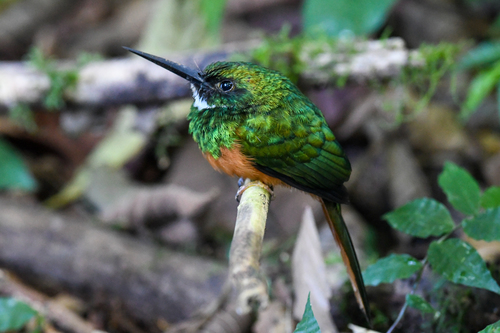
アカオキリハシ (Galbula ruficauda) アカオキリハシ
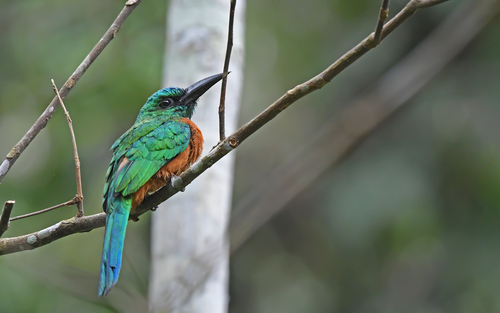
オオキリハシ (Jacamerops aureus) オオキリハシ

メディア

読み込み中…

要点

アカオキリハシとオオキリハシの最も信頼できるフィールドマークは、全体のサイズと体格です:オオキリハシは明らかに大きく、重い体を持ち、より深いくちばしとより頑丈な外観をしています。両種は金属的な緑の上面と赤褐色の下面を共有していますが、オオキリハシはより暗い青黒い尾とより豊かで深い赤褐色の腹を持ち、アカオキリハシの尾は明るい赤褐色で腹と一致しています。両者の性別は微妙に異なりますが、オスの白い喉の斑点はオオキリハシでよりはっきりと定義されています。止まっている時や飛行中の姿では、尾の色と全体のサイズに注目することで、最も早く区別できます。

識別のコツ

  1. サイズと体格:オオキリハシは体重がずっと重く、全体的に大きいです;もし鳥がずんぐりしていて頑丈に見えるなら、オオキリハシを疑ってください。アカオキリハシはスリムで繊細です。
  2. 尾の色:アカオキリハシは腹と一致する明るい赤褐色の尾を持っています;オオキリハシの尾は青黒く、赤褐色の腹と対照的です。これは、止まっている姿や飛行中の姿の両方でしばしば見られます。
  3. 腹と尾の下側:アカオキリハシの下面と尾の下側は両方とも赤褐色で、緑の胸の帯があります。オオキリハシの腹はより深く、豊かな赤褐色で、尾の下側は暗いです。
  4. 背中と上面:両者は上面が金属的な緑ですが、オオキリハシは特に背中や尾に金色、青みがかった、または紫銅色の色合いを示すことがあります。
  5. 喉の斑点(性別特有):オスのアカオキリハシは広い白い喉を持ち、メスはバフ色です。オオキリハシのオスは小さく、はっきりとした白い下喉を持ち、メスは喉に白い部分がありません。喉がバフ色または淡い色の場合は、他のマークを確認して種と性別を確認してください。
  6. くちばしの形と長さ:オオキリハシのくちばしはより深く、重く、そのずんぐりした頭に合っています。アカオキリハシのくちばしは長く、細く、まっすぐで、スリムな外観を強調しています。
  7. 止まる姿勢:アカオキリハシはしばしば直立してくちばしを上に傾けて止まりますが、通常は開けた場所やエッジの生息地にいます。オオキリハシはより水平に、森の奥深くに止まります。
  8. 生息地の文脈:開けた森林、空き地、または森林のエッジでは、アカオキリハシがはるかに可能性が高いです。日陰で湿った低地の熱帯雨林、特に中層の樹冠では、オオキリハシを期待してください。
  9. 飛行スタイル:オオキリハシは遅く、重い羽ばたきで飛び、あまり敏捷に見えません。アカオキリハシは飛行中により速く、優雅です。
  10. 性差:メスのアカオキリハシはバフ色の喉とより淡い下面を持ち、メスのオオキリハシは白い喉の斑点が完全に欠けていますが、その他はオスに似ています。
  11. 年齢特有の翼のパターンなし:どちらの種も特異な幼鳥または未熟な上翼のマークを示さないため、飛行中の翼のパターンに頼って区別しないでください。
  12. 鳴き声:鋭い「ピーオップ」や高く、トリルのような歌声が聞こえた場合はアカオキリハシを支持しますが、歌がないことはオオキリハシの診断にはなりません。
  13. 亜種のくちばしの長さ:アカオキリハシの亜種G. r. brevirostrisは短いくちばしを持っていますが、それでもオオキリハシよりもスリムに見えます。
  14. 尾と体の対比:尾が腹と同じくらい明るい場合はアカオキリハシです;尾が腹よりもはるかに暗い場合はオオキリハシです。
  15. 文脈的手がかり:中央アメリカにいる場合や分布の北端にいる場合は、アカオキリハシがより可能性が高いです;オオキリハシは湿ったアマゾンの森林や隣接する森林により制限されています。

大きさ

オオキリハシは最大のキリハシで、全長25〜30 cm、体重57〜70 g([wikidata])です。これにより、平均約25 cmの長さで、体重がずっと軽いアカオキリハシよりもかなりずんぐりした体格になります(正確な質量は利用できませんが、目に見えてスリムです)。現場では、オオキリハシはずんぐりしていて重いくちばしを持っているように見え、アカオキリハシはスリムでより繊細です。両者が一緒に見られたり、馴染みのある種と比較されたりすると、質量と全体的な存在感の違いは際立っています。

羽色

どちらの種にも年齢特有の幼鳥または未熟な翼のパターンの違いは記載されていないため、区別は成鳥の羽毛と構造に依存します。アカオキリハシは上面が金属的な緑で、明るい赤褐色の腹と尾の下側、緑の胸の帯を持っています。オスは白い喉を持ち、メスはバフ色の喉とより淡い下面を持っています。オオキリハシも上面が金属的な緑ですが、金色や青みがかった色合い、青黒い尾、深く豊かな赤褐色の腹を持っています。オスははっきりとした白い下喉を持ち(アカオキリハシよりも小さい)、メスはこの白い斑点がありません。オオキリハシの背中は紫銅色の色合いを示すことがあり、尾は常に腹よりも暗く、アカオキリハシの赤褐色の尾とは異なります。どちらの種にも季節的または年齢に基づく変化は記載されていないため、これらのマークは年間を通じて信頼できます。

行動

両種は止まり木から飛び出して昆虫を狩りますが、オオキリハシはより高く、日陰の中層の止まり木を好む傾向があり、小さな脊椎動物(トカゲなど)を捕まえることもあります。アカオキリハシは森林のエッジや開けた場所でより頻繁に見られ、くちばしを上に傾けて目立つように止まります。両者は獲物を飲み込む前に枝に叩きつけます。飛行中、オオキリハシは重く、あまり敏捷に見えず、アカオキリハシはより速く、優雅です。

生息環境

アカオキリハシは南メキシコから中央アメリカを経て南アメリカの大部分に広く分布し、開けた森林、森林のエッジ、空き地を好みます。オオキリハシは湿った低地の熱帯雨林の鳥であり、通常は樹冠の中層や日陰の森林のエッジに見られ、開けた場所にはめったに出ません。深い森林、特に中層の樹冠で見られる場合は、オオキリハシの可能性が高く、アカオキリハシは日当たりの良いエッジや二次成長に典型的です。

声

アカオキリハシは鋭い「ピーオップ」という呼び声と高く、細いトリルのような歌声を出します。オオキリハシの鳴き声は提供されたメモには記載されていないため、声はここでの信頼できる区別要因ではありません。

より良い説明を送る

比較と同じ項目を使ってください。文章はすぐに公開されます。

The most reliable field mark between Rufous-tailed Jacamar and Great Jacamar is overall size and bulk: Great Jacamar is noticeably larger and heavier-bodied, with a deeper bill and a more robust appearance. Both species share a metallic green upperpart and rufous underparts, but Great Jacamar has a darker, blue-black tail and a richer, deeper rufous belly, while Rufous-tailed Jacamar's tail is bright rufous and matches the belly. Sexes differ subtly in both, but the white throat patch in males is more sharply defined in Great Jacamar. In perched or flight views, focus on tail color and overall size for the quickest separation.

  1. Size and bulk: Great Jacamar is much heavier-bodied and larger overall; if the bird looks chunky and robust, suspect Great Jacamar. Rufous-tailed Jacamar is slim and delicate.
  2. Tail color: Rufous-tailed Jacamar has a bright rufous tail matching its belly; Great Jacamar's tail is blue-black, contrasting with the rufous belly. This is often visible in both perched and flight views.
  3. Belly and undertail: Rufous-tailed Jacamar's underparts and undertail are both rufous, with a green breast band. Great Jacamar's belly is a deeper, richer rufous, and the undertail is dark.
  4. Back and upperparts: Both are metallic green above, but Great Jacamar may show gold, blueish, or purple-copper tones, especially on the back and tail.
  5. Throat patch (sex-specific): Male Rufous-tailed Jacamar has a broad white throat; female's is buff. Great Jacamar male has a smaller, sharply defined white lower throat; female lacks any white on the throat. If the throat is buff or pale, check for other marks to confirm species and sex.
  6. Bill shape and length: Great Jacamar's bill is deeper and heavier, fitting its bulkier head. Rufous-tailed Jacamar's bill is long, thin, and straight, accentuating its slender look.
  7. Perching posture: Rufous-tailed Jacamar often sits upright with bill tilted up, usually in open or edge habitats. Great Jacamar perches more horizontally and deeper in the forest.
  8. Habitat context: In open woodland, clearings, or forest edge, Rufous-tailed Jacamar is far more likely. In shaded, humid lowland rainforest, especially mid-canopy, expect Great Jacamar.
  9. Flight style: Great Jacamar flies with slower, heavier wingbeats and appears less agile. Rufous-tailed Jacamar is quicker and more graceful in flight.
  10. Sex differences: Female Rufous-tailed Jacamar has a buff throat and paler underparts; female Great Jacamar lacks the white throat spot entirely but otherwise resembles the male.
  11. No age-specific wing pattern: Neither species shows distinctive juvenile or immature upperwing marks, so do not rely on wing pattern in flight for separation.
  12. Vocalizations: If you hear a sharp 'pee-op' or high, trilling song, it supports Rufous-tailed Jacamar, but absence of song is not diagnostic for Great Jacamar.
  13. Bill length in subspecies: Rufous-tailed Jacamar subspecies G. r. brevirostris has a shorter bill, but still appears slimmer than Great Jacamar.
  14. Tail vs. body contrast: If the tail is as bright as the belly, it's Rufous-tailed; if the tail is much darker than the belly, it's Great Jacamar.
  15. Contextual clues: If you are in Central America or at the northern edge of the range, Rufous-tailed Jacamar is more likely; Great Jacamar is more restricted to humid Amazonian and adjacent forests.

Great Jacamar is the largest jacamar, measuring 25–30 cm in length and weighing 57–70 g ([wikidata]), making it significantly bulkier than Rufous-tailed Jacamar, which averages about 25 cm in length but is much lighter-bodied (no precise mass available, but visibly slimmer). In the field, Great Jacamar looks chunky and heavy-billed, while Rufous-tailed Jacamar is slender and more delicate. If both are seen together or compared to familiar species, the difference in mass and overall presence is striking.

No age-specific juvenile or immature wing pattern differences are described for either species, so separation relies on adult plumage and structure. Rufous-tailed Jacamar is metallic green above with a bright rufous belly and undertail, and a green breast band. Males have a white throat, females a buff throat and paler underparts. Great Jacamar is also metallic green above, but with gold and blueish overtones, a blue-black tail, and a deep, rich rufous belly. The male has a sharply defined white lower throat (smaller than in Rufous-tailed), and the female lacks this white spot. The back of Great Jacamar can show purple-copper tones, and the tail is always darker than the belly, unlike the matching rufous tail of Rufous-tailed Jacamar. No seasonal or age-based changes are noted for either species, so these marks are reliable year-round.

Both species hunt insects by sallying from perches, but Great Jacamar tends to favor higher, more shaded mid-canopy perches and may also take small vertebrates like lizards. Rufous-tailed Jacamar is more often seen at forest edges or open areas, perching conspicuously with bill tilted up. Both beat prey against branches before swallowing. In flight, Great Jacamar appears heavier and less agile, while Rufous-tailed is quicker and more graceful.

Rufous-tailed Jacamar is widespread from southern Mexico through Central America into much of South America, favoring open woodland, forest edges, and clearings. Great Jacamar is more strictly a bird of humid lowland rainforest, typically found in the mid-levels of the canopy or shaded forest edges, rarely venturing into open spaces. If seen in deep forest, especially at mid-canopy, Great Jacamar is more likely; Rufous-tailed Jacamar is more typical of sunlit edges and secondary growth.

Rufous-tailed Jacamar gives a sharp 'pee-op' call and a high, thin, trilling song. Great Jacamar's vocalizations are not described in the provided notes, so voice is not a reliable separator here.

変更を破棄しますか?

保存していない編集があります。今離れると失われます。

アカオキリハシ · オオキリハシ · 苦手な鳥