

Motmot

アカエボシカマドドリ 対 キバシリカマドドリ

Pseudoseisura unirufa 対 Certhiaxis cinnamomeus

アカエボシカマドドリとキバシリカマドドリのクイズ
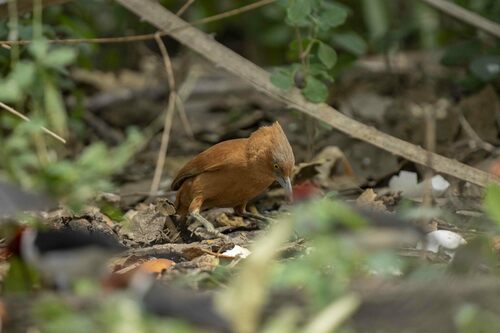
アカエボシカマドドリ (Pseudoseisura unirufa) アカエボシカマドドリ
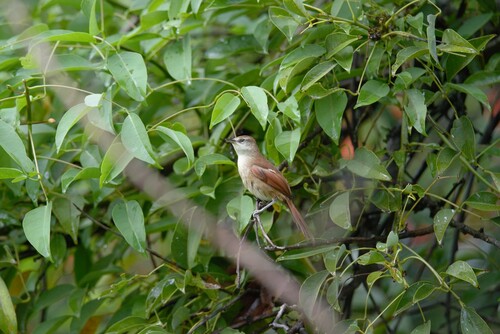
キバシリカマドドリ (Certhiaxis cinnamomeus) キバシリカマドドリ

メディア

読み込み中…

要点

アカエボシカマドドリとキバシリカマドドリを区別する最も信頼できるフィールドマークは、全体の構造とサイズです:アカエボシカマドドリははるかに大きく、ずんぐりしており、目立つ冠を持っていますが、キバシリカマドドリは細長い尾を持つ鳥で、冠はありません。羽色では、アカエボシカマドドリは豊かな、ほぼ均一な赤褐色で、変化のある赤褐色から灰色がかった冠とオレンジがかった喉を持っていますが、キバシリカマドドリは上面が栗色、下面が白っぽく、常に淡い黄色の喉を示します。幼鳥のアカエボシカマドドリは短い冠と均一でない色を持っていますが、いずれにせよキバシリカマドドリよりもずんぐりしています。フィールドでは、生息地と行動も役立ちます:アカエボシカマドドリは乾燥した開けた森林やギャラリー林でよく見られ、キバシリカマドドリは湿地や河川の植生に結びついており、通常は低い場所にいます。鳴き声は異なりますが、構造と喉の色が最も早く確認できるポイントです。

識別のコツ

  1. Size and bulk: アカエボシカマドドリはキバシリカマドドリよりもはるかに大きく、重いです。もし鳥がずんぐりしているか、ツグミサイズに見えるなら、それはアカエボシカマドドリです;もし細くて小さいなら、それはキバシリカマドドリです。これはすべての年齢に当てはまります。
  2. Crest: アカエボシカマドドリは常に目立つ冠を持っています(幼鳥では短くても)、それは赤褐色または灰色がかった色です。キバシリカマドドリは決して冠を持たず、その頭は滑らかに丸みを帯びています。
  3. Throat color: キバシリカマドドリは常に淡い黄色の喉の斑点を示し、白っぽい下面と対照的です。アカエボシカマドドリはオレンジがかった喉を持っていますが、明確な黄色の斑点はなく、下面は白ではなく淡い赤褐色です。
  4. Overall plumage: アカエボシカマドドリは上面と下面が均一に明るい赤褐色で、下面にはわずかな淡さがあります。キバシリカマドドリは上面が栗色、下面が白っぽく、上面と下面の間に明確な対比があります。
  5. Bill structure: アカエボシカマドドリは厚い青灰色から灰色のくちばしを持ち、下顎はより淡い色です;キバシリカマドドリのくちばしは細く、色も目立ちません。
  6. Tail: キバシリカマドドリは長く狭い尾を持ち、しばしば振ったり傾けたりします;アカエボシカマドドリの尾は広く、あまり表現力がありません。
  7. Iris color: アカエボシカマドドリは黄色から淡い黄色の目を持っています;これは微妙ですが、近距離で役立つことがあります。キバシリカマドドリの目の色は特徴的ではありません。
  8. Juvenile marks: 幼いアカエボシカマドドリは短い冠と均一でない色を持っていますが、依然として赤褐色でずんぐりしており、キバシリカマドドリの黄色の喉や細い体型は示しません。
  9. Flight feathers: アカエボシカマドドリは飛翔羽に暗褐色の先端を持っていますが、これはフィールドではほとんど見えません;キバシリカマドドリにはそのようなパターンはありません。
  10. Perched posture: アカエボシカマドドリはしばしば直立して目立つ位置に座り、時にはペアで見られます;キバシリカマドドリはより水平で、低い植生の中を這い回ります。
  11. Habitat: アカエボシカマドドリは開けた森林やギャラリー林を好み、水から離れていることが多いです。キバシリカマドドリはほぼ常に湿地、葦、またはマングローブに関連しており、水の近くにいます。
  12. Nest: アカエボシカマドドリは高い木に大きな枝の巣を作ります;キバシリカマドドリの巣は湿地の植生の中に低い位置にある球状の枝の構造で、垂直の入り口トンネルがあります。
  13. Voice: キバシリカマドドリは鋭い rattling の鳴き声を出します;アカエボシカマドドリの鳴き声はここでは詳しく説明されていないので、まずは構造と羽色を使ってください。
  14. Geographic overlap: 両種はブラジル、パラグアイ、ボリビアで見られることがありますが、生息地の選択は強い手がかりです。
  15. Sexes: 両種は性別的に単形であり、オスとメスは似ているため、識別に性別に頼らないでください。

大きさ

アカエボシカマドドリはキバシリカマドドリ(15 cm、15 g)よりもはるかに大きく、重い(49 g、20–21 cm)です。アカエボシカマドドリは頑丈で大きな頭を持つ鳥で、厚いくちばしと目立つ冠を持ち、ずんぐりとした直立した外観を与えています。キバシリカマドドリは細長く、比例的に長い尾と細いくちばしを持ち、冠はありません。幼鳥のアカエボシカマドドリでさえ、成鳥のキバシリカマドドリよりも明らかにずんぐりしています。

羽色

どちらの種についても年齢特有の上翼や飛行パターンは言及されていないため、区別は全体の色合いと頭/喉の詳細に依存します。成鳥のアカエボシカマドドリは上面と下面が明るい赤褐色で、下面はより淡い色合いを持ち、変化のある冠(赤褐色から灰色がかった)とオレンジがかった喉を持っています。幼鳥は短い冠と均一でない色を持っていますが、依然としてほとんど赤褐色です。キバシリカマドドリは上面が栗色、下面が白っぽく、常に存在する特徴的な淡い黄色の喉の斑点を持っています。その頭は栗色で、決して冠はなく、下面は上面よりもはるかに淡いです。アカエボシカマドドリの虹彩は黄色から淡い黄色、くちばしは青灰色から灰色、脚はオリーブ色から緑がかった灰色です;キバシリカマドドリの細部はフィールドではあまり診断的ではありません。アカエボシカマドドリの飛翔羽には暗褐色の先端がありますが、これは微妙です;キバシリカマドドリにはそのようなパターンはありません。

行動

アカエボシカマドドリは通常、直立して止まっている姿が見られ、しばしばペアで、時には木の中や目立つ止まり木にいることが多く、密な湿地の低い場所にはあまりいません。大きな枝の巣を作るために枝を運んでいる姿が見られることがあります。キバシリカマドドリははるかに活発で落ち着きがなく、通常は葦、湿地、またはマングローブの低い場所で餌を探し、しばしば開けた場所にいますが、高い木の中にはめったにいません。彼らは親しみやすく、騒がしく、しばしば長い尾を振っています。両種は目立ちますが、アカエボシカマドドリの行動はカケスや大型のツグミに似ており、キバシリカマドドリは小さくて活発なウグイスに似ています。

生息環境

アカエボシカマドドリはボリビア、ブラジル、パラグアイの開けた森林、ギャラリー林、乾燥した生息地に見られます。水に結びついておらず、湿地を避けます。キバシリカマドドリは南アメリカの多くの地域、特にブラジル、アルゼンチン、ウルグアイ、トリニダードの湿地、河川の端、マングローブの湿地に強く関連しています。もし鳥が密な湿地の植生やマングローブの中にいる場合、特に低い位置にいるなら、ほぼ確実にキバシリカマドドリです。もし乾燥した森林の中にいるか、特に水から離れた高い木に止まっているなら、アカエボシカマドドリの可能性がはるかに高いです。

声

両種は騒がしいですが、鳴き声は異なります:キバシリカマドドリは鋭い rattling の鳴き声を出し、アカエボシカマドドリの声はここでは詳しく説明されていません。フィールドでは、構造と羽色が声よりも信頼性が高く、これら二つを区別するためには、鳴き声がよく知られている場合を除きます。

より良い説明を送る

比較と同じ項目を使ってください。文章はすぐに公開されます。

The most reliable field mark to separate Rufous Cacholote from Yellow-chinned Spinetail is overall structure and size: the cacholote is much larger, bulkier, and sports a prominent crest, while the spinetail is a slender, long-tailed bird with no crest. In plumage, the cacholote is a rich, mostly uniform rufous with a variable rufous-to-grayish crest and an orange-tinged throat, while the spinetail is chestnut above, whitish below, and always shows a pale yellow throat. Juvenile cacholotes have a shorter crest and less uniform color but remain bulkier than any spinetail. In the field, habitat and behavior also help: cacholotes are often seen in drier open woodlands or gallery forests, while spinetails are tied to marshes and riverside vegetation, usually low in the open. Calls differ, but structure and throat color are the fastest checks.

  1. Size and bulk: Rufous Cacholote is much larger and heavier than Yellow-chinned Spinetail. If the bird looks chunky or thrush-sized, it's a cacholote; if it's slim and small, it's a spinetail. This holds for all ages.
  2. Crest: Cacholote always has a prominent crest (even if shorter in juveniles), which can be rufous or grayish. Spinetail never has a crest—its head is smoothly rounded.
  3. Throat color: Spinetail always shows a pale yellow throat patch, contrasting with whitish underparts. Cacholote has an orange-tinged throat but not a discrete yellow patch; its underparts are paler rufous, not white.
  4. Overall plumage: Cacholote is uniformly bright reddish-rufous above and below, with only slight paleness on the underparts. Spinetail is chestnut above and whitish below, with a clear contrast between upper- and underparts.
  5. Bill structure: Cacholote has a thick, blue-gray to gray bill with a paler mandible; spinetail's bill is slender and less conspicuous in color.
  6. Tail: Spinetail has a long, narrow tail often flicked or cocked; cacholote's tail is broad and less expressive.
  7. Iris color: Cacholote has yellow to buff-yellow eyes; this is subtle but can help at close range. Spinetail's eye color is not distinctive.
  8. Juvenile marks: Young cacholotes have a shorter crest and less uniform color but remain rufous and bulky, never showing the spinetail's yellow throat or slim build.
  9. Flight feathers: Cacholote has fuscous tips to flight feathers, but this is rarely visible in the field; spinetail lacks any such pattern.
  10. Perched posture: Cacholote often sits upright and prominent, sometimes in pairs; spinetail is more horizontal, creeping through low vegetation.
  11. Habitat: Cacholote prefers open woodland or gallery forest, often away from water. Spinetail is almost always in marshes, reeds, or mangroves, close to water.
  12. Nest: Cacholote builds a large stick nest high in trees; spinetail's nest is a spherical stick structure low in marsh vegetation, with a vertical entrance tunnel.
  13. Voice: Spinetail gives a shrill rattling call; cacholote's call is not described here, so use structure and plumage first.
  14. Geographic overlap: Both species can occur in Brazil, Paraguay, and Bolivia, but habitat choice is a strong clue.
  15. Sexes: Both species are sexually monomorphic—males and females look alike, so do not rely on sex for ID.

Rufous Cacholote is much larger and heavier (49 g, 20–21 cm) than Yellow-chinned Spinetail (15 cm, 15 g). The cacholote is a robust, big-headed bird with a thick bill and a prominent crest, giving it a chunky, upright look. The spinetail is slender, with a proportionally long tail and slim bill, lacking any crest. Even juvenile cacholotes are noticeably bulkier than adult spinetails.

No age-specific upperwing or flight pattern is mentioned for either species, so separation relies on overall coloration and head/throat details. Adult Rufous Cacholote is bright reddish-rufous above and below, paler on the underparts, with a variable crest (rufous to grayish) and an orange-tinged throat. Juveniles have a shorter crest and less even color but are still mostly rufous. Yellow-chinned Spinetail is chestnut brown above, whitish below, with a distinctive pale yellow throat patch that is always present. Its head is chestnut, never crested, and the underparts are much paler than the upperparts. The cacholote's iris is yellow to buff-yellow, bill blue-gray to gray, and legs olive to greenish gray; the spinetail's finer details are less diagnostic in the field. The cacholote's flight feathers have fuscous tips, but this is subtle; the spinetail lacks any such pattern.

Rufous Cacholote is typically seen perched upright, often in pairs, sometimes in the open in trees or on prominent perches, and is less likely to be low in dense marsh vegetation. It may be seen carrying sticks for its large, stick-built nest placed several meters above ground. Yellow-chinned Spinetail is much more active and restless, usually foraging low in reeds, marshes, or mangroves, often in the open but rarely high in trees. It is confiding and noisy, often flicking its long tail. Both species are conspicuous, but the cacholote's behavior is more reminiscent of a jay or large thrush, while the spinetail is more like a small, hyperactive wren.

Rufous Cacholote is found in open woodlands, gallery forests, and drier habitats in Bolivia, Brazil, and Paraguay. It is not tied to water and avoids marshes. Yellow-chinned Spinetail is strongly associated with marshes, river edges, and mangrove swamps across much of South America, including Brazil, Argentina, Uruguay, and Trinidad. If the bird is in dense marsh vegetation or mangroves, especially low down, it is almost certainly a spinetail. If it is in drier woodland or perched high in a tree, especially away from water, cacholote is far more likely.

Both species are noisy, but their calls differ: the spinetail gives a shrill rattling call, while the cacholote's voice is not described in detail here. In the field, structure and plumage are more reliable than voice for separating these two, unless the call is well known.

変更を破棄しますか?

保存していない編集があります。今離れると失われます。

アカエボシカマドドリ · キバシリカマドドリ · 苦手な鳥