

Motmot

エリマキライチョウ 対 アオライチョウ

Bonasa umbellus 対 Dendragapus obscurus

エリマキライチョウとアオライチョウのクイズ
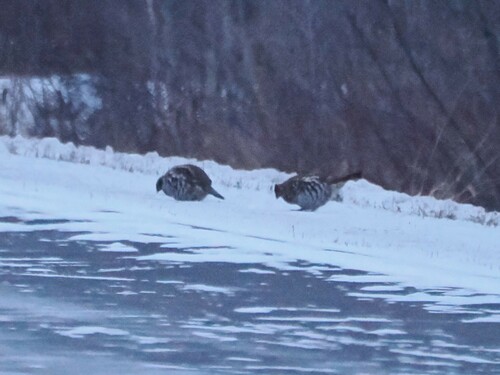
エリマキライチョウ (Bonasa umbellus) エリマキライチョウ
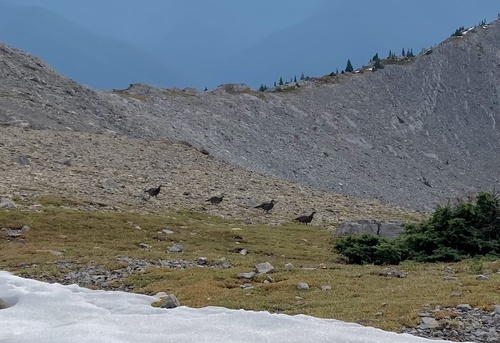
アオライチョウ (Dendragapus obscurus) アオライチョウ

メディア

読み込み中…

要点

The most reliable field mark to separate Ruffed Grouse from Dusky Grouse is the tail pattern: Ruffed Grouse shows a broad black subterminal band near the tip of the tail, while Dusky Grouse has a long, square tail with a solid gray tip. Ruffed Grouse are smaller and chunkier, with a short, rounded tail and a bushy crest, whereas Dusky Grouse are larger, longer-tailed, and lack the prominent crest. Both species can be brown overall, but Ruffed Grouse often appear more variegated and can show a striking gray or brown morph, while Dusky Grouse females are more uniformly mottled. In flight or when flushed, Ruffed Grouse explode noisily from cover, while Dusky Grouse are more likely to flush quietly or walk away. Habitat is also a strong clue: Ruffed Grouse favor dense deciduous or mixed forests, while Dusky Grouse are found in open coniferous woods and mountain slopes.

識別のコツ

  1. Tail pattern is key: Ruffed Grouse shows a broad, black subterminal tail band (sometimes broken in females), while Dusky Grouse has a long, square tail with a solid gray tip and no black band. This is the most reliable field mark in all seasons and ages.
  2. Size and shape: Dusky Grouse are much larger and heavier (up to twice the mass of Ruffed Grouse), with a longer, squarer tail and a bulkier build. Ruffed Grouse are compact, round-bodied, and short-tailed.
  3. Crest and ruffs: Ruffed Grouse have a bushy crest on the head and prominent neck ruffs (especially in display), present in both sexes. Dusky Grouse lack both crest and ruffs.
  4. Plumage morphs: Ruffed Grouse can be gray or brown morphs, often with a variegated, barred look and a lighter throat and belly. Dusky Grouse females are more uniformly mottled brown with dark and white marks below; males are darker and may show a purplish throat sac and white surround in display.
  5. Flight behavior: Ruffed Grouse explode noisily from cover when flushed, with a loud whirring of wings. Dusky Grouse are more likely to flush quietly or walk away.
  6. Drumming display: Only Ruffed Grouse drum, producing a low, accelerating thump by beating their wings on a log or mound. Dusky Grouse do not drum.
  7. Habitat: Ruffed Grouse prefer dense, brushy deciduous or mixed forests; Dusky Grouse are found in open coniferous forests and mountain slopes.
  8. Sex differences: Both sexes of Ruffed Grouse are similarly marked and sized, but males tend to have unbroken tail bands. Dusky Grouse males are larger and darker, but sex differences are more pronounced in display.
  9. Bill and head: Ruffed Grouse have a proportionally smaller bill and rounder head with a crest; Dusky Grouse have a larger bill and flatter crown.
  10. Underparts: Ruffed Grouse usually show more white or pale barring on the belly and flanks, especially in gray morphs; Dusky Grouse females are more evenly mottled below.
  11. Tail shape in flight: Ruffed Grouse show a short, rounded tail with a black band; Dusky Grouse show a long, square tail with a gray tip.
  12. Rump feather spots (in hand): Ruffed Grouse females have single white dots on rump feathers, males have multiple; not visible in the field but may help if handling birds.
  13. Seasonal context: Ruffed Grouse may be seen burrowing into snow in winter; Dusky Grouse are more often seen in open woods or perched in trees.
  14. Voice: If you hear drumming, it's Ruffed Grouse; Dusky Grouse are generally silent or give soft hoots/booms not easily heard.
  15. Range overlap: If you're in the Rockies in open conifers, expect Dusky Grouse; in the Great Lakes, Appalachians, or northern mixed woods, expect Ruffed Grouse.

大きさ

Dusky Grouse is significantly larger than Ruffed Grouse. Dusky Grouse average about 1056 g in body mass [wikidata], with males reaching up to 1.21 kg (2.67 lbs), compared to Ruffed Grouse, which weigh 450–750 g (0.99–1.65 lbs) [wikipedia]. Dusky Grouse also have a longer, squarer tail and a generally bulkier, longer-bodied appearance. Ruffed Grouse are more compact, with shorter wings and tail, and appear rounder overall.

羽色

Tail pattern is the best plumage separator for all ages and sexes: Ruffed Grouse shows a broad, black subterminal band near the tip of the tail, with the rest of the tail barred brownish-gray or brown, and the band may be broken in females. Dusky Grouse has a long, square tail with a solid gray tip, lacking the bold black band. Ruffed Grouse comes in gray and brown morphs, both with a variegated, barred look and a lighter throat and belly, while Dusky Grouse females are more uniformly mottled brown with dark and white marks below. Male Dusky Grouse are much darker overall, especially in display, with a purplish throat air sac and white surround, but these are rarely visible except during courtship. Ruffed Grouse of both sexes have a bushy crest and neck ruffs, which Dusky Grouse lack. Juvenile and immature upperwing patterns are not described as diagnostic for either species in the sources.

行動

Ruffed Grouse are famous for their explosive, noisy flush when startled, often bursting from cover with a loud whir of wings. They spend much time on the ground and may burrow into snow in winter. Dusky Grouse are more likely to walk away or flush quietly, and are less likely to startle observers with a sudden burst. Ruffed Grouse males display by drumming their wings on a log or elevated perch, producing a low, accelerating thump. Dusky Grouse males display with visual cues (inflated throat sacs, eye wattles) and do not drum. Both species are largely terrestrial but Ruffed Grouse are more secretive and cryptic in dense cover.

生息環境

Ruffed Grouse are found in dense deciduous or mixed forests, especially with aspen, birch, or alder, and are widespread across northern North America, including the Appalachians, Great Lakes, and Canada. Dusky Grouse inhabit open coniferous forests and mountain slopes of the Rocky Mountains, often at higher elevations and in more open, drier woods. If you see a grouse in thick, brushy lowland woods, it's likely a Ruffed Grouse; in open pine or fir forests on a mountainside, it's more likely Dusky Grouse.

声

Ruffed Grouse are unique among North American grouse for their nonvocal drumming display: a series of accelerating wingbeats that create a deep, thumping sound, often heard in spring from a distance. Dusky Grouse do not drum; their displays are visual and may include soft hoots or booming sounds, but these are rarely heard by casual observers. If you hear drumming, it's a Ruffed Grouse.

より良い説明を送る

比較と同じ項目を使ってください。文章はすぐに公開されます。

The most reliable field mark to separate Ruffed Grouse from Dusky Grouse is the tail pattern: Ruffed Grouse shows a broad black subterminal band near the tip of the tail, while Dusky Grouse has a long, square tail with a solid gray tip. Ruffed Grouse are smaller and chunkier, with a short, rounded tail and a bushy crest, whereas Dusky Grouse are larger, longer-tailed, and lack the prominent crest. Both species can be brown overall, but Ruffed Grouse often appear more variegated and can show a striking gray or brown morph, while Dusky Grouse females are more uniformly mottled. In flight or when flushed, Ruffed Grouse explode noisily from cover, while Dusky Grouse are more likely to flush quietly or walk away. Habitat is also a strong clue: Ruffed Grouse favor dense deciduous or mixed forests, while Dusky Grouse are found in open coniferous woods and mountain slopes.

  1. Tail pattern is key: Ruffed Grouse shows a broad, black subterminal tail band (sometimes broken in females), while Dusky Grouse has a long, square tail with a solid gray tip and no black band. This is the most reliable field mark in all seasons and ages.
  2. Size and shape: Dusky Grouse are much larger and heavier (up to twice the mass of Ruffed Grouse), with a longer, squarer tail and a bulkier build. Ruffed Grouse are compact, round-bodied, and short-tailed.
  3. Crest and ruffs: Ruffed Grouse have a bushy crest on the head and prominent neck ruffs (especially in display), present in both sexes. Dusky Grouse lack both crest and ruffs.
  4. Plumage morphs: Ruffed Grouse can be gray or brown morphs, often with a variegated, barred look and a lighter throat and belly. Dusky Grouse females are more uniformly mottled brown with dark and white marks below; males are darker and may show a purplish throat sac and white surround in display.
  5. Flight behavior: Ruffed Grouse explode noisily from cover when flushed, with a loud whirring of wings. Dusky Grouse are more likely to flush quietly or walk away.
  6. Drumming display: Only Ruffed Grouse drum, producing a low, accelerating thump by beating their wings on a log or mound. Dusky Grouse do not drum.
  7. Habitat: Ruffed Grouse prefer dense, brushy deciduous or mixed forests; Dusky Grouse are found in open coniferous forests and mountain slopes.
  8. Sex differences: Both sexes of Ruffed Grouse are similarly marked and sized, but males tend to have unbroken tail bands. Dusky Grouse males are larger and darker, but sex differences are more pronounced in display.
  9. Bill and head: Ruffed Grouse have a proportionally smaller bill and rounder head with a crest; Dusky Grouse have a larger bill and flatter crown.
  10. Underparts: Ruffed Grouse usually show more white or pale barring on the belly and flanks, especially in gray morphs; Dusky Grouse females are more evenly mottled below.
  11. Tail shape in flight: Ruffed Grouse show a short, rounded tail with a black band; Dusky Grouse show a long, square tail with a gray tip.
  12. Rump feather spots (in hand): Ruffed Grouse females have single white dots on rump feathers, males have multiple; not visible in the field but may help if handling birds.
  13. Seasonal context: Ruffed Grouse may be seen burrowing into snow in winter; Dusky Grouse are more often seen in open woods or perched in trees.
  14. Voice: If you hear drumming, it's Ruffed Grouse; Dusky Grouse are generally silent or give soft hoots/booms not easily heard.
  15. Range overlap: If you're in the Rockies in open conifers, expect Dusky Grouse; in the Great Lakes, Appalachians, or northern mixed woods, expect Ruffed Grouse.

Dusky Grouse is significantly larger than Ruffed Grouse. Dusky Grouse average about 1056 g in body mass [wikidata], with males reaching up to 1.21 kg (2.67 lbs), compared to Ruffed Grouse, which weigh 450–750 g (0.99–1.65 lbs) [wikipedia]. Dusky Grouse also have a longer, squarer tail and a generally bulkier, longer-bodied appearance. Ruffed Grouse are more compact, with shorter wings and tail, and appear rounder overall.

Tail pattern is the best plumage separator for all ages and sexes: Ruffed Grouse shows a broad, black subterminal band near the tip of the tail, with the rest of the tail barred brownish-gray or brown, and the band may be broken in females. Dusky Grouse has a long, square tail with a solid gray tip, lacking the bold black band. Ruffed Grouse comes in gray and brown morphs, both with a variegated, barred look and a lighter throat and belly, while Dusky Grouse females are more uniformly mottled brown with dark and white marks below. Male Dusky Grouse are much darker overall, especially in display, with a purplish throat air sac and white surround, but these are rarely visible except during courtship. Ruffed Grouse of both sexes have a bushy crest and neck ruffs, which Dusky Grouse lack. Juvenile and immature upperwing patterns are not described as diagnostic for either species in the sources.

Ruffed Grouse are famous for their explosive, noisy flush when startled, often bursting from cover with a loud whir of wings. They spend much time on the ground and may burrow into snow in winter. Dusky Grouse are more likely to walk away or flush quietly, and are less likely to startle observers with a sudden burst. Ruffed Grouse males display by drumming their wings on a log or elevated perch, producing a low, accelerating thump. Dusky Grouse males display with visual cues (inflated throat sacs, eye wattles) and do not drum. Both species are largely terrestrial but Ruffed Grouse are more secretive and cryptic in dense cover.

Ruffed Grouse are found in dense deciduous or mixed forests, especially with aspen, birch, or alder, and are widespread across northern North America, including the Appalachians, Great Lakes, and Canada. Dusky Grouse inhabit open coniferous forests and mountain slopes of the Rocky Mountains, often at higher elevations and in more open, drier woods. If you see a grouse in thick, brushy lowland woods, it's likely a Ruffed Grouse; in open pine or fir forests on a mountainside, it's more likely Dusky Grouse.

Ruffed Grouse are unique among North American grouse for their nonvocal drumming display: a series of accelerating wingbeats that create a deep, thumping sound, often heard in spring from a distance. Dusky Grouse do not drum; their displays are visual and may include soft hoots or booming sounds, but these are rarely heard by casual observers. If you hear drumming, it's a Ruffed Grouse.

変更を破棄しますか?

保存していない編集があります。今離れると失われます。

エリマキライチョウ · アオライチョウ · 苦手な鳥