

Motmot

アカツクシガモ 対 トモエガモ

Tadorna ferruginea 対 Sibirionetta formosa

アカツクシガモとトモエガモのクイズ
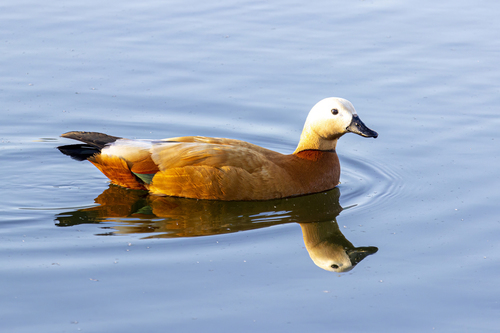
アカツクシガモ (Tadorna ferruginea) アカツクシガモ
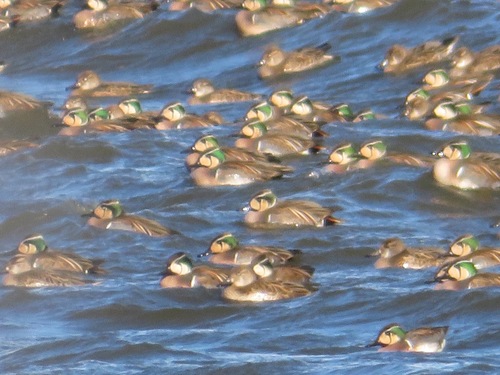
トモエガモ (Sibirionetta formosa) トモエガモ

メディア

読み込み中…

要点

アカツクシガモとトモエガモを区別する最も信頼できる方法は、サイズと全体的な構造です:アカツクシガモははるかに大きく、頑丈でガチョウのような体型と目を引くオレンジ茶色の羽毛を持っていますが、トモエガモは小さく、コンパクトな水面で餌を探すカモで、複雑な顔と体の模様があります。飛んでいるとき、アカツクシガモは黒い飛行羽と対照的な広い白い翼覆いを示し、この特徴はすべての年齢で見られますが、特に成鳥では際立っています。トモエガモは、幼鳥や日食羽毛の状態でも、このような大胆な白い翼のパネルを示すことはなく、代わりに緑のスペキュラムとより微妙な下翼のコントラストを持つ、より典型的なカモのような翼を持っています。止まっているのが見られた場合、アカツクシガモの淡い頭とオレンジの体は、トモエガモの模様のある顔と小さく、より繊細な体型に対して際立っています。

識別のコツ

  1. Size is the first check: アカツクシガモはトモエガモのほぼ2倍の長さと質量を持っています。もしその鳥がガチョウのサイズに見えるか、近くのカモよりも高くそびえているなら、それはアカツクシガモです。
  2. Wing pattern in flight (all ages): アカツクシガモの広く明るい白い上翼覆いを探してください。これは黒い飛行羽と尾と鋭く対照的です。トモエガモはこれを示すことはありません;その上翼はより控えめで、緑のスペキュラムがあり、大きな白いパネルはありません。
  3. Body shape and posture: アカツクシガモは長い首を持ち、直立しており、重い体をしています。しばしば陸上で高く立っています。トモエガモはコンパクトで、短い首を持ち、水面に低く座っています。
  4. Head and face pattern: アカツクシガモは、模様がほとんどない淡いオレンジまたは白っぽい頭を持っています(雌はより淡い)。トモエガモ(雌/幼鳥)は、くちばしの基部に特徴的な白い斑点、目に向かう白い喉のストライプ、そして淡い眉を示し、暗い冠を持っています—アカツクシガモの平坦な顔とは非常に異なります。
  5. Adult male トモエガモ: 完全な繁殖羽毛の状態では、雄のトモエガモは緑の後頭部、黄色と黒の顔、そして大胆な顔の模様を持っており、アカツクシガモの平坦な頭と混同することはありません。
  6. Adult male アカツクシガモ: 狭い黒い襟を示し(日食の時を除く)、トモエガモには決して存在しません。
  7. Female/juvenile confusion: もしその鳥が全体的にオレンジ茶色で、淡い、ほぼ白っぽい頭を持っているなら、それは雌または幼鳥のアカツクシガモです。もしそれが模様のある顔と白い喉を持つまだら茶色なら、それはトモエガモです。
  8. Bill and leg color: アカツクシガモは黒いくちばしと暗い灰色の足を持っています;トモエガモのくちばしは暗いですが、より頑丈ではなく、足はそれほど目立ちません。
  9. Tail length: トモエガモは他のカモと比較してサイズに対して比較的長い尾を持っていますが、それでもアカツクシガモの比率的に広い尾よりはずっと短いです。
  10. Behavior on land: アカツクシガモは水から遠く離れて歩いているのが見られることがあり、乾燥した場所に巣を作ることもあります;トモエガモはほぼ常に水の近くにいます。
  11. Vocalization: 大きく鼻にかかったホンク音が聞こえたら、それはアカツクシガモです。トモエガモの鳴き声はより柔らかく、響きが少ないです。
  12. Habitat context: 開けた乾燥した高地の環境、特に水から離れた場所では、アカツクシガモを疑ってください。浅い湿地に密集した群れでは、トモエガモの方が可能性が高いです。
  13. Seasonal variation: 雄のアカツクシガモは繁殖後に黒い襟を失いますが、部分的な換羽で再び得ます;日食中のトモエガモの雄は雌に似て見えますが、より豊かな赤褐色で、決してオレンジ茶色にはなりません。
  14. Juvenile confusion: 幼鳥のアカツクシガモは成鳥の雌の暗い茶色のバージョンで、顔の模様はまだありません。幼鳥のトモエガモは雌に似ていますが、淡いロラルスポットと同じ顔の模様を持っています。
  15. Pitfalls: 距離と悪い光はトモエガモをより暖かくまたは大きく見せることがありますが、大胆な白い翼のパネルと模様のある顔が重要です。逆に、遠くのアカツクシガモは平坦な顔でオレンジに見えるかもしれません—決してトモエガモのように模様がありません。

大きさ

アカツクシガモはかなり大きく、長さ58〜70 cm、翼幅110〜135 cm、平均質量1230 gです [wikipedia][wikidata]。トモエガモははるかに小さく、長さ39〜43 cm、体重約500 gです [wikipedia]。アカツクシガモはほぼガチョウのサイズに見えますが、トモエガモは典型的なカモよりわずかに大きいだけです。このサイズの差は、両者が一緒に見られたり、他の水鳥とスケールを比較したりすると明らかです。

羽色

行動

アカツクシガモはしばしば高く立ち、ガチョウのような歩き方で陸上を歩き、水から遠く離れていることがあり、隙間や木の中に巣を作ることもあります。トモエガモは典型的な水面で餌を探すカモのように振る舞い、水面で餌を食べたり、ひっくり返ったりし、ほとんど水から遠く離れているのは見られません。飛行中、アカツクシガモは重く直接的に見え、広い翼と遅い羽ばたきを持っていますが、トモエガモは敏捷で素早く、小さなカモに典型的な速い羽ばたきを持っています。

生息環境

両種は湿地を利用しますが、アカツクシガモはより大きく開けた内陸の水域—湖、貯水池、川—を好み、時には水から遠く離れた乾燥したまたはより開けた国に見られます。トモエガモは湿地、浅い湖、洪水の草地により制限されており、ほとんど水から遠く離れることはありません。冬には、トモエガモは東アジアの湿地に大群で群れを成し、アカツクシガモはインド亜大陸を含むより広範囲で冬を越します。

声

アカツクシガモは、地上でも飛行中でも大きく鼻にかかったホンク音を出し、雄と雌の声にはいくつかの違いがあります。トモエガモは「スクワークダック」として知られていますが、音は詳細な説明を提供していません;一般的に、カモの鳴き声はアカツクシガモのホンクよりも柔らかく高音です。

より良い説明を送る

比較と同じ項目を使ってください。文章はすぐに公開されます。

The most reliable way to separate Ruddy Shelduck from Baikal Teal is by size and overall structure: Ruddy Shelduck is much larger, with a robust, goose-like build and striking orange-brown plumage, while Baikal Teal is a small, compact dabbling duck with intricate facial and body patterns. In flight, Ruddy Shelduck shows broad white wing-coverts contrasting with black flight feathers, a feature visible in all ages but especially striking in adults. Baikal Teal, even in juvenile or eclipse plumage, never shows such bold white wing panels; instead, it has a more typical teal-like wing with a green speculum and subtler underwing contrasts. If seen perched, the shelduck's pale head and orange body stand out against the teal's patterned face and smaller, more delicate frame.

  1. Size is the first check: Ruddy Shelduck is nearly twice the length and mass of Baikal Teal. If the bird looks goose-sized or towers over nearby ducks, it's a shelduck.
  2. Wing pattern in flight (all ages): Look for the broad, bright white upperwing-coverts of Ruddy Shelduck, sharply contrasting with black flight feathers and tail. Baikal Teal never shows this; its upperwing is more muted, with a green speculum and no large white panel.
  3. Body shape and posture: Ruddy Shelduck is long-necked, upright, and heavy-bodied, often standing tall on land. Baikal Teal is compact, short-necked, and sits low on the water.
  4. Head and face pattern: Ruddy Shelduck has a plain, pale orange or whitish head (female paler), with little pattern. Baikal Teal (female/juvenile) shows a distinctive white spot at the bill base, a white throat stripe to the eye, and a pale eyebrow, with a darker crown—very different from the shelduck's plain face.
  5. Adult male Baikal Teal: In full breeding plumage, the male Baikal Teal is unmistakable with a green nape, yellow and black face, and bold facial pattern. No confusion with the plain-headed shelduck.
  6. Adult male Ruddy Shelduck: Shows a narrow black collar (except in eclipse), never present on Baikal Teal.
  7. Female/juvenile confusion: If the bird is orange-brown overall with a pale, almost whitish head, it's a female or juvenile Ruddy Shelduck. If it's mottled brown with a patterned face and white throat, it's a Baikal Teal.
  8. Bill and leg color: Ruddy Shelduck has a black bill and dark grey legs; Baikal Teal's bill is dark but less robust, and legs are not as prominent.
  9. Tail length: Baikal Teal has a relatively longer tail for its size compared to other teals, but still much shorter than the shelduck's proportionally broad tail.
  10. Behavior on land: Ruddy Shelduck may be seen walking far from water, even nesting in dry places; Baikal Teal is almost always near water.
  11. Vocalization: If you hear loud, nasal honks, it's Ruddy Shelduck. Baikal Teal's calls are softer and less resonant.
  12. Habitat context: In open, dry, or upland settings, especially away from water, suspect Ruddy Shelduck. In dense flocks on shallow marshes, Baikal Teal is more likely.
  13. Seasonal variation: Male Ruddy Shelduck loses the black collar after breeding but regains it in a partial moult; Baikal Teal males in eclipse look more like females but are richer rufous, never orange-brown.
  14. Juvenile confusion: Juvenile Ruddy Shelduck is a darker brown version of the adult female, still lacking any facial pattern. Juvenile Baikal Teal resembles the female but has a pale loral spot and the same facial markings.
  15. Pitfalls: Distance and poor light can make Baikal Teal look warmer or larger, but the lack of a bold white wing panel and the patterned face are key. Conversely, a distant Ruddy Shelduck may seem plain-faced and orange—never patterned like a Baikal Teal.

Ruddy Shelduck is substantially larger, measuring 58–70 cm in length with a wingspan of 110–135 cm and an average mass of 1230 g [wikipedia][wikidata]. Baikal Teal is much smaller, at 39–43 cm in length and about 500 g in weight [wikipedia]. The shelduck appears almost goose-sized, while Baikal Teal is only slightly larger than a typical teal. This size gap is obvious when both are seen together or with other waterfowl for scale.

  • Juvenile and non-breeding birds in flight: Ruddy Shelduck of all ages shows broad, bright white upperwing-coverts sharply set off by black flight feathers and tail; this white is especially obvious in flight and is diagnostic. Juvenile Baikal Teal, like the adult female, lacks any such bold white panel and instead shows a green speculum with a cinnamon-cream border and a darker leading edge to the underwing.
  • Adult males (breeding): Ruddy Shelduck males have a uniform orange-brown body, paler head, and a narrow black neck collar (lost in eclipse). Baikal Teal males are unmistakable with a green nape, yellow and black face, dark crown, and spotted breast with grey flanks and white bars.
  • Females and juveniles: Female Ruddy Shelduck is orange-brown with a paler, almost whitish head and no collar; female Baikal Teal is mottled brown, with a distinct white spot at the bill base, a white throat extending to the eye, and a pale eyebrow bordered by a darker crown. Juvenile Baikal Teal closely resembles the female but with a pale loral spot.
  • Eclipse males: Baikal Teal males in eclipse resemble females but are richer rufous overall, never orange-brown like shelduck.

Ruddy Shelduck often stands tall, walks on land with a goose-like gait, and may be found well away from water, even nesting in crevices or trees. Baikal Teal behaves like a typical dabbling duck, feeding on the water surface or tipping up, and is rarely seen far from water. In flight, Ruddy Shelduck appears heavy and direct, with broad wings and slow wingbeats, while Baikal Teal is agile and quick, with rapid wingbeats typical of small ducks.

Both species use wetlands, but Ruddy Shelduck favors larger, open inland waterbodies—lakes, reservoirs, and rivers—and can be found in drier or more open country, sometimes far from water. Baikal Teal is more restricted to marshes, shallow lakes, and flooded grassland, rarely venturing far from water. In winter, Baikal Teal flocks in large numbers on East Asian wetlands, while Ruddy Shelduck winters more widely, including in the Indian subcontinent.

Ruddy Shelduck gives loud, nasal honking calls, both on the ground and in flight, with some difference between male and female voices. Baikal Teal is known as the "squawk duck" but the notes do not provide a detailed description; in general, teal calls are softer and higher-pitched than the shelduck's honks.

変更を破棄しますか?

保存していない編集があります。今離れると失われます。

アカツクシガモ · トモエガモ · 苦手な鳥