

バライロムクドリ 対 シベリアムクドリ
Pastor roseus 対 Agropsar sturninus
バライロムクドリとシベリアムクドリのクイズ
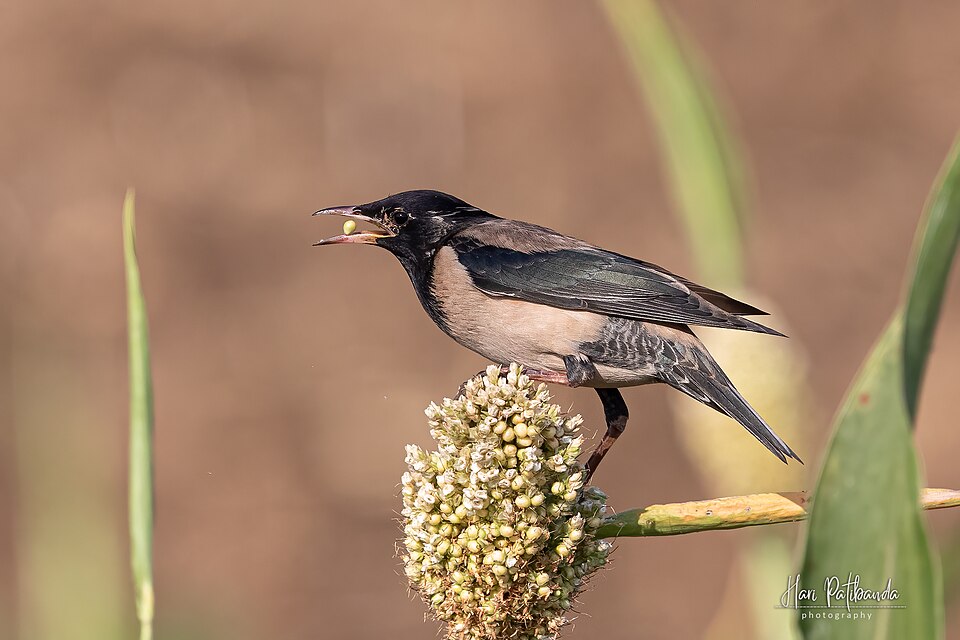 バライロムクドリ
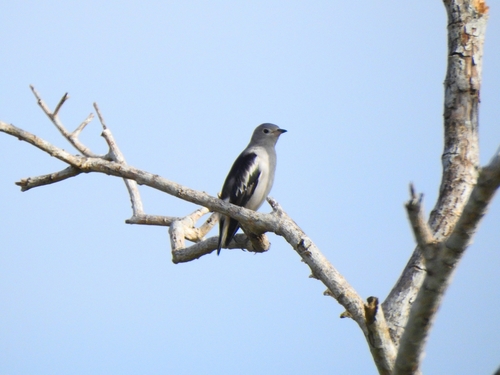 シベリアムクドリ
要点
The most reliable field mark to separate Rose-coloured Starling from Daurian Starling is the adult's striking pink body and glossy black wings, head, and tail, especially in breeding plumage. Juvenile Rose-coloured Starlings are pale buff-brown overall with a short yellow bill, while Daurian Starling lacks this coloration and instead shows a dark mantle and crown with narrow wing bars. Crest presence in adults (especially males) is another key difference: Rose-coloured Starling males have a wispy crest, while Daurian Starling does not. Both species can be found in open country, but their ranges overlap only in parts of Central Asia, and their preferred habitats differ. In mixed or immature flocks, focus on overall paleness and bill color for Rose-coloured Starling versus the darker, more patterned Daurian.
識別のコツ
- Juvenile coloration: Juvenile Rose-coloured Starlings are pale buffy-brown with a short yellow bill, much paler than Daurian Starling juveniles, which show a darker mantle and crown and narrow wing bars. Use this mark for birds seen in late summer and autumn.
- Adult breeding plumage: Adult Rose-coloured Starling is unmistakable with a pink body and glossy black wings, head, and tail. Daurian Starling never shows pink or a crest.
- Crest: Male Rose-coloured Starlings have a wispy crest in the breeding season, which is fluffed when excited. Daurian Starling always lacks a crest. Females have a shorter crest, but it is still visible.
- Bill color: In breeding Rose-coloured Starling, the bill is black at the base with a bright pink tip; in winter, it turns grey. Juveniles have a short yellow bill. Daurian Starling does not show this combination.
- Wing bars: Daurian Starling shows narrow wing bars in all plumages, a feature never present in Rose-coloured Starling.
- Mantle and crown: Daurian Starling has a dark mantle and crown, contrasting with paler underparts. Rose-coloured Starling, even in winter or immature plumage, lacks this dark upper coloration.
- Sex differences: Female Rose-coloured Starlings are less sharply marked than males but still show a pinkish body and some crest, unlike any Daurian Starling.
- Seasonal timing: Juvenile Rose-coloured Starlings molt into a duller adult-like plumage in late autumn, about 2–3 months later than juvenile Common Starlings; Daurian Starling does not have this delayed molt timing.
- Flock structure: Large, dense flocks in open agricultural land in Central Asia or India in winter are likely Rose-coloured Starlings, especially if pink tones or crests are visible.
- Habitat context: If seen in the eastern Palearctic (eastern Mongolia, northeast China, Korea), Daurian Starling is more likely; in Central Asia or India, Rose-coloured Starling is more likely, especially in open steppe or farmland.
- Irruptive behavior: Large numbers appearing suddenly outside the normal range (e.g., western Europe) are almost always Rose-coloured Starling.
- Bill shape and structure: Both species have typical starling bills, but the color differences are more reliable than shape.
- Flight jizz: No specific difference is noted, but Rose-coloured Starling may appear paler and more uniform in flight, especially as a juvenile or non-breeding adult.
- Voice: Both species have starling-like calls; do not rely on voice alone for separation.
- Pitfalls: Beware of dull or worn non-breeding Rose-coloured Starlings, which can appear less pink and less crested, but will still lack Daurian's dark mantle and wing bars.
大きさ
Rose-coloured Starling is about the same size as a Common Starling, with a body mass around 73 g [wikidata]. No direct measurement is available for Daurian Starling, but both are medium-sized starlings and likely similar in size. Structural differences are subtle and not a primary field mark between these two species.
羽色
-
Juveniles/Immatures: Juvenile Rose-coloured Starlings are pale buffy-brown with a short yellow bill, lacking any dark mantle or wing bars. They are much paler than Daurian Starling juveniles, which have a darker mantle and crown and show narrow wing bars. Rose-coloured Starling juveniles also molt into a subdued, duller version of adult plumage in late autumn, still lacking a crest, and remain paler overall compared to Daurian.
-
Adult Breeding: Adult Rose-coloured Starling is unmistakable with a pink body and glossy black head, wings, and tail. Males have a prominent wispy crest, especially when excited. Daurian Starling adults lack pink and crest, instead showing a dark mantle and crown with narrow wing bars.
-
Adult Non-breeding/Winter: Rose-coloured Starling becomes duller greyish-pink, with a shorter crest and paler feather edges. The bill turns grey. Daurian Starling remains darker above with the same wing bars and lacks any pink or crest.
-
Sex Differences: Female Rose-coloured Starlings have a shorter crest and less sharp color separation, but still show a pinkish body, unlike Daurian Starling.
行動
Rose-coloured Starling is highly gregarious and forms large flocks, especially outside the breeding season. It is a colonial breeder and often seen in open steppe or agricultural land, sometimes in irruptive numbers. Daurian Starling is also social but is not noted for the same level of coloniality or massive irruptions. Both species feed on insects and fruit, but Rose-coloured Starling is particularly known for feeding on locusts and grasshoppers in summer.
生息環境
Rose-coloured Starling breeds in steppes, semi-deserts, and open agricultural land from Central Asia to Southeast Europe, wintering in India. It can irrupt westward in years of high insect abundance. Daurian Starling is found further east, from eastern Mongolia and southeastern Russia to North Korea and central China, preferring open country but within a more eastern Palearctic range. Overlap is possible in parts of Mongolia and northern China, but the core ranges are distinct.
声
Rose-coloured Starling gives a typical starling mix of squeaks and rattles, often with wing trembling. No specific vocal description is available for Daurian Starling in the provided notes, but both are likely to have typical starling-like calls. Voice is not a primary separator based on available information.