

Motmot

カワマユミソサザイ 対 シマバラマユミソサザイ

Cantorchilus semibadius 対 Cantorchilus nigricapillus

カワマユミソサザイとシマバラマユミソサザイのクイズ
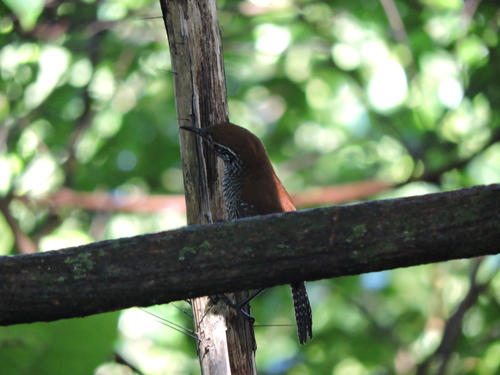
カワマユミソサザイ (Cantorchilus semibadius) カワマユミソサザイ

シマバラマユミソサザイ (Cantorchilus nigricapillus) シマバラマユミソサザイ

メディア

読み込み中…

要点

リバーサイド・レンとベイ・レンを区別する最も信頼できるフィールドマークは、頭部と下部の色と模様です:リバーサイド・レンは明るいオレンジ茶色の冠と栗色の背中を持ち、はっきりとした黒と白のストライプの顔を示します。一方、ベイ・レンは黒い冠とうなじを持ち、ほとんど黒い顔に狭い白い眉斑があり、頬の後ろには白い斑点があります。両種ともに縞模様の尾と下部を持っていますが、リバーサイド・レンの縞模様は細かく、淡い灰色の下部に広がっていますが、ベイ・レンの縞模様はより大胆で、白と赤褐色の下部に対して設定されています。両者の幼鳥は鈍い色合いですが、頭部と下部の模様は依然として特徴的です。ベイ・レンはまた、明らかに重くてがっしりとしています。両種は水の近くの密な植生を好みますが、その分布はコスタリカとパナマの一部でのみ重なります。

識別のコツ

  1. Head color and pattern (all ages): リバーサイド・レンは明るいオレンジ茶色の冠と栗色のうなじ/背中を持ち、はっきりとした黒と白のストライプの顔と黒い上に白い眉斑を持っています。ベイ・レンは黒い冠とうなじを持ち、ほとんど黒い顔に狭い白い眉斑があり、頬の後ろには白い斑点があります。これは最も信頼できるフィールドマークです。
  2. Underpart color and barring: リバーサイド・レンは淡い灰色の下部を持ち、全体に細く狭い黒い縞模様があり、肛門に向かってバフ色が強くなります。ベイ・レンは白い喉と胸、赤褐色の腹/側面を持ち、胸から肛門まで大胆な黒い縞模様があります。ベイ・レンの白と赤褐色のコントラストは特徴的です。
  3. Juvenile plumage: 幼鳥のリバーサイド・レンは鈍い色合いで、冠に細かい黒いスケーリングがあり、下部の縞模様はあまりはっきりしていませんが、オレンジ茶色の冠とストライプの顔は依然として示しています。幼鳥のベイ・レンはより淡く、あまり目立たないですが、黒い冠と白い頬の斑点を保持しています。
  4. Tail pattern: 両者ともに縞模様の尾を持っていますが、リバーサイド・レンの尾は黒っぽく、バフ白の縞模様があります。一方、ベイ・レンの尾は豊かな茶色で大胆な黒い縞模様があります。ベイ・レンでは尾の色が背中と一致しますが、リバーサイド・レンではより対照的です。
  5. Facial contrast: リバーサイド・レンの顔ははっきりとしたストライプと斑点があり、「忙しい」印象を与えます。ベイ・レンの顔は主に黒く、きれいな白い斑点と狭い眉斑があり、より「マスクされた」印象を与えます。
  6. Size and structure: ベイ・レンは明らかに重く(23.9 g vs. 17.0 g)で、しばしばがっしりとしていて頑丈に見えます。リバーサイド・レンはより細身で少し短いです。これは両者を一緒に見たり、直接比較したりする経験がある場合に最も役立ちます。
  7. Song: リバーサイド・レンは繰り返しの大きな鳴り響くフレーズを出し、それぞれ異なるフレーズが続きます。ベイ・レンの歌は急速で複雑な笛、トリル、ワーブルの連続で、しばしば対唱されます。トリルやワーブルのフレーズを聞いた場合は、ベイ・レンを疑ってください。
  8. Habitat in overlap zones: 両者は水の近くの密な植生を好みますが、リバーサイド・レンは河岸や急な岸により制限されているのに対し、ベイ・レンは過成長した空き地や道路脇を含む、より広範囲の密で絡み合った生息地に見られます。
  9. Supercilium: リバーサイド・レンの眉斑は白の上に黒で、ストライプの顔に対して際立っています。ベイ・レンの眉斑は黒い顔の上にある狭い白い線で、全体的には目立ちません。
  10. Cheek patch: ベイ・レンは頬の後ろに明確な白い斑点を持ち、リバーサイド・レンにはありません。
  11. Back color: リバーサイド・レンの背中は栗色で、オレンジ茶色の冠に溶け込みます。ベイ・レンの背中は豊かな栗色ですが、黒い冠とうなじからはっきりと分かれています。
  12. Underpart transition: リバーサイド・レンの下部は全体が淡い灰色で、後方に向かってバフ色になります。ベイ・レンは白から赤褐色に移行し、明確な色の境界があります。
  13. Group behavior: 両者はペアや家族グループで見られることがありますが、リバーサイド・レンはアリの群れで混成群に参加する可能性が高いです。
  14. Nest shape (not field-diagnostic): リバーサイド・レンは球状の二室の巣を作り、しばしば水の上にあります。ベイ・レンの巣は通常、入口のチューブを持つ肘型です。これはフィールドではあまり役立ちません。
  15. Range: コスタリカと西パナマの外にいる場合、ベイ・レンの方がはるかに可能性が高いです。リバーサイド・レンはこれらの国の太平洋側に制限されています。

大きさ

ベイ・レンはリバーサイド・レンよりも一貫して大きく、重いです。ベイ・レンの平均は約23.9 gで、リバーサイド・レンは17.0 g [wikidata]で、最大でわずかに長く(最大15.6 cm対リバーサイドの14 cm)なります。フィールドでは、ベイ・レンはしばしばがっしりとして頑丈に見え、リバーサイド・レンはより細身に見えます。このサイズの違いは、両者が一緒に見られたり、地域の他のレンと直接比較されたりする場合に最も明らかです。

羽色

両種の幼鳥と成鳥の羽毛は、それぞれの成鳥に似たパターンですが、鈍く、はっきりとしたマーキングが少なくなっています。リバーサイド・レン(すべての年齢)では、明るいオレンジ茶色の冠、栗色のうなじと背中、そしてはっきりとした黒と白のストライプの顔と黒の上に白い眉斑を探してください。下部は淡い灰色で、狭い黒い縞模様があり、肛門に向かってバフ色が強くなります。幼鳥は鈍く、冠に細かい黒いスケーリングがあり、下部の縞模様はあまりはっきりしていません。ベイ・レン(すべての年齢)は黒い冠とうなじ、狭い白い眉斑と頬の後ろに白い斑点を持ち、豊かな栗色の上部を持っています。尾は豊かな茶色で大胆な黒い縞模様があります。下部は喉と胸が白く、腹と側面が赤褐色に変わり、胸から肛門まで大胆な黒い縞模様があります。幼鳥はより淡く、あまり目立たないですが、全体のパターンを保持しています。頭の色と顔のパターンは、すべての年齢で最も一貫した違いです。

行動

両種は密な植生の低い場所で採餌し、しばしば地面の近くで見られます。リバーサイド・レンは通常ペアや家族グループで見られ、時にはアリの群れで混成種の群れに参加します。ベイ・レンは葉からの採餌や絡み合った場所を探ることで採餌し、しばしばペアや小グループで見られます。両者ともに活発で秘密主義ですが、ベイ・レンは動きがより頑丈で意図的に見えることがありますが、リバーサイド・レンはより敏捷で細身に見えることがあります。両者ともに精巧な巣を作りますが、巣の形は信頼できるフィールドマークではありません。

生息環境

両種は水の近くの密で低い植生に密接に関連しています。リバーサイド・レンはコスタリカと西パナマの太平洋側に見られ、密な河岸の茂み、湿地の林縁、または急な植生の斜面を好み、海面から1,200 mまでの範囲で見られます。ベイ・レンはニカラグアからエクアドルまでの広範囲に分布し、水路、過成長した空き地、道路脇、十分な下草のある森林の下層に見られます。重なり合う地域(コスタリカとパナマ)では、微細な生息地の違いを確認してください:リバーサイド・レンは水辺や急な岸により制限されているのに対し、ベイ・レンはより多様な密で絡み合った生息地に見られることがあります。

声

両種は非常に声が大きいです。リバーサイド・レンの歌は、繰り返しの大きな鳴り響くフレーズで構成され、それぞれ異なるフレーズが続き、呼び声には厳しいチュル音やクリアなチンチン音が含まれます。ベイ・レンの歌は、急速なクリアでリッチな音色の、スラーレッドな笛、トリル、ワーブルの連続で、しばしば対唱されます。両者は未経験者には似たように聞こえることがありますが、ベイ・レンの歌はより複雑で多様であり、トリルやワーブルの要素が多く含まれています。一方、リバーサイド・レンの歌はフレーズベースで鳴り響くものです。リバーサイド・レンでは両性が歌いますが、ベイ・レンもペアで歌います。

より良い説明を送る

比較と同じ項目を使ってください。文章はすぐに公開されます。

The most reliable field mark to separate Riverside Wren from Bay Wren is the color and pattern of the head and underparts: Riverside Wren shows a bright orange-brown crown and chestnut back with a boldly streaked black-and-white face, while Bay Wren has a black crown and nape, a mostly black face with a narrow white supercilium, and a white patch behind the cheek. Both have barred tails and underparts, but Riverside Wren's barring is finer and extends over pale gray underparts, whereas Bay Wren's barring is bolder and set against white and rufous underparts. Juveniles of both are duller, but the head and underpart patterns remain distinctive. Bay Wren is also noticeably heavier and bulkier. Both species prefer dense vegetation near water, but their ranges overlap only in parts of Costa Rica and Panama.

  1. Head color and pattern (all ages): Riverside Wren has a bright orange-brown crown and chestnut nape/back, with a boldly streaked black-and-white face and a black-over-white supercilium. Bay Wren has a black crown and nape, a mostly black face with a narrow white supercilium, and a white patch behind the cheek. This is the most reliable field mark.
  2. Underpart color and barring: Riverside Wren shows pale gray underparts with fine, narrow black barring throughout, becoming buffier toward the vent. Bay Wren has white throat and breast, rufous brown belly/flanks, and bold black barring from breast to vent. The contrast between white and rufous in Bay Wren is distinctive.
  3. Juvenile plumage: Juvenile Riverside Wren is duller, with fine black scaling on the crown and less crisp barring below, but still shows the orange-brown crown and streaked face. Juvenile Bay Wren is paler and less well-marked, but retains the black crown and white cheek patch.
  4. Tail pattern: Both have barred tails, but Riverside Wren's tail is blackish with buff-white bars, while Bay Wren's is rich brown with bold black bars. The tail color matches the back in Bay Wren, but contrasts more in Riverside Wren.
  5. Facial contrast: Riverside Wren's face is heavily streaked and spotted, giving a 'busy' look; Bay Wren's face is mostly black with a clean white patch and narrow supercilium, appearing more 'masked.'
  6. Size and structure: Bay Wren is noticeably heavier (23.9 g vs. 17.0 g) and often appears bulkier and more robust. Riverside Wren is more slender and slightly shorter. This is most useful if you have experience with both or see them together.
  7. Song: Riverside Wren gives repeated, loud ringing phrases, each followed by a different phrase. Bay Wren's song is a rapid, complex series of whistles, trills, and warbles, often antiphonal. If you hear trilled or warbled phrases, suspect Bay Wren.
  8. Habitat in overlap zones: Both prefer dense vegetation near water, but Riverside Wren is more restricted to riversides and steep banks, while Bay Wren can be found in a broader range of dense, tangled habitats, including overgrown clearings and roadsides.
  9. Supercilium: Riverside Wren's supercilium is black over white and stands out against the streaked face; Bay Wren's is a narrow white line above a black face, less prominent overall.
  10. Cheek patch: Bay Wren has a distinct white patch behind the cheek, lacking in Riverside Wren.
  11. Back color: Riverside Wren's back is chestnut, blending into the orange-brown crown; Bay Wren's back is rich chestnut but sharply separated from the black crown and nape.
  12. Underpart transition: Riverside Wren's underparts are pale gray throughout, becoming buffy to the rear; Bay Wren transitions from white to rufous brown, with a clear color boundary.
  13. Group behavior: Both may be seen in pairs or family groups, but Riverside Wren is more likely to join mixed flocks at ant swarms.
  14. Nest shape (not field-diagnostic): Riverside Wren builds globular, two-chambered nests, often over water; Bay Wren's nests are usually elbow-shaped with an entrance tube. This is rarely useful in the field.
  15. Range: If outside Costa Rica and western Panama, Bay Wren is much more likely. Riverside Wren is restricted to the Pacific slope in these countries.

Bay Wren is consistently larger and heavier than Riverside Wren. Bay Wren averages about 23.9 g, compared to Riverside Wren's 17.0 g [wikidata], and is slightly longer at maximum (up to 15.6 cm vs. Riverside's 14 cm). In the field, Bay Wren often appears bulkier and more robust, while Riverside Wren is more slender. This size difference is most apparent when both are seen together or with direct comparison to other wrens in the area.

Juvenile and adult plumages in both species are similar in pattern to their respective adults, but duller and with less sharply defined markings. For Riverside Wren (all ages), look for the bright orange-brown crown, chestnut nape and back, and a face that is boldly streaked and spotted black and white with a black-over-white supercilium. The underparts are pale gray with narrow black bars, becoming buffier toward the vent. Juveniles are duller, with fine black scaling on the crown and less crisp barring below. Bay Wren (all ages) has a black crown and nape, black face with a narrow white supercilium and a white patch behind the cheek, and rich chestnut upperparts. Its tail is rich brown with bold black bars. Underparts are white on the throat and breast, shading to rufous brown on the belly and flanks, with bold black barring from breast to vent. Juveniles are paler and less well-marked but retain the overall pattern. The head color and face pattern are the most consistent differences at all ages.

Both species forage low in dense vegetation, often near the ground. Riverside Wren is usually seen in pairs or family groups and sometimes joins mixed-species flocks at army ant swarms. Bay Wren forages by gleaning from foliage and probing tangles, and is also often found in pairs or small groups. Both are active and secretive, but Bay Wren may appear more robust and deliberate in its movements, while Riverside Wren can seem more agile and slender. Both construct elaborate nests, but nest shape is not a reliable field mark.

Both species are closely tied to dense, low vegetation near water. Riverside Wren is found along the Pacific slope of Costa Rica and western Panama, favoring dense riverside thickets, swampy woodland edges, or steep vegetated slopes, from sea level up to 1,200 m. Bay Wren has a broader range, from Nicaragua to Ecuador, and is found in similar dense vegetation along watercourses, overgrown clearings, roadsides, and forest understory with sufficient undergrowth. In regions of overlap (Costa Rica and Panama), check for subtle differences in microhabitat: Riverside Wren is more restricted to water edges and steep banks, while Bay Wren can occur in a wider variety of dense, tangled habitats.

Both species are highly vocal. Riverside Wren's song consists of repeated loud, ringing phrases, each followed by a different phrase, and calls include harsh churrs and clear tinkling notes. Bay Wren's song is a rapid series of clear, rich-toned, slurred whistles, trills, and warbles, often given antiphonally. While both can sound similar to the untrained ear, Bay Wren's song is more complex and varied, with more trills and warbling elements, whereas Riverside Wren's song is more phrase-based and ringing. Both sexes sing in Riverside Wren; Bay Wren also sings in pairs.

変更を破棄しますか?

保存していない編集があります。今離れると失われます。

カワマユミソサザイ · シマバラマユミソサザイ · 苦手な鳥