

Motmot

クビワコガモ 対 キバシオナガガモ

Callonetta leucophrys 対 Anas georgica

クビワコガモとキバシオナガガモのクイズ
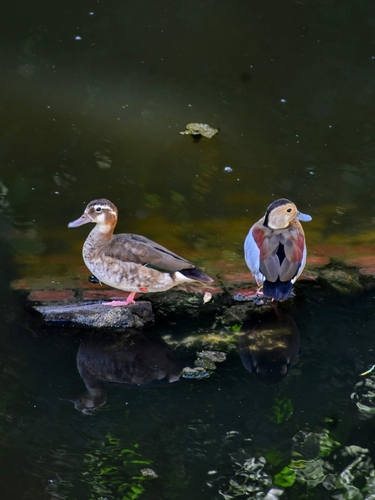
クビワコガモ (Callonetta leucophrys) クビワコガモ
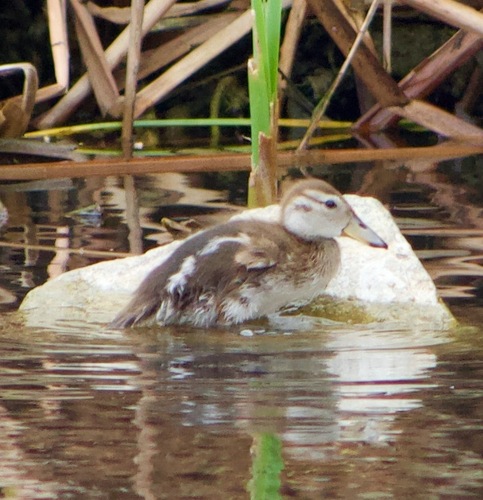
キバシオナガガモ (Anas georgica) キバシオナガガモ

メディア

読み込み中…

要点

クビワコガモとキバシオナガガモの間で最も信頼できるフィールドマークはくちばしです:クビワコガモは常に無地の灰色のくちばしを示し、キバシオナガガモは黒い先端と中央のストライプを持つ目を引く黄色のくちばしを持っています。飛行中または水上では、クビワコガモは特徴的な白い翼の斑点と淡い尾を示し、キバシオナガガモの暗い緑がかった黒の二次羽と白い翼のパネルがないことと対照的です。構造も役立ちます:クビワコガモはコンパクトで短い尾を持つカモであり、キバシオナガガモはより長く、スリムで、尖った尾を持っています。両者の雌と幼鳥は混乱を招くことがありますが、くちばしの色、翼のパターン、体の形の組み合わせがほぼすべてのフィールド状況でそれらを区別します。

識別のコツ

  1. くちばしの色は診断的です: クビワコガモは常に無地の灰色のくちばしを持ち、キバシオナガガモは黒い先端と中央に黒いストライプを持つ明るい黄色のくちばしを示します。これはすべての年齢と性別に当てはまります。
  2. 飛行中または休息中の翼のパターン: すべての年齢のクビワコガモは翼に大胆な白い斑点と淡い尾を示し、飛行中や羽繕い中に簡単に見ることができます。キバシオナガガモは翼に白を示さず、代わりに灰色がかった茶色の上翼と黒っぽい緑の二次羽を持っています。
  3. 尾の形: クビワコガモは対照的な淡い尾を持つ短くて暗い尾を持ち、キバシオナガガモは特に飛行中や泳いでいるときに明らかに見える、下尾覆羽を超えてよく伸びる尖った茶色の尾を持っています。
  4. 体の構造と印象: クビワコガモはコンパクトで短い首を持ち、しばしば丸い体に見えます。キバシオナガガモはより長く、スリムで、より伸びた外観を持ち、長い首と尾を持っています。
  5. 羽毛の詳細(オス): オスのクビワコガモは豊かな栗色の背中、淡い灰色の側面、黒い斑点のあるサーモンピンクの胸、そして黒いストライプを頭から首まで示します。キバシオナガガモのオスはこれらの色がなく、より均一にバフ茶色で黒い斑点があります。
  6. 羽毛の詳細(メス): メスのクビワコガモは上面がオリーブ茶色で、下面が淡く細かく縞模様で、白い顔のパターンを持っています。メスのキバシオナガガモはより均一にバフ茶色で黒い斑点があり、白い顔と縞模様がありません。
  7. クビワコガモにはエクリプス羽毛がない: 両性ともに基本的なパターンを一年中保持するため、他のカモのように鈍いエクリプスのオスを見ることはありません。
  8. 止まり方: クビワコガモは長い爪のおかげで木や枝に止まっているのを見ることがあります。キバシオナガガモはほとんど止まっているのを見ません。
  9. 生息地の文脈: よく木が生い茂った森林湿地や小さく隠れた池では、クビワコガモを疑ってください。開けた湖、湿地、高地の湿地では、キバシオナガガモの方が可能性が高いです。
  10. 群れの構造: クビワコガモはしばしばペアまたは小さな家族グループで見られますが、キバシオナガガモはより孤立しているか、緩く関連していることがありますが、これは常に信頼できるわけではありません。
  11. 声: 猫のような「ミーオーウィング」や持続的な「ピーヴー」を聞いたら、それはクビワコガモです。キバシオナガガモの鳴き声は音符において特異ではありません。
  12. 幼鳥の混乱: 幼いクビワコガモでも白い翼の斑点と淡い尾を示しますが、幼いキバシオナガガモは示しません。
  13. 落とし穴—雌の混乱: メスのクビワコガモとキバシオナガガモはどちらも茶色がかった縞模様に見えることがありますが、くちばしの色と翼の斑点が常にそれらを区別します。
  14. 落とし穴—遠くからの視界: 遠くからは、くちばしの色と全体の形に焦点を当ててください;クビワコガモの白い翼の斑点は、悪い光の中でもフラッシュすることがあります。
  15. 季節と性: クビワコガモには強い季節的または性差がありません;キバシオナガガモはわずかな亜種の変異を示すことがありますが、主要なマークは一貫しています。

大きさ

クビワコガモは明らかに小さく、よりコンパクトなカモで、体重は約372g、長さは35〜38cmです。キバシオナガガモはより大きく、長く、より細長い体と尖った尾を持っていますが、ここでは正確な体重は示されていません。混合群では、クビワコガモは明らかに華奢で短い首に見え、キバシオナガガモはよりスリムで伸びた外観を持っています。

羽色

幼鳥と成鳥のクビワコガモは両性ともに翼に大胆な白い斑点(飛行中およびしばしば休息中に見える)、淡い尾、暗い尾を示します。オスは豊かな栗色の背中、淡い灰色の側面、黒い斑点のあるサーモンピンクの胸、そして黒い後頭部のストライプを持っています。メスはより控えめで、オリーブ茶色の背中と淡く細かく縞模様のある下面を持っていますが、依然として白い翼の斑点と淡い尾を示します。すべての年齢のキバシオナガガモは翼に白を欠き、代わりに上翼は灰色がかった茶色で黒っぽい緑の二次羽を持っています。体はバフ茶色で黒い斑点があり、尾は茶色がかって尖っています。頭と首は茶色で、くちばしは常に黒い模様のある黄色です。クビワコガモにはエクリプス羽毛がなく、両性ともに基本的なパターンを一年中保持します。要約すると、クビワコガモの白い翼の斑点と淡い尾はユニークであり、キバシオナガガモの翼は暗く、白を欠いています。

行動

クビワコガモは長く尖った爪と水かきのある足のおかげで、木や枝に止まっているのを見ることが多いです。水の上や森林湿地の縁に座っていることがよくあります。キバシオナガガモは典型的なダブリングダックで、通常は開けた水や湿地で泳いだり餌を取ったりしており、めったに止まっていることはありません。飛行中、クビワコガモはコンパクトで短い尾を持っているように見え、キバシオナガガモはより長く、スリムで尖った尾を示します。両者はダブラーですが、クビワコガモはより小さく、隠れたグループで見られることが多く、時にはペアで見られますが、キバシオナガガモはより分散していることがあります。

生息環境

クビワコガモは熱帯の湿地森林、湿地の開けた場所、そしてよく木が生い茂った低地の隠れた池を好みます。しばしば木が覆いかぶさる場所や密なカバーのある地域で見られます。キバシオナガガモはより広範囲に分布し、高地の湖や湿地から低地の川や開けた国の湿地、海岸や島を含みます。小さな木に囲まれた池を見つけた場合、クビワコガモの方が可能性が高いですが、開けた湿地や湖、特に高地や開けた国ではキバシオナガガモがデフォルトです。

声

クビワコガモは猫のような「ミーオーウィング」の鳴き声(メス)と持続的な「ピーヴー」(オス)を出します。提供されたメモにはキバシオナガガモの特異な鳴き声は記載されていないため、声は主要な区別要因ではありません。

より良い説明を送る

比較と同じ項目を使ってください。文章はすぐに公開されます。

The most reliable field mark between Ringed Teal and Yellow-billed Pintail is the bill: Ringed Teal always shows a plain grey bill, while Yellow-billed Pintail has a striking yellow bill with a black tip and central stripe. In flight or on the water, Ringed Teal displays a distinctive white wing patch and a pale rump, contrasting with the pintail's dark greenish-black secondaries and lack of a white wing panel. Structure also helps: Ringed Teal is a compact, short-tailed duck, while Yellow-billed Pintail is longer, slimmer, and has a pointed tail. Females and immatures of both can be confusing, but the combination of bill color, wing pattern, and body shape will separate them in almost all field situations.

  1. Bill color is diagnostic: Ringed Teal always has a plain grey bill, while Yellow-billed Pintail shows a bright yellow bill with a black tip and a black stripe down the middle. This works for all ages and sexes.
  2. Wing pattern in flight or at rest: Ringed Teal of all ages shows a bold white patch on the wing and a pale rump, easily seen in flight or when preening. Yellow-billed Pintail never shows white in the wing, instead displaying grayish-brown upperwings with blackish-green secondaries.
  3. Tail shape: Ringed Teal has a short, dark tail with a contrasting pale rump, while Yellow-billed Pintail has a pointed, brownish tail that extends well beyond the undertail coverts, especially obvious in flight or when swimming.
  4. Body structure and jizz: Ringed Teal is compact, short-necked, and often appears round-bodied. Yellow-billed Pintail is longer, slimmer, and has a more stretched-out look, with a longer neck and tail.
  5. Plumage details (male): Male Ringed Teal shows a rich chestnut back, pale grey flanks, salmon-pink breast with black spots, and a black stripe from crown to nape. Yellow-billed Pintail males lack these colors, being more uniformly buff-brown with black spots.
  6. Plumage details (female): Female Ringed Teal is olive-brown above, pale and finely barred below, with a white face pattern. Female pintails are more uniformly buff-brown with black spots and lack the white face and barring.
  7. No eclipse plumage in Ringed Teal: Both sexes retain their basic pattern year-round, so you won't see a dull eclipse male as in some ducks.
  8. Perching behavior: Ringed Teal may be seen perched in trees or on branches, thanks to its long claws. Yellow-billed Pintail is almost never seen perching.
  9. Habitat context: In well-wooded, forested wetlands or small, secluded pools, suspect Ringed Teal. In open lakes, marshes, or highland wetlands, Yellow-billed Pintail is more likely.
  10. Group structure: Ringed Teal often appears in pairs or small family groups, while pintails can be more solitary or loosely associated, but this is not always reliable.
  11. Voice: If you hear a cat-like 'mee-oowing' or a lingering 'peewoo', it's Ringed Teal. Pintail vocalizations are not distinctive in the notes.
  12. Juvenile confusion: Even young Ringed Teal show the white wing patch and pale rump, while juvenile pintails do not.
  13. Pitfall—female confusion: Female Ringed Teal and Yellow-billed Pintail can both appear brownish and barred, but the bill color and wing patch will always separate them.
  14. Pitfall—distant views: At a distance, focus on bill color and overall shape; the white wing patch of Ringed Teal can flash even in poor light.
  15. Season and sex: No strong seasonal or sexual dimorphism in Ringed Teal; pintails may show slight subspecies variation, but the main marks remain consistent.

Ringed Teal is a noticeably smaller and more compact duck, with a body mass around 372 g and a length of 35–38 cm. Yellow-billed Pintail is larger and longer, with a more elongated body and a pointed tail, though exact mass is not given here. In mixed flocks, Ringed Teal will look distinctly daintier and shorter-necked, while pintails appear sleeker and more stretched out.

Juvenile and adult Ringed Teal of both sexes show a bold white patch on the wing (visible in flight and often at rest), a pale rump, and a dark tail. Males have a rich chestnut back, pale grey flanks, and a salmon-pink breast with black spots, plus a black nape stripe. Females are more subdued, with olive-brown backs and pale, finely barred underparts, but still show the white wing patch and pale rump. Yellow-billed Pintail of all ages lacks any white in the wing; instead, the upperwing is grayish-brown with blackish-green secondaries. The body is buff-brown with black spots, and the tail is brownish and pointed. The head and neck are brown, and the bill is always yellow with black markings. No eclipse plumage is present in Ringed Teal; both sexes keep their basic pattern year-round. In summary, the white wing patch and pale rump of Ringed Teal are unique, while the pintail's wing is darker and lacks white.

Ringed Teal is more likely to be seen perching in trees or on branches, thanks to its long, pointed claws and webbed toes. It often sits above water or along the edges of wooded wetlands. Yellow-billed Pintail is a classic dabbling duck, usually found swimming or feeding in open water or marshes, rarely perching. In flight, Ringed Teal appears compact and short-tailed, while Yellow-billed Pintail is longer, sleeker, and shows a pointed tail. Both are dabblers, but Ringed Teal may be seen in smaller, more secluded groups, sometimes paired, while pintails can be more dispersed.

Ringed Teal prefers tropical, swampy forests, marshy clearings, and secluded pools in well-wooded lowlands. It is often found in areas with overhanging trees or dense cover. Yellow-billed Pintail ranges more widely, from high-elevation lakes and marshes to lowland rivers and open country wetlands, including coasts and islands. If you find a small, tree-lined pool, Ringed Teal is more likely; in open marshes or lakes, especially at higher elevations or in open country, Yellow-billed Pintail is the default.

Ringed Teal gives a cat-like 'mee-oowing' call (female) and a lingering 'peewoo' (male). No distinctive vocalization is described for Yellow-billed Pintail in the provided notes, so voice is not a primary separator.

変更を破棄しますか?

保存していない編集があります。今離れると失われます。

クビワコガモ · キバシオナガガモ · 苦手な鳥