

Motmot

ヨーロッパコシアカツバメ/アフリカコシアカツバメ/コシアカツバメ 対 コズアカコシアカツバメ

Cecropis daurica 対 Cecropis abyssinica

ヨーロッパコシアカツバメ/アフリカコシアカツバメ/コシアカツバメとコズアカコシアカツバメのクイズ
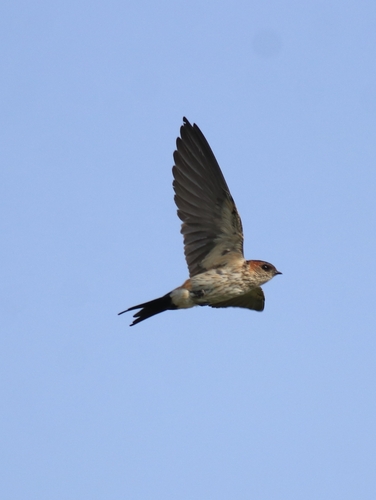
ヨーロッパコシアカツバメ/アフリカコシアカツバメ/コシアカツバメ (Cecropis daurica) ヨーロッパコシアカツバメ/アフリカコシアカツバメ/コシアカツバメ
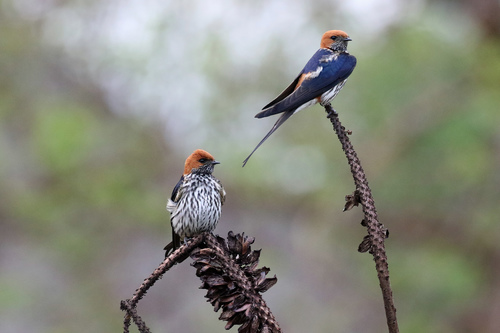
コズアカコシアカツバメ (Cecropis abyssinica) コズアカコシアカツバメ

メディア

読み込み中…

要点

幼鳥と成鳥のヨーロッパコシアカツバメとコズアカコシアカツバメは、特に飛行中は似て見えることがありますが、最も信頼できるフィールドマークは頭部と尾部の色です:コズアカコシアカツバメは明るい赤褐色の冠と後頭部、深い赤の尾を示し、ヨーロッパコシアカツバメは青い冠と後頭部、亜種によっては淡い、縞模様または均一な赤褐色の尾を持っています。両者は暗い縞模様のある白い腹部を持っていますが、コズアカコシアカツバメの縞模様は通常より重く、遠くからでも頭部の色が際立ちます。尾の形と長さも役立ちます:コズアカコシアカツバメは一般的に、特にオスでは、より長く、深く分かれた尾羽を持っています。分布は強力な手がかりです—ヨーロッパコシアカツバメはアジアに、コズアカコシアカツバメはアフリカに生息していますが、迷鳥も発生します。両者の幼鳥は鈍く、茶色がかっていますが、頭部と尾部の違いは持続します。

識別のコツ

  1. 頭部の色が重要です: コズアカコシアカツバメは常に明るい赤褐色の冠、後頭部、頭の側面を示します。ヨーロッパコシアカツバメは青い冠と後頭部を持ち、時々淡い赤い襟がありますが、完全な赤褐色の頭部はありません。
  2. 尾部の色と模様: ヨーロッパコシアカツバメの尾部は亜種によって異なります—均一な暗い赤褐色(C. d. erythropygia)または淡い色で暗い軸の縞模様(C. d. nipalensis)があります。コズアカコシアカツバメは縞模様のない深く、豊かな赤の尾を持っています。
  3. 腹部の縞模様: 両者は暗い縞模様のある白い腹部を持っていますが、コズアカコシアカツバメの縞模様はより重く、広範囲にわたることがあり、腹部が密にマーキングされているように見えることがあります。
  4. 尾の形と長さ: コズアカコシアカツバメは、特にオスでは、より深く分かれた尾と長い外羽を持っています。ヨーロッパコシアカツバメの尾は深く分かれていますが、浅く見えることもあり、尾の白い斑点はあまりはっきりしていません。
  5. 幼鳥の違い: 幼鳥のヨーロッパコシアカツバメは鈍く、茶色がかっており、淡い尾と短い尾を持っていますが、コズアカコシアカツバメの赤褐色の冠はまだ欠けています。幼鳥のコズアカコシアカツバメも鈍いですが、赤褐色の頭を保持しています。
  6. 翼の覆羽: コズアカコシアカツバメは、良い光や写真で見ることができる黄褐色の翼の覆羽を持っていますが、ヨーロッパコシアカツバメは持っていません。
  7. 顔の模様: コズアカコシアカツバメの赤褐色の頭と後頭部は、暗い青い背中と強く対照的です。ヨーロッパコシアカツバメの顔は白く、重い暗い縞模様がありますが、赤褐色の冠はありません。
  8. 飛行の特徴: コズアカコシアカツバメは、飛行中にしばしばより大きく、長い尾を持っているように見え、飛行スタイルはより不規則です。ヨーロッパコシアカツバメはより細身で、滑らかで直接的な飛行をします。
  9. 止まっている時の特徴: 止まっている時、コズアカコシアカツバメの長い尾羽と赤褐色の頭が明らかです。ヨーロッパコシアカツバメはよりコンパクトで青い頭に見えます。
  10. 生息地と分布: 分布を強力な手がかりとして使用します—ヨーロッパコシアカツバメはアジアに、コズアカコシアカツバメはアフリカに生息しています。生息地の重複は迷鳥を除いては稀です。
  11. 巣作りの行動: コズアカコシアカツバメはしばしば建物、橋、または水路に巣を作りますが、ヨーロッパコシアカツバメは自然の場所を好み、人造構造物を使用する可能性は低いです。
  12. 声: 「ゼッゼッゼッゼッゼッ」という鼻にかかった声が聞こえたら、それはコズアカコシアカツバメです。ヨーロッパコシアカツバメの鳴き声はこれらのメモには特に記載されていません。
  13. 性差: 尾羽の長さはオスのコズアカコシアカツバメでわずかに長くなりますが、鳥が並んでいない限り、主要なフィールドマークではありません。
  14. 亜種の混乱: ヨーロッパコシアカツバメの尾部の色と尾の分かれ具合の亜種の変異に注意してください;常に最初に頭部の色を確認してください。
  15. 落とし穴: 両種は、特に幼鳥の場合、悪い光や距離で似て見えることがあります。頭部と尾部の色に焦点を当て、分布と生息地の文脈を使用して識別をサポートしてください。

大きさ

両種は長さが15〜19 cmで似ていますが、コズアカコシアカツバメはツバメとして「大きい」と説明され、フィールドではしばしばより大きく見えます。ヨーロッパコシアカツバメは通常、より細身で全体的にわずかに小さいですが、サイズの重複はかなりあり、常に分離のために信頼できるわけではありません。尾羽の長さはコズアカコシアカツバメでわずかに長く、特に成鳥のオスでは、止まっている時や飛行中に長い尾のように見えます。

羽色

行動

両種は空中の昆虫食者であり、しばしば開けた場所の上を低く飛んでいるのが見られます。コズアカコシアカツバメの飛行は不規則と説明されており、しばしば巣作りに人造構造物を使用し、高い場所に巣を作ることもあります。ヨーロッパコシアカツバメは開けた丘陵地帯やクリアリングに関連しており、建物に巣を作る可能性は低いです。両者はワイヤーに止まりますが、コズアカコシアカツバメは止まっている時により大きく、長い尾を持っているように見えることがあります。

生息環境

ヨーロッパコシアカツバメは、東アジアと南東アジアから北東インド、台湾にかけての開けた、しばしば丘陵地帯のクリアリングや耕作地に生息しています。コズアカコシアカツバメはサハラ以南のアフリカに特有で、シエラレオネや南スーダンから南アフリカ東部まで繁殖し、巣作りの好みから人間の居住地の近くで見られることが多いです。分布は強力な区別要因です:ヨーロッパコシアカツバメはアジアに、コズアカコシアカツバメはアフリカに生息しており、これらの地域の外での迷鳥は非常に稀です。

声

コズアカコシアカツバメは鼻にかかった「ゼッゼッゼッゼッゼッ」という鳴き声を出します。これらのメモにはヨーロッパコシアカツバメの特に記載された鳴き声はなく、コズアカコシアカツバメの鳴き声が聞こえた場合にのみ声が役立ちます。

より良い説明を送る

比較と同じ項目を使ってください。文章はすぐに公開されます。

Juvenile and adult Red-rumped Swallows and Lesser Striped Swallows can look similar, especially in flight, but the most reliable field mark is the head and rump color: Lesser Striped Swallow shows a bright rufous-chestnut crown and nape with a deep red rump, while Red-rumped Swallow has a blue crown and nape and a paler, streaked or uniform chestnut rump depending on subspecies. Both have white underparts with dark streaks, but Lesser Striped Swallow's streaking is usually heavier and its head color stands out at a distance. Tail shape and length can help: Lesser Striped Swallow generally has longer, more deeply forked tail streamers, especially in males. Range is a strong clue—Red-rumped Swallow is Asian, Lesser Striped is African—but vagrants do occur. Juveniles of both are duller and browner, but the head and rump differences persist.

  1. Head color is key: Lesser Striped Swallow always shows a bright rufous-chestnut crown, nape, and sides of the head. Red-rumped Swallow has a blue crown and nape, sometimes with a faint reddish collar, but never the full rufous head.
  2. Rump color and pattern: Red-rumped Swallow's rump varies by subspecies—either uniform dark chestnut (C. d. erythropygia) or paler with dark shaft streaks (C. d. nipalensis). Lesser Striped Swallow has a deeper, richer red rump without streaks.
  3. Underpart streaking: Both have white underparts with dark streaks, but Lesser Striped Swallow's streaking is heavier and more extensive, sometimes making the underparts look densely marked.
  4. Tail shape and length: Lesser Striped Swallow has a more deeply forked tail with longer outer feathers, especially in males. Red-rumped Swallow's tail is deeply forked but can appear shallower, and the white patches on the tail are less distinct.
  5. Juvenile differences: Juvenile Red-rumped Swallow is duller and browner with a paler rump and shorter tail, but still lacks the rufous-chestnut crown of Lesser Striped Swallow. Juvenile Lesser Striped Swallow is also duller but retains the rufous head.
  6. Underwing coverts: Lesser Striped Swallow has tawny underwing coverts, which can be seen in good light or photos; Red-rumped Swallow does not.
  7. Facial pattern: Lesser Striped Swallow's rufous head and nape contrast strongly with the dark blue back. Red-rumped Swallow's face is white with heavy dark streaking but lacks the rufous crown.
  8. Flight jizz: Lesser Striped Swallow often appears bulkier and longer-tailed in flight, with a more erratic flight style. Red-rumped Swallow is more slender and has a smoother, more direct flight.
  9. Perched jizz: When perched, Lesser Striped Swallow's longer tail streamers and rufous head are obvious. Red-rumped Swallow appears more compact and blue-headed.
  10. Habitat and range: Use range as a strong clue—Red-rumped Swallow is Asian, Lesser Striped Swallow is African. Habitat overlap is rare except in vagrancy.
  11. Nesting behavior: Lesser Striped Swallow often nests on buildings, bridges, or culverts; Red-rumped Swallow prefers natural sites and is less likely to use man-made structures.
  12. Voice: If you hear a nasal 'zeh zeh zeh zeh zeh', it's Lesser Striped Swallow. Red-rumped Swallow's call is not distinctive in these notes.
  13. Sex differences: Tail streamer length is slightly greater in male Lesser Striped Swallow, but not a primary field mark unless birds are side by side.
  14. Subspecies confusion: Be aware of Red-rumped Swallow subspecies variation in rump color and tail fork depth; always check head color first.
  15. Pitfalls: Both species can look similar in poor light or at a distance, especially juveniles. Focus on head and rump color, and use range and habitat context to support your ID.

Both species are similar in length, ranging from 15–19 cm, but Lesser Striped Swallow is described as 'large' for a swallow and often appears bulkier in the field. Red-rumped Swallow is typically more slender and slightly smaller overall, but size overlap is considerable and not always reliable for separation. Tail streamer length is slightly greater in Lesser Striped Swallow, especially in adult males, giving it a longer-tailed look when perched or in flight.

  • Juveniles (both species): Both are duller and browner than adults, with shorter tail streamers. Red-rumped Swallow juveniles have a paler rump and less contrast overall, while Lesser Striped Swallow juveniles are also duller but retain the rufous-chestnut crown and nape, which Red-rumped Swallow lacks at all ages.
  • Adults: Red-rumped Swallow has blue upperparts with a reddish (sometimes faint or absent) collar and a chestnut rump that may be streaked or uniform depending on subspecies. Lesser Striped Swallow has dark blue upperparts, a deep red rump, and a bright rufous-chestnut crown, nape, and sides of the head. Underparts in both are white with dark streaking, but Lesser Striped Swallow's streaking is heavier and more extensive. The underwing coverts of Lesser Striped Swallow are tawny, while Red-rumped Swallow's are not described as such. Tail: Lesser Striped Swallow's tail is more deeply forked and blackish with very long outer feathers; Red-rumped Swallow's is deeply forked but can appear shallower in some subspecies, and the white patches on the tail are less distinct.

Both species are aerial insectivores, often seen flying low over open areas. Lesser Striped Swallow's flight is described as erratic, and it frequently uses man-made structures for nesting, sometimes high up. Red-rumped Swallow is more associated with open, hilly country and clearings, and is less likely to be found nesting on buildings. Both perch on wires, but Lesser Striped Swallow may appear bulkier and longer-tailed when perched.

Red-rumped Swallow is found in open, often hilly areas with clearings and cultivation across eastern and southeastern Asia to northeastern India and Taiwan. Lesser Striped Swallow is endemic to Sub-Saharan Africa, breeding from Sierra Leone and southern Sudan south to eastern South Africa, and is more likely to be seen near human habitation due to its nesting preferences. Range is a strong separator: Red-rumped Swallow is Asian, Lesser Striped Swallow is African, with only rare vagrancy outside these regions.

Lesser Striped Swallow gives a nasal 'zeh zeh zeh zeh zeh' call. No distinctive vocalization is described for Red-rumped Swallow in these notes, so voice is only useful if Lesser Striped Swallow's call is heard.

変更を破棄しますか?

保存していない編集があります。今離れると失われます。

ヨーロッパコシアカツバメ/アフリカコシアカツバメ/コシアカツバメ · コズアカコシアカツバメ · 苦手な鳥