

European/African/Eastern Red-rumped Swallow vs Lesser Striped Swallow
Cecropis daurica contro Cecropis abyssinica
Fai un quiz con European/African/Eastern Red-rumped Swallow e Lesser Striped Swallow
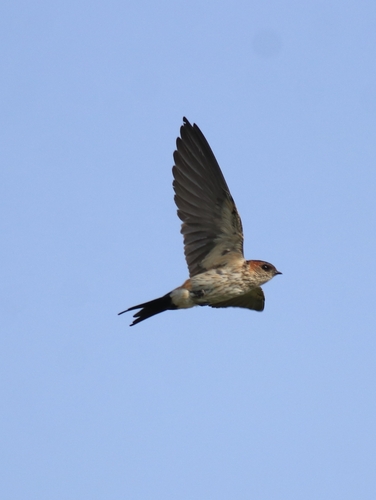 European/African/Eastern Red-rumped Swallow
 Lesser Striped Swallow
In breve
I giovani e gli adulti delle European/African/Eastern Red-rumped Swallows e delle Lesser Striped Swallows possono sembrare simili, specialmente in volo, ma il segno distintivo più affidabile è il colore della testa e del sottocoda: la Lesser Striped Swallow mostra una corona e una nuca di un brillante color ruggine-castano con un sottocoda rosso profondo, mentre la European/African/Eastern European/African/Eastern Red-rumped Swallow ha una corona e una nuca blu e un sottocoda castano più chiaro, striato o uniforme a seconda della sottospecie. Entrambi hanno parti inferiori bianche con striature scure, ma le striature della Lesser Striped Swallow sono solitamente più pesanti e il colore della sua testa si distingue da lontano. La forma e la lunghezza della coda possono aiutare: la Lesser Striped Swallow ha generalmente streamers della coda più lunghi e più profondamente biforcati, specialmente nei maschi. L'areale è un forte indizio: la European/African/Eastern European/African/Eastern Red-rumped Swallow è asiatica, la Lesser Striped è africana, ma si verificano vagabondi. I giovani di entrambe sono più opachi e marroni, ma le differenze di testa e sottocoda persistono.
Consigli di identificazione
- Il colore della testa è fondamentale: La Lesser Striped Swallow mostra sempre una corona, una nuca e lati della testa di un brillante color ruggine-castano. La European/African/Eastern European/African/Eastern Red-rumped Swallow ha una corona e una nuca blu, a volte con un leggero collare rossastro, ma mai la testa completamente ruggine.
- Colore e motivo del sottocoda: Il sottocoda della European/African/Eastern European/African/Eastern Red-rumped Swallow varia a seconda della sottospecie: o castano scuro uniforme (C. d. erythropygia) o più chiaro con striature scure (C. d. nipalensis). La Lesser Striped Swallow ha un sottocoda rosso più profondo e ricco senza striature.
- Striature delle parti inferiori: Entrambi hanno parti inferiori bianche con striature scure, ma le striature della Lesser Striped Swallow sono più pesanti e più estese, a volte rendendo le parti inferiori sembrano densamente marcate.
- Forma e lunghezza della coda: La Lesser Striped Swallow ha una coda più profondamente biforcata con piume esterne più lunghe, specialmente nei maschi. La coda della European/African/Eastern European/African/Eastern Red-rumped Swallow è profondamente biforcata ma può apparire meno profonda, e le macchie bianche sulla coda sono meno distinte.
- Differenze nei giovani: La giovane European/African/Eastern European/African/Eastern Red-rumped Swallow è più opaca e marrone con un sottocoda più chiaro e una coda più corta, ma manca ancora della corona ruggine-castano della Lesser Striped Swallow. La giovane Lesser Striped Swallow è anch'essa più opaca ma mantiene la testa ruggine.
- Copritrici del sottovolo: La Lesser Striped Swallow ha copritrici del sottovolo color fulvo, che possono essere viste in buona luce o in foto; la European/African/Eastern European/African/Eastern Red-rumped Swallow no.
- Motivo facciale: La testa e la nuca ruggine della Lesser Striped Swallow contrastano fortemente con il dorso blu scuro. Il viso della European/African/Eastern European/African/Eastern Red-rumped Swallow è bianco con pesanti striature scure ma manca della corona ruggine.
- Stile di volo: La Lesser Striped Swallow appare spesso più robusta e con una coda più lunga in volo, con uno stile di volo più erratico. La European/African/Eastern European/African/Eastern Red-rumped Swallow è più snella e ha un volo più fluido e diretto.
- Aspetto in perching: Quando è in perching, gli streamers della coda più lunghi e la testa ruggine della Lesser Striped Swallow sono evidenti. La European/African/Eastern European/African/Eastern Red-rumped Swallow appare più compatta e con la testa blu.
- Habitat e areale: Usa l'areale come un forte indizio: la European/African/Eastern European/African/Eastern Red-rumped Swallow è asiatica, la Lesser Striped Swallow è africana. L'overlap dell'habitat è raro tranne che nei vagabondi.
- Comportamento di nidificazione: La Lesser Striped Swallow spesso nidifica su edifici, ponti o culvert; la European/African/Eastern European/African/Eastern Red-rumped Swallow preferisce siti naturali ed è meno probabile che utilizzi strutture fatte dall'uomo.
- Voce: Se senti un nasale 'zeh zeh zeh zeh zeh', è la Lesser Striped Swallow. Il richiamo della European/African/Eastern European/African/Eastern Red-rumped Swallow non è distintivo in queste note.
- Differenze sessuali: La lunghezza degli streamers della coda è leggermente maggiore nei maschi della Lesser Striped Swallow, ma non è un segno distintivo primario a meno che gli uccelli non siano affiancati.
- Confusione delle sottospecie: Fai attenzione alla variazione delle sottospecie della European/African/Eastern European/African/Eastern Red-rumped Swallow nel colore del sottocoda e nella profondità della biforcazione della coda; controlla sempre prima il colore della testa.
- Trappole: Entrambe le specie possono sembrare simili in scarsa luce o da lontano, specialmente i giovani. Concentrati sul colore della testa e del sottocoda, e usa l'areale e il contesto dell'habitat per supportare la tua identificazione.
Taglia
Entrambe le specie sono simili in lunghezza, variando da 15 a 19 cm, ma la Lesser Striped Swallow è descritta come 'grande' per una rondine e spesso appare più robusta sul campo. La European/African/Eastern European/African/Eastern Red-rumped Swallow è tipicamente più snella e leggermente più piccola nel complesso, ma l'overlap di dimensioni è considerevole e non sempre affidabile per la separazione. La lunghezza degli streamers della coda è leggermente maggiore nella Lesser Striped Swallow, specialmente nei maschi adulti, conferendole un aspetto di coda più lunga quando è in perching o in volo.
Piumaggio
- Giovani (entrambe le specie): Entrambi sono più opachi e marroni rispetto agli adulti, con streamers della coda più corti. I giovani della European/African/Eastern European/African/Eastern Red-rumped Swallow hanno un sottocoda più chiaro e meno contrasto complessivo, mentre i giovani della Lesser Striped Swallow sono anch'essi più opachi ma mantengono la corona e la nuca ruggine-castano, che la European/African/Eastern European/African/Eastern Red-rumped Swallow non ha a nessuna età.
- Adulti: La European/African/Eastern European/African/Eastern Red-rumped Swallow ha parti superiori blu con un collare rossastro (a volte tenue o assente) e un sottocoda castano che può essere striato o uniforme a seconda della sottospecie. La Lesser Striped Swallow ha parti superiori blu scuro, un sottocoda rosso profondo e una brillante corona, nuca e lati della testa di color ruggine-castano. Le parti inferiori di entrambe sono bianche con striature scure, ma le striature della Lesser Striped Swallow sono più pesanti e più estese. Le copritrici del sottovolo della Lesser Striped Swallow sono fulve, mentre quelle della European/African/Eastern European/African/Eastern Red-rumped Swallow non sono descritte in questo modo. Coda: la coda della Lesser Striped Swallow è più profondamente biforcata e nerastra con piume esterne molto lunghe; quella della European/African/Eastern European/African/Eastern Red-rumped Swallow è profondamente biforcata ma può apparire meno profonda in alcune sottospecie, e le macchie bianche sulla coda sono meno distinte.
Comportamento
Entrambe le specie sono insetti aerei, spesso viste volare basse su aree aperte. Il volo della Lesser Striped Swallow è descritto come erratico, e utilizza frequentemente strutture fatte dall'uomo per nidificare, a volte in alto. La European/African/Eastern European/African/Eastern Red-rumped Swallow è più associata a paesaggi aperti e collinari e radure, ed è meno probabile trovarla a nidificare su edifici. Entrambe si posano sui fili, ma la Lesser Striped Swallow può apparire più robusta e con una coda più lunga quando è in perching.
Habitat
La European/African/Eastern European/African/Eastern Red-rumped Swallow si trova in aree aperte, spesso collinari, con radure e coltivazioni in tutta l'Asia orientale e sudorientale fino al nord-est dell'India e a Taiwan. La Lesser Striped Swallow è endemica dell'Africa sub-sahariana, nidificando dalla Sierra Leone e dal Sudan meridionale fino all'est dell'Africa meridionale, ed è più probabile vederla vicino agli insediamenti umani a causa delle sue preferenze di nidificazione. L'areale è un forte separatore: la European/African/Eastern European/African/Eastern Red-rumped Swallow è asiatica, la Lesser Striped Swallow è africana, con solo rare vagabondaggi al di fuori di queste regioni.
Voce
La Lesser Striped Swallow emette un richiamo nasale 'zeh zeh zeh zeh zeh'. Nessuna vocalizzazione distintiva è descritta per la European/African/Eastern European/African/Eastern Red-rumped Swallow in queste note, quindi la voce è utile solo se si sente il richiamo della Lesser Striped Swallow.
European/African/Eastern Red-rumped Swallow · Lesser Striped Swallow · I miei uccelli difficili