

Motmot

アカエリヨタカ 対 ヨーロッパアマツバメ

Caprimulgus ruficollis 対 Apus apus

アカエリヨタカとヨーロッパアマツバメのクイズ
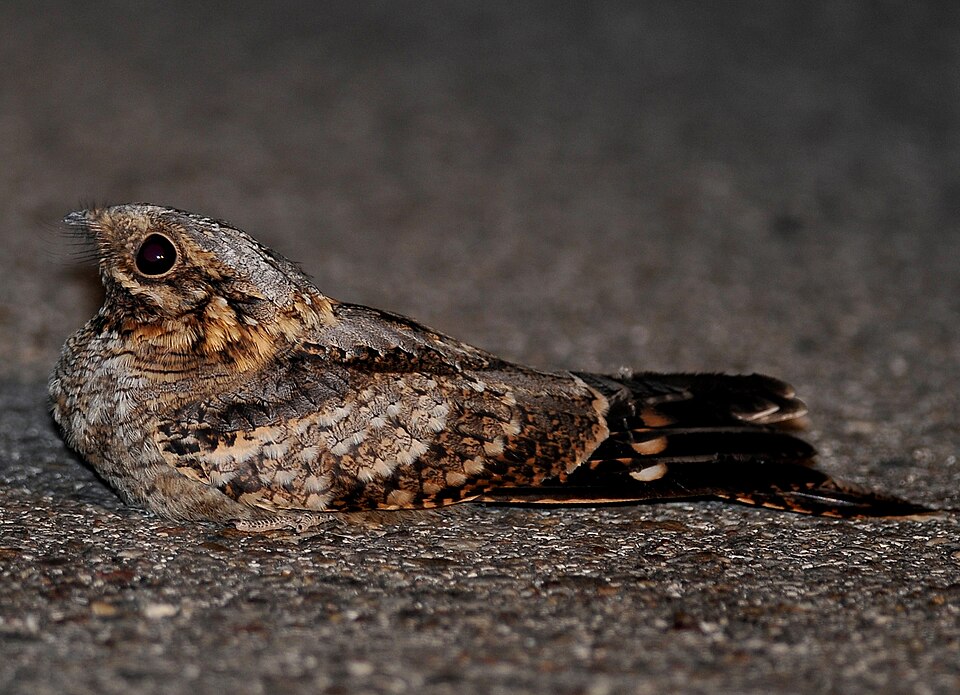
アカエリヨタカ (Caprimulgus ruficollis) アカエリヨタカ
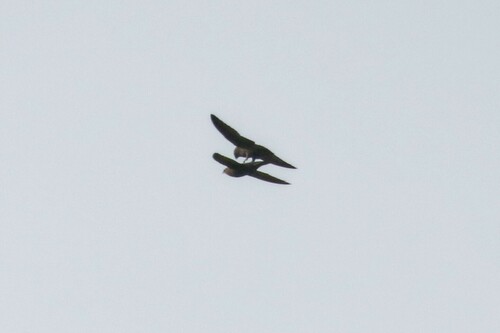
ヨーロッパアマツバメ (Apus apus) ヨーロッパアマツバメ

メディア

読み込み中…

要点

最も信頼できるフィールドマークは構造的なもので、アカエリヨタカはヨーロッパアマツバメよりもはるかに大きく、がっしりとしており、尾が長く、翼が広く丸みを帯びています。一方、アマツバメはコンパクトで、三日月のような翼を持ち、昼間は決して露出して止まることはありません。飛行中、ヨタカは白い斑点のあるゆっくりとした蛾のような浮遊する飛行を示しますが、アマツバメは速く、鎌のような翼を持ち、均一に暗い色をしています。ヨタカは目を引く赤褐色の首輪と縞模様の腹部を持ち、アマツバメの全体が暗い羽毛とわずかな淡い顎の斑点と対照的です。止まっている場合、ヨタカは地面や枝に水平に座りますが、アマツバメはほとんど目に見える場所で止まることはありません。鳴き声も非常に異なります:ヨタカは機械的なチャーリングや拍手の音を出し、アマツバメは大きな叫び声を出します。

識別のコツ

  1. サイズと構造: ヨタカははるかに大きく、頑丈な体、長い尾、広く丸い翼を持っています;アマツバメはコンパクトで、細身で、三日月のような翼を持っています。これは遠くからでも明らかです。
  2. 飛行スタイル: ヨタカは強い翼の拍動と滑空を交互に行うゆっくりとした浮遊する蛾のような飛行をします;アマツバメは速く、直接的で、機敏で、滑空することはほとんどなく、常に速い翼の拍動を持っています。
  3. 翼の形: ヨタカの翼は広く丸いです;アマツバメの翼は長く、狭く、ブーメランや三日月のように後ろに傾いています。
  4. 尾: ヨタカは白い隅を持つ長くまっすぐまたはわずかに丸い尾を持っています(両性とも);アマツバメの尾は短く、深く分かれており、白はありません。
  5. 羽毛のパターン: ヨタカは灰色、バフ、栗色、黒のまだら模様で、目立つ赤褐色の首輪と縞模様の腹部を持っています;アマツバメは均一な黒褐色で、縞模様や赤褐色のトーンはありません。
  6. 白いマーキング: ヨタカは翼と尾の側面に白い斑点を示します(両性、すべての年齢);アマツバメは翼や尾に白はなく、わずかな淡い顎の斑点のみです。
  7. 止まっている外観: ヨタカは地面や枝に水平に止まり、樹皮や落ち葉に溶け込みます;アマツバメは巣以外ではほとんど目に見える場所で止まることはなく、決して露出して座ることはありません。
  8. くちばしと口の開き: ヨタカは昆虫を捕まえるために非常に広い口を持つ短いくちばしを持っています;アマツバメは小さなくちばしとあまり目立たない口の開きを持っています。
  9. 声: ヨタカの鳴き声は繰り返しの機械的なキョクキョクキョクとチャーリングの歌です;アマツバメの鳴き声は大きく、高音の叫び声で、しばしば群れで飛んでいます。叫び声を聞いたら、それはアマツバメです;チャーリングや機械的なクリック音を聞いたら、それはヨタカです。
  10. 生息地の文脈: ヨタカは散在する木や低木のある開けた砂地のヒースに生息し、通常は昼間は地面にいます;アマツバメは町、田畑、水の上を高く飛んでいるのが見られ、決して地面にはいません。
  11. 活動期間: ヨタカは薄明かりや夜行性で、夕暮れや夜明けに最も活発です;アマツバメは日中活動的です。
  12. カモフラージュ: ヨタカは止まっているときに非常に良くカモフラージュされており、樹皮や地衣類に似ています;アマツバメは決してカモフラージュされず、ほとんど常に飛んでいます。
  13. 季節的な存在: ヨタカはイベリア半島や北アフリカで繁殖し、熱帯西アフリカで冬を越します;アマツバメはヨーロッパ全体で繁殖し、サハラ以南のアフリカに移動しますが、移動中はより広範な生息地に存在します。
  14. 一般的な落とし穴: 夕暮れ時、遠くの飛んでいるヨタカは長い翼のためにアマツバメと間違えられることがありますが、ゆっくりとした浮遊する飛行と白い翼や尾の斑点が診断的です。アマツバメは翼や尾に白を示さず、決して露出して止まることはありません。
  15. 性別/年齢の違い: 両方のヨタカの性別は翼や尾に白と赤褐色の首輪を示します;アマツバメの性別や年齢は似ており、常に暗く、わずかな顎の斑点を除いて白はありません。

大きさ

アカエリヨタカはヨーロッパアマツバメと比較して劇的に大きく、重いです(体重約84g、長さ32cm、翼幅64cm [wikidata, wikipedia])。ヨタカは最大のヨーロッパのヨタカで、尾が長く、はるかに頑丈な体を持っています。アマツバメはアマツバメとしては中型ですが、ヨタカの質量の半分にも満たず、直接比較すると細身で軽量に見えます。

羽色

どちらの種にも年齢特有の上翼パターンは記載されていないため、焦点は成鳥と一般的な羽毛にあります。アカエリヨタカは地衣類のような灰色で、バフ、栗色、黒の縞模様や筋模様があり、特徴的な赤褐色の首輪と縞模様の腹部を持っています。両性ともに翼、尾の側面、喉に白い斑点を示し、飛行中や時には休んでいるときに見えます。ヨーロッパアマツバメは完全に黒褐色で、わずかな淡い顎の斑点(遠くからは見えない)しかなく、翼や尾に白はありません。アマツバメの羽毛は均一で、縞模様、赤褐色のトーン、明らかなパターンが欠けています。飛行中、ヨタカの白い斑点と赤褐色の首輪は診断的であり、アマツバメは平坦で暗いままです。

行動

アカエリヨタカは薄明かりや夜行性で、夕暮れ時にゆっくりとした浮遊する蛾のような翼の拍動で飛び、強いフラップと滑空を交互に行います。昼間は地面や枝の上で動かずに横たわり、完璧にカモフラージュされています。ヨーロッパアマツバメはほとんど常に空中におり、速く、直接的で、非常に機敏な飛行をし、巣以外ではほとんど着地しません。アマツバメは一日中活動的で、しばしば叫び声を上げる群れで見られ、決して開けた場所で止まっているのは見られません。ヨタカは水平に止まっているのが見られますが、アマツバメはそうではありません。

生息環境

アカエリヨタカはイベリア半島と北アフリカの散在する木や低木のある開けた砂地のヒースで繁殖し、熱帯西アフリカで冬を越します。昼間は地面に生息します。ヨーロッパアマツバメはヨーロッパ全体で繁殖し、適切な巣作りの場所(しばしば建物)を好む都市や農村地域を選び、ほとんどの生活を空中で過ごし、特に水の近くで広範な生息地を探索します。アマツバメは地面や止まっているのが見られることはほとんどありません。

声

アカエリヨタカは繰り返しの機械的なキョクキョクキョクの鳴き声を出し、頭を回すときに上下し、止まっているときやしゃがんでいるときにはチャーリングの歌を歌います。また、求愛中に鋭い翼の拍手音を出します。ヨーロッパアマツバメの鳴き声は大きく、鋭い叫び声で、しばしば群れで飛んでいるときに出され、2つの音程タイプ(雌からは高い音)が存在します。これら2つの鳴き声は全く異なり、聞こえた場合には診断的です。

より良い説明を送る

比較と同じ項目を使ってください。文章はすぐに公開されます。

The most reliable field mark is structural: Red-necked Nightjar is much larger and bulkier than Common Swift, with a longer tail and broader, rounded wings, while the swift is compact, crescent-winged, and never perches exposed during the day. In flight, nightjar shows a slow, moth-like, buoyant flight with white patches on the wings and tail sides, whereas the swift is fast, scythe-winged, and uniformly dark. Nightjars have a striking rufous neck collar and barred underparts, contrasting with the swift’s all-dark plumage and only a tiny pale chin patch. If perched, the nightjar sits horizontally on the ground or a branch; swifts almost never perch visibly. Calls are also very different: mechanical churring or clapping for nightjar, loud screaming for swift.

  1. Size and structure: Nightjar is much larger, with a robust body, long tail, and broad, rounded wings; swift is compact, slender, and crescent-winged. This is obvious even at a distance.
  2. Flight style: Nightjar has a slow, buoyant, moth-like flight with alternating strong wingbeats and glides; swift is fast, direct, and agile, rarely gliding, with constant rapid wingbeats.
  3. Wing shape: Nightjar’s wings are broad and rounded; swift’s are long, narrow, and swept back like a boomerang or crescent.
  4. Tail: Nightjar has a long, straight or slightly rounded tail with white corners (in both sexes); swift’s tail is short and deeply forked, with no white.
  5. Plumage pattern: Nightjar is mottled grey, buff, chestnut, and black, with a conspicuous rufous neck collar and barred underparts; swift is uniform blackish-brown with no barring or rufous tones.
  6. White markings: Nightjar shows white spots on the wings and tail sides (both sexes, all ages); swift has no white in wings or tail, only a tiny pale chin patch.
  7. Perched appearance: Nightjar perches horizontally on the ground or a branch, blending in with bark or leaf litter; swift almost never perches visibly except at the nest, and never sits exposed.
  8. Bill and gape: Nightjar has a short bill with a very wide gape for catching insects; swift has a tiny bill and less obvious gape.
  9. Voice: Nightjar’s call is a repetitive mechanical kyok-kyok-kyok and a churring song; swift’s call is a loud, high-pitched scream, often in flocks. If you hear a scream, it’s a swift; if you hear churring or mechanical clicks, it’s a nightjar.
  10. Habitat context: Nightjar is found in open sandy heaths with scattered trees/bushes, usually on the ground by day; swift is seen flying high over towns, fields, or water, never on the ground.
  11. Activity period: Nightjar is crepuscular/nocturnal, most active at dusk and dawn; swift is diurnal, active all day.
  12. Camouflage: Nightjar is extremely well-camouflaged when perched, resembling bark or lichen; swift is never camouflaged, as it is almost always in flight.
  13. Seasonal presence: Nightjar breeds in Iberia/North Africa, winters in tropical West Africa; swift breeds across Europe and migrates to sub-Saharan Africa, but is present in a wider range of habitats during migration.
  14. Common pitfalls: At dusk, a distant nightjar in flight could be mistaken for a swift due to long wings, but the slow, buoyant flight and white wing/tail patches are diagnostic. Swifts never show white in the wings/tail and never perch exposed.
  15. Sex/age differences: Both nightjar sexes show white in wings/tail and rufous collar; swift sexes and ages look alike, always dark with no white except tiny chin patch.

Red-necked Nightjar is dramatically larger and heavier (body mass ~84g, length 32 cm, wingspan 64 cm [wikidata, wikipedia]) compared to the Common Swift (length 16–17 cm, wingspan 38–40 cm [wikipedia]). The nightjar is the largest European nightjar, with a longer tail and much more robust body. The swift is medium-sized for a swift but less than half the nightjar’s mass, appearing slender and lightweight in direct comparison.

No age-specific upperwing patterns are described for either species, so focus is on adult and general plumage. Red-necked Nightjar is lichen-grey, barred and streaked with buff, chestnut, and black, with a distinctive rufous neck collar and barred underparts. Both sexes show white spots on the wings, tail sides, and throat, visible in flight and sometimes at rest. Common Swift is entirely blackish-brown, with only a small pale chin patch (not visible at distance) and no white in the wings or tail. The swift’s plumage is uniform and lacks any barring, rufous tones, or obvious patterning. In flight, the nightjar’s white patches and rufous collar can be diagnostic, while the swift remains plain and dark.

Red-necked Nightjar is crepuscular and nocturnal, flying at dusk with slow, buoyant, moth-like wingbeats, often alternating strong flaps with glides. By day, it lies motionless on the ground or a branch, perfectly camouflaged. Common Swift is almost always airborne, with rapid, direct, and highly maneuverable flight, rarely landing except at the nest. Swifts are active all day, often in screaming flocks, and are never seen perched in the open. Nightjars can be seen perched horizontally; swifts are not.

Red-necked Nightjar breeds in open sandy heaths with scattered trees or bushes in Iberia and North Africa, wintering in tropical West Africa. It is a ground-dweller by day. Common Swift breeds across Europe, favoring urban or rural areas with suitable nesting sites (often buildings), and spends most of its life in the air, foraging over a wide range of habitats, especially near water. Swifts are rarely seen on the ground or perched.

Red-necked Nightjar gives a repetitive mechanical kyok-kyok-kyok call, rising and falling as the bird turns its head, and a churring song when perched or crouched. It also produces a sharp wing-clap during courtship. Common Swift’s call is a loud, piercing scream, often given in flight in flocks, with two pitch types (higher from females). The two vocalizations are entirely different and diagnostic if heard.

変更を破棄しますか?

保存していない編集があります。今離れると失われます。

アカエリヨタカ · ヨーロッパアマツバメ · 苦手な鳥