

Motmot

アカアシイワシャコ 対 シロハラサケイ

Alectoris rufa 対 Pterocles alchata

アカアシイワシャコとシロハラサケイのクイズ
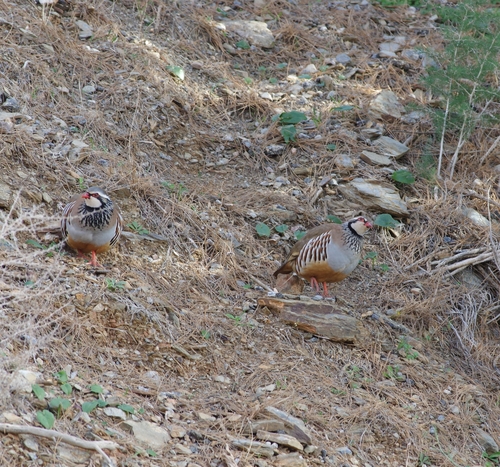
アカアシイワシャコ (Alectoris rufa) アカアシイワシャコ
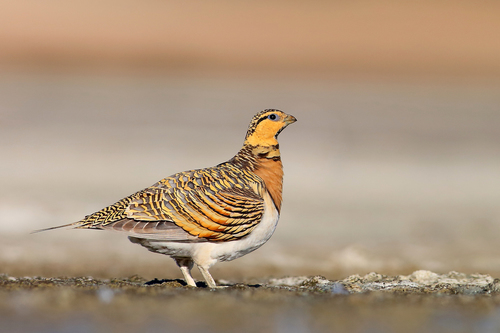
シロハラサケイ (Pterocles alchata) シロハラサケイ

メディア

読み込み中…

要点

アカアシイワシャコとシロハラサケイを区別する最も信頼できるフィールドマークは、アカアシイワシャコの強く大胆な模様の顔と側面に対して、シロハラサケイのより均一な黄緑色の上面と特徴的な長く尖った尾です。飛行中、シロハラサケイは目を引く白い翼の下と長い中央の尾の流れを示しますが、アカアシイワシャコはこれらの特徴がなく、短い尾と丸い翼でよりコンパクトに見えます。アカアシイワシャコは目立つ黒と白の顔の模様と赤褐色の横縞を持っていますが、シロハラサケイは小さく、鳩のような頭と広い栗色の胸のバンドを持っています。生息地と行動も異なります:アカアシイワシャコは通常農地や低木地に見られ、シロハラサケイは開けた乾燥した平原に生息します。

識別のコツ

  1. 尾の形と長さ: シロハラサケイは長く尖った中央の尾羽(特にオス)を持ち、飛行中や休んでいるときにピンテールの外観を作ります。アカアシイワシャコは流れがない短く丸い尾を持っています。
  2. 飛行中の翼の下の色: サケイはすべての年齢と性別で明るい白い翼の下と下部を示しますが、アカアシイワシャコの翼の下は白くなく、鈍い色に見えます。
  3. 顔の模様: アカアシイワシャコはクリーム色の喉を持つ大胆な黒と白の顔を持ち、黒いゴルゲットで縁取られ、赤いくちばしと赤い目の輪があります。サケイはずっと地味な顔を持ち、黄緑色または金色の頬、狭い黒い目のストライプ、スレートグレーのくちばしを持っています。
  4. 横縞の模様: アカアシイワシャコは横に大胆な赤褐色と黒の縞を持ち、オフホワイトと淡い灰色で分かれていますが、サケイは横縞がなく、緑がかった首と広い栗色の胸のバンドで分けられたきれいな白い腹を示します。
  5. 頭頂と後頭部: アカアシイワシャコは淡い青灰色の縁を持つ温かみのあるピンクがかった茶色の頭頂を示し、狭いオフホワイトのスーパーシリウムを持っています。サケイはオスに黄緑色の頭頂を持ち、メスはより金色の頬を持ち、スーパーシリウムはありません。
  6. 上面: アカアシイワシャコは上面が単純な砂色の茶色です。サケイは黄緑色で鈍い黄色の斑点(オスの繁殖期)または黒と茶色の黄色の縞(非繁殖期とメス)を持っています。
  7. くちばしの色: アカアシイワシャコは明るい赤いくちばしを持っていますが、サケイのくちばしはスレートグレーです。
  8. 脚の色: アカアシイワシャコはピンクがかった赤い脚を持っていますが、サケイの脚は特徴的ではないとされています。
  9. 体の形: アカアシイワシャコはコンパクトで鶏のような形をしており、丸い体と短い尾を持っています。サケイはより細長く、小さな鳩のような頭、長い尖った翼、長い尾を持っています。
  10. 飛行スタイル: アカアシイワシャコは羽音を立てながら丸い翼で飛び、短く直接的に滑空します。サケイは速く直接的に飛び、しばしば群れで、長い尖った翼と尾の流れを持っています。
  11. 鳴き声: アカアシイワシャコの地面での「チャックチャックチャック」というおしゃべりと、サケイの飛行中の「カッタルカッタル」または「ガガガ」を聞いてください。
  12. 生息地: アカアシイワシャコは農地、草地、または低木地に生息し、サケイは乾燥した開けた平原や半砂漠に生息します。
  13. 性別と季節: 繁殖羽毛のオスのサケイは明るく、黄緑色の上面と黄色の頬を持っています。メスは鈍く、よりカモフラージュされていますが、両性とも長い尾と白い翼の下を保持しています。
  14. 群れの行動: サケイは群れで見られることが多く、特に夜明けに水に飛んでいくことが多いです。アカアシイワシャコは通常、地面で小さな群れを作っています。
  15. 潜在的な落とし穴: 照明が悪い場合や距離がある場合、サケイの長い尾と白い翼の下が最も良いマークです。開けた国のすべての砂色の鳥がアカアシイワシャコであると仮定することに注意してください—尾の形と翼の下の色を確認してください。

大きさ

シロハラサケイはわずかに大きく、外見がより細長く、体重は約237.5gです。アカアシイワシャコはよりがっしりとしており、コンパクトで、短い尾と丸い体を持っています。サケイの長く尖った翼と尾の流れは、特に飛行中にスリムで空気力学的に見え、アカアシイワシャコはより重く、鶏のように見えます。

羽色

幼鳥と未成熟の羽毛はどちらの種についても詳細には説明されていませんが、すべての年齢において、シロハラサケイは飛行中に特徴的な白い翼の下、長い中央の尾羽(特にオス)、および横縞のある尾と尾羽を示します。アカアシイワシャコは年齢に関係なく白い翼の下と尾の流れがなく、代わりに単純な砂色の茶色の背中、大胆な赤褐色と黒の横縞、そして目を引く黒と白の顔の模様を示します。繁殖羽毛の成鳥のオスのサケイは、黄緑色の上面に黄色の頬と黒い目のストライプを持っていますが、メスは鈍く、よりカモフラージュされており、金色の頬と首を持っています。アカアシイワシャコは常に黒いゴルゲットで縁取られたクリーム色の喉と下喉に三角形の黒い筋を示します。非繁殖のサケイでは、上面はより横縞があり、喉は白っぽくなりますが、長い尾と白い翼の下は特徴的です。

行動

アカアシイワシャコは通常、農地、ヘッジ、または開けた低木地で小さな群れで歩いたり走ったりしているのが見られます。彼らは飛ぶのを嫌がり、動かされるときだけ空に飛び立ち、羽音を立てながら丸い翼で飛び、短く滑空します。シロハラサケイは非常に群れを成し、しばしば群れで見られ、夜明けに水飲み場への長く速い直接的な飛行に適応しています。地面では、サケイはより秘密主義的で、開けた石の多い平原に溶け込み、アカアシイワシャコが好む豊かなまたは構造化された生息地ではめったに見られません。

生息環境

アカアシイワシャコは農地、草地、そして低木地を好み、しばしば生け垣や森林の端の近くに見られます。シロハラサケイは乾燥した開けた無木の平原と半砂漠の専門家であり、耕作されたり豊かな地域ではめったに見られません。乾燥した不毛の風景で鳥を見かけた場合、サケイの可能性が高く、農地や混合農業地ではアカアシイワシャコがデフォルトです。

声

アカアシイワシャコは一連のチャッタリングの繰り返しの呼び声を出し、通常は地面から「チャックチャックチャック」または「カー・カー・カー」と表現されます。シロハラサケイは地面ではほとんど静かですが、飛行中には大きな「カッタルカッタル」、鼻にかかった「ガガガ」、そして低い「ガングアン」を出します。サケイの呼び声はより響き渡り、特に群れが水に飛ぶときに長距離にわたって伝わります。

より良い説明を送る

比較と同じ項目を使ってください。文章はすぐに公開されます。

The most reliable field mark to separate Red-legged Partridge from Pin-tailed Sandgrouse is the strong, boldly patterned face and flanks of the partridge versus the sandgrouse's more uniform, yellowish-green upperparts and distinctive long, pointed tail. In flight, Pin-tailed Sandgrouse show strikingly white underwings and long central tail streamers, while Red-legged Partridge lacks these features and appears more compact with short tail and rounded wings. The partridge has a prominent black-and-white face pattern and rufous-barred flanks, while the sandgrouse has a smaller, pigeon-like head and a broad chestnut breast band. Habitat and behavior also differ: partridges are usually found in farmland or scrub, sandgrouse on open, dry plains.

  1. Tail shape and length: Pin-tailed Sandgrouse has long, pointed central tail feathers (especially in males), creating a pin-tailed look in flight and at rest. Red-legged Partridge has a short, rounded tail with no streamers.
  2. Underwing color in flight: Sandgrouse shows bright white underwings and underparts in all ages and sexes; partridge underwings are not white and appear duller.
  3. Face pattern: Red-legged Partridge has a bold black-and-white face with a cream throat bordered by a solid black gorget, a red bill, and a red eye-ring. Sandgrouse has a much plainer face: yellowish or golden-buff cheeks, a narrow black eye-stripe, and a slate-grey bill.
  4. Flank pattern: Partridge has bold rufous and black bars on the flanks, separated by off-white and pale grey; sandgrouse lacks any flank barring, instead showing a clean white belly separated from the greenish neck by a broad chestnut breast band.
  5. Crown and nape: Partridge shows a warm pinkish-brown crown with pale blue-grey edges and a narrow off-white supercilium; sandgrouse has a yellowish-green crown in males, more golden-buff in females, with no supercilium.
  6. Upperparts: Partridge is plain sandy-brown above; sandgrouse is yellowish-green with dull yellow spots (male breeding), or barred black and brownish-yellow (non-breeding and female).
  7. Bill color: Partridge has a bright red bill; sandgrouse's bill is slate-grey.
  8. Leg color: Partridge has pinkish-red legs; sandgrouse legs are not described as distinctive.
  9. Body shape: Partridge is compact and chicken-like, with a rounded body and short tail; sandgrouse is more elongated, with a small pigeon-like head, long pointed wings, and a long tail.
  10. Flight style: Partridge flies with whirring, rounded wings and short, direct glides; sandgrouse flies fast and directly, often in flocks, with long pointed wings and tail streamers.
  11. Vocalizations: Listen for the partridge's chattering 'chuck-chuck-chuck' on the ground versus the sandgrouse's loud 'kattar-kattar' or 'ga-ga-ga' in flight.
  12. Habitat: Partridge in farmland, grassy fields, or scrub; sandgrouse on dry, open plains or semi-desert.
  13. Sex and season: Male sandgrouse in breeding plumage are brighter with yellowish-green upperparts and yellow cheeks; females are duller and more camouflaged, but both sexes retain the long tail and white underwing.
  14. Group behavior: Sandgrouse are often seen in flocks, especially flying to water at dawn; partridges are usually in small coveys on the ground.
  15. Potential pitfalls: In poor light or at distance, the sandgrouse's long tail and white underwing are the best marks; beware of assuming all sandy-brown birds in open country are partridges—check for tail shape and underwing color.

Pin-tailed Sandgrouse is slightly larger and more elongated in appearance, with a body mass around 237.5g [wikidata]. Red-legged Partridge is stockier and more compact, with a shorter tail and rounder body. The sandgrouse's long, pointed wings and tail streamers make it look sleeker and more aerodynamic, especially in flight, while the partridge appears heavier and more chicken-like.

Juvenile and immature plumages are not described in detail for either species, but in all ages, Pin-tailed Sandgrouse shows a distinctive white underwing in flight, long central tail feathers (especially in males), and a barred rump and tail. The Red-legged Partridge, regardless of age, lacks white underwings and tail streamers, instead showing a plain sandy-brown back, bold rufous and black flank bars, and a striking black-and-white face pattern. Adult male sandgrouse in breeding plumage have yellowish-green upperparts with yellow cheeks and a black eye-stripe, while females are duller and better camouflaged, with golden-buff cheeks and neck. The partridge always shows a cream throat bordered by a black gorget and triangular black streaks on the lower throat. In non-breeding sandgrouse, upperparts are more barred and the throat becomes whitish, but the long tail and white underwing remain distinctive.

Red-legged Partridge is usually seen walking or running on the ground in small groups, often in farmland, hedgerows, or open scrub. They are reluctant fliers, taking to the air only when disturbed, flying with whirring, rounded wings and short glides. Pin-tailed Sandgrouse is highly gregarious, often in flocks, and is adapted for long, fast, direct flights to watering holes at dawn. On the ground, sandgrouse are more secretive and blend into open, stony plains, rarely seen in the lush or structured habitats preferred by partridges.

Red-legged Partridge favors farmland, grassy fields, and scrubby areas, often near hedges or woodland edges. Pin-tailed Sandgrouse is a specialist of dry, open, treeless plains and semi-desert, rarely found in cultivated or lush areas. If you see the bird in a dry, barren landscape, sandgrouse is more likely; in farmland or mixed agricultural land, partridge is the default.

Red-legged Partridge gives a series of chattering, repeated calls, often described as 'chuck-chuck-chuck' or 'kerr-kerr-kerr', usually from the ground. Pin-tailed Sandgrouse is mostly silent on the ground but in flight gives a loud, rolling 'kattar-kattar', a nasal 'ga-ga-ga', and a low 'gang gang'. Sandgrouse calls are more resonant and carry over long distances, especially when flocks fly to water.

変更を破棄しますか?

保存していない編集があります。今離れると失われます。

アカアシイワシャコ · シロハラサケイ · 苦手な鳥