

Motmot

ベニバト 対 テリハウズラバト

Streptopelia tranquebarica 対 Geotrygon chrysia

ベニバトとテリハウズラバトのクイズ
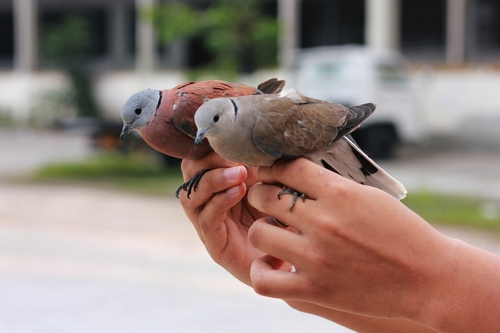
ベニバト (Streptopelia tranquebarica) ベニバト
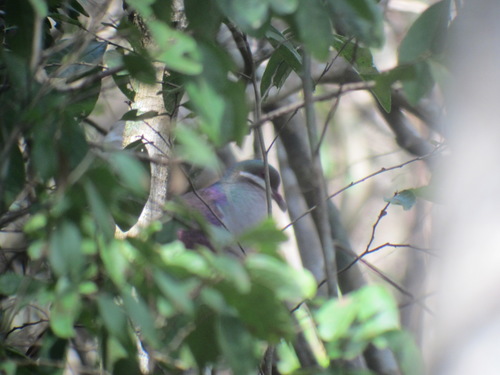
テリハウズラバト (Geotrygon chrysia) テリハウズラバト

メディア

読み込み中…

要点

レッドコラードダブとテリハウズラバトを区別する最も信頼できるフィールドマークは、頭部と顔のパターンです:レッドコラードダブのオスは青灰色の頭ときれいな黒い襟を持ち、テリハウズラバトは大胆な白い顔のストライプと虹色の冠/うなじを示します。飛んでいるときや止まっているとき、レッドコラードダブは明らかに小さくて細身で、雌は地味で淡い外観を持つのに対し、テリハウズラバトは大きくてがっしりしており、豊かな錆色と虹色のトーンを持っています。幼鳥や未成熟の特定の上翼パターンはどちらの種にも記載されていないため、頭、顔、全体の色合いに焦点を当ててください。生息地と分布も強力な手がかりです:レッドコラードダブは開けた国のアジアの種であり、テリハウズラバトはカリブの森林の鳥です。

識別のコツ

  1. 頭部と顔のパターン:オスのレッドコラードダブは青灰色の頭と鋭い黒い襟を持ち、テリハウズラバトは大胆な白い顔のストライプと虹色の冠/うなじを持っています。白い顔のストライプはテリハウズラバトに特有で、遠くからでも見えます。
  2. 全体の色合い:テリハウズラバトは上面が豊かな錆色で、強い虹色(頭と首にアメジスト/青銅色、背中と翼の覆羽に紫がかった赤)を持っています;レッドコラードダブはより均一で、オスは淡い赤褐色を示し、雌はピンクがかったり淡い茶色です。
  3. 性差:レッドコラードダブの雌はオスよりもずっと地味で淡い色合いで、強いコントラストと虹色が欠けています。テリハウズラバトはフィールドでこのような顕著な性差を示しません。
  4. サイズと構造:レッドコラードダブは小さくて細身(20.5–23 cm、~104 g)で、テリハウズラバトは大きくて重い(27–31 cm、169 g)です。もしその鳥がダブにしてはがっしりしているか大きく見えるなら、テリハウズラバトの可能性が高いです。
  5. 虹色:テリハウズラバトだけが冠、うなじ、首にアメジスト/青銅色の虹色を持ち、背中/翼の覆羽には紫がかった赤があります。レッドコラードダブには虹色がありません。
  6. 黒い襟:きれいな黒い襟はオスの成鳥のレッドコラードダブの特徴で、テリハウズラバトには存在しません。
  7. 白い顔のストライプ:テリハウズラバトにのみ存在し、すべての年齢と性別のレッドコラードダブにはありません。
  8. 生息地の文脈:レッドコラードダブはアジアの開けた、よく木が生えた低地、プランテーション、都市の端に生息し、テリハウズラバトはカリブの森林の専門家で、開けた国にはめったにいません。
  9. 行動:レッドコラードダブはしばしば開けた場所や電線に止まります;テリハウズラバトは秘密主義で、森林の床で餌を探し、開けた場所に止まることはめったにありません。
  10. 飛行スタイル:ここでは詳細は述べませんが、レッドコラードダブは開けた飛行に飛び立つ可能性が高く、テリハウズラバトは低く潜んだり、下草を通り抜けるかもしれません。
  11. 幼鳥/未成熟の混乱:どちらの種にも特有の幼鳥や未成熟の上翼パターンは記載されていないため、年齢が他のダブよりも混乱を引き起こす可能性は低いです。
  12. 鳴き声:もし聞こえた場合、密な森林での単音のうめき声はテリハウズラバトを支持します;レッドコラードダブの鳴き声はここでは詳細に述べられていません。
  13. 地理的分布:レッドコラードダブはアジアの種であり、テリハウズラバトはカリブの種です。分布外の記録は注意深く調査する必要があります。
  14. 群れのサイズ:レッドコラードダブは繁殖地に到着する際に特に小さな群れで見られることがあります;テリハウズラバトはほぼ常に孤独またはペアで見られます。
  15. 羽毛の落とし穴:雌のレッドコラードダブは非常に地味に見えることがあり、他の茶色のダブと混同されることがありますが、テリハウズラバトの虹色と大胆な顔のパターンが欠けています。

大きさ

レッドコラードダブは明らかに小さくて軽く、長さは20.5–23 cm、質量は約104 g(ウィキペディアによる)で、テリハウズラバトの長さ27–31 cm、質量169 g [wikidata]と比較されます。このサイズの違いはフィールドで明らかです:レッドコラードダブは小柄で繊細に見え、テリハウズラバトははるかにがっしりしていて長い体を持っています。一緒に見られた場合、テリハウズラバトはレッドコラードダブを圧倒します。

羽色

どちらの種にも年齢特有の上翼や幼鳥の飛行マークは記載されていないため、成鳥と一般的な羽毛に焦点を当ててください。オスのレッドコラードダブは青灰色の頭、淡い赤褐色の体、きれいな黒い襟を示し、雌は全体的に淡い茶色またはピンクがかったトーンで、強いコントラストが欠けています。テリハウズラバトの両性は上面が豊かな錆色で、冠、うなじ、首にアメジストまたは青銅色の虹色を持ち、大胆な白い顔のストライプがあります。テリハウズラバトの背中、尾、内翼の覆羽は紫がかった赤の虹色を示し、レッドコラードダブでは決して見られません。要約すると:レッドコラードダブはより均一で控えめ(特に雌)であり、テリハウズラバトはより豊かな色合いと虹色を持ち、独特の顔のパターンを持っています。

行動

レッドコラードダブはしばしばペアまたは小さな群れで見られ、特に繁殖地に到着する際に、開けたまたは半開けた国で快適に過ごし、時には電線や露出した枝に止まります。テリハウズラバトは通常孤独またはペアで、森林の床で静かに餌を探し、開けた場所に止まることはめったにありません。彼らの動きはより隠密で地面指向であり、レッドコラードダブのより樹上性で開けた国の行動とは対照的です。

生息環境

レッドコラードダブは開けた、よく木が生えた低地を好み、運河や道路沿いの樹木プランテーションなどに生息し、アジアの平野に広く分布し、岩だらけの山麓や砂漠を避けます。密な森林には見られません。対照的に、テリハウズラバトはカリブの密な森林や茂みの種で、開けた国にはめったに出ません。もしその鳥が深い森林や森林の床にいるなら、テリハウズラバトの可能性がはるかに高いです;アジアの開けた農地、プランテーション、または都市の端にいる場合は、レッドコラードダブが期待されます。

声

レッドコラードダブの鳴き声はここでは詳細に述べられていません。テリハウズラバトは白ビタイシャコバトに似た単音のうめき声を出します。もし密な森林で低く悲しげな呼び声が聞こえた場合、それはテリハウズラバトを示すかもしれませんが、声は与えられた情報での主要な区別要因ではありません。

より良い説明を送る

比較と同じ項目を使ってください。文章はすぐに公開されます。

The most reliable field mark to separate Red Collared Dove from Key West Quail-Dove is the head and facial pattern: Red Collared Dove males have a blue-grey head and a neat black collar, while Key West Quail-Dove shows a bold white facial stripe and iridescent crown/nape. In flight or perched, Red Collared Dove is noticeably smaller and slimmer, with a plain, pale appearance in females, whereas Key West Quail-Dove is larger and bulkier, with rich rusty and iridescent tones. Juvenile or immature-specific upperwing patterns are not described for either species, so focus on head, face, and overall coloration. Habitat and range are also strong clues: Red Collared Dove is an open-country Asian species, while Key West Quail-Dove is a Caribbean forest bird.

  1. Head and facial pattern: Male Red Collared Dove has a blue-grey head and a sharp black collar; Key West Quail-Dove has a bold white facial stripe and iridescent crown/nape. The white facial stripe is unique to Key West Quail-Dove and is visible even at a distance.
  2. Overall coloration: Key West Quail-Dove is rich rusty-brown above with strong iridescence (amethyst/bronze-green on head and neck, purplish-red on back and wing coverts); Red Collared Dove is more uniform, with males showing light red-brown and females/pinkish or pale brown.
  3. Sexual dimorphism: Red Collared Dove females are much plainer and paler than males, lacking strong contrast and iridescence. Key West Quail-Dove does not show such marked sexual dimorphism in the field.
  4. Size and structure: Red Collared Dove is small and slim (20.5–23 cm, ~104 g), while Key West Quail-Dove is larger and heavier (27–31 cm, 169 g). If the bird appears bulky or large for a dove, Key West Quail-Dove is more likely.
  5. Iridescence: Only Key West Quail-Dove has amethyst/bronze-green iridescence on the crown, nape, and neck, and purplish-red on mantle/back/wing coverts. Red Collared Dove lacks any iridescence.
  6. Black collar: The neat black collar is a feature of adult male Red Collared Dove, not present in Key West Quail-Dove.
  7. White facial stripe: Present only in Key West Quail-Dove, absent in Red Collared Dove of all ages and sexes.
  8. Habitat context: Red Collared Dove is found in open, well-wooded lowlands, plantations, and urban edges in Asia; Key West Quail-Dove is a Caribbean forest specialist, rarely in open country.
  9. Behavior: Red Collared Dove often perches in the open or on wires; Key West Quail-Dove is secretive, foraging on the forest floor and rarely perching in the open.
  10. Flight style: Not detailed here, but Red Collared Dove is likely to flush into open flight, while Key West Quail-Dove may skulk or burst low through undergrowth.
  11. Juvenile/immature confusion: No distinctive juvenile or immature upperwing patterns are described for either species, so age is less likely to cause confusion than in some other doves.
  12. Vocalizations: If heard, a single-pitched moan in dense woodland supports Key West Quail-Dove; Red Collared Dove's calls are not detailed here.
  13. Geographic range: Red Collared Dove is Asian; Key West Quail-Dove is Caribbean. Out-of-range records should be scrutinized carefully.
  14. Flock size: Red Collared Dove may be seen in small flocks, especially on arrival in breeding areas; Key West Quail-Dove is almost always solitary or in pairs.
  15. Plumage pitfalls: Female Red Collared Dove can appear very plain and may be confused with other brown doves, but lacks the iridescence and bold facial pattern of Key West Quail-Dove.

Red Collared Dove is significantly smaller and lighter, with a length of 20.5–23 cm and a mass around 104 g (per Wikipedia), compared to the Key West Quail-Dove's 27–31 cm length and 169 g mass [wikidata]. This size difference is apparent in the field: Red Collared Dove appears petite and delicate, while Key West Quail-Dove is much bulkier and longer-bodied. If seen together, the Key West Quail-Dove would dwarf the Red Collared Dove.

No age-specific upperwing or juvenile flight marks are described for either species, so focus on adult and general plumage. Male Red Collared Dove shows a blue-grey head, light red-brown body, and a neat black collar; females are plainer, with overall pale brown or pinkish tones and lack strong contrast. Key West Quail-Dove of both sexes is rich rusty-brown above, with amethyst or bronze-green iridescence on the crown, nape, and neck, and a bold white facial stripe. The mantle, back, rump, and inner wing coverts of Key West Quail-Dove show purplish-red iridescence, never seen in Red Collared Dove. In summary: Red Collared Dove is more uniform and subdued (especially females), while Key West Quail-Dove is more richly colored and iridescent, with a distinctive facial pattern.

Red Collared Dove is often seen in pairs or small flocks, especially when arriving in breeding areas, and is comfortable in open or semi-open country, sometimes perching on wires or exposed branches. Key West Quail-Dove is typically solitary or in pairs, foraging quietly on the forest floor and rarely perching in the open. Their movements are more furtive and ground-oriented, in contrast to the more arboreal and open-country behavior of Red Collared Dove.

Red Collared Dove prefers open, well-wooded tracts in the lowlands, such as canal or roadside tree plantations, and is widespread in the plains of Asia, avoiding rocky foothills and deserts. It is not found in dense forests. In contrast, Key West Quail-Dove is a Caribbean species of dense forests and thickets, rarely venturing into open country. If the bird is in deep woodland or forest floor, Key West Quail-Dove is far more likely; if in open farmland, plantations, or urban edges in Asia, Red Collared Dove is expected.

The Red Collared Dove's vocalizations are not described in detail here. Key West Quail-Dove gives a single-pitched moan, similar to the White-tipped Dove. If you hear a low, mournful call in dense woodland, it may point to Key West Quail-Dove, but voice is not a primary separator with the information given.

変更を破棄しますか?

保存していない編集があります。今離れると失われます。

ベニバト · テリハウズラバト · 苦手な鳥