

Motmot

アメリカムラサキバン 対 セイケイ

Porphyrio martinica 対 Porphyrio porphyrio

アメリカムラサキバンとセイケイのクイズ
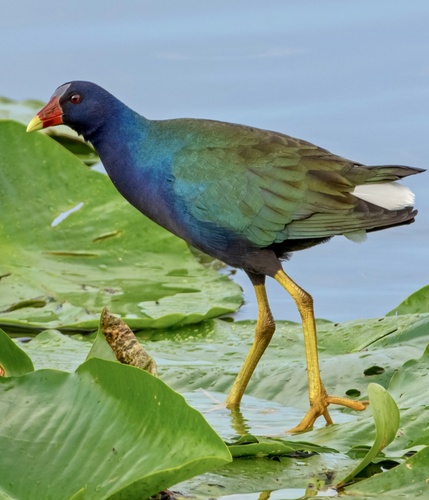
アメリカムラサキバン (Porphyrio martinica) アメリカムラサキバン
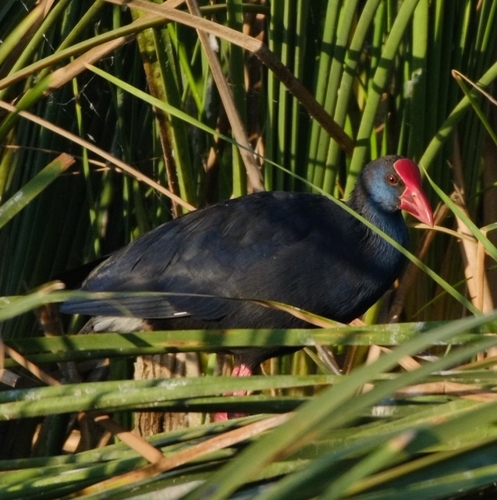
セイケイ (Porphyrio porphyrio) セイケイ

メディア

読み込み中…

要点

アメリカムラサキバンとセイケイを区別する最も信頼できる方法は、全体の色合いとくちばしおよび前頭盾の色によるものです:アメリカムラサキバンの成鳥は淡い青の盾と赤と黄色のくちばしを示し、セイケイは固体の赤いくちばしと盾を持っています。未成熟のアメリカムラサキバンは茶色がかっており、青銅のヒントと淡いくちばし/盾を持っており、若いセイケイと混同されることがありますが、セイケイは淡い盾と茶色がかった脚の同じ組み合わせを示すことはありません。両種は大きな足と明るい羽毛を持っていますが、アメリカムラサキバンは明らかに小さく、より繊細で、黄色い脚(成鳥)とより虹色で多色の光沢を持っています。セイケイはよりがっしりしており、鶏のサイズで、すべての羽毛において常に赤いくちばしと盾を持っています。

識別のコツ

  1. Bill and shield color: 成鳥のアメリカムラサキバンは淡い青の前頭盾と赤と黄色のくちばしを持ち、セイケイは常に固体の赤いくちばしと盾を持っています。これはすべての年齢で最も信頼できるフィールドマークです。
  2. Leg and foot color: 成鳥のアメリカムラサキバンは明るい黄色の脚と足を持ち、未成熟は茶色がかった黄色の脚、幼鳥は茶色の脚を持っています。セイケイは通常、赤みがかったか鈍い色の脚(黄色ではない)を持ち、成鳥のアメリカムラサキバンの明るい黄色は持っていません。
  3. Body size and shape: アメリカムラサキバンははるかに小さく、スリムで、より繊細な体型を持ち、サイズに対して相対的に長い足指を持っています。セイケイはがっしりしており、鶏のサイズで、はるかに重い体に見えます。
  4. Plumage iridescence: アメリカムラサキバンの成鳥は良い光の中で紫、緑、トルコ石のきらめく混合を示し、セイケイはより均一に深い青または紫で、同じ虹色の光沢を欠いています。
  5. Juvenile/immature confusion: 若いアメリカムラサキバンは茶色がかっており、緑青銅のヒントと淡いくちばし/盾を持っています;セイケイの幼鳥はこの組み合わせを示さず、全体的に茶色であることはありません。淡い盾とくちばしを持つ茶色がかったレールを見たら、それは若いアメリカムラサキバンです。
  6. Flight jizz: 両種は脚をぶら下げて飛びますが、アメリカムラサキバンの黄色い足(成鳥)または茶色がかった足(未成熟)は特徴的です。セイケイは飛行中によりがっしりして重く見えます。
  7. Habitat and range: アメリカではアメリカムラサキバンが唯一の選択肢です;西ヨーロッパと北西アフリカではセイケイが期待されます。範囲外の記録は非常にまれで、通常は迷鳥に関係しています。
  8. Perched behavior: アメリカムラサキバンは浮遊植物や葦の上でバランスを取っているのが見られることが多く、長い足指を使います。セイケイはより固い地面や密な植生の上を歩いているのが見られることが多いです。
  9. Plumage in poor light: アメリカムラサキバンは悪い光の中で曇ったり茶色がかって見えることがありますが、盾とくちばしの色は診断的なままです。セイケイの色は照明条件に対してより安定しています。
  10. Sex and season: 両種において顕著な性差はなく、すべてのフィールドマークは年間を通じて適用されます。
  11. Courtship and display: アメリカムラサキバンだけが、翼を直角に持ち、一次羽を下向きに傾けた相互ディスプレイを行うことが記述されていますが、これはフィールドIDにはあまり役立ちません。
  12. Vagrancy: アメリカムラサキバンは悪名高い迷鳥ですが、ほとんどすべての範囲外の記録は幼鳥です;範囲外の鳥を疑う場合は、茶色がかった羽毛と淡いくちばし/盾を確認してください。
  13. Confusion risk: 主な落とし穴は、鈍いまたは未成熟のアメリカムラサキバンをセイケイと間違えることです、特に悪い光や距離で。全体のサイズや色の印象に頼る前に、くちばし/盾の色と脚の色を常に確認してください。
  14. Feet size: 両者は大きな足を持っていますが、アメリカムラサキバンの足はより細くて黄色(成鳥)であり、セイケイの足はより厚く、決して黄色ではありません。
  15. No distinctive upperwing pattern: 両種はフィールドでの区別に役立つ独自の上翼パターンを示しません。

大きさ

アメリカムラサキバンは、セイケイと比較して著しく小さく、軽量です(平均成鳥の質量約236g)。セイケイは鶏のサイズで、がっしりしていると説明されています(正確な質量は示されていませんが、すべてのフィールドでの遭遇で一貫して大きいです)。アメリカムラサキバンはよりスリムで、頑丈さが少なく、サイズに対して相対的に長い足指を持っています。直接比較すると、セイケイははるかに重い体に見え、高く見えます、特に両者が並んで見られるときや、馴染みのある湿地の鳥と一緒に見られるときに。

羽色

行動

両種は大きな足を使って浮遊植物の上を歩くように適応していますが、アメリカムラサキバンはより敏捷で、しばしばスイレンの葉や葦の上を登っているのが見られ、長い足指を使って体重を分散させます。通常、短い距離だけを飛び、しばしば脚を引きずります。セイケイはより重く、より慎重に動き、しばしば湿地や開けた湿地の端を歩いているのが見られます。両者は開けた場所で大胆になることがありますが、アメリカムラサキバンはより薄い植物の上でバランスを取っているのが見られることが多いです。

生息環境

アメリカムラサキバンはアメリカで見られ、特に密な浮遊または出現する植生のある湿地、湖、川に生息しています。セイケイは西地中海(スペイン、ポルトガル、フランス、イタリア、北西アフリカ)の周辺の湿地に制限されており、しばしば大きな葦原、湿地、時には水田に生息しています。彼らの範囲は、まれな迷鳥のイベントを除いて重なりません。アメリカでは、どんなセイケイもほぼ確実にアメリカムラサキバンです;イベリア、フランス、または北西アフリカでは、セイケイがデフォルトの大きな紫のレールです。

より良い説明を送る

比較と同じ項目を使ってください。文章はすぐに公開されます。

The most reliable way to separate Purple Gallinule from Western Swamphen is by their overall coloration and the color of the bill and frontal shield: Purple Gallinule adults show a pale blue shield and a red-and-yellow bill, while Western Swamphen has a solid red bill and shield. Immature Purple Gallinules are brownish with hints of bronze and a pale bill/shield, which can be confused with young swamphens, but Western Swamphen never shows the same combination of pale shield and brownish legs. Both species have large feet and bright plumage, but Purple Gallinule is distinctly smaller and more delicate, with yellow legs (adults) and a more iridescent, multicolored sheen. Western Swamphen is bulkier, chicken-sized, and always has a red bill and shield in all plumages.

  1. Bill and shield color: Adult Purple Gallinule has a pale blue forehead shield and a red-and-yellow bill; Western Swamphen always has a solid red bill and shield. This is the single most reliable field mark at all ages.
  2. Leg and foot color: Adult Purple Gallinule has bright yellow legs and feet; immatures have brownish-yellow legs, juveniles brown legs. Western Swamphen typically has reddish or duller legs (not yellow), and never the bright yellow of adult gallinule.
  3. Body size and shape: Purple Gallinule is much smaller and slimmer, with a more delicate build and proportionally longer toes for its size. Western Swamphen is bulkier, chicken-sized, and appears much heavier-bodied.
  4. Plumage iridescence: Purple Gallinule adults show a shimmering mix of purple, green, and turquoise in good light, while Western Swamphen is more uniformly deep blue or purple, lacking the same iridescent sheen.
  5. Juvenile/immature confusion: Young Purple Gallinules are brownish with green-bronze hints and a pale bill/shield; Western Swamphen juveniles do not show this combination and are never as brown overall. If you see a brownish rail with a pale shield and bill, it's a young gallinule.
  6. Flight jizz: Both species fly with legs dangling, but the gallinule's yellow feet (adults) or brownish feet (immatures) are distinctive. Western Swamphen appears bulkier and heavier in flight.
  7. Habitat and range: In the Americas, Purple Gallinule is the only option; in Western Europe and NW Africa, Western Swamphen is expected. Out-of-range records are extremely rare and usually involve vagrants.
  8. Perched behavior: Purple Gallinule is more likely to be seen balancing on floating plants or reeds, using its long toes. Western Swamphen is more often seen striding on firmer ground or in denser vegetation.
  9. Plumage in poor light: Purple Gallinule can look dusky or brownish in bad light, but the shield and bill color remain diagnostic. Western Swamphen's color is more stable across lighting conditions.
  10. Sex and season: No significant sexual dimorphism in either species; all field marks apply year-round.
  11. Courtship and display: Only Purple Gallinule is described as performing a mutual display with wings held at right angles and primaries angled down, but this is rarely useful for field ID.
  12. Vagrancy: Purple Gallinule is a notorious vagrant, but almost all extralimital records are juveniles; check for brownish plumage and pale bill/shield if you suspect an out-of-range bird.
  13. Confusion risk: The main pitfall is mistaking a dull or immature gallinule for a swamphen, especially in poor light or at distance. Always check bill/shield color and leg color before relying on overall size or color impression.
  14. Feet size: Both have large feet, but the gallinule's are more slender and yellow (adults); swamphen's are thicker and never yellow.
  15. No distinctive upperwing pattern: Neither species shows a unique upperwing pattern in flight that is useful for separation in the field.

Purple Gallinule is notably smaller and lighter (average adult mass ~236 g) compared to the Western Swamphen, which is described as chicken-sized and bulkier (no precise mass given, but consistently larger in all field encounters). The gallinule appears more slender and less robust, with proportionally longer toes for its size. In direct comparison, Western Swamphen will look much heavier-bodied and taller, especially when both are seen side by side or with familiar wetland birds.

  • Juvenile/Immature: Purple Gallinule juveniles are light brown with green-bronze hints on the wings and back, and white undertail coverts; their bill and shield are pale, and legs are brown. Immatures are brown-bronze overall with some purple on the chest, still with a pale bill and shield and brownish-yellow legs. Western Swamphen juveniles are not described in detail here, but never show the same pale shield and bill combination; even young birds have a red bill and shield, and their overall coloration is more blue or purple, lacking the brown-bronze tones of gallinule immatures.
  • Adult: Purple Gallinule adults are strikingly iridescent purple-blue, with green and turquoise highlights in good light, a pale blue forehead shield, and a red-and-yellow bill. Legs and feet are bright yellow. Western Swamphen adults are deep blue to purple, with a solid red bill and frontal shield, and large feet (color not specified here, but typically reddish or duller in swamphens). The gallinule's plumage is more variable in light, sometimes looking dusky or brownish in poor light, but the shield and bill pattern remain distinctive.
  • Flight: Purple Gallinule often flies with legs dangling, showing yellow feet (adults) or brownish feet (immatures); Western Swamphen also has large feet, but the color and bulk of the bird are different. No distinctive upperwing pattern is described for either species in these notes.

Both species are adapted for walking on floating vegetation with their large feet, but Purple Gallinule is more agile and often seen clambering on lily pads or reeds, using its long toes to distribute weight. It usually flies only short distances and often with legs trailing. Western Swamphen is heavier and moves more deliberately, often seen striding through marshes or open wetland edges. Both can be bold in the open, but the gallinule is more likely to be seen balancing on flimsy vegetation.

Purple Gallinule is found in the Americas, especially in marshes, lakes, and rivers with dense floating or emergent vegetation. Western Swamphen is restricted to wetlands around the western Mediterranean (Spain, Portugal, France, Italy, NW Africa), often in large reedbeds, marshes, and sometimes paddy fields. Their ranges do not overlap except in rare vagrancy events. In the Americas, any swamphen is almost certainly a Purple Gallinule; in Iberia, France, or NW Africa, Western Swamphen is the default large purple rail.

変更を破棄しますか?

保存していない編集があります。今離れると失われます。

アメリカムラサキバン · セイケイ · 苦手な鳥