

Motmot

フナシスズメバト 対 ソライロアルキバト

Columbina minuta 対 Claravis pretiosa

フナシスズメバトとソライロアルキバトのクイズ
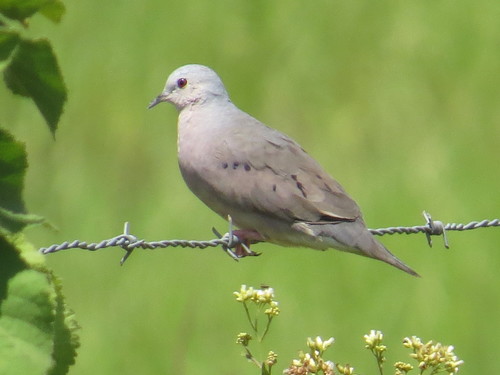
フナシスズメバト (Columbina minuta) フナシスズメバト
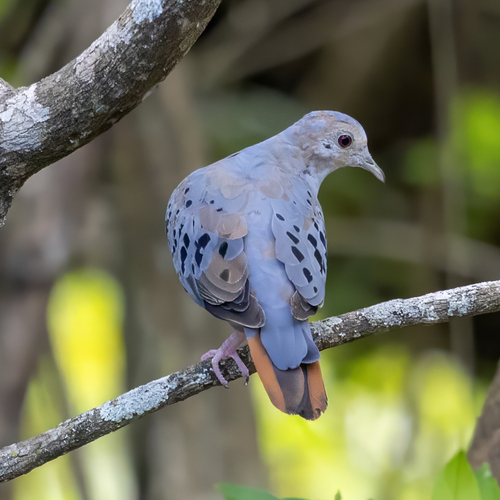
ソライロアルキバト (Claravis pretiosa) ソライロアルキバト

メディア

読み込み中…

要点

これら二種の最も信頼できるフィールドマークは、大胆な翼の斑点の有無です:ソライロアルキバト(特に成鳥のオス)は、翼に目立つ黒または栗色の斑点を示しますが、フナシスズメバトは、より淡い翼に微妙な暗紫色の斑点しか持ちません。幼鳥のソライロアルキバトは背中に赤褐色のスケーリングがあり、フナシスズメバトはこれを示すことはありません。構造的には、ソライロアルキバトは明らかに大きく、体重も重く、フィールドではより頑丈な外観を持っています。フナシスズメバトは、スズメバトに典型的な頭部と胸部のスケール状または斑点状の羽毛を欠いており、全体的にソライロアルキバトよりも地味で小さいです。性別と年齢の違いは重要です:雌および未熟なソライロアルキバトはより茶色で、栗色の翼の斑点を示しますが、フナシスズメバトはより均一な色合いを保ち、強いコントラストを欠いています。

識別のコツ

  1. Wing spotting in flight or at rest: 成鳥のソライロアルキバト(特にオス)は、翼に大胆な黒(オス)または栗色(雌/未熟)の斑点を示し、しばしばバンドを形成します;フナシスズメバトは、より淡い翼に微妙な暗紫色の斑点しか持たず、決して強いバンドを形成しません。これはすべての年齢で最も信頼できるマークです。
  2. Juvenile/immature back pattern: 幼鳥のソライロアルキバトは背中に赤褐色のスケーリングがあります;フナシスズメバトはどの年齢でもこの特徴を示しません。
  3. Overall size and structure: ソライロアルキバトははるかに大きく、重く、より大きな体と長い尾を持っています。フナシスズメバトは小さくて繊細で、他の地面のハトよりも明らかに小さく見えることがよくあります。
  4. Male plumage: 成鳥のオスのソライロアルキバトは、上面が青灰色で、下面がより淡い色合いで、対照的な淡い顔と大胆な黒の翼の斑点を持っています;フナシスズメバトは均一に暗灰色から茶色で、強いコントラストや青のトーンはありません。
  5. Female/immature plumage: 雌のソライロアルキバトは茶色がかっており、赤褐色の背中と栗色の尾/尾羽、栗色の翼の斑点を持っています。フナシスズメバトの雌はオスに似ていますが、赤褐色や栗色のトーンと強い色のコントラストを欠いています。
  6. Breast and head pattern: フナシスズメバトは、スケール状または斑点状の外観を欠いた、平坦で無地の胸と頭を持っています。ソライロアルキバトのオスは清潔で淡い顔を持ち、雌は頭と背中の間にいくつかのコントラストを示します。
  7. Underwing color: フナシスズメバトは主に赤褐色の下翼を持ち、飛行中に見えることがあります;ソライロアルキバトの雌は淡い青灰色の下翼を持っています。
  8. Bill, legs, and eye color: フナシスズメバトは灰色のくちばし、ピンクの足、赤みがかった目を持っています。ソライロアルキバトは赤または黄色の虹彩、緑の裸眼リング、肉色の足を持っています(これらはフィールドで見るのが難しい場合があります)。
  9. Behavior in pairs: ソライロアルキバトはしばしば青灰色と茶色の鳥が一緒に飛んでいるのが見られます(オスと雌);フナシスズメバトはより孤立しているか、小さく均一な群れで見られることが多いです。
  10. Habitat context: 湿った森林や森林の端の生息地では、ソライロアルキバトがより一般的です;乾燥した開けた国では、フナシスズメバトがより典型的です。
  11. Confusion with other doves: フナシスズメバトはスズメバトと混同されることがありますが、スケール状の頭と首が欠けています。ソライロアルキバトの雌は雌のケアシスズメバトに似ることがありますが、より大きく、栗色の(黒っぽくない)翼の斑点を持っています。
  12. Flight style: ソライロアルキバトはより強力で安定した飛行を持っています;フナシスズメバトの飛行は速く、ひらひらしており、その小さなサイズに合っています。
  13. Sexual dimorphism: ソライロアルキバトは強い性的二形性を示します(青灰色のオス、茶色がかった雌);フナシスズメバトは性的二形性がはるかに少なく、両性が似ています。
  14. Group composition: 混合ペア(青灰色と茶色)を一緒に見ると、ソライロアルキバトの可能性が高いです;フナシスズメバトの群れは色がより均一です。
  15. When in doubt, focus on wing pattern and size: これら二つのマーク—翼の斑点と全体のサイズ—は、すべての年齢と性別でこれらの種を分けるために最も一貫して信頼できるものです。

大きさ

ソライロアルキバトは大きく、重いです:成鳥は約20 cmの長さで、65–72 gの重さがあります [wikidata]、一方、フナシスズメバトはわずか14.5–16 cmで、24–42 gです [wikipedia]。フィールドでは、ソライロアルキバトはより頑丈で、より重い体格とわずかに長い尾を持っているように見えます。フナシスズメバトは質量で最も小さなコロンビダの一つであり、特に横に並んで見たり、混合群れで見たりすると、明らかに小柄に見えます。

羽色

行動

両種は地面で餌を探すハトですが、ソライロアルキバトはしばしばペアで餌を探します(時には青灰色のオスと茶色がかった雌が一緒にいることがあります)、これは手がかりになることがあります。フナシスズメバトは単独または小さな群れで見られることが多く、その小さなサイズと地味な色合いのために目立たない傾向があります。飛行中、ソライロアルキバトの大きなサイズとより頑丈な翼の打撃は、フナシスズメバトの速くひらひらした飛行と比較して目立ちます。

生息環境

両種は開けた国、森林の端、低木地に生息することがありますが、ソライロアルキバトは湿った熱帯地域で見られることが多く、より森林や端の生息地で見られます。フナシスズメバトは通常、開けた乾燥した地域に生息し、密な森林を避けます。地域によっては、ソライロアルキバトはあまり一般的でなく、より局所的である一方、フナシスズメバトはその小さなサイズと隠れた羽毛のために見落とされることがあります。

より良い説明を送る

比較と同じ項目を使ってください。文章はすぐに公開されます。

The most reliable field mark between these two is the presence or absence of bold wing spotting: Blue Ground Dove (especially adult males) shows prominent black or chestnut spots on the wings, while Plain-breasted Ground Dove has only subtle dark violet spots on paler wings. Juvenile Blue Ground Doves have ruddy scaling on the back, which is never shown by Plain-breasted. Structurally, Blue Ground Dove is noticeably larger and heavier-bodied, with a stouter appearance in the field. Plain-breasted Ground Dove lacks the scaled or speckled feathering on the head and breast that is typical of Common Ground Dove, and is overall plainer and smaller than Blue Ground Dove. Sex and age differences are important: female and immature Blue Ground Doves are browner and show chestnut wing spots, while Plain-breasted remains more uniformly colored and lacks strong contrast.

  1. Wing spotting in flight or at rest: Adult Blue Ground Doves (especially males) show bold black (male) or chestnut (female/immature) spots on the wings, often forming a band; Plain-breasted Ground Dove has only subtle dark violet spots on paler wings, never forming a strong band. This is the single most reliable mark in all ages.
  2. Juvenile/immature back pattern: Juvenile Blue Ground Doves have ruddy scaling on the back; Plain-breasted Ground Dove never shows this feature at any age.
  3. Overall size and structure: Blue Ground Dove is much larger and heavier, with a bulkier body and longer tail. Plain-breasted Ground Dove is tiny and delicate, often appearing noticeably smaller than other ground doves.
  4. Male plumage: Adult male Blue Ground Dove is blue-grey above, paler below, with a contrasting pale face and bold black wing spots; Plain-breasted Ground Dove is uniformly dark grey-brown, with no strong contrast or blue tones.
  5. Female/immature plumage: Female Blue Ground Dove is brownish with a ruddy back and chestnut rump/tail, and chestnut wing spots. Plain-breasted Ground Dove females are similar to males, lacking the ruddy or chestnut tones and strong color contrasts.
  6. Breast and head pattern: Plain-breasted Ground Dove has a plain, unmarked breast and head, lacking any scaled or speckled appearance. Blue Ground Dove males have a clean, pale face, while females show some contrast between head and back.
  7. Underwing color: Plain-breasted Ground Dove has mostly rufous underwings, which may be visible in flight; Blue Ground Dove females have pale blue-grey underwings.
  8. Bill, legs, and eye color: Plain-breasted Ground Dove has a grey bill, pink legs, and reddish eyes. Blue Ground Dove has a red or yellow iris, green bare eyering, and flesh-pink legs (these may be hard to see in the field).
  9. Behavior in pairs: Blue Ground Dove is often seen as a blue-grey and brown bird flying together (male and female); Plain-breasted Ground Dove is more often solitary or in small, uniform groups.
  10. Habitat context: In humid, wooded, or forest edge habitats, Blue Ground Dove is more likely; in dry, open country, Plain-breasted Ground Dove is more typical.
  11. Confusion with other doves: Plain-breasted Ground Dove can be confused with Common Ground Dove, but lacks the scaled head and neck. Blue Ground Dove females may resemble female Ruddy Ground Dove, but are larger and have chestnut (not blackish) wing spots.
  12. Flight style: Blue Ground Dove has a more powerful, steady flight; Plain-breasted Ground Dove's flight is quick and fluttery, matching its small size.
  13. Sexual dimorphism: Blue Ground Dove shows strong sexual dimorphism (blue-grey male, brownish female); Plain-breasted Ground Dove is much less sexually dimorphic, with both sexes similar.
  14. Group composition: If you see a mixed pair (blue-grey and brown) together, it's likely Blue Ground Dove; Plain-breasted Ground Dove groups are more uniform in color.
  15. When in doubt, focus on wing pattern and size: These two marks—wing spotting and overall size—are the most consistently reliable for separating these species in all ages and sexes.

Blue Ground Dove is substantially larger and heavier: adults are about 20 cm long and weigh 65–72 g [wikidata], while Plain-breasted Ground Dove is only 14.5–16 cm and 24–42 g [wikipedia]. In the field, Blue Ground Dove appears bulkier and more robust, with a heavier build and a slightly longer tail. Plain-breasted Ground Dove is one of the smallest columbids by mass and looks distinctly petite, especially when seen side by side or in mixed flocks.

  • Juveniles/immatures: Juvenile Blue Ground Doves show ruddy scaling on the back, a feature never present in Plain-breasted Ground Dove. Immature Blue Ground Doves (like females) have chestnut-brown spots in the wings, while Plain-breasted Ground Dove's wing spots are dark violet but much less bold and never chestnut.
  • Adult males: Blue Ground Dove males are blue-grey above with paler grey underparts and bold black wing spots (often forming bands), blackish flight feathers, and a grey-white face. Plain-breasted Ground Dove is dark grey to brown overall, with paler wings and subtle dark violet spots, and rufous underwings. It lacks any bold banding or strong contrast in the wings.
  • Adult females: Female Blue Ground Dove has a grey-brown head, neck, and breast, pale blue-grey underwings and belly, a ruddy brown back, and chestnut rump/tail, with chestnut wing spots. Plain-breasted Ground Dove females are similar to males but slightly paler, and lack the strong color contrasts and chestnut tones of Blue Ground Dove females.
  • Head and breast: Plain-breasted Ground Dove is named for its unmarked, plain breast, lacking the scaled or speckled appearance seen in some similar species. Blue Ground Dove males have a clean, pale face, while females are more muted but still show contrast between head, back, and rump.

Both species are ground-foraging doves, but Blue Ground Dove often forages in pairs (sometimes a blue-grey male and brownish female together), which can be a clue. Plain-breasted Ground Dove is more likely to be seen singly or in small groups and tends to be more inconspicuous due to its smaller size and plainer coloration. In flight, Blue Ground Dove's larger size and more robust wingbeats are noticeable compared to the quick, fluttery flight of Plain-breasted.

Both species can occur in open country, forest edges, and scrub, but Blue Ground Dove is more often found in humid tropical regions and can be seen in more wooded or edge habitats. Plain-breasted Ground Dove is typically found in open, drier areas and avoids dense forest. Local abundance may differ: in some regions, Blue Ground Dove is less common and more localized, while Plain-breasted Ground Dove may be overlooked due to its small size and cryptic plumage.

変更を破棄しますか?

保存していない編集があります。今離れると失われます。

フナシスズメバト · ソライロアルキバト · 苦手な鳥