

Motmot

マダラフルマカモメ 対 ナンキョククジラドリ

Daption capense 対 Pachyptila desolata

マダラフルマカモメとナンキョククジラドリのクイズ
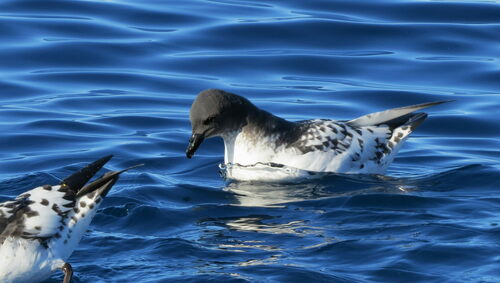
マダラフルマカモメ (Daption capense) マダラフルマカモメ
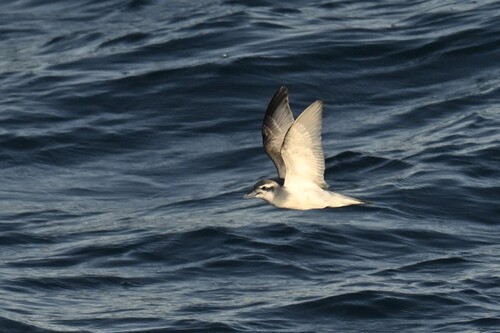
ナンキョククジラドリ (Pachyptila desolata) ナンキョククジラドリ

メディア

読み込み中…

要点

マダラフルマカモメとナンキョククジラドリの最も信頼できるフィールドマークは、マダラフルマカモメの大胆な黒と白の斑点模様の上翼と背中であり、ナンキョククジラドリの滑らかな青灰色の上面は背中と翼に暗い'M'があることで対照的です。飛行中、マダラフルマカモメは広い黒い縁取りのある目立つ白い下翼を示し、ナンキョククジラドリの下翼はそのような縁取りのないよりシンプルな白です。マダラフルマカモメは体重もずっと重く、黒い頭と首を持ち、ナンキョククジラドリの白い眉毛のある淡い顔とは異なります。これらの違いはすべての年齢で見られ、特に飛行中に明確です。

識別のコツ

  1. Upperwing pattern in flight: マダラフルマカモメは大胆な黒と白の斑点模様の上翼と背中を示し、すべての年齢で見られます。ナンキョククジラドリの上翼は滑らかな青灰色で暗い'M'がありますが、決して斑点模様ではありません。
  2. Underwing pattern: マダラフルマカモメは広い黒い縁取りのある目立つ白い下翼を持っています; ナンキョククジラドリの下翼はシンプルな白で、強い縁取りがありません。
  3. Head and face: マダラフルマカモメは黒い頭と首を持ち、白い下部と鋭く対照的です。ナンキョククジラドリは淡い顔、白い眉毛を持ち、頭に黒はありません。
  4. Tail pattern: マダラフルマカモメの尾は黒い帯で斑点模様があります; ナンキョククジラドリの尾は灰色で、くさび形で、黒い先端がありますが、帯状でも斑点模様でもありません。
  5. Bill color and shape: ナンキョククジラドリは青灰色のくちばしを持っていますが、マダラフルマカモメのくちばしは暗く、遠くからは目立ちません。
  6. Body size and shape: マダラフルマカモメはずっと大きくてがっしりしており、鳩のような体型をしています。ナンキョククジラドリは小さく、より繊細で細身です。
  7. Flight style: マダラフルマカモメは飛行中により重く、より直接的に見えます; ナンキョククジラドリは軽く、より浮力があり、敏捷です。
  8. Back pattern: 背中と翼にある'M'のパターンはナンキョククジラドリに特有で、マダラフルマカモメにはありません。
  9. Greater covert color: ナンキョククジラドリはほぼ黒の大きな覆羽を持っていますが、その効果はマダラフルマカモメの大胆な斑点模様に比べて微妙です。
  10. Behavior near ships: マダラフルマカモメはしばしば攻撃的で、船に近づいて追いかけますが、ナンキョククジラドリはそうする可能性が低いです。
  11. Feeding behavior: マダラフルマカモメは大きな獲物を捕まえたり、ダイビングしたりするのが見られ、食べ物の源では攻撃的です; ナンキョククジラドリは表面で動物プランクトンを濾過している可能性が高いです。
  12. Habitat context: 船の近くや餌を求めているときに見られる場合、マダラフルマカモメの可能性が高いです; ナンキョククジラドリは開放海域でより典型的です。
  13. No age-specific confusion: 混乱を引き起こすような幼鳥や未成熟の特定の上翼や飛行マークは記載されていません—成鳥のパターンは年間を通じて適用されます。
  14. No significant seasonal or sex variation: 両種は羽毛において季節的または性的二形性がほとんど見られないため、これらのマークは年間を通じて信頼できます。
  15. Plumage pitfalls: プリオンの微妙な暗い'M'と滑らかな青灰色をマカモメの大胆な斑点模様と混同しないでください; 違いは良好な双眼鏡の視界で常に見えます。

大きさ

マダラフルマカモメはかなり大きくてがっしりしており、体重は約424g、長さは35〜40cmで、ナンキョククジラドリの体重は156gとずっと軽く、長さは27cmです。マダラフルマカモメの翼幅(80〜90cm)はナンキョククジラドリ(61〜66cm)をも上回ります。フィールドでは、マダラフルマカモメはより頑丈で鳩のように見え、ナンキョククジラドリは明らかにより繊細で細身です。

羽色

すべての年齢において、マダラフルマカモメはその上翼と背中に独特の黒と白の斑点模様を示し、黒い頭と首、白い下部、そして広く黒で縁取られた白い下翼を持っています。尾は明確な黒い帯で斑点模様があります。ナンキョククジラドリは年齢に関係なく、青灰色の上面に特徴的な暗い'M'が背中から翼にかけて走り、白い顔と白い眉毛、青灰色のくちばしを持っています。下部は清潔な白で、下翼にはマダラフルマカモメに見られる大胆な黒い縁取りがありません。プリオンの尾は灰色で、くさび形で、黒い先端があり、翼の大きな覆羽はほぼ黒ですが、全体的な効果は滑らかで斑点模様ではありません。どちらの種にも、これらの成鳥のパターンを覆すような年齢特有の上翼や飛行マークは記載されていません。

行動

両種は外洋性で、ほとんどの時間を海で過ごしますが、マダラフルマカモメは攻撃的な船追尾で知られ、しばしばボートに近づいて食べ物の残り物を食べます。時には競争相手に胃の油を吐き出すこともあります。ナンキョククジラドリは表面で動物プランクトンを濾過しているのが見られる可能性が高く、船の周りではあまり攻撃的ではありません。飛行中、マダラフルマカモメはより重く、より直接的に見え、ナンキョククジラドリは軽く、より浮力があり、滑空する敏捷な飛行スタイルです。

生息環境

両種は南極海の海鳥ですが、マダラフルマカモメは特に豊富で船の近くでよく見られ、ナンキョククジラドリはより厳密に開放海域に関連しており、繁殖地を除いて船や陸に近づくことはあまりありません。両者は海で重なることがありますが、文脈的には、マダラフルマカモメは船の活動がある地域でより可能性が高いです。

より良い説明を送る

比較と同じ項目を使ってください。文章はすぐに公開されます。

The most reliable field mark between Pintado Petrel and Antarctic Prion is the bold, black-and-white speckled upperwing and back of the Pintado Petrel, contrasting with the Antarctic Prion's smooth blue-grey upperparts marked by a dark 'M' across the back and wings. In flight, Pintado Petrel shows a striking white underwing with a broad black border, while Antarctic Prion's underwing is plainer white without such a border. Pintado Petrel is also much heavier-bodied and has a black head and neck, unlike the prion's pale face with a white eyebrow. These differences are visible at all ages and are especially clear in flight.

  1. Upperwing pattern in flight: Pintado Petrel shows a bold, black-and-white speckled upperwing and back, visible at all ages. Antarctic Prion's upperwing is smooth blue-grey with a dark 'M' but never speckled.
  2. Underwing pattern: Pintado Petrel has a striking white underwing with a broad black border; Antarctic Prion's underwing is plain white, lacking a strong border.
  3. Head and face: Pintado Petrel has a black head and neck, contrasting sharply with its white underparts. Antarctic Prion has a pale face, white eyebrow, and no black on the head.
  4. Tail pattern: Pintado Petrel's tail is speckled with a black band; Antarctic Prion's tail is grey, wedge-shaped, with a black tip but not banded or speckled.
  5. Bill color and shape: Antarctic Prion has a blue-grey bill, while Pintado Petrel's bill is darker and less distinctive at a distance.
  6. Body size and shape: Pintado Petrel is much larger and bulkier, with a pigeon-like jizz. Antarctic Prion is smaller, more delicate, and slender.
  7. Flight style: Pintado Petrel appears heavier and more direct in flight; Antarctic Prion is lighter, more buoyant, and agile.
  8. Back pattern: The 'M' pattern across the back and wings is unique to Antarctic Prion and absent in Pintado Petrel.
  9. Greater covert color: Antarctic Prion has near-black greater coverts, but the effect is subtle compared to the bold speckling of Pintado Petrel.
  10. Behavior near ships: Pintado Petrel is often aggressive and follows ships closely, while Antarctic Prion is less likely to do so.
  11. Feeding behavior: Pintado Petrel may be seen diving or surface seizing larger prey and is aggressive at food sources; Antarctic Prion is more likely to be filtering zooplankton at the surface.
  12. Habitat context: If seen close to a ship or in a feeding frenzy, Pintado Petrel is more likely; Antarctic Prion is more typical in open ocean settings.
  13. No age-specific confusion: There are no described juvenile or immature-specific upperwing or flight marks that would cause confusion—adult patterns apply throughout the year.
  14. No significant seasonal or sex variation: Both species show little seasonal or sexual dimorphism in plumage, so these marks are reliable year-round.
  15. Plumage pitfalls: Do not confuse the prion's subtle dark 'M' and smooth blue-grey with the petrel's bold speckling; the difference is always visible with good binocular views.

Pintado Petrel is significantly larger and bulkier, with a body mass of about 424 g and a length of 35–40 cm, compared to the Antarctic Prion's much lighter 156 g and shorter 27 cm length. The wingspan of Pintado Petrel (80–90 cm) also exceeds that of Antarctic Prion (61–66 cm). In the field, Pintado Petrel appears more robust and pigeon-like, while Antarctic Prion is noticeably more delicate and slender.

For all ages, Pintado Petrel displays a unique black-and-white speckled pattern on its upperwings and back, with a black head and neck, white underparts, and a white underwing bordered broadly in black. The tail is speckled with a distinct black band. Antarctic Prion, regardless of age, has blue-grey upperparts with a characteristic dark 'M' running from the back onto the wings, a white face with a white eyebrow, and a blue-grey bill. Its underparts are clean white, and the underwing lacks the bold black border seen in Pintado Petrel. The prion's tail is grey, wedge-shaped, with a black tip, and the greater coverts on the wing are near black, but the overall effect is smooth and not speckled. There are no age-specific upperwing or flight marks described for either species that would override these adult patterns.

Both species are pelagic and spend most of their time at sea, but Pintado Petrel is known for its aggressive ship-following and will often approach boats to feed on scraps, sometimes spitting stomach oil at competitors. Antarctic Prion is more likely to be seen filtering zooplankton at the surface and is less aggressive around ships. In flight, Pintado Petrel appears heavier and more direct, while Antarctic Prion is lighter and more buoyant, with a gliding, agile flight style.

Both species are Southern Ocean seabirds, but Pintado Petrel is especially abundant and often seen near ships, while Antarctic Prion is more strictly associated with open ocean and is less frequently encountered close to vessels or land except at breeding sites. Both may overlap at sea, but contextually, Pintado Petrel is more likely in areas with ship activity.

変更を破棄しますか?

保存していない編集があります。今離れると失われます。

マダラフルマカモメ · ナンキョククジラドリ · 苦手な鳥