

Motmot

ヒメウ 対 ナンベイヒメウ

Urile pelagicus 対 Nannopterum brasilianum

ヒメウとナンベイヒメウのクイズ
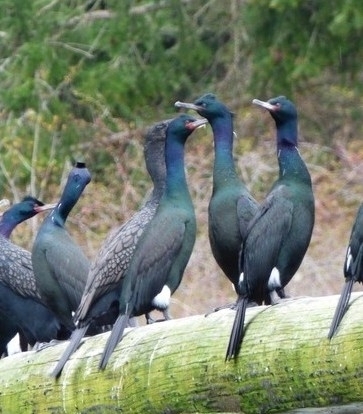
ヒメウ (Urile pelagicus) ヒメウ
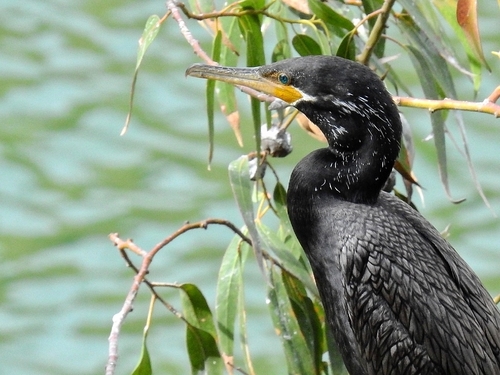
ナンベイヒメウ (Nannopterum brasilianum) ナンベイヒメウ

メディア

読み込み中…

要点

The most reliable field mark between Pelagic Cormorant and Neotropic Cormorant is the facial skin and bill structure in adults, especially in breeding season: Pelagic Cormorant shows a thin, all-black bill and a small, magenta patch of bare skin below the eye, while Neotropic Cormorant has a yellow-brown throat patch with a white border in breeding, and a longer, thinner neck with a more prominent gular patch. Immature birds of both species are brownish and can be very similar, but Pelagic Cormorant is generally darker and glossier as it matures, while Neotropic tends to show a paler throat and slightly grayer upperwings. In flight, Pelagic Cormorant is more slender and has a longer tail relative to body, while Neotropic often appears with a proportionally longer neck and tail, and a more S-shaped neck posture. Habitat and range are also strong clues: Pelagic is strictly coastal in the North Pacific, while Neotropic is found in the American tropics and subtropics, often inland. Size is very similar, but Pelagic is slightly heavier on average.

識別のコツ

  1. Facial skin pattern (adults, especially breeding): Pelagic Cormorant has a small, magenta patch of bare skin below the eye (breeding), while Neotropic Cormorant has a yellow-brown throat patch with a white border (breeding) or plain yellow-brown (nonbreeding). This is the most reliable mark at close range.
  2. Bill shape: Pelagic Cormorant has a long, thin, all-black bill, almost needle-like; Neotropic's bill is also dark but slightly stouter and not as sharply pointed. This is subtle but visible in good light.
  3. Crest and head tufts (breeding adults): Pelagic shows two short crests (crown and nape); Neotropic lacks these but develops small white tufts on the sides of the head.
  4. White thigh patch (breeding adults): Pelagic Cormorant shows conspicuous white thighs in breeding plumage; Neotropic never shows this feature.
  5. Iridescence: Adult Pelagic Cormorant is all-black with a metallic green or violet sheen, especially in good light; Neotropic is black but less glossy, with a slightly grayer upperwing.
  6. Juvenile/immature plumage: Both are brownish, but Pelagic immatures are darker overall, lacking a pale throat, while Neotropic immatures are browner with a paler throat and sometimes a grayer upperwing. This is subtle and not always reliable at distance.
  7. Neck and tail shape: Neotropic Cormorant often holds its neck in a pronounced S-shape, and has a proportionally long tail; Pelagic is also long-tailed but appears more slender and straight-necked, especially in flight.
  8. Flight silhouette: Pelagic Cormorant looks slim and straight, with a long tail and thin bill; Neotropic looks longer-necked and longer-tailed, with a more angular S-shaped neck in flight. Both are slimmer than Double-crested Cormorant.
  9. Habitat: Pelagic is strictly coastal (rocky shores, kelp beds, inlets) in the North Pacific; Neotropic is found in a wide range of habitats, including inland lakes, rivers, and ponds, as well as coasts and mangroves in the Americas.
  10. Range: If seen inland in the Americas, it is almost certainly Neotropic. Pelagic is not found inland.
  11. Behavior on land: Pelagic walks with a high-stepped waddle and often scratches the ground after landing; Neotropic's terrestrial behavior is less distinctive.
  12. Vocalization: Pelagic often calls (gargling noise) before takeoff, especially in breeding season; Neotropic's calls are not distinctive for field ID.
  13. Group foraging: Neotropic may forage in groups, sometimes beating the water to herd fish; Pelagic is more often solitary or in small groups.
  14. Sex differences: Both species are sexually monomorphic in plumage, but female Pelagic is slightly smaller. This is not a useful field mark.
  15. Size: Both are similar in length and wingspan, but Pelagic is slightly heavier on average. In the field, size is not a reliable separator.

大きさ

Both species are similar in length (about 64 cm/25 in) and wingspan (about 1 m/39 in) [wikipedia]. However, Pelagic Cormorant is somewhat heavier (1,500–2,400 g) compared to Neotropic Cormorant (1,100–1,500 g for males, with females slightly lighter) [wikipedia][avonet]. In the field, this difference is subtle and not usually diagnostic. Both are noticeably smaller and slimmer than Double-crested Cormorant, but Neotropic is especially slender and long-tailed for its size.

羽色

Juvenile and immature birds of both species are brownish, but Pelagic Cormorant immatures are darker overall, with less contrast between upperparts and underparts, and lack the pale throat patch of Neotropic. Neotropic Cormorant juveniles are brownish with a paler throat and slightly grayer upperwings, sometimes giving a more two-toned appearance. In adult nonbreeding plumage, Pelagic is all-black with metallic iridescence, while Neotropic is black with a yellow-brown throat patch. In breeding plumage, Pelagic develops two short crests (crown and nape), white thighs, and a vivid magenta facial patch; Neotropic shows white tufts on the sides of the head, scattered white filoplumes, and a white-edged yellow-brown throat patch. The upperwing of Neotropic is a bit grayer than the rest of the body, but this is subtle. The facial skin pattern is the most consistent difference in adults. Both species have all-dark bills, but Pelagic's is thinner and more needle-like.

行動

Pelagic Cormorant is clumsy on land, walks with a high-stepped waddle, and often scratches the ground after landing. It usually calls before taking off, especially in the breeding season. Neotropic Cormorant often holds its neck in an S-shape, and forages both alone and in groups, sometimes beating the water to herd fish. Both species dive for prey using their feet for propulsion. Pelagic tends to forage in kelp beds and rocky inlets, while Neotropic is more versatile, using both coastal and inland waters. After foraging, both species adopt a spread-winged drying posture.

生息環境

Pelagic Cormorant is strictly coastal along the northern Pacific, favoring rocky shores, kelp beds, and sheltered inlets, and rarely found inland. Neotropic Cormorant is widespread in the American tropics and subtropics, found on coasts, in mangroves, and commonly at inland lakes, ponds, and rivers. If you see a small cormorant well inland in the Americas, it is almost certainly Neotropic. Overlap is limited to the extreme southern and western US coast, where careful attention to facial skin and structure is needed.

声

Pelagic Cormorant is noted for calling before takeoff, especially in the breeding season, with a gargling noise. Neotropic Cormorant's vocalizations are not described in the sources, and are not a reliable field mark for separation.

より良い説明を送る

比較と同じ項目を使ってください。文章はすぐに公開されます。

The most reliable field mark between Pelagic Cormorant and Neotropic Cormorant is the facial skin and bill structure in adults, especially in breeding season: Pelagic Cormorant shows a thin, all-black bill and a small, magenta patch of bare skin below the eye, while Neotropic Cormorant has a yellow-brown throat patch with a white border in breeding, and a longer, thinner neck with a more prominent gular patch. Immature birds of both species are brownish and can be very similar, but Pelagic Cormorant is generally darker and glossier as it matures, while Neotropic tends to show a paler throat and slightly grayer upperwings. In flight, Pelagic Cormorant is more slender and has a longer tail relative to body, while Neotropic often appears with a proportionally longer neck and tail, and a more S-shaped neck posture. Habitat and range are also strong clues: Pelagic is strictly coastal in the North Pacific, while Neotropic is found in the American tropics and subtropics, often inland. Size is very similar, but Pelagic is slightly heavier on average.

  1. Facial skin pattern (adults, especially breeding): Pelagic Cormorant has a small, magenta patch of bare skin below the eye (breeding), while Neotropic Cormorant has a yellow-brown throat patch with a white border (breeding) or plain yellow-brown (nonbreeding). This is the most reliable mark at close range.
  2. Bill shape: Pelagic Cormorant has a long, thin, all-black bill, almost needle-like; Neotropic's bill is also dark but slightly stouter and not as sharply pointed. This is subtle but visible in good light.
  3. Crest and head tufts (breeding adults): Pelagic shows two short crests (crown and nape); Neotropic lacks these but develops small white tufts on the sides of the head.
  4. White thigh patch (breeding adults): Pelagic Cormorant shows conspicuous white thighs in breeding plumage; Neotropic never shows this feature.
  5. Iridescence: Adult Pelagic Cormorant is all-black with a metallic green or violet sheen, especially in good light; Neotropic is black but less glossy, with a slightly grayer upperwing.
  6. Juvenile/immature plumage: Both are brownish, but Pelagic immatures are darker overall, lacking a pale throat, while Neotropic immatures are browner with a paler throat and sometimes a grayer upperwing. This is subtle and not always reliable at distance.
  7. Neck and tail shape: Neotropic Cormorant often holds its neck in a pronounced S-shape, and has a proportionally long tail; Pelagic is also long-tailed but appears more slender and straight-necked, especially in flight.
  8. Flight silhouette: Pelagic Cormorant looks slim and straight, with a long tail and thin bill; Neotropic looks longer-necked and longer-tailed, with a more angular S-shaped neck in flight. Both are slimmer than Double-crested Cormorant.
  9. Habitat: Pelagic is strictly coastal (rocky shores, kelp beds, inlets) in the North Pacific; Neotropic is found in a wide range of habitats, including inland lakes, rivers, and ponds, as well as coasts and mangroves in the Americas.
  10. Range: If seen inland in the Americas, it is almost certainly Neotropic. Pelagic is not found inland.
  11. Behavior on land: Pelagic walks with a high-stepped waddle and often scratches the ground after landing; Neotropic's terrestrial behavior is less distinctive.
  12. Vocalization: Pelagic often calls (gargling noise) before takeoff, especially in breeding season; Neotropic's calls are not distinctive for field ID.
  13. Group foraging: Neotropic may forage in groups, sometimes beating the water to herd fish; Pelagic is more often solitary or in small groups.
  14. Sex differences: Both species are sexually monomorphic in plumage, but female Pelagic is slightly smaller. This is not a useful field mark.
  15. Size: Both are similar in length and wingspan, but Pelagic is slightly heavier on average. In the field, size is not a reliable separator.

Both species are similar in length (about 64 cm/25 in) and wingspan (about 1 m/39 in) [wikipedia]. However, Pelagic Cormorant is somewhat heavier (1,500–2,400 g) compared to Neotropic Cormorant (1,100–1,500 g for males, with females slightly lighter) [wikipedia][avonet]. In the field, this difference is subtle and not usually diagnostic. Both are noticeably smaller and slimmer than Double-crested Cormorant, but Neotropic is especially slender and long-tailed for its size.

Juvenile and immature birds of both species are brownish, but Pelagic Cormorant immatures are darker overall, with less contrast between upperparts and underparts, and lack the pale throat patch of Neotropic. Neotropic Cormorant juveniles are brownish with a paler throat and slightly grayer upperwings, sometimes giving a more two-toned appearance. In adult nonbreeding plumage, Pelagic is all-black with metallic iridescence, while Neotropic is black with a yellow-brown throat patch. In breeding plumage, Pelagic develops two short crests (crown and nape), white thighs, and a vivid magenta facial patch; Neotropic shows white tufts on the sides of the head, scattered white filoplumes, and a white-edged yellow-brown throat patch. The upperwing of Neotropic is a bit grayer than the rest of the body, but this is subtle. The facial skin pattern is the most consistent difference in adults. Both species have all-dark bills, but Pelagic's is thinner and more needle-like.

Pelagic Cormorant is clumsy on land, walks with a high-stepped waddle, and often scratches the ground after landing. It usually calls before taking off, especially in the breeding season. Neotropic Cormorant often holds its neck in an S-shape, and forages both alone and in groups, sometimes beating the water to herd fish. Both species dive for prey using their feet for propulsion. Pelagic tends to forage in kelp beds and rocky inlets, while Neotropic is more versatile, using both coastal and inland waters. After foraging, both species adopt a spread-winged drying posture.

Pelagic Cormorant is strictly coastal along the northern Pacific, favoring rocky shores, kelp beds, and sheltered inlets, and rarely found inland. Neotropic Cormorant is widespread in the American tropics and subtropics, found on coasts, in mangroves, and commonly at inland lakes, ponds, and rivers. If you see a small cormorant well inland in the Americas, it is almost certainly Neotropic. Overlap is limited to the extreme southern and western US coast, where careful attention to facial skin and structure is needed.

Pelagic Cormorant is noted for calling before takeoff, especially in the breeding season, with a gargling noise. Neotropic Cormorant's vocalizations are not described in the sources, and are not a reliable field mark for separation.

変更を破棄しますか?

保存していない編集があります。今離れると失われます。

ヒメウ · ナンベイヒメウ · 苦手な鳥