

Motmot

ウスアマツバメ 対 ソコトラアマツバメ

Apus pallidus 対 Apus berliozi

ウスアマツバメとソコトラアマツバメのクイズ
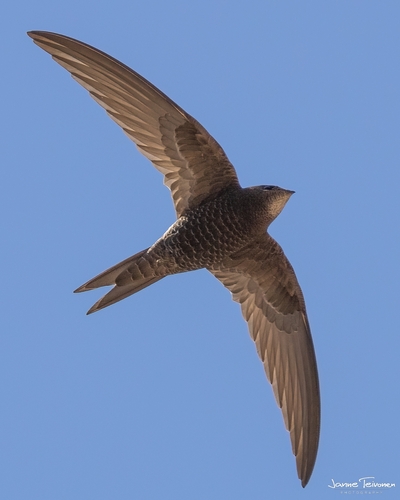
ウスアマツバメ (Apus pallidus) ウスアマツバメ
ソコトラアマツバメ (Apus berliozi) ソコトラアマツバメ

メディア

読み込み中…

要点

ウスアマツバメとソコトラアマツバメは、フィールドで非常に似ており、構造と飛行スタイルがほぼ同一であるため、経験豊富な観察者でも分離が難しい。ウスアマツバメの最も信頼できる特徴は、全体的に淡い茶色の外観であり、特に暗い体に対してやや淡い飛行羽、腹部、尾のコントラストが際立っていること、さらに遠くからでも見える大きな白い喉の斑点があることだ。ソコトラアマツバメは分離のための詳細なフィールドマークが公開されていないが、一般的にウスアマツバメよりも暗く、コントラストが少ない。両種は長い後方に傾いた翼と短い分岐尾を持ち、近くで長時間観察することで最も分離しやすい。これら二種の間で年齢特有の翼のパターンの違いは文書化されていないため、微妙な羽毛のコントラストと全体的なトーンに注目すること。

識別のコツ

  1. Overall Tone: ウスアマツバメはソコトラアマツバメよりも明らかに淡く茶色い。ソコトラアマツバメは暗く、より均一に見える。これは良い光の下で近距離で最も明らかになる。
  2. Throat Patch: ウスアマツバメの大きな白い喉の斑点を探す。遠くからでも見えることが多い。ソコトラアマツバメはこのような目立つ淡い喉を示さない。
  3. Contrast in Flight Feathers and Rump: ウスアマツバメはやや淡い飛行羽と尾を示し、体の残りの部分との微妙なコントラストを生み出す。ソコトラアマツバメはより均一で、このコントラストが欠けている。
  4. Scaly Belly: ウスアマツバメの腹部は、淡い羽の縁のためにしばしば鱗状に見える。この特徴はソコトラアマツバメには記載されていない。
  5. Structural Similarity: 両種は長い後方に傾いた翼と短い分岐尾を持つ。構造は分離に役立たない。
  6. No Age-Specific Wing Pattern: これら二種の間で幼鳥や未成熟の翼のパターンに関する文書化された違いはない。すべての年齢は構造的およびパターン的に似ているため、全体的なトーンとコントラストに注目すること。
  7. Flight Style: 両種は同じ速く、敏捷なブーメラン型の飛行を共有している。飛行行動に頼って分離しないこと。
  8. Voice: 呼び声は似ており、フィールドで信頼性のある分離はできない。
  9. Habitat Context: ソコトラアマツバメの知られている繁殖地や越冬地の外で見られた場合(例:ソマリア沿岸、アラビア南部、またはソコトラから離れて)、ウスアマツバメの可能性が高い。しかし、範囲の重複や迷行は可能性があるため、 habitatを唯一の基準として使用しないこと。
  10. Lighting Conditions: 微妙な羽毛のコントラストは強い直射光の下で最も明らかになる。曇りや逆光の条件ではウスアマツバメの淡いトーンが隠され、分離が難しくなる。
  11. Flock Composition: 混合アマツバメの群れで見られた場合、白い喉の斑点を持つ淡く茶色い鳥(ウスアマツバメ)と、より暗く均一な鳥(潜在的なソコトラアマツバメ)を直接比較すること。
  12. Beware of Wear and Fading: 褪せたまたは摩耗したウスアマツバメは暗く見えることがあり、新鮮なソコトラアマツバメはややコントラストが強く見えることがあり、混乱を増す。
  13. Photographic Review: 可能であれば、喉、尾、腹部のスケーリングの微妙なコントラストを確認するために写真をレビューすること。これらが最も信頼できるマークである。
  14. Do Not Rely on Size: 体重の小さな違いはフィールドでは見えず、識別に使用すべきではない。
  15. Accept Uncertainty: 照明が悪い、遠くからの視界、または急速な飛行では、これら二種を分離することが不可能な場合がある。正確な識別のために喉と腹部の明確で良好な視界を優先すること。

大きさ

ウスアマツバメはわずかに重い(41.3g対38.0g)が、両者はサイズと構造が非常に似ており、フィールドでの実質的な違いはない。両種は中型のアマツバメで、長い三日月型の翼と短い分岐尾を持つ。認識されるサイズの違いは、識別には無視できるものである。

羽色

どちらの種にも年齢特有の翼のパターンや幼鳥のマークは文書化されていないため、すべての年齢は全体的な色合いとコントラストで分離する必要がある。ウスアマツバメは全体的に明らかに淡く茶色いトーンを示し、大きな白い喉の斑点が際立っている、特に良い光の下で。飛行羽、腹部、尾は体の残りの部分よりもやや淡い色合いで、微妙だが実際のコントラストを生み出している。腹部は羽の縁のためにしばしば鱗状に見える。対照的に、ソコトラアマツバメは一般的に暗く、より均一で、ウスアマツバメの強い淡いコントラストや鱗状の腹部が欠けている。両種は同じ基本的なアマツバメの構造を共有し、いかなる羽毛においても明らかな翼や尾のパターンの違いはない。

行動

両種は非常に空中性が高く、垂直面にしがみつく以外はめったに止まらない。彼らの飛行は速く敏捷で、長い後方に傾いた翼がブーメランまたは三日月の形を与えている。ウスアマツバメとソコトラアマツバメの間で飛行スタイルや行動の違いは文書化されていない。両者は飛行中に捕らえた昆虫を食べ、水を飲む。

生息環境

生息地は範囲が重複する場合には信頼できる分離要因ではないが、ソコトラアマツバメは地理的により制限されており、ソマリア沿岸、アラビア半島南部、ソコトラで繁殖し、モザンビークまで南で越冬する。ウスアマツバメはより広い範囲を持ち、これらの沿岸地域にそれほど密接には結びついていない。しかし、潜在的な重複のある地域では、生息地だけでは診断的ではない。

声

両種はアマツバメに典型的な大きく乾いた叫び声を持つ。ウスアマツバメの呼び声は大きく乾いた叫び声として説明され、ヨーロッパアマツバメよりもおそらく二音節であるが、ソコトラアマツバメの呼び声をウスアマツバメから区別するための公開された説明はない。声はこれら二種の間で信頼できるフィールドの分離要因ではない。

より良い説明を送る

比較と同じ項目を使ってください。文章はすぐに公開されます。

Pallid Swift and Forbes-Watson's Swift are extremely similar in the field, with nearly identical structure and flight style, making separation challenging even for experienced observers. The most reliable mark for Pallid Swift is its overall paler, browner appearance, especially the contrast between its slightly paler flight feathers, underparts, and rump compared to the darker body, plus a large white throat patch that can be visible at a distance. Forbes-Watson's Swift lacks detailed published field marks for separation, but is generally darker and less contrasting than Pallid Swift. Both species have long, swept-back wings and a short forked tail, and are best separated with close, prolonged views. Age-specific wing pattern differences are not documented between these two, so focus on subtle plumage contrasts and overall tone.

  1. Overall Tone: Pallid Swift is noticeably paler and browner than Forbes-Watson's Swift, which appears darker and more uniform. This is most apparent in good light and at close range.
  2. Throat Patch: Look for a large white throat patch on Pallid Swift, often visible even at a distance. Forbes-Watson's Swift does not show such a prominent pale throat.
  3. Contrast in Flight Feathers and Rump: Pallid Swift shows slightly paler flight feathers and rump, creating a subtle contrast with the rest of the body. Forbes-Watson's Swift is more uniform, lacking this contrast.
  4. Scaly Belly: The belly of Pallid Swift often appears scaly due to pale feather edges. This feature is not noted for Forbes-Watson's Swift.
  5. Structural Similarity: Both species have long, swept-back wings and a short forked tail. Structure is not helpful for separation.
  6. No Age-Specific Wing Pattern: There are no documented differences in juvenile or immature wing patterns between these two species. All ages look structurally and pattern-wise similar, so focus on overall tone and contrast.
  7. Flight Style: Both species share the same fast, agile, boomerang-winged flight. Do not rely on flight action for separation.
  8. Voice: Calls are similar and not reliably separable in the field.
  9. Habitat Context: If seen outside the known breeding or wintering range of Forbes-Watson's Swift (e.g., away from coastal Somalia, southern Arabia, or Socotra), Pallid Swift is more likely. However, range overlap and vagrancy are possible, so do not use habitat as the sole criterion.
  10. Lighting Conditions: Subtle plumage contrasts are most apparent in strong, direct light. Overcast or backlit conditions may obscure the paler tones of Pallid Swift, making separation more difficult.
  11. Flock Composition: If seen in a mixed swift flock, compare individuals directly for paler, browner birds with a white throat patch (Pallid Swift) versus darker, more uniform birds (potential Forbes-Watson's Swift).
  12. Beware of Wear and Fading: Faded or worn Pallid Swifts may appear darker, while fresh Forbes-Watson's Swifts may show slightly more contrast, increasing confusion.
  13. Photographic Review: If possible, review photos for subtle contrasts in throat, rump, and underpart scaling, as these are the most reliable marks.
  14. Do Not Rely on Size: The small difference in body mass is not visible in the field and should not be used for identification.
  15. Accept Uncertainty: In poor light, distant views, or rapid flight, separating these two may be impossible. Prioritize clear, well-lit views of the throat and underparts for the best chance of a correct ID.

Pallid Swift is marginally heavier (41.3g vs 38.0g) but both are very similar in size and structure, with no practical difference in the field. Both species are medium-sized swifts with long, crescent-shaped wings and short forked tails. Any perceived size difference is likely to be negligible and unreliable for identification.

No age-specific wing pattern or juvenile marks are documented for either species, so all ages must be separated by overall coloration and contrast. Pallid Swift shows a noticeably paler, browner tone overall, with a large white throat patch that stands out, especially in good light. Its flight feathers, underparts, and rump are slightly paler than the rest of the body, creating a subtle but real contrast. The belly often appears scaly due to feather edges. Forbes-Watson's Swift, by contrast, is generally darker and more uniform, lacking the strong pale contrasts and scaly belly of Pallid Swift. Both species share the same basic swift structure and lack obvious wing or tail pattern differences in any plumage.

Both species are highly aerial, rarely perching except to cling to vertical surfaces. Their flight is fast and agile, with long, swept-back wings giving a boomerang or crescent shape. There is no documented difference in flight style or behavior between Pallid Swift and Forbes-Watson's Swift. Both feed on insects caught in flight and drink on the wing.

Habitat is not a reliable separator where ranges overlap, but Forbes-Watson's Swift is more restricted geographically, breeding along coastal Somalia, southern Arabian Peninsula, and Socotra, and wintering as far south as Mozambique. Pallid Swift has a broader range and is not as closely tied to these coastal regions. However, in areas of potential overlap, habitat alone is not diagnostic.

Both species have loud, dry screaming calls typical of swifts. Pallid Swift's call is described as a loud, dry scream, possibly more disyllabic than Common Swift, but there is no published description distinguishing the calls of Forbes-Watson's Swift from Pallid Swift. Voice is not a reliable field separator between these two.

変更を破棄しますか?

保存していない編集があります。今離れると失われます。

ウスアマツバメ · ソコトラアマツバメ · 苦手な鳥