

Motmot

カラフトムシクイ 対 カラフトムジセッカ

Phylloscopus proregulus 対 Phylloscopus schwarzi

カラフトムシクイとカラフトムジセッカのクイズ
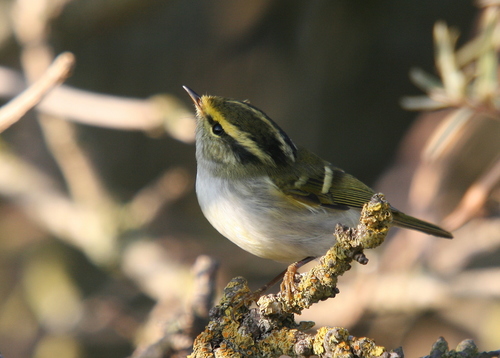
カラフトムシクイ (Phylloscopus proregulus) カラフトムシクイ
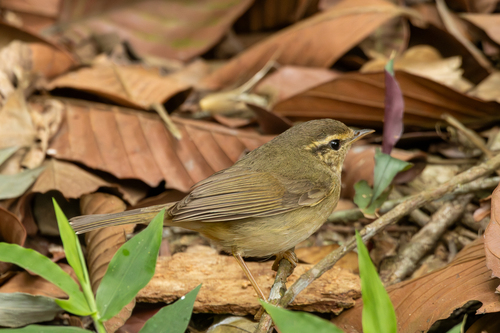
カラフトムジセッカ (Phylloscopus schwarzi) カラフトムジセッカ

メディア

読み込み中…

要点

カラフトムシクイとカラフトムジセッカを区別する最も信頼できるフィールドマークは、Pallas'sの鮮やかな黄色の尾羽、二重の黄色の翼帯、そして大胆な黄色のスーパーシリウムと頭頂線の組み合わせであり、Radde'sにはこれらがありません。カラフトムジセッカは大きく、地味な茶色の背中、バフ色の腹部、長く淡いスーパーシリウムを持っていますが、羽毛には黄色がありません。幼鳥や非繁殖期のPallas'sはより地味に見えることがありますが、依然として重要な翼帯とスーパーシリウムを示します。一方、Radde'sの幼鳥は下側がより黄色いですが、翼帯や黄色の尾羽は決して示しません。構造的には、Radde'sはより頑丈で、くちばしが太く、足が大きく、しばしばより地上性に見えます。声や生息地も役立ちますが、羽毛や構造ほど信頼性は高くありません。

識別のコツ

  1. Yellow rump (Pallas's only): 尾の基部でレモンイエローの閃光が見えたら、特に鳥がホバリングしたり尾を振ったりしているときは、それはカラフトムシクイです。Radde'sは決して黄色の尾羽を示しません。
  2. Double yellow wingbars (Pallas's only): Pallas'sは常にカバーの上に2つの明るい黄色の翼帯を示し、すべての年齢と季節で見ることができます。カラフトムジセッカには翼帯がなく、その翼は地味な茶色です。
  3. Yellow supercilium and crown stripe (Pallas's): Pallas'sは大胆な黄色のスーパーシリウムと中央の黄色の頭頂線を持ち、目を引く頭の模様を形成します。Radde'sは長く淡い(白っぽい)スーパーシリウムを持っていますが、頭頂線はありません;そのスーパーシリウムは茶色の頭に対して対照的ではありません。
  4. Upperparts color: Pallas'sは上面が緑がかっており、Radde'sは地味な茶色です。鈍い光の中では、Pallas'sはあまり緑に見えないことがありますが、翼帯とスーパーシリウムは診断的です。
  5. Underparts: Pallas'sは下側が白く、Radde'sはバフ色です。幼鳥のRadde'sは下側がより黄色いことがありますが、決して白くはありません。
  6. Bill and legs: Radde'sはより太く、尖ったくちばしと淡い足を持っています;Pallas'sのくちばしはより細く、暗く、黄色がかった縁があります。これらはフィールドでは微妙ですが、近くで見ると役立ちます。
  7. Size and structure: Pallas'sは小さく、大きな頭と短い尾を持っていますが、Radde'sははるかに大きく、ずんぐりしており、尾が長いです。両方を一緒に見ると、違いは明らかですが、単独で見ると他のマークを使用してください。
  8. Feet: Radde'sは大きく、強い足を持ち、地上性の習性を反映しています。Pallas'sの足はより繊細です。
  9. Behavior: Pallas'sは落ち着きがなく、しばしば高い木の上で、時にはホバリングします;Radde'sはより地上性で、密な低いカバーや地面でゆっくりと動きます。
  10. Juvenile confusion: 幼鳥のPallas'sは地味ですが、依然として翼帯とスーパーシリウムを示します;幼鳥のRadde'sは下側がより黄色いですが、決して翼帯や黄色の頭頂/尾羽は持ちません。
  11. Flight views: 飛行中は、Pallas'sの黄色の尾羽と翼帯を探してください。飛行中のRadde'sは地味な茶色で、対照的なマークはありません。
  12. Call: Pallas'sは柔らかい「dju-ee」を出し、Radde'sは柔らかい「chick」を出します。呼び声はよく聞こえれば役立ちますが、両方とも静かで見逃されることがあります。
  13. Habitat: Pallas'sは木の高い場所を好み、Radde'sは通常低い場所や地面にいます。これは密なカバーで役立ちます。
  14. Season: ヨーロッパのほとんどのPallas'sは秋に初年度の鳥で、しばしば明るく、明確な翼帯を持っています。Radde'sはより稀ですが、同様の時期や場所に出現することがあります。
  15. Sex: 両種は性的に単形であり、オスとメスは似ているため、性別をフィールドマークとして使用しないでください。

大きさ

カラフトムシクイははるかに小さく、軽量で、平均体重は6.0gで、カラフトムジセッカの11.5gと比較されます[wikidata]。フィールドでは、Pallas'sは小さくて繊細に見え、大きな頭と短い尾を持っていますが、Radde'sはキタヤナギムシクイに近いサイズで、ずんぐりしており、体が長く見えます。両方がすぐに見られると、違いはしばしば明らかですが、単独で見ると微妙なことがあります。

羽色

幼鳥と成鳥のカラフトムシクイは常に目立つ二重の黄色の翼帯、大胆な黄色のスーパーシリウム、中央の黄色の頭頂線、そしてレモンイエローの尾羽を示します(ただし、尾羽は鳥がホバリングしたり尾を振ったりしない限り隠れていることがあります)。非繁殖期と幼鳥のPallas'sは上面がより明るい緑で、羽の縁がより広く明るいですが、依然として翼帯とスーパーシリウムを保持しています;幼鳥は上面に茶色がかった色合いを持ち、スーパーシリウムがより地味に見えることがありますが、パターンは残ります。カラフトムジセッカはすべての年齢で翼帯と羽毛の中の黄色が欠けています。地味でストリークのない茶色の背中、バフ色の腹部、非常に長く淡い(白っぽい)スーパーシリウムを持っています。幼鳥のRadde'sは下側がより黄色いですが、依然として翼帯や黄色の頭頂/尾羽は持ちません。Radde'sのくちばしはより太く、足は似たようなムシクイよりも淡いですが、これらは羽毛のコントラストよりも目立ちません。

行動

カラフトムシクイは非常に活発で、しばしば高い木の上で餌を食べ、ホバリングしたり翼や尾を振ったりすることがあり、これにより黄色の尾羽が露出します。カラフトムジセッカはより地上性で、しばしば密な植生の低いところや地面で見られ、より重く、意図的に動きます。その大きな足はこの地上採餌の傾向を反映しています。Pallas'sはしばしば落ち着きがなくエネルギッシュに見えますが、Radde'sはより計画的でホバリングする可能性が低いです。

生息環境

両種は渡り鳥であり、渡りの際に範囲が重なることがありますが、カラフトムシクイは南シベリアから北東中国の山林で繁殖し、カラフトムジセッカはシベリアで繁殖し、東南アジアで越冬します。ヨーロッパでは、Pallas'sは特に初年度の鳥として、秋の定期的な迷鳥ですが、Radde'sはより稀で、同様の生息地に出現することがあります。Pallas'sは木の高い場所で見つかる可能性が高いですが、Radde'sは密で低い植生や地面を好みます。

声

カラフトムシクイは短く柔らかい「dju-ee」の呼び声と、 whistlesやtrillsの混合で強く長い歌を出し、時にはカナリアを思わせることがあります。カラフトムジセッカは柔らかい「chick」の呼び声を持っています。歌は渡りや冬にはめったに聞かれないため、呼び声がより役立ちますが、両方ともかなり静かで見逃されることがあります。声は、よく聞こえない限り、最も信頼できる区別の特徴ではありません。

より良い説明を送る

比較と同じ項目を使ってください。文章はすぐに公開されます。

The most reliable field mark to separate Pallas's Warbler from Radde's Warbler is the combination of Pallas's vivid yellow rump, double yellow wingbars, and bold yellow supercilium and crown stripe, which are absent in Radde's. Radde's Warbler is larger, with a plain brown back, buff underparts, and a long, pale supercilium but lacks any yellow in the plumage. Juvenile and non-breeding Pallas's can be duller but still show the key wingbars and supercilium, while Radde's juveniles are yellower below but never show wingbars or yellow rumps. Structurally, Radde's is bulkier, with a thicker bill and larger feet, and often appears more terrestrial. Voice and habitat can help but are less reliable than plumage and structure.

  1. Yellow rump (Pallas's only): If you see a flash of lemon-yellow at the base of the tail, especially when the bird is hovering or flicking its tail, it's Pallas's Warbler. Radde's never shows a yellow rump.
  2. Double yellow wingbars (Pallas's only): Pallas's always shows two bright yellow wingbars on the coverts, visible in all ages and seasons. Radde's Warbler never has wingbars—its wings are plain brown.
  3. Yellow supercilium and crown stripe (Pallas's): Pallas's has a bold yellow supercilium and a central yellow crown stripe, forming a striking head pattern. Radde's has a long, pale (whitish) supercilium but no crown stripe; its supercilium is less contrasting against the brown head.
  4. Upperparts color: Pallas's is greenish above, Radde's is plain brown. In dull light, Pallas's may look less green, but the wingbars and supercilium remain diagnostic.
  5. Underparts: Pallas's is white below, Radde's is buff. Juvenile Radde's can be yellower below, but never white.
  6. Bill and legs: Radde's has a thicker, more pointed bill and paler legs; Pallas's bill is finer and darker, with yellowish edges. These are subtle in the field but can help with close views.
  7. Size and structure: Pallas's is tiny, with a large head and short tail, while Radde's is much larger, chunkier, and longer-tailed. If you see both together, the difference is clear; alone, use other marks.
  8. Feet: Radde's has large, strong feet, reflecting its terrestrial habits. Pallas's feet are more delicate.
  9. Behavior: Pallas's is restless, often high in trees, sometimes hovering; Radde's is more terrestrial, moving slowly in dense low cover or on the ground.
  10. Juvenile confusion: Juvenile Pallas's is duller but still shows wingbars and supercilium; juvenile Radde's is yellower below but never has wingbars or yellow crown/rump.
  11. Flight views: In flight, look for the yellow rump and wingbars of Pallas's. Radde's in flight looks plain brown with no contrasting marks.
  12. Call: Pallas's gives a soft 'dju-ee'; Radde's a soft 'chick'. Calls are helpful if heard well, but both are quiet and can be missed.
  13. Habitat: Pallas's prefers higher perches in trees, Radde's is usually low or on the ground. This can help in dense cover.
  14. Season: Most Pallas's in Europe are first-year birds in autumn, often brighter and with clear wingbars. Radde's is rarer but can occur in similar times and places.
  15. Sex: Both species are sexually monomorphic—males and females look alike, so do not use sex as a field mark.

Pallas's Warbler is much smaller and lighter, with an average body mass of 6.0 g compared to Radde's Warbler's 11.5 g [wikidata]. In the field, Pallas's looks tiny and delicate, with a large head and short tail, while Radde's is closer in size to a Willow Warbler, appearing chunkier and longer-bodied. The difference is often obvious if both are seen in quick succession, but can be subtle when seen alone.

Juvenile and adult Pallas's Warbler always show prominent double yellow wingbars, a bold yellow supercilium, a central yellow crown stripe, and a lemon-yellow rump (though the rump can be hidden unless the bird is hovering or flicking its tail). Non-breeding and juvenile Pallas's are brighter green above and have broader, brighter feather fringes, but still retain the wingbars and supercilium; juveniles may have a brownish tinge above and duller supercilium, but the pattern remains. Radde's Warbler, in all ages, lacks wingbars and yellow in the plumage. It has a plain, unstreaked brown back, buff underparts, and a very long, pale (whitish) supercilium. Juvenile Radde's are yellower below but still lack any wingbars or yellow crown/rump. The bill of Radde's is thicker and the legs paler than similar warblers, but these are less obvious than the plumage contrasts.

Pallas's Warbler is highly active, often feeding high in trees, hovering or flicking its wings and tail, which can expose the yellow rump. Radde's Warbler is more terrestrial, often seen low in dense vegetation or on the ground, moving with a heavier, more deliberate manner. Its large feet reflect this ground-foraging tendency. Pallas's often appears restless and energetic, while Radde's is more methodical and less likely to hover.

Both species are migratory and can overlap in range during migration, but Pallas's Warbler breeds in mountain forests from southern Siberia to northeast China, while Radde's Warbler breeds in Siberia and winters in Southeast Asia. In Europe, Pallas's is a regular autumn vagrant, especially as a first-year bird, while Radde's is rarer but can occur in similar habitats. Pallas's is more likely to be found higher in trees, while Radde's prefers dense, low vegetation or the ground.

Pallas's Warbler gives a short, soft 'dju-ee' call and a strong, prolonged song with a mix of whistles and trills, sometimes reminiscent of a canary. Radde's Warbler has a soft 'chick' call. Song is rarely heard on migration or in winter, so calls are more useful, but both are rather soft and can be easily missed. Vocalizations are not the most reliable separation feature unless heard well.

変更を破棄しますか?

保存していない編集があります。今離れると失われます。

カラフトムシクイ · カラフトムジセッカ · 苦手な鳥