

ウスムジツグミ 対 バフムジツグミ
Turdus obsoletus 対 Turdus grayi
ウスムジツグミとバフムジツグミのクイズ
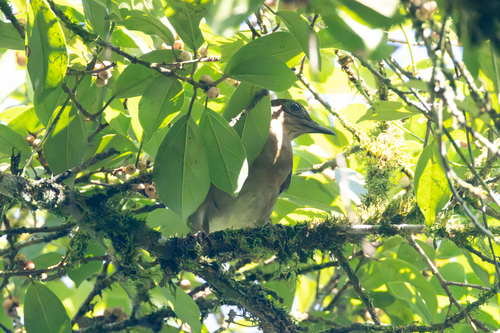 ウスムジツグミ
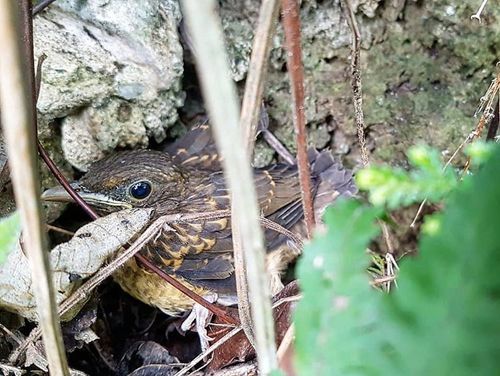 バフムジツグミ
要点
The most reliable field mark between Pale-vented Thrush and Clay-coloured Thrush is the color and pattern of the vent and underwing: Pale-vented shows a distinctly pale or whitish vent and pale orange underwing, while Clay-coloured is more uniformly brownish below without a sharply pale vent or orange underwing. Juvenile Clay-coloured Thrushes show faint mottling on the back and underparts, which Pale-vented lacks. Bill and leg color, as well as subtle differences in throat pattern and habitat preference, can also help, but beware that both are plain brown thrushes and can easily be confused in poor light or at a distance.
識別のコツ
- Pale vent and underwing (Pale-vented Thrush): Look for a distinctly pale or whitish vent and pale orange underwing, especially when the bird is in flight or flicks its wings. This is the single most reliable mark for adults and immatures.
- Uniform brown below (Clay-coloured Thrush): Clay-coloured lacks a sharply pale vent or orange underwing; its underparts are lighter than the back but not strongly contrasting, and the vent is not distinctly paler.
- Juvenile/immature plumage: If you see faint mottling on the back and underparts, you are likely looking at a juvenile Clay-coloured Thrush. Pale-vented Thrush is not described as showing this pattern at any age.
- Throat pattern: Clay-coloured Thrush shows faint streaking on the throat, which is less marked or absent in Pale-vented Thrush. Check this in good light, as it can be subtle.
- Bill and leg color: Clay-coloured Thrush has a greenish-yellow bill with a dark base, pinkish or flesh-colored legs, and reddish irises. These are more prominent than in Pale-vented, but can be hard to judge at a distance.
- Subspecies variation (Pale-vented): 'parambanus' is darker above with a white belly; 'colombianus' is paler with olive tones. This can cause confusion with Clay-coloured, so rely on the vent and underwing color first.
- Habitat context: In gardens, parks, or near houses, especially in Costa Rica, Clay-coloured Thrush is much more likely. In undisturbed or degraded forest, especially in South America, Pale-vented is the better bet.
- Behavior: Clay-coloured Thrush is bolder and more likely to be seen in open, urban, or semi-open habitats. Pale-vented is more secretive and forest-associated.
- Song: If you hear a rich, melodious, and varied song, especially at the start of the rainy season, it is likely Clay-coloured Thrush. Pale-vented's song is not described, so use this only as a positive for Clay-coloured.
- Size and jizz: Clay-coloured is slightly larger and bulkier, but this is only useful if you have direct comparison or experience with both species.
- Flank color: Clay-coloured is lightest on the flanks, but this is subtle and can overlap with Pale-vented in some subspecies.
- Regional abundance: Clay-coloured is common and widespread in its range, especially in Costa Rica and northwards. Pale-vented is less common and more localized, especially in Ecuador.
- Flight views: In flight, look for the pale vent and orange underwing of Pale-vented; Clay-coloured appears more uniformly brown below.
- Sex differences: Both species are sexually monomorphic—do not use sex as a field mark.
- Pitfalls: Poor light, distance, and subspecies variation can make separation tricky. Always try to see the vent and underwing color, and use multiple marks when possible.
大きさ
Both species are similar in size, but Clay-coloured Thrush is generally a bit larger, measuring 23–27 cm in length and weighing 74–76 g [wikipedia]. Pale-vented Thrush is reported as 5–23 cm tall and 61–82 g [wikipedia], but the lower end of that range is likely an error; in practice, both are medium-sized thrushes, with Clay-coloured tending to look slightly bulkier and longer-tailed. In the field, size alone is rarely diagnostic unless seen side by side.
羽色
- Juvenile/immature birds: Clay-coloured Thrush immatures have faint mottling on the back and underparts, a feature not described for Pale-vented Thrush. Use this to separate young birds in late summer or early fall.
- Adults: Pale-vented Thrush has brown upperparts with a noticeably paler, whitish vent and pale orange underwing. Subspecies variation exists: 'parambanus' is darker above with a white belly, 'colombianus' is paler with olive on the breast and underwing. Clay-coloured Thrush is brownish overall, lighter below (especially on the flanks), but does not show a sharply pale vent or orange underwing. Its throat is faintly streaked, and birds from humid areas are darker overall. The bill is greenish-yellow with a dark base, legs are pinkish/flesh, and irises reddish—these are more prominent than in Pale-vented. Both sexes are similar in both species.
行動
Both species forage on or near the ground, often singly or in pairs. Clay-coloured Thrush is more likely to be seen near human habitation, in gardens, or following army ants for disturbed prey. It is also known to be aggressive in nest defense. Pale-vented Thrush is more of a forest bird, less likely to be seen in open or urban areas. In flight, both species show typical Turdus thrush behavior, but the pale vent and underwing of Pale-vented may be visible if seen well.
生息環境
Pale-vented Thrush is found in subtropical or tropical moist lowland and montane forests, and sometimes in heavily degraded former forest, mainly in Colombia, Costa Rica, Ecuador, Panama, and Peru [wikipedia]. It is more common in Central America and rare in Ecuador. Clay-coloured Thrush ranges from South Texas to northern Colombia and is very familiar in yards, gardens, and secondary growth, especially near human settlements. If you are in a city or garden, especially in Costa Rica, Clay-coloured is much more likely; in deep or undisturbed forest, Pale-vented is more probable.
声
Clay-coloured Thrush is famous for its rich, melodious, and varied song, especially at the start of the rainy season in Costa Rica. Its song consists of slurred whistles, warbles, and trills, often repeated irregularly, and its flight call is a harsh 'tock.' Pale-vented Thrush's vocalizations are not described in the provided notes, so voice is only diagnostic if you hear the distinctive song of Clay-coloured Thrush.