

Motmot

ムラサキバト 対 オビオバト

Patagioenas cayennensis 対 Patagioenas fasciata

ムラサキバトとオビオバトのクイズ
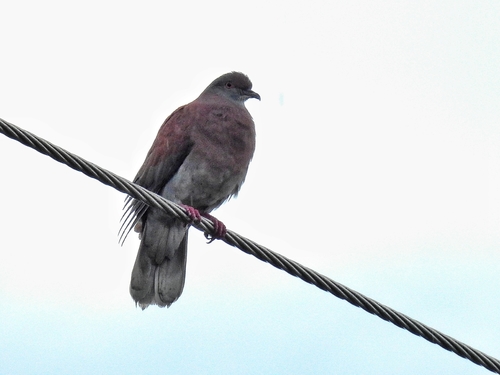
ムラサキバト (Patagioenas cayennensis) ムラサキバト
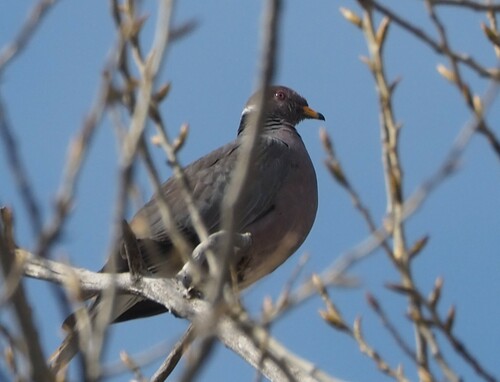
オビオバト (Patagioenas fasciata) オビオバト

メディア

読み込み中…

要点

ムラサキバトとオビオバトを区別する最も信頼できるフィールドマークは、オビオバトの後頭部にある薄い白い襟と黄色いくちばしの存在であり、ムラサキバトにはこれらがありません。幼鳥のオビオバトは上面に鱗状の外観を示し、白い襟が欠けていますが、ムラサキバトの平坦で鈍い幼鳥とは異なります。ムラサキバトの成鳥は鈍い紫色の頭部と胸部を持ち、後頭部に銅色の光沢があり、赤い裸の部分がありますが、オビオバトは全体的に灰色で、わずかにピンクがかった色合いと暗い帯のある淡い尾を持っています。飛行中または遠くから見ると、くちばしと足の色、ならびに尾の模様が重要です。両種は大型の鳩ですが、オビオバトは一般的にずっしりとしていて長いです。

識別のコツ

  1. 白い後頭部の襟(オビオバトのみ): 成鳥のオビオバトは後頭部に薄い白い襟を持ち、静止時や時々飛行中に見えます。ムラサキバトはこのマークを示しません。幼鳥のオビオバトは襟が欠けていますが、他の点で異なります。
  2. くちばしと足の色: オビオバトは黄色いくちばし(北部の個体では時々黒い先端がある)と黄色い足を持ち、ムラサキバトは黒いくちばしと赤い足/アイリングを持っています。これらの色は近距離または良好な光の下で見えます。
  3. 尾の模様: オビオバトは基部に対照的な暗い帯のある淡い灰色の尾先を示します(バハ・カリフォルニアの個体を除く);ムラサキバトは均一に暗い灰色の尾を持っています。これは特に飛行中や遠くからの止まり木で役立ちます。
  4. 頭部と胸部の色: ムラサキバトの成鳥は鈍い紫色の頭部と胸部を持ち、後頭部に銅色の光沢がありますが、オビオバトは主に灰色で、わずかにピンクがかったまたは紫がかった色合いを持ち、決してムラサキバトほど豊かではありません。
  5. 腹部: オビオバトの腹部はほぼ白く、他の腹部と対照的です。ムラサキバトは淡い灰色(または南部亜種では白い)下腹部を持っていますが、移行はあまり明確ではありません。
  6. 幼鳥/未成熟の模様: 幼鳥のオビオバトは淡い羽の縁のために上面に鱗状の外観を持ち、白い襟が欠けています。未成熟のムラサキバトは平坦で鈍く、灰褐色で、鱗状の模様や襟が欠けており、全体的に平坦に見えます。
  7. 裸の部分の色: ムラサキバトの赤い足とアイリングに対して、オビオバトの黄色い足は近距離での強い手がかりです。
  8. サイズと構造: オビオバトはずっしりとしていて、長く、翼幅が広い(最大66 cm)ですが、ムラサキバトはやや小さく、スリムです。これは両種が一緒に見られるときに最も顕著です。
  9. 飛行スタイル: 両種は強く、直接的な飛行を持っていますが、オビオバトはより重く、より意図的に見えるかもしれません。ムラサキバトにはディスプレイ飛行(半円形の滑空)が見られます。
  10. 生息地: ムラサキバトは熱帯低地の縁や木のある開けた場所を好み、オビオバトは山地や温帯の森林、特にオーク、時には郊外の公園に見られることが多いです。
  11. 声: ムラサキバトの鳴き声の最初のkukを聞いてください;オビオバトにはこの特徴がありません。
  12. 性差: 両種はわずかな性的二形を示します;雌は両方とも鈍いですが、これは診断的ではありません。
  13. 亜種の変異: 南部のムラサキバト(P. c. andersoni)は下腹部がより白いですが、オビオバトの白い後頭部の襟と黄色いくちばしは依然として欠けています。
  14. 落とし穴: 白い襟のない幼鳥のオビオバトはムラサキバトと混同される可能性がありますが、鱗状の上面と黄色い裸の部分を確認してください。未成熟のムラサキバトは常に平坦で鈍いです。
  15. 地理的文脈: 熱帯低地にいる場合、ムラサキバトの方が可能性が高いです;山地や温帯の森林、特に北アメリカではオビオバトが期待されます。

大きさ

オビオバトは全体的に大きく、長さ33–40 cm、重さ226–460 g、翼幅は最大66 cmです。ムラサキバトはやや小さく、30–32 cm、230–250 gです。体重には多少の重複がありますが、オビオバトは通常、目立って大きく、頑丈です。両種はそれぞれの範囲で最大の鳩の中に含まれますが、オビオバトは長く、重い体に見える傾向があります。

羽色

行動

両種は強力な飛行者であり、高く速く飛ぶのを見ることができ、しばしば開けた場所を飛びます。ムラサキバトはかなり孤独ですが、水源で小さな群れを形成することがありますが、オビオバトは特に食物源で小さなコロニーや緩い群れで見られることが多いです。両種は主に果物や種子を食べます。ムラサキバトには半円形の滑空で止まり木に降りるディスプレイ飛行が記述されています。一般的に、オビオバトは動きがずっしりとしていて意図的に見えるかもしれませんが、ムラサキバトはややスリムで姿勢が鈍いです。

生息環境

ムラサキバトは熱帯アメリカの森林の縁、河岸、散在する木のある部分的に開けた場所で一般的です。オビオバトは山地の森林、オークの森林、時には郊外の地域を含む広範な範囲を占め、主に北アメリカと中央アメリカに見られます。両種は密な森林の内部から離れた場所で見られますが、オビオバトはより高い標高や温帯の地域に関連付けられることが多く、ムラサキバトは厳密に熱帯および亜熱帯です。

声

ムラサキバトは柔らかいkuk kuk croo-ooosの連続を発し、最初の短いkukがそのグループに特有です。オビオバトの鳴き声はここでは詳細に説明されていませんが、最初のkukの欠如と異なる歌の構造の存在は、よく聞こえればそれらを区別するのに役立ちます。実際には、声はこれら二つの種にとって羽毛や構造ほど信頼性が高くありませんが、ムラサキバトの独特なkukのイントロは手がかりになるかもしれません。

より良い説明を送る

比較と同じ項目を使ってください。文章はすぐに公開されます。

The most reliable field mark to separate Pale-vented Pigeon from Band-tailed Pigeon is the presence of a thin white collar on the nape and a yellow bill in Band-tailed, both absent in Pale-vented. Juvenile Band-tailed Pigeons show a scaly appearance above and lack the white collar, but still differ from the plain, duller immatures of Pale-vented. Adults of Pale-vented have a dull purple head and breast with copper gloss on the nape and red bare parts, while Band-tailed is overall gray with a faint pink cast and a pale tail with a dark band. In flight or at a distance, bill and leg color, as well as the tail pattern, are key. Both are large pigeons, but Band-tailed is generally bulkier and longer.

  1. White nape collar (Band-tailed only): Adult Band-tailed Pigeons have a thin white collar on the nape, visible at rest and sometimes in flight. Pale-vented Pigeons never show this mark. Juvenile Band-taileds lack the collar but still differ in other ways.
  2. Bill and leg color: Band-tailed has a yellow bill (sometimes with a black tip in northern birds) and yellow feet; Pale-vented has a black bill and red legs/eye-ring. These colors are visible at close range or in good light.
  3. Tail pattern: Band-tailed shows a pale gray tail tip with a contrasting dark band at the base (except in Baja California birds); Pale-vented has a uniformly dark gray tail. This is especially useful in flight or distant perched views.
  4. Head and breast color: Pale-vented adults have a dull purple head and breast with copper gloss on the nape, while Band-tailed is mostly gray with a faint pinkish or purple-gray cast, never as rich as Pale-vented.
  5. Underparts: Band-tailed's belly is nearly white, contrasting with the rest of the underparts. Pale-vented has pale gray (or white in southern subspecies) lower underparts, but the transition is less sharp.
  6. Juvenile/immature pattern: Juvenile Band-taileds have a scaly look above due to pale feather edges, and lack the white collar. Immature Pale-vented are plain, dull, and grayish-brown, lacking any scaly effect or collar.
  7. Bare part color: Red legs and eye-ring in Pale-vented vs. yellow feet in Band-tailed are strong clues at close range.
  8. Size and structure: Band-tailed is bulkier, longer, and has a broader wingspan (up to 66 cm), while Pale-vented is slightly smaller and slimmer. This is most noticeable when both species are seen together.
  9. Flight style: Both species have strong, direct flight, but Band-tailed may appear heavier and more deliberate. Display flights (semi-circular glide) are noted for Pale-vented.
  10. Habitat: Pale-vented prefers tropical lowland edges and open areas with trees; Band-tailed is more likely in montane or temperate forests, especially oaks, and sometimes suburban parks.
  11. Voice: Listen for the initial kuk in Pale-vented's call; Band-tailed lacks this feature.
  12. Sex differences: Both species show only subtle sexual dimorphism; females are duller in both, but this is rarely diagnostic.
  13. Subspecies variation: Southern Pale-vented (P. c. andersoni) has whiter lower underparts, but still lacks the white nape collar and yellow bill of Band-tailed.
  14. Pitfalls: Juvenile Band-taileds without the white collar can be confused with Pale-vented, but check for scaly upperparts and yellow bare parts. Immature Pale-vented are always plain and dull.
  15. Geographic context: If in tropical lowlands, Pale-vented is more likely; in montane or temperate forests, especially in North America, Band-tailed is expected.

Band-tailed Pigeon is larger overall, measuring 33–40 cm in length and weighing 226–460 g, with a wingspan up to 66 cm. Pale-vented Pigeon is slightly smaller, at 30–32 cm and 230–250 g. While there is some overlap in weight, Band-tailed is usually noticeably bigger and more robust, especially in direct comparison. Both species are among the largest pigeons in their respective ranges, but Band-tailed tends to look longer and heavier-bodied.

  • Juvenile/immature plumage: Juvenile Band-tailed Pigeons have pale feather edges above, creating a scaly look, and lack the white nape collar and neck iridescence. Immature Pale-vented Pigeons are very dull, mainly grayish-brown, and lack any scaly pattern or collar, appearing plainer overall.
  • Adult plumage: Adult Pale-vented Pigeons show a dull purple head, breast, and upperparts with copper gloss on the nape, a whitish throat, dark gray lower back and tail, and pale gray lower underparts (white in some southern birds). Band-tailed adults are mostly gray, darker above, with a faint pinkish cast on the head and breast, a nearly white belly, and a distinctive thin white collar on the nape. The tail of Band-tailed is pale at the tip with a dark band at the base, while Pale-vented has a uniformly dark gray tail. Bare part colors differ: Pale-vented has a black bill and red legs/eye-ring, Band-tailed has a yellow bill and feet (bill sometimes with a black tip in northern birds).

Both species are strong fliers and can be seen flying high and fast, often over open areas. Pale-vented Pigeon is fairly solitary but may form small flocks at water sources, while Band-tailed Pigeon is more likely to be seen in small colonies or loose flocks, especially at food sources. Both species feed mainly on fruits and seeds. Display flights are described for Pale-vented, with a semi-circular glide down to a perch. In general, Band-tailed may appear bulkier and more deliberate in movement, while Pale-vented is slightly slimmer and less robust in posture.

Pale-vented Pigeon is common at forest edges, riverbanks, and partially open areas with scattered trees in the tropical Americas. Band-tailed Pigeon occupies a broader range, including montane forests, oak woodlands, and sometimes suburban areas, mainly in North and Central America. Both species can be found away from dense forest interiors, but Band-tailed is more often associated with higher elevations and temperate zones, while Pale-vented is strictly tropical and subtropical.

Pale-vented Pigeon gives a soft series of kuk kuk croo-ooos, with the initial short kuk being distinctive for its group. Band-tailed Pigeon's call is not described in detail here, but the absence of the initial kuk and the presence of a different song structure can help separate them if heard well. In practice, voice is less reliable than plumage and structure for these two, but the unique kuk intro of Pale-vented may be a clue.

変更を破棄しますか?

保存していない編集があります。今離れると失われます。

ムラサキバト · オビオバト · 苦手な鳥