

Motmot

ズアカエボシゲラ 対 ヒメテンニョゲラ

Campephilus guatemalensis 対 Celeus loricatus

ズアカエボシゲラとヒメテンニョゲラのクイズ
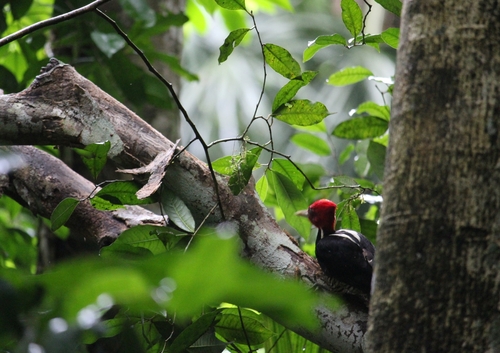
ズアカエボシゲラ (Campephilus guatemalensis) ズアカエボシゲラ
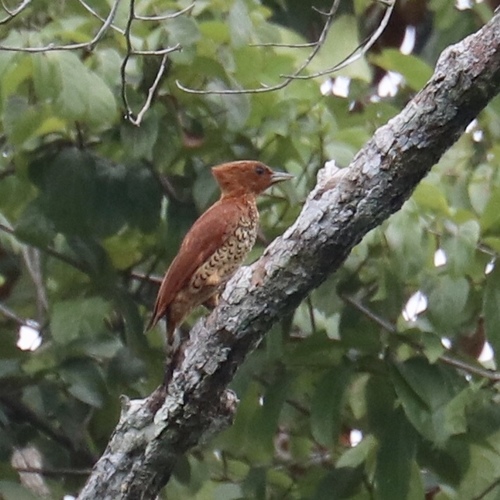
ヒメテンニョゲラ (Celeus loricatus) ヒメテンニョゲラ

メディア

読み込み中…

要点

ズアカエボシゲラとヒメテンニョゲラを区別する最も信頼できるフィールドマークは、全体のサイズと構造です:ズアカエボシゲラは巨大で重いくちばしを持つCampephilusであり、ヒメテンニョゲラははるかに小さく、スリムで、よりコンパクトです。すべての羽色において、ズアカエボシゲラは目を引くアイボリーイエローのノミのようなくちばしと、背中に淡いV字型の模様を持つ大胆な黒と白の上面を示しますが、ヒメテンニョゲラは温かみのあるルフスシナモン色で黒い縞模様があり、はるかに小さく、灰色から黄色がかったくちばしを持っています。飛行中、ズアカエボシゲラは広い翼を持ち、大きく力強く見えますが、ヒメテンニョゲラは素早く軽やかです。両者の幼鳥は成鳥に似ていますが、同じ構造的および色のコントラストによって区別できます。これら二種はサイズや全体的な印象で重なることは考えにくいですが、視界が悪い場合や頭の色だけに焦点を当てると混乱が生じることがあります。

識別のコツ

  1. Size is the fastest check: ズアカエボシゲラは巨大(ほぼカラスサイズ)、ヒメテンニョゲラは小さくスリムです。大きく力強く見えるキツツキを見たら、それはヒメテンニョゲラではありません。
  2. Bill color and shape: ズアカエボシゲラは長くて太いアイボリーイエローのノミのようなくちばしを持ち、遠くからでも非常に特徴的です。ヒメテンニョゲラのくちばしははるかに短く、細く、灰色から黄色がかった色です。
  3. Upperparts pattern: ズアカエボシゲラの黒い背中にある大胆な淡い(白またはバフ)V字型の模様や縞模様を探してください。ヒメテンニョゲラは上面が均一にルフスシナモン色で、狭い黒い縞模様があり、決して淡いVはありません。
  4. Head color and crest: オスのズアカエボシゲラは、ふさふさした冠を持つ真っ赤な頭を持ち、メスは黒い前頭部と喉を持っています。ヒメテンニョゲラは両性ともに頭に黒い縞模様のあるルフス色の頭を持ち、ふさふさした冠があります。オスのヒメテンニョゲラだけが顎/喉に赤色を示し(黒い縞模様付き)、メスのヒメテンニョゲラはそこが単色のルフス色です。
  5. Tail pattern: ズアカエボシゲラの尾は鈍い茶色で、下側はオリーブブラウンです。ヒメテンニョゲラの尾は黒で、広いバフ/白っぽい縞模様があります—尾が見えるか確認してください。
  6. Underparts: ズアカエボシゲラは狭い黒い縞模様のある淡い黄色がかったバフの腹部を示します。ヒメテンニョゲラは下側がより淡いバフで、大胆な黒い矢じりの模様(縞模様ではない)があります。
  7. Juvenile confusion: 幼鳥のズアカエボシゲラは成鳥のメスに似ていますが、色が鈍いです。幼鳥のヒメテンニョゲラは成鳥に似ていますが、より多くの斑点があります。サイズと全体的な色でまだ区別できます。
  8. Flight impression: ズアカエボシゲラは広い翼を持ち、重く、飛行中は遅いです。ヒメテンニョゲラは素早く、軽やかで、機敏です。
  9. Leg color: ズアカエボシゲラは緑がかった灰色の脚を持ち、ヒメテンニョゲラは灰色です。フィールドでは通常診断には使えません。
  10. Eye color: ズアカエボシゲラは淡いクリームバフの虹彩を持ち、ヒメテンニョゲラは赤です。近くで見ると役立ちます。
  11. Habitat context: 大きな古木のある成熟した森林にいる場合、ズアカエボシゲラの可能性が高いです。湿った低地の森林、特に分布の南部では、ヒメテンニョゲラが可能です。
  12. Sex differences: オスのヒメテンニョゲラだけが顎/喉に赤色を示します。ズアカエボシゲラの両性はふさふさした冠を持ちますが、オスだけが全体が赤い頭です。
  13. Mixed flock behavior: ズアカエボシゲラは混合群に参加しません。ヒメテンニョゲラの行動は特定されていませんが、より柔軟である可能性があります。
  14. Bill darkness in juveniles: 幼鳥のズアカエボシゲラは成鳥よりも暗いくちばしを持っていますが、それでもヒメテンニョゲラよりもはるかに大きく、色が薄いです。
  15. Pitfall: '赤い頭'だけに頼らないでください—両者は視界によって赤い頭に見えることがあります。常にサイズ、くちばし、上面の模様を確認してください。

大きさ

ズアカエボシゲラは劇的に大きく、平均体重は242g、体長は35.5–38cmで、ヒメテンニョゲラの78gおよび19–23cmと比較されます。フィールドでは、ズアカエボシゲラはほぼカラスサイズに見え、重く長いくちばしと頑丈で細長い体を持っています。ヒメテンニョゲラは小さなキツツキに近く、スリムで短い尾を持ち、相対的に小さな頭とくちばしを持っています。サイズだけで通常は一緒に見た場合やスケール感があれば区別できます。

羽色

年齢特有の上翼や飛行マークはどちらの種にも記載されていませんが、全体の羽色はすべての年齢で非常に特徴的です。すべての年齢と性別のズアカエボシゲラは、背中に淡い(白またはバフ)V字型のストライプがあり、長いアイボリーイエローのくちばしを持ち、ふさふさした冠を持つ赤(オス)またはほとんど黒(メス)の頭を示します。腹部は淡いバフで、細かい黒い縞模様があります。幼鳥は成鳥のメスに似ていますが、くちばしが暗く、頭の側面が鈍いです。ヒメテンニョゲラは、すべての羽色で、上面と下面が豊かなルフスシナモン色で、背中と翼に狭い黒い縞模様があり、ふさふさしたルフス色の冠と黒い縞模様またはストライプのある冠を持っています。オスは赤い縞模様のある顎と喉を持ち、メスはそこが単色のルフス色です。くちばしははるかに短く、灰色から黄色がかった色です。幼鳥は成鳥に似ていますが、より多くの斑点と不規則な模様があります。ヒメテンニョゲラの尾は黒で、広いバフまたは白っぽい縞模様がありますが、ズアカエボシゲラの鈍い茶色の尾とは異なります。

行動

ズアカエボシゲラは主に大きな幹や枝で採餌し、しばしば死んだ木を掘り、通常は単独またはペアで見られ、時には数メートル離れていることがあります。混合群に参加することはほとんどなく、切り株の上で地面にいることがあります。ヒメテンニョゲラの採餌行動はここでは詳述されていませんが、その小さなサイズと軽い体格は、より機敏で大きな幹に依存しないことを示唆しています。両種は木に巣穴を掘りますが、ズアカエボシゲラは通常、より大きく高い木を使用します。

生息環境

ズアカエボシゲラはメキシコからパナマまで見られ、主に低地および山地の熱帯森林に生息し、常緑樹、落葉樹、マングローブ、松・オークを含みますが、重度に森林が伐採された地域は避けます。ヒメテンニョゲラはコロンビア、コスタリカ、エクアドル、ニカラグア、パナマに生息し、分布の一部で重なりますが、一般的には湿った森林に生息しています。両者は成熟した森林に見られますが、ズアカエボシゲラは大きな木のある原生林やあまり乱されていない森林にいる可能性が高く、ヒメテンニョゲラはより広範囲の湿った森林タイプを許容するかもしれません。

より良い説明を送る

比較と同じ項目を使ってください。文章はすぐに公開されます。

The most reliable field mark to separate Pale-billed Woodpecker from Cinnamon Woodpecker is overall size and structure: Pale-billed is a massive, heavy-billed Campephilus, while Cinnamon is much smaller, slimmer, and more compact. In all plumages, Pale-billed shows a striking ivory-yellow chisel bill and bold black-and-white upperparts with a pale V on the back, while Cinnamon is warm rufous-cinnamon with black barring and a much smaller, grayish to yellowish bill. In flight, Pale-billed appears large and powerful with broad wings, whereas Cinnamon is quick and light. Juveniles of both are similar to adults but can be separated by the same structural and color contrasts. These two are unlikely to overlap in size or overall impression, but confusion can arise with poor views or when focusing only on head color.

  1. Size is the fastest check: Pale-billed is huge (almost crow-sized), Cinnamon is small and slim. If you see a woodpecker that looks large and powerful, it's not Cinnamon.
  2. Bill color and shape: Pale-billed has a long, thick, ivory-yellow chisel bill—very distinctive even at a distance. Cinnamon's bill is much shorter, thinner, and grayish to yellowish.
  3. Upperparts pattern: Look for the bold pale (white or buff) V or stripes on the black back of Pale-billed. Cinnamon is uniformly rufous-cinnamon above with narrow black barring, never with a pale V.
  4. Head color and crest: Male Pale-billed has a solid red head with a bushy crest; female has a black forecrown and throat. Cinnamon has a rufous head with black streaks on the crown for both sexes, and a bushy crest. Only male Cinnamon shows red on the chin/throat (with black streaks); female Cinnamon is plain rufous there.
  5. Tail pattern: Pale-billed's tail is dull brown with olive-brown below; Cinnamon's is black with wide buff/whitish bars—check if the tail is visible.
  6. Underparts: Pale-billed shows pale yellowish buff underparts with narrow black bars; Cinnamon is paler buff below with bold black arrowhead marks (not bars).
  7. Juvenile confusion: Juvenile Pale-billed resembles adult female but is duller; juvenile Cinnamon is like adult but with more mottling. Size and overall color still separate them.
  8. Flight impression: Pale-billed is broad-winged, heavy, and slow in flight; Cinnamon is quick, light, and agile.
  9. Leg color: Pale-billed has greenish gray legs; Cinnamon's are gray. Not usually diagnostic in the field.
  10. Eye color: Pale-billed has a light cream-buff iris; Cinnamon's is red. Useful in close views.
  11. Habitat context: If in a large, mature forest with big dead trees, Pale-billed is more likely. In humid lowland forest, especially in the south of the range, Cinnamon is possible.
  12. Sex differences: Only male Cinnamon shows red on the chin/throat; both sexes of Pale-billed have a bushy crest, but only the male is all red-headed.
  13. Mixed flock behavior: Pale-billed does not join mixed flocks; Cinnamon's behavior is not specified but may be more flexible.
  14. Bill darkness in juveniles: Juvenile Pale-billed has a darker bill than adults, but still much larger and paler than Cinnamon.
  15. Pitfall: Do not rely on 'red head' alone—both can look red-headed in some views. Always check size, bill, and upperparts pattern for confirmation.

Pale-billed Woodpecker is dramatically larger, with an average mass of 242 g and a length of 35.5–38 cm, compared to Cinnamon Woodpecker's 78 g and 19–23 cm. In the field, Pale-billed looks almost crow-sized, with a heavy, long bill and a robust, elongated body. Cinnamon is closer to a small woodpecker, appearing slim, short-tailed, and with a proportionally smaller head and bill. Size alone is usually enough to separate them if seen together or with a sense of scale.

No age-specific upperwing or flight marks are described for either species, but overall plumage is highly distinctive at all ages. Pale-billed Woodpecker of all ages and sexes shows black upperparts with a pale (white or buff) V-shaped stripe down the back, a long ivory-yellow bill, and a red (male) or mostly black (female) head with a bushy crest. The underparts are pale buff with fine black barring. Juveniles resemble adult females but have a darker bill and duller head sides. Cinnamon Woodpecker, in all plumages, is rich rufous-cinnamon above and below with narrow black barring on the back and wings, a bushy rufous crest, and a black-barred or streaked crown. Males have a red-streaked chin and throat, while females are plain rufous there. The bill is much shorter and grayish to yellowish. Juveniles are similar to adults but with more mottling and irregular markings. The tail of Cinnamon is black with wide buff or whitish bars, unlike the dull brown tail of Pale-billed.

Pale-billed Woodpecker forages mostly on large trunks and limbs, often excavating in dead wood, and is usually seen singly or in pairs, sometimes separated by several meters. It rarely joins mixed flocks and may be seen on the ground at stumps. Cinnamon Woodpecker's foraging behavior is not detailed here, but its smaller size and lighter build suggest it may be more agile and less tied to large trunks. Both species excavate nest cavities in trees, but Pale-billed typically uses larger, higher trees.

Pale-billed Woodpecker is found from Mexico to Panama, mostly in lowland and montane tropical forests, including evergreen, deciduous, mangroves, and pine-oak, but avoids heavily deforested areas. Cinnamon Woodpecker occurs in Colombia, Costa Rica, Ecuador, Nicaragua, and Panama, overlapping in part of the range but generally in humid forests. Both can be found in mature forest, but Pale-billed is more likely in primary or less disturbed forest with large trees, while Cinnamon may tolerate a wider range of humid forest types.

変更を破棄しますか?

保存していない編集があります。今離れると失われます。

ズアカエボシゲラ · ヒメテンニョゲラ · 苦手な鳥