

Motmot

タイヘイヨウキンバト 対 ハイムネバト

Chalcophaps longirostris 対 Pampusana beccarii

タイヘイヨウキンバトとハイムネバトのクイズ
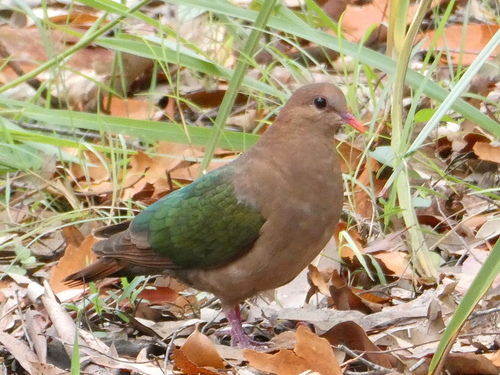
タイヘイヨウキンバト (Chalcophaps longirostris) タイヘイヨウキンバト
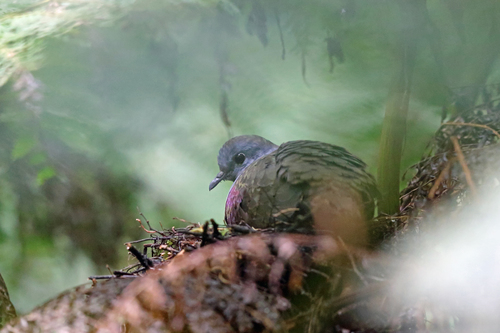
ハイムネバト (Pampusana beccarii) ハイムネバト

メディア

読み込み中…

要点

太平洋エメラルドバトとハイムネバトを区別する最も信頼性の高いフィールドマークは、明るいエメラルドグリーンの上面と下背部の広い黒と白の帯の組み合わせであり、これは太平洋エメラルドバトの飛行中に見られますが、ハイムネバトにはそのような鮮やかな緑と帯がありません。未熟な太平洋エメラルドバトは、翼と体に茶色のスカロッピングを示し、これはハイムネバトには記載されていない特徴です。太平洋エメラルドバトはより大きく、より地上性であり、密な森林の開けた地域で地面を歩いているのがよく見られますが、ハイムネバトは通常、より小さく、目立たないです。もし、明るい赤いくちばし、エメラルド色の翼を持ち、飛ぶのではなく歩く傾向のあるずんぐりした中型の鳩を見たら、それはおそらく太平洋エメラルドバトです。

識別のコツ

  1. 未熟な太平洋エメラルドバトは体と翼の覆羽に茶色のスカロッピングを示す—もしこれを見たら、特に緑の翼を持つ鳥の場合、ハイムネバトではありません。
  2. 飛行中、太平洋エメラルドバトの下背部に広い黒と白の帯を探してください; ハイムネバトにはこれがありません。
  3. 明るいエメラルドグリーンの上面と翼は、最も若い幼鳥を除くすべての羽色で太平洋エメラルドバトの診断に役立ちます; ハイムネバトは決してこのように緑ではありません。
  4. 成鳥のオスの太平洋エメラルドバトは灰色の冠と白い肩の斑点を持つ; ハイムネバトにはこれらの特徴はありません。
  5. 太平洋エメラルドバトの雌と未熟な個体はより茶色ですが、翼にはまだ緑が見られます; ハイムネバトは緑と肩の斑点の両方が欠けています。
  6. 太平洋エメラルドバトは明るい赤いくちばしと赤褐色の脚/足を持つ—近距離または良い光の下で役立ちます。
  7. 太平洋エメラルドバトはハイムネバトよりもずんぐりしていて長い(23–28 cm); 両種が一緒に見られる場合や経験があればサイズを判断できます。
  8. 太平洋エメラルドバトは開けた場所や森林の端で地面を歩くことが多いが、ハイムネバトはより秘密主義で、開けた場所で歩いているのが見られる可能性は低いです。
  9. 太平洋エメラルドバトの飛行は速く、直接的で低く、淡褐色の下翼と栗色の飛行羽を持つ; ハイムネバトの飛行は記載されていませんが、緑と帯が欠けています。
  10. 低く上昇するクーイングの連続音や鼻にかかった「フー・フー・フーン」を聞いたら、それは太平洋エメラルドバトです; ハイムネバトの鳴き声はここでは記載されていません。
  11. 太平洋エメラルドバトは一般的におとなしく近づきやすい; 地面にいる鳩が近づくことを許す場合、この種である可能性が高いです。
  12. 文脈を確認してください: 太平洋エメラルドバトは庭やマングローブを含む広範な生息地を使用します; ハイムネバトは密で手つかずの森林にいる可能性が高いです。
  13. 太平洋エメラルドバトの尾と飛行羽は黒っぽい; 側に止まっている鳥の緑の背中とのコントラストを探してください。
  14. 太平洋エメラルドバトのオスは求愛中に上下に揺れるダンスを行う—この行動を見たら、それは診断的です。
  15. 不確かな場合は、太平洋エメラルドバトの緑の上面、赤いくちばし、地上性の習性の組み合わせに焦点を当ててください; これらの特徴が欠けている場合は注意とさらなる精査を促すべきです。

大きさ

太平洋エメラルドバトはずんぐりした中型の鳩で、通常の長さは23–28 cmです [wikipedia]。ハイムネバトは小さいですが、利用可能なメモには正確な測定値は提供されていません。フィールドでは、太平洋エメラルドバトはハイムネバトよりも明らかにずんぐりしていて長く、より頑丈な体型と相対的に長い尾を持っています。

羽色

行動

太平洋エメラルドバトは非常に地上性で、落ちた果物を探して地面を歩くことが多く、一般的におとなしく近づきやすいです。驚かされたときには飛ぶのではなく歩いて逃げることを好み、飛ぶときには密な森林の中を巧みに縫うように飛びます。ハイムネバトの行動は利用可能なメモには詳細に記載されていませんが、一般的に目立たず、開けた場所で歩いているのが見られる可能性は低いです。もし、特により開けた地域で自信を持って森林の床を歩いている鳩を見たら、太平洋エメラルドバトの可能性が高いです。

生息環境

太平洋エメラルドバトは熱帯雨林、密な湿った森林、農場、庭、マングローブ、沿岸のヒースに生息し、密なカバーのパッチがある地域や、より開けた、乱された生息地でも見られます。ハイムネバトの生息地はメモには記載されていませんが、一般的に密な森林に制限されており、太平洋エメラルドバトと比較して開けた場所やエッジの生息地で見られる可能性は低いです。

声

太平洋エメラルドバトは約6〜7音の低く柔らかいうめき声を出し、静かに始まり上昇します。また、鼻にかかった「フー・フー・フーン」も出します。ハイムネバトの鳴き声は利用可能なメモには記載されていないため、声は太平洋エメラルドバトの特徴的なクーイングを聞いた場合のみ診断的です。

より良い説明を送る

比較と同じ項目を使ってください。文章はすぐに公開されます。

The most reliable field mark to separate Pacific Emerald Dove from Bronze Ground Dove is the combination of bright emerald-green upperparts and broad black-and-white bars on the lower back, visible in flight on Pacific Emerald Dove, versus the lack of such vivid green and barring in Bronze Ground Dove. Immature Pacific Emerald Doves show brown scalloping on the wing and body, a feature not described for Bronze Ground Dove. Pacific Emerald Dove is larger, more terrestrial, and often seen walking on the ground in open areas of dense forest, while Bronze Ground Dove is typically smaller and less conspicuous. If you see a stocky, medium-sized pigeon with a bright red bill, emerald wings, and a tendency to walk rather than flush, it is likely Pacific Emerald Dove.

  1. Immature Pacific Emerald Dove shows brown scalloping on body and wing coverts—if you see this, especially on a green-winged bird, it's not Bronze Ground Dove.
  2. In flight, look for broad black-and-white bars on the lower back of Pacific Emerald Dove; Bronze Ground Dove lacks these.
  3. Bright emerald-green upperparts and wings are diagnostic for Pacific Emerald Dove in all plumages except the youngest juveniles; Bronze Ground Dove is never this green.
  4. Adult male Pacific Emerald Dove has a grey crown and a white shoulder patch; neither feature is present on Bronze Ground Dove.
  5. Females and immatures of Pacific Emerald Dove are browner but still show green on the wings; Bronze Ground Dove will lack both the green and the shoulder marks.
  6. Pacific Emerald Dove has a bright red bill and rufous legs/feet—useful at close range or with good light.
  7. Pacific Emerald Dove is bulkier and longer (23–28 cm) than Bronze Ground Dove; size can be judged if both species are seen together or with experience.
  8. Pacific Emerald Dove often walks on the ground in the open or at forest edges, while Bronze Ground Dove is more secretive and less likely to be seen walking in open areas.
  9. Pacific Emerald Dove's flight is fast, direct, and low, with buff underwings and chestnut flight feathers; Bronze Ground Dove's flight is not described but lacks the green and barring.
  10. If you hear a low, rising cooing sequence or nasal 'hoo-hoo-hoon,' it's Pacific Emerald Dove; Bronze Ground Dove's call is not described here.
  11. Pacific Emerald Dove is generally tame and approachable; if a ground-dwelling pigeon allows close approach, it's more likely this species.
  12. Check the context: Pacific Emerald Dove uses a wide range of habitats, including gardens and mangroves; Bronze Ground Dove is more likely in dense, undisturbed forest.
  13. Tail and flight feathers of Pacific Emerald Dove are blackish; look for contrast with the green back in perched birds.
  14. Pacific Emerald Dove males perform a bobbing dance during courtship—if you see this behavior, it's diagnostic.
  15. If uncertain, focus on the combination of green upperparts, red bill, and terrestrial habits for Pacific Emerald Dove; absence of these features should prompt caution and further scrutiny.

Pacific Emerald Dove is a stocky, medium-sized pigeon, typically 23–28 cm in length [wikipedia]. Bronze Ground Dove is smaller, but exact measurements are not provided in the available notes. In the field, Pacific Emerald Dove will appear noticeably bulkier and longer than Bronze Ground Dove, with a more robust build and proportionally longer tail.

  • Immature/juvenile birds: Pacific Emerald Dove immatures resemble females but show distinctive brown scalloping on the body and wing coverts, a feature not described for Bronze Ground Dove. This scalloping is a strong clue for Pacific Emerald Dove in young birds.
  • Adult males: Pacific Emerald Dove males have a bright emerald-green back and wings, a grey crown, and a white patch on the shoulder. Bronze Ground Dove lacks these vivid green upperparts and the white shoulder patch.
  • Adult females: Female Pacific Emerald Doves are browner than males, with a grey mark on the shoulder, but still show green on the wings. Bronze Ground Dove females are not described in detail, but absence of green and shoulder markings is expected.
  • Flight: In flight, Pacific Emerald Dove shows a buff underwing, chestnut flight feathers, blackish tail, and broad black-and-white bars on the lower back—these are not present in Bronze Ground Dove. The overall impression of green and strong barring is unique to Pacific Emerald Dove.
  • Bill and legs: Pacific Emerald Dove has a bright red bill and rufous legs and feet, which are not described for Bronze Ground Dove but are distinctive in the field.

Pacific Emerald Dove is quite terrestrial, often walking on the ground in search of fallen fruit, and is generally tame and approachable. It prefers to walk away rather than fly when disturbed, and when it does fly, it weaves skillfully through dense forest. Bronze Ground Dove's behavior is not detailed in the available notes, but it is generally less conspicuous and less likely to be seen walking in the open. If you see a pigeon walking confidently on the forest floor, especially in more open areas, Pacific Emerald Dove is more likely.

Pacific Emerald Dove inhabits rainforest, dense wet woodlands, farms, gardens, mangroves, and coastal heaths, often in areas with patches of dense cover but also in more open, disturbed habitats. Bronze Ground Dove's habitat is not described in the notes, but it is generally more restricted to dense forest and less likely to be found in open or edge habitats compared to Pacific Emerald Dove.

Pacific Emerald Dove gives a low, soft, moaning coo of about six to seven notes, starting quietly and rising, as well as a nasal 'hoo-hoo-hoon.' Bronze Ground Dove's vocalizations are not described in the available notes, so voice is only diagnostic if you hear the distinctive cooing of Pacific Emerald Dove.

変更を破棄しますか?

保存していない編集があります。今離れると失われます。

タイヘイヨウキンバト · ハイムネバト · 苦手な鳥