

Motmot

Ornate Sunbird 対 ルリオタイヨウチョウ

Cinnyris ornatus 対 Aethopyga gouldiae

Ornate Sunbirdとルリオタイヨウチョウのクイズ
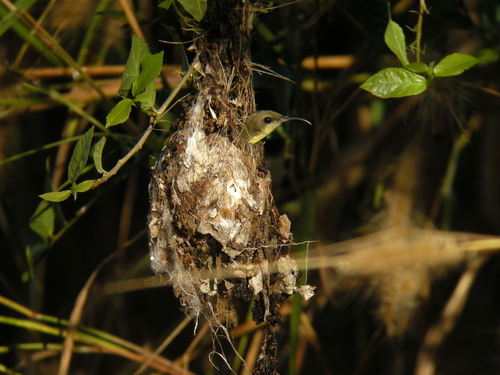
Ornate Sunbird (Cinnyris ornatus) Ornate Sunbird
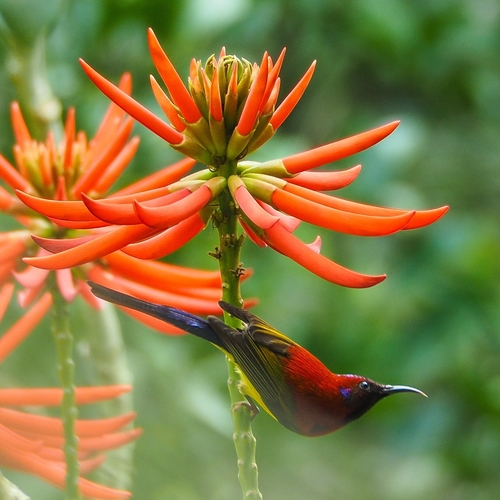
ルリオタイヨウチョウ (Aethopyga gouldiae) ルリオタイヨウチョウ

メディア

読み込み中…

要点

オーナテサンバードとルリオタイヨウチョウを区別する最も信頼できるフィールドマークは、オスの頭部と喉の色です:オスのオーナテサンバードは喉に青黒い虹色を示し、上半身は主にオリーブ色ですが、オスのルリオタイヨウチョウは深いバイオレットの冠と喉を持ち、頭部と上部には広範囲に明るい赤またはスカーレットがあります。両種の雌はより地味ですが、眉斑と全体のトーンが異なります:オーナテサンバードの雌は黄味がかった眉斑と下部がより黄色いですが、ルリオタイヨウチョウの雌は上部がオリーブグリーンで下部が灰色がかった黄色です。飛んでいる時や止まっている時、ルリオタイヨウチョウは明らかに尾が長く、全体的に大きく、特にオスではよりカラフルでコントラストのある外観を持っています。両種は東南アジアで重なることがあるため、これらの羽毛と構造の違いに注意を払うことが重要です。

識別のコツ

  1. オスの頭部と喉の色:オスのオーナテサンバードは青黒い虹色の喉と額を持ち、オスのルリオタイヨウチョウは額から喉にかけて深いバイオレットを示し、頭部と後頭部には広範囲にスカーレット/赤があります。これは成鳥のオスにとって最も信頼できるマークです。
  2. オスの上部:オーナテサンバードのオスは上部がオリーブ色で、緑の縁取りがある黒い翼を持っています;ルリオタイヨウチョウのオスは明るい赤/スカーレットの上部を持ち、青いハイライトと茶色/オリーブ色の翼があります。
  3. 尾の長さと色:ルリオタイヨウチョウははるかに長い尾を持っています(特にオスで)、明るい青の尾覆羽と紫の先端があります。オーナテサンバードの尾は短く、黒で白い先端があります。
  4. 雌の眉斑:雌のオーナテサンバードは黄味がかった眉斑(眉毛)を持ち、ルリオタイヨウチョウの雌にはそれがありません。
  5. 雌の下部:雌のオーナテサンバードは下部がより黄色いですが、ルリオタイヨウチョウの雌は下部が灰色がかった黄色で上部がオリーブグリーンです。
  6. 全体の色の鮮やかさ:ルリオタイヨウチョウ(特にオス)ははるかにカラフルでコントラストが強く、赤、バイオレット、青、緑があります。オーナテサンバードはより控えめで、オリーブと黄色のトーンが支配しています。
  7. くちばしの長さと形:ルリオタイヨウチョウはより長く、より下向きに曲がったくちばし(13–17 mm)を持ち、オーナテサンバードのくちばしは短く、あまり強く曲がっていません。これは微妙かもしれませんが、良い視界で見ることができます。
  8. サイズと構造:ルリオタイヨウチョウはより大きく、より細長いですが、特に長い尾のためです。オーナテサンバードはよりコンパクトで、尾が短いです。
  9. 飛行中の翼のパターン:どちらの種にも特定の年齢に特有の上翼や飛行マークは記載されていないため、翼のパターンに頼って区別しないでください。
  10. 生息地の文脈:山地または高地の森林で見られた場合、ルリオタイヨウチョウの可能性が高いです;低地や庭の環境では、オーナテサンバードがより期待されますが、両者は東南アジアで重なることがあります。
  11. 亜種の変異:ルリオタイヨウチョウは胸の色にいくつかの変異(スカーレットまたは赤いストライプの有無にかかわらず黄色)を示しますが、常に明るい頭部と上部を保持します。オーナテサンバードは外観がより一貫しています。
  12. 幼鳥/未熟な混乱:どちらの種にも特定の幼鳥や未熟なマークは記載されていないため、若い鳥は上記の構造と全体の色パターンで識別する必要があります。
  13. 虹彩と脚の色:両種ともに暗褐色の虹彩と黒い脚/タルサを持っているため、これらは区別には役立ちません。
  14. 行動の印象:ルリオタイヨウチョウは長い尾のため、飛行中により敏捷で細長く見えることがあります;オーナテサンバードはよりコンパクトで、より水平に止まることがあります。
  15. 声:提供された情報源には診断的な声の違いは記載されていないため、呼び声や歌に頼って区別しないでください。

大きさ

ルリオタイヨウチョウはオーナテサンバードよりも明らかに大きいです。成鳥のオスのルリオタイヨウチョウは131–160 mmの長さで、長い尾(64–88 mm)を持ち、オーナテサンバードは100–114 mmとかなり短いです。ルリオタイヨウチョウはまた、より長い翼(51–58 mm対オーナテサンバードの未記載ですが相対的に短い翼)とより長いくちばし(13–17 mm)を持っています。ルリオタイヨウチョウの雌もオーナテサンバードの雌(100–114 mm)よりも長い(91–111 mm)ですが、尾の長さの違いが最も顕著です。ルリオタイヨウチョウは上端でより重く(オスは最大12 g)ですが、下端ではオーナテサンバードと重なることがあります。フィールドでは、ルリオタイヨウチョウは特に長い尾のため、より細長く見えることがよくあります。

羽色

どちらの種にも年齢特有の翼や飛行パターンのマークは記載されていないため、区別は主に体と頭の羽毛に依存します、特に成鳥のオスにおいて。オーナテサンバードのオスは上部がオリーブ色で、緑の縁取りがある黒い翼、白い先端の黒い尾、青黒い虹色の喉と胸を持ち、下部は黄色です。ルリオタイヨウチョウのオスははるかにカラフルです:額から喉にかけて深いバイオレット、頭部、後頭部、マントルに広範囲にスカーレット/赤、耳羽と側面に青、茶色またはオリーブグリーンの翼、先端が紫にフェードする明るい青の尾覆羽を持ち、腹部は黄緑がかった色です。雌のオーナテサンバードは上部が緑がかったオリーブ色で、黄色の眉斑と黄色の下部を持ち、雌のルリオタイヨウチョウは上部が深いオリーブグリーンで下部が灰色がかった黄色で、黄色の眉斑がありません。ルリオタイヨウチョウの亜種の変異は胸の色(スカーレットまたは赤いストライプの有無にかかわらず黄色)に影響を与えることがありますが、全体のパターンは常にオーナテサンバードよりも鮮やかでコントラストがあります。幼鳥/未熟な特有の上翼や飛行マークはどちらの種にも記載されていません。

行動

両種は活動的な蜜を食べるもので、似たようなサンバードの行動を持っています:花の間を素早く飛び回り、しばしば短時間ホバリングします。ルリオタイヨウチョウは大きくて尾が長いため、飛行中により細長く敏捷に見えることがありますが、時にはより直立に止まります。オーナテサンバードはよりコンパクトで、印象としてはより「スズメのよう」に見えることがあります。両種は単独またはペアで見られ、キャノピーや低木層で活発に餌を探すことができます。

生息環境

オーナテサンバードは東南アジアとグレーター・スンダスの低地および丘陵の森林、庭、開けた森林に特有です。ルリオタイヨウチョウは南ヒマラヤから東南アジアにかけて分布し、通常は森林や低木地帯に生息し、オーナテサンバードよりも高い標高で見られることが多いです。重なり合う地域(例:東南アジア)では、ルリオタイヨウチョウはより山地または森林の生息地に見られる可能性が高く、オーナテサンバードは低地または乱れた生息地に見られる可能性が高いですが、これは範囲が重なる場所では信頼できるフィールドマークではありません。

より良い説明を送る

比較と同じ項目を使ってください。文章はすぐに公開されます。

The most reliable field mark to separate Ornate Sunbird from Mrs. Gould's Sunbird is the male's head and throat color: male Ornate Sunbird shows blue-black iridescence on the throat and a mostly olive upperbody, while male Mrs. Gould's Sunbird has a deep violet crown and throat with extensive bright red or scarlet on the head and upperparts. Females of both species are duller but differ in the supercilium and overall tone: Ornate Sunbird females have a yellowish supercilium and more yellow below, while Mrs. Gould's Sunbird females are olive-green above and greyish-yellow below. In flight or perched, Mrs. Gould's Sunbird is distinctly longer-tailed and larger overall, with a more colorful and contrasting appearance, especially in males. Both species can overlap in Southeast Asia, so careful attention to these plumage and structural differences is essential.

  1. Male head and throat color: Male Ornate Sunbird has a blue-black iridescent throat and forehead, while male Mrs. Gould's Sunbird shows deep violet from forehead to throat and extensive scarlet/red on the head and nape. This is the single most reliable mark for adult males.
  2. Male upperparts: Ornate Sunbird males are olive above with green-edged black wings; Mrs. Gould's Sunbird males have bright red/scarlet upperparts with blue highlights and brown/olive wings.
  3. Tail length and color: Mrs. Gould's Sunbird has a much longer tail (especially in males), with a bright blue tail covert and purple tip. Ornate Sunbird's tail is shorter, black with a white tip.
  4. Female supercilium: Female Ornate Sunbird has a yellowish supercilium (eyebrow), which is lacking in Mrs. Gould's Sunbird females.
  5. Female underparts: Female Ornate Sunbird is more yellow below, while Mrs. Gould's Sunbird female is greyish-yellow below and olive-green above.
  6. Overall color vibrancy: Mrs. Gould's Sunbird (especially males) is much more colorful and contrasting, with reds, violets, blues, and greens. Ornate Sunbird is more subdued, with olive and yellow tones dominating.
  7. Bill length and shape: Mrs. Gould's Sunbird has a longer, more down-curved bill (13–17 mm), while Ornate Sunbird's bill is shorter and less strongly curved. This may be subtle but is visible with good views.
  8. Size and structure: Mrs. Gould's Sunbird is larger and more elongated, especially due to its long tail. Ornate Sunbird is more compact and shorter-tailed.
  9. Wing pattern in flight: No distinctive age-specific upperwing or flight marks are described for either species, so do not rely on wing pattern for separation.
  10. Habitat context: If seen in montane or higher elevation forest, Mrs. Gould's Sunbird is more likely; in lowland or garden settings, Ornate Sunbird is more expected, but both can overlap in Southeast Asia.
  11. Subspecific variation: Mrs. Gould's Sunbird shows some variation in breast color (scarlet or yellow with/without a red stripe), but always retains the bright head and upperparts. Ornate Sunbird is more consistent in appearance.
  12. Juvenile/immature confusion: No specific juvenile or immature marks are described for either species, so young birds should be identified by structure and overall color pattern as above.
  13. Iris and leg color: Both species have dark brown irises and black legs/tarsi, so these are not useful for separation.
  14. Behavioral jizz: Mrs. Gould's Sunbird may appear more agile and elongated in flight due to its long tail; Ornate Sunbird is more compact and may perch more horizontally.
  15. Voice: No diagnostic vocal differences are described in the sources provided, so do not rely on calls or song for separation.

Mrs. Gould's Sunbird is noticeably larger than Ornate Sunbird. Adult male Mrs. Gould's Sunbird measures 131–160 mm in length, with a long tail (64–88 mm), while Ornate Sunbird is much shorter at 100–114 mm. Mrs. Gould's Sunbird also has a longer wing (51–58 mm vs. Ornate's unlisted but proportionally shorter wing) and a longer bill (13–17 mm). Females of Mrs. Gould's Sunbird are also longer (91–111 mm) than Ornate Sunbird females (100–114 mm), but the difference is most striking in the tail length. Mrs. Gould's Sunbird is heavier at the upper end (males up to 12 g) but can overlap with Ornate Sunbird at the lower end. In the field, Mrs. Gould's Sunbird often appears more elongated and slender, especially due to its long tail.

No age-specific wing or flight pattern marks are described for either species, so separation relies on body and head plumage, especially in adult males. Male Ornate Sunbird is olive above with black wings edged green, a black tail with white tip, and a blue-black iridescent throat and breast; underparts are yellow. The male Mrs. Gould's Sunbird is much more colorful: deep violet from forehead to throat, extensive scarlet/red on the head, nape, and mantle, blue on the auriculars and sides, brown or olive green wings, and a bright blue tail covert fading to purple at the tip. The belly is yellowish-green. Female Ornate Sunbird is greenish-olive above with a yellow supercilium and yellow underparts, while female Mrs. Gould's Sunbird is deep olive-green above and greyish-yellow below, lacking the yellow supercilium. Subspecific variation in Mrs. Gould's Sunbird can affect breast color (scarlet or yellow with/without a red stripe), but the overall pattern is always more vibrant and contrasting than Ornate Sunbird. Juvenile/immature-specific upperwing or flight marks are not described for either species.

Both species are active nectar feeders with similar sunbird behavior: rapid, darting movements among flowers, often hovering briefly. Mrs. Gould's Sunbird, being larger and longer-tailed, may appear more elongated and agile in flight, sometimes perching more upright. Ornate Sunbird is more compact and may appear more 'sparrow-like' in jizz. Both species can be seen singly or in pairs, actively foraging in the canopy or shrub layer.

Ornate Sunbird is endemic to lowland and foothill forests, gardens, and open woodland across Southeast Asia and the Greater Sundas. Mrs. Gould's Sunbird ranges from the southern Himalayas to Southeast Asia, typically in forests and shrublands, often at higher elevations than Ornate Sunbird. In areas of overlap (e.g., Southeast Asia), Mrs. Gould's Sunbird may be found in more montane or forested habitats, while Ornate Sunbird is more likely in lowland or disturbed habitats, but this is not a reliable field mark where ranges overlap.

変更を破棄しますか?

保存していない編集があります。今離れると失われます。

Ornate Sunbird · ルリオタイヨウチョウ · 苦手な鳥