

Ornate Sunbird vs Mrs. Gould's Sunbird
Cinnyris ornatus contro Aethopyga gouldiae
Fai un quiz con Ornate Sunbird e Mrs. Gould's Sunbird
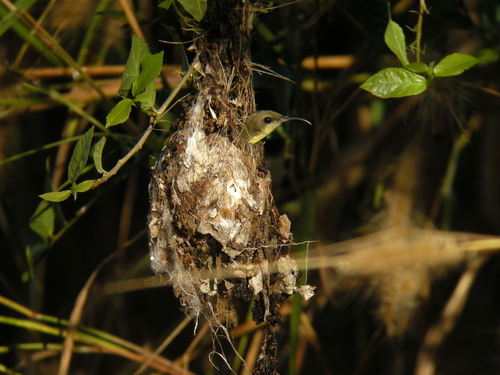 Ornate Sunbird
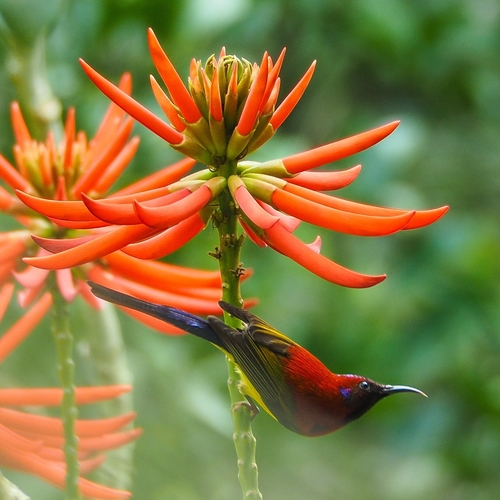 Mrs. Gould's Sunbird
In breve
Il segno di campo più affidabile per separare l'Ornate Sunbird dalla Mrs. Gould's Sunbird è il colore della testa e della gola del maschio: il maschio Ornate Sunbird mostra un'iridescenza blu-nera sulla gola e un corpo superiore per lo più oliva, mentre il maschio della Mrs. Gould's Sunbird ha una corona e una gola di un profondo viola con ampie aree di rosso brillante o scarlatto sulla testa e sulle parti superiori. Le femmine di entrambe le specie sono più opache ma differiscono nel sopracciglio e nel tono generale: le femmine dell'Ornate Sunbird hanno un sopracciglio giallastro e più giallo sotto, mentre le femmine della Mrs. Gould's Sunbird sono verde oliva sopra e giallo-grigiastro sotto. In volo o posate, la Mrs. Gould's Sunbird ha una coda visibilmente più lunga e una dimensione complessiva maggiore, con un aspetto più colorato e contrastante, specialmente nei maschi. Entrambe le specie possono sovrapporsi nel Sud-est asiatico, quindi è essenziale prestare attenzione a queste differenze di piumaggio e strutturali.
Consigli di identificazione
- Colore della testa e della gola del maschio: Il maschio Ornate Sunbird ha una gola e una fronte iridescenti blu-neri, mentre il maschio della Mrs. Gould's Sunbird mostra un profondo viola dalla fronte alla gola e ampio scarlatto/rosso sulla testa e sul nape. Questo è il segno più affidabile per i maschi adulti.
- Parti superiori del maschio: I maschi dell'Ornate Sunbird sono oliva sopra con ali nere bordate di verde; i maschi della Mrs. Gould's Sunbird hanno parti superiori rosso brillante/scarlatto con riflessi blu e ali marroni/olive.
- Lunghezza e colore della coda: La Mrs. Gould's Sunbird ha una coda molto più lunga (specialmente nei maschi), con una copertura della coda blu brillante e una punta viola. La coda dell'Ornate Sunbird è più corta, nera con una punta bianca.
- Sopracciglio femminile: La femmina dell'Ornate Sunbird ha un sopracciglio giallastro (sopracciglio), che manca nelle femmine della Mrs. Gould's Sunbird.
- Parti inferiori femminili: La femmina dell'Ornate Sunbird è più gialla sotto, mentre la femmina della Mrs. Gould's Sunbird è giallo-grigiastro sotto e verde oliva sopra.
- Vivacità del colore complessivo: La Mrs. Gould's Sunbird (specialmente i maschi) è molto più colorata e contrastante, con rossi, viola, blu e verdi. L'Ornate Sunbird è più sobrio, con toni di oliva e giallo predominanti.
- Lunghezza e forma del becco: La Mrs. Gould's Sunbird ha un becco più lungo e più curvo (13–17 mm), mentre il becco dell'Ornate Sunbird è più corto e meno curvato. Questo può essere sottile ma è visibile con buone viste.
- Dimensioni e struttura: La Mrs. Gould's Sunbird è più grande e più allungata, specialmente a causa della sua lunga coda. L'Ornate Sunbird è più compatto e con coda più corta.
- Schema delle ali in volo: Non sono descritti segni distintivi specifici per età sulle ali superiori o sui segni di volo per nessuna delle due specie, quindi non fare affidamento sullo schema delle ali per la separazione.
- Contesto dell'habitat: Se vista in foreste montane o a elevazione più alta, è più probabile che si tratti della Mrs. Gould's Sunbird; in ambienti di pianura o giardino, è più attesa l'Ornate Sunbird, ma entrambe possono sovrapporsi nel Sud-est asiatico.
- Variazione subspecifica: La Mrs. Gould's Sunbird mostra alcune variazioni nel colore del petto (scarlatto o giallo con/senza una striscia rossa), ma mantiene sempre la testa e le parti superiori brillanti. L'Ornate Sunbird è più coerente nell'aspetto.
- Confusione giovanile/immatura: Non sono descritti segni specifici giovanili o immaturi per nessuna delle due specie, quindi gli uccelli giovani dovrebbero essere identificati in base alla struttura e al modello di colore generale come sopra.
- Colore dell'iride e delle gambe: Entrambe le specie hanno iridi marroni scure e gambe/tarsi neri, quindi questi non sono utili per la separazione.
- Comportamento generale: La Mrs. Gould's Sunbird può apparire più agile e allungata in volo a causa della sua lunga coda; l'Ornate Sunbird è più compatto e può posarsi più orizzontalmente.
- Voce: Non sono descritte differenze vocali diagnostiche nelle fonti fornite, quindi non fare affidamento su richiami o canti per la separazione.
Taglia
La Mrs. Gould's Sunbird è visibilmente più grande dell'Ornate Sunbird. Il maschio adulto della Mrs. Gould's Sunbird misura 131–160 mm di lunghezza, con una lunga coda (64–88 mm), mentre l'Ornate Sunbird è molto più corto a 100–114 mm. La Mrs. Gould's Sunbird ha anche un'ala più lunga (51–58 mm contro l'ala non elencata ma proporzionalmente più corta dell'Ornate) e un becco più lungo (13–17 mm). Le femmine della Mrs. Gould's Sunbird sono anche più lunghe (91–111 mm) rispetto alle femmine dell'Ornate Sunbird (100–114 mm), ma la differenza è più evidente nella lunghezza della coda. La Mrs. Gould's Sunbird è più pesante all'estremità superiore (maschi fino a 12 g) ma può sovrapporsi con l'Ornate Sunbird all'estremità inferiore. Sul campo, la Mrs. Gould's Sunbird appare spesso più allungata e snella, specialmente a causa della sua lunga coda.
Piumaggio
Non sono descritti segni specifici per età sulle ali o sul modello di volo per nessuna delle due specie, quindi la separazione si basa sul piumaggio del corpo e della testa, specialmente nei maschi adulti. Il maschio dell'Ornate Sunbird è oliva sopra con ali nere bordate di verde, una coda nera con punta bianca e una gola e un petto iridescenti blu-neri; le parti inferiori sono gialle. Il maschio della Mrs. Gould's Sunbird è molto più colorato: viola profondo dalla fronte alla gola, ampio scarlatto/rosso sulla testa, sul nape e sul mantello, blu sulle auricolari e sui lati, ali marroni o verde oliva, e una copertura della coda blu brillante che sfuma in viola alla punta. La pancia è giallo-verde. La femmina dell'Ornate Sunbird è verde oliva sopra con un sopracciglio giallo e parti inferiori gialle, mentre la femmina della Mrs. Gould's Sunbird è di un profondo verde oliva sopra e giallo-grigiastro sotto, priva del sopracciglio giallo. La variazione subspecifica nella Mrs. Gould's Sunbird può influenzare il colore del petto (scarlatto o giallo con/senza una striscia rossa), ma il modello generale è sempre più vibrante e contrastante rispetto all'Ornate Sunbird. Non sono descritti segni specifici per giovanili/immaturi sulle ali superiori o sul volo per nessuna delle due specie.
Comportamento
Entrambe le specie sono attivi alimentatori di nettare con un comportamento simile agli uccelli sole: movimenti rapidi e veloci tra i fiori, spesso sospendendosi brevemente. La Mrs. Gould's Sunbird, essendo più grande e con una coda più lunga, può apparire più allungata e agile in volo, a volte posandosi più eretta. L'Ornate Sunbird è più compatto e può apparire più 'simile a un passero' nel comportamento. Entrambe le specie possono essere viste singolarmente o in coppie, mentre cercano attivamente nel canopeo o nello strato di arbusti.
Habitat
L'Ornate Sunbird è endemico delle foreste di pianura e delle colline, giardini e boschi aperti nel Sud-est asiatico e nelle Grandi Sunda. La Mrs. Gould's Sunbird si estende dalle Himalaya meridionali al Sud-est asiatico, tipicamente in foreste e terreni arbustivi, spesso a elevazioni più alte rispetto all'Ornate Sunbird. Nelle aree di sovrapposizione (ad es., Sud-est asiatico), la Mrs. Gould's Sunbird può essere trovata in habitat più montani o forestali, mentre l'Ornate Sunbird è più probabile che si trovi in habitat di pianura o disturbati, ma questo non è un segno di campo affidabile dove gli areali si sovrappongono.
Ornate Sunbird · Mrs. Gould's Sunbird · I miei uccelli difficili