

タイワンヒバリ 対 カンムリヒバリ
Alauda gulgula 対 Galerida cristata
タイワンヒバリとカンムリヒバリのクイズ
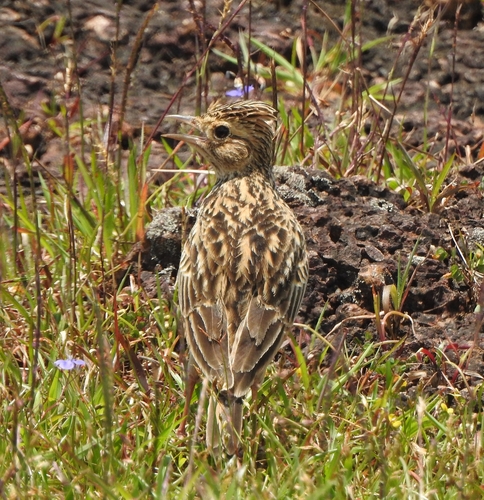 タイワンヒバリ
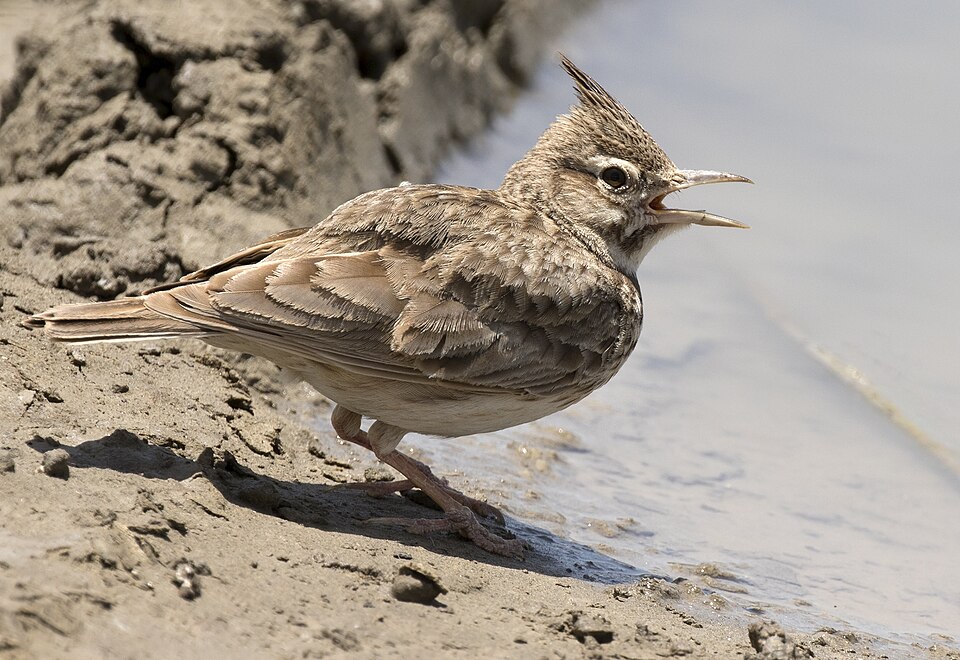 カンムリヒバリ
要点
The most reliable field mark between Oriental Skylark and Crested Lark is the presence of reddish underwings in flight on Crested Lark, which Oriental Skylark lacks. Juvenile Crested Larks also show more spots on the back, while Oriental Skylark juveniles are more heavily streaked above in some subspecies. Structurally, Crested Lark is bulkier with a more prominent, always-visible crest, and a heavier bill, while Oriental Skylark is smaller, slimmer, with a shorter tail and a more pointed bill. In perched or ground views, Oriental Skylark’s white or buff outer tail feathers and shorter tail contrast with the Crested Lark’s light brown outer tail feathers and stubbier tail. Both species are brown and streaked, but subtle differences in wing and tail pattern, especially in flight, are key for separation.
識別のコツ
- Reddish underwings in flight (all ages): Crested Lark shows reddish underwings, especially visible when the bird flushes or flies overhead. Oriental Skylark lacks this feature.
- Juvenile back pattern: Juvenile Crested Larks have more spots on the back, while Oriental Skylark juveniles (notably A. g. wattersi) are more heavily streaked above. Use this in late summer and autumn when juveniles are present.
- Tail pattern in flight: Oriental Skylark has white or buff outer tail feathers, creating a pale flash in flight. Crested Lark’s outer tail feathers are light brown, less contrasting.
- Crest shape and prominence: Crested Lark’s crest is always obvious, often held erect, especially when agitated or singing. Oriental Skylark’s crest is shorter and less noticeable, often appearing flat-headed unless raised.
- Bill shape: Crested Lark has a heavier, stubbier bill, while Oriental Skylark’s bill is longer and more pointed. This is subtle but visible at close range or in profile.
- Overall structure: Crested Lark is bulkier, with a rounder head and thicker body. Oriental Skylark is slimmer, with a shorter tail and wings.
- Plumage tone: Oriental Skylark is more yellow-brown above, while Crested Lark can appear paler, sparser, or more whitish, especially in worn plumage.
- Wing and tail length: Oriental Skylark has shorter wings and tail compared to Crested Lark, which can be appreciated when both are seen together or in direct comparison.
- Flight behavior: Crested Lark’s flight is undulatory, and it sings either on the ground or at altitude, not during ascent. Oriental Skylark may sing during ascent, similar to Eurasian Skylark.
- Habitat context: In urban, disturbed, or wasteland habitats, Crested Lark is more likely. In open, undisturbed grasslands, Oriental Skylark is favored.
- Song delivery: If the bird is singing while rising in flight, lean toward Oriental Skylark. If singing from a perch or at altitude, Crested Lark is more likely.
- Subtle subspecies variation: Some Oriental Skylark subspecies (A. g. inopinata) are paler and larger, which may overlap with Crested Lark, but the other structural and flight marks still hold.
- Sex and season: Both species are similar between sexes and do not show strong seasonal differences in plumage, so rely on structural and flight marks year-round.
- Pitfalls: Both are brown, streaked, and crested, so do not rely on overall color or the presence of a crest alone. Always check underwing color and tail pattern in flight for confirmation.
- When in doubt: Focus on underwing color in flight, crest shape, and habitat context for the most reliable separation.
大きさ
Crested Lark is noticeably heavier and bulkier: adults weigh 37–55 g and reach about 17 cm in length, with a wingspan of 29–38 cm. Oriental Skylark is smaller and lighter, at 15.5–18 cm and 24–30 g. The Crested Lark’s head and body are more robust, giving it a chunkier appearance, while Oriental Skylark is more slender overall. Both are similar in length, but Crested Lark’s greater mass and bulk are apparent in direct comparison.
羽色
Juvenile and immature Crested Larks have more spots on the back than adults, while Oriental Skylark juveniles (especially A. g. wattersi) are more heavily streaked above. In flight, Crested Lark shows reddish underwings, a feature absent in Oriental Skylark. Oriental Skylark’s outer tail feathers are white or buff, contrasting with the Crested Lark’s light brown outer tail feathers. Oriental Skylark lacks the white trailing edge to the wings seen in Eurasian Skylark, and its tail and wings are shorter than Crested Lark’s. Both species are brown and streaked, but Oriental Skylark tends to be more yellow-brown, and Crested Lark’s plumage can appear sparser and more whitish. The crest is always more pronounced on Crested Lark, especially during display or song.
行動
Both species forage on the ground in open areas, but Crested Lark is often found in wastelands and on the outskirts of towns, sometimes using disturbed or urban habitats. Oriental Skylark is more strictly a grassland bird. In flight, Crested Lark’s undulatory pattern and tendency to sing either on the ground or at altitude (not during ascent) differ from Oriental Skylark, which behaves more like Eurasian Skylark and may sing during ascent. Crested Lark’s crest is often raised, especially when excited or displaying, while Oriental Skylark’s crest is shorter and less conspicuous.
生息環境
Oriental Skylark is found in open grasslands across the Sino-Indian region and central Asia, rarely venturing into urban or disturbed areas. Crested Lark is more adaptable, commonly nesting in wastelands, field edges, and even the outskirts of towns, and is widespread across Eurasia and northern Africa. If seen in a weedy lot or roadside, Crested Lark is more likely; in natural grassland, Oriental Skylark is favored.
声
Crested Lark has a liquid, warbling song often described as 'whee-whee-wheeoo' or 'twee-tee-too', delivered either from the ground or high in the air, but not during ascent. Oriental Skylark’s song is not described in detail here, but it is noted that Eurasian Skylark sings during ascent, a behavior Oriental Skylark may share. Thus, if the bird sings while rising, Oriental Skylark is more likely; if singing is from a perch or at altitude, Crested Lark is favored.