

Motmot

ハシビロガモ 対 オウチュウ

Spatula clypeata 対 Dicrurus macrocercus

ハシビロガモとオウチュウのクイズ
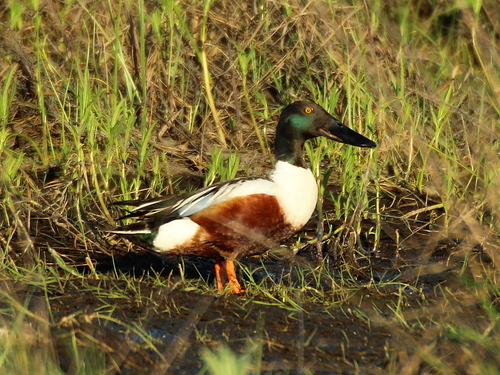
ハシビロガモ (Spatula clypeata) ハシビロガモ
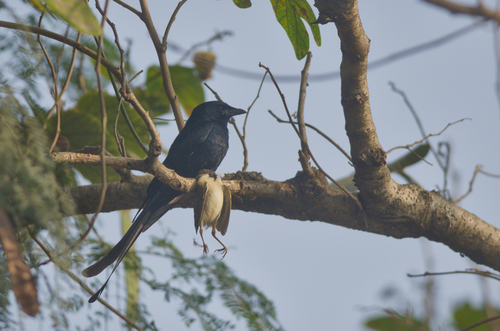
オウチュウ (Dicrurus macrocercus) オウチュウ

メディア

読み込み中…

要点

ハシビロガモとオウチュウを区別する最も信頼できる方法は、構造によるものです。ハシビロガモの巨大でスプーン状のくちばしは、カモの中で独特であり、オウチュウの細長く尖ったくちばしとは全く異なります。飛んでいる時や止まっている時、ハシビロガモはオレンジ色の足を持つ広く丸い体を示し、すべての羽色において大きく平らなくちばしを持っています。一方、オウチュウはスリムで直立しており、深く分かれた尾を持っています。雌や日食羽色のハシビロガモは地味で茶色に見えることがありますが、オウチュウの全体が黒く光沢のある外観や分かれた尾を持つことはありません。幼鳥のオウチュウは茶色がかりで白い縞模様がありますが、依然として特徴的なオウチュウの形と尾を示します。距離があっても、くちばしの形、尾、全体の印象の組み合わせが混乱を防ぐはずです。

識別のコツ

  1. くちばしの形は診断的: ハシビロガモは常に巨大で広いスプーン状のくちばしを持っており、幼鳥や雌でも同様です。オウチュウは、一般的な小鳥に典型的な細長く尖ったくちばしを持っています。広く平らなくちばしを見たら、それは決してオウチュウではありません。
  2. 尾の形: オウチュウはすべての羽色において長く深く分かれた尾を持っています。ハシビロガモはカモに典型的な短く丸い尾を持っています。分かれた尾 = オウチュウ。
  3. 体の構造と印象: ハシビロガモはオレンジ色の足を持つ広く重い体のカモで、低く水平な姿勢をしています。オウチュウはスリムで直立しており、しばしば高い場所に止まって昆虫を追いかけます。
  4. 飛行中の羽色: すべてのハシビロガモ(雌や日食のオスを含む)は、飛行中に淡い青の前羽パネルと緑の鏡を示します。オウチュウは均一に暗く、羽パネルや鏡はありません。
  5. 足の色と位置: ハシビロガモの足は明るいオレンジ色で、泳ぐために体の後方に位置しています。オウチュウの足は短く暗く、止まるために適応しています。
  6. 止まり方: オウチュウはワイヤーや枝、家畜の上に直立して止まりますが、ハシビロガモはほとんど地面の上に止まることはなく、通常は水や泥の上で見られます。
  7. 幼鳥の混乱: 幼鳥のオウチュウは茶色がかりで白い縞模様がありますが、依然としてスリムで分かれた尾を持っています。幼鳥や雌のハシビロガモは斑点のある茶色ですが、常に広いくちばしとカモのような形を持っています。
  8. 成鳥のオスのハシビロガモ: 繁殖羽色では、虹色の緑の頭、白い胸、栗色の側面、大きなくちばしを探してください—オウチュウでは決して見られません。
  9. 成鳥のオウチュウ: 全体が光沢のある黒で、口の基部に小さな白い斑点があり、茶色の斑点や青/緑の羽パネルはありません。
  10. 生息地の文脈: 鳥が開けた水の上にいるか湿地で水面をかき回している場合、それはほぼ確実にハシビロガモです。もしそれが野原やワイヤーに止まっている場合、それはおそらくオウチュウです。
  11. 飛行スタイル: ハシビロガモは安定した直接的なカモの飛行をしますが、オウチュウは敏捷で、迅速でアクロバティックな動きをします。
  12. 鳴き声: 複雑で鋭い、または模倣する鳴き声はオウチュウを示します; ハシビロガモははるかに静かです。
  13. 相対的なサイズ: ハシビロガモはオウチュウよりもはるかに大きくてずっしりとしています。両方を一緒に見ると、カモがオウチュウを圧倒します。
  14. 季節的な混乱: 日食のオスのハシビロガモは雌に似ていますが、青い前羽を保持しています—オウチュウでは見られません。
  15. 落とし穴: 全体の色だけに頼らないでください; 構造とくちばしの形は常に羽色よりも信頼性が高いです、特に光が悪い場合や距離がある場合に。

大きさ

ハシビロガモは中型のカモで、全長44〜52 cm、翼幅70〜84 cm、体重500〜800 gです [wikipedia][avonet]。対照的に、オウチュウははるかに小さな小鳥で、約28 cmの長さで、はるかに軽い(体重は記載されていませんが、このサイズの小鳥は通常100 g未満です) [wikipedia]。ハシビロガモはずっしりとしており、広い体と比較的短い首を持っていますが、オウチュウはスリムで直立し、長い尾を持っています。雌のハシビロガモでさえ、直接比較するとオウチュウを圧倒します。

羽色

行動

ハシビロガモは水面を左右にかき回して泳ぎながら餌を取ることが多いダブリングカモです。彼らは陸上では不器用に歩き、地面の上に止まることはほとんどありません。オウチュウは敏捷で攻撃的な空中昆虫食者で、しばしば露出した止まり木から飛び出し、飛行中に昆虫を追いかけ、大きな鳥を襲います。彼らはワイヤーや枝、さらには家畜の上に直立して止まり、泳ぐことはほとんどありません。オウチュウは飛行中に非常に活発でアクロバティックであり、迅速で操縦可能な羽ばたきを持っていますが、ハシビロガモは安定した直接的なカモの飛行を持っています。

生息環境

ハシビロガモは泥底の湿地、浅い湖、そして水生無脊椎動物が豊富な湿地を好み、通常は開けた国に生息しています。彼らは水から離れていることはほとんどありません。オウチュウは開けた国、農業地帯、人間の居住地の近くで一般的で、熱帯南アジア全体で水から遠く離れていることが多いです。オウチュウは乾燥したまたは耕作された地域のワイヤーや露出した枝に止まっていることが頻繁に見られますが、ハシビロガモはほとんど常に水域に関連しています。

声

オウチュウは声の大きい鳥で、特徴的な2音の「ティー・ヒー」という鳴き声を含む広範な鳴き声を生成します。ハシビロガモは一般的に静かで、典型的なカモのクワックや柔らかい鳴き声を持っていますが、オウチュウの鳴き声に似たものはありません。フィールドでは、複雑で鋭い、または模倣する鳴き声を聞くと、それはオウチュウを示し、ハシビロガモではありません。

より良い説明を送る

比較と同じ項目を使ってください。文章はすぐに公開されます。

The most reliable way to separate Northern Shoveler from Black Drongo is by structure: the shoveler’s huge, spatulate bill is unique among ducks and utterly unlike the drongo’s slender, pointed bill. In flight or perched, shovelers show broad, rounded bodies with orange legs and, in all plumages, a large, flat bill; drongos are slim, upright, and have a deeply forked tail. Female and eclipse-plumaged shovelers can look drab and brown, but never have the all-black, glossy appearance or forked tail of a drongo. Juvenile drongos are brownish with some white barring, but still show the characteristic drongo shape and tail. Even at a distance, the combination of bill shape, tail, and overall jizz should prevent confusion.

  1. Bill shape is diagnostic: Northern Shoveler always has a huge, broad, spatulate bill, even in juveniles and females. Black Drongo has a slender, pointed bill typical of a passerine. If you see a wide, flat bill, it is never a drongo.
  2. Tail shape: Black Drongo has a long, deeply forked tail in all plumages. Northern Shoveler has a short, rounded tail typical of ducks. Forked tail = drongo.
  3. Body structure and jizz: Shoveler is a broad, heavy-bodied duck with orange legs and a low, horizontal posture. Drongo is slim, upright, and perches high on wires or branches, often sallying after insects.
  4. Plumage in flight: All shovelers (including females and eclipse males) show a pale blue forewing panel and green speculum with a white border in flight. Drongos are uniformly dark with no wing panels or speculum.
  5. Leg color and position: Shoveler legs are bright orange-red and set far back on the body for swimming. Drongo legs are short, dark, and adapted for perching.
  6. Perching behavior: Drongos perch upright on wires, branches, or livestock; shovelers almost never perch above ground and are usually seen on water or mud.
  7. Juvenile confusion: Juvenile drongos are brownish with white barring, but still slim and fork-tailed. Juvenile/female shovelers are mottled brown, but always with a broad bill and duck-like shape.
  8. Adult male shoveler: In breeding plumage, look for iridescent green head, white breast, chestnut flanks, and black bill—never matched by drongo.
  9. Adult drongo: Glossy black all over, with a small white spot at the gape, and never any brown mottling or blue/green wing panels.
  10. Habitat context: If the bird is on open water or dabbling in a wetland, it is almost certainly a shoveler. If it is perching in a field or on a wire, it is likely a drongo.
  11. Flight style: Shovelers have steady, direct duck flight; drongos are agile, with rapid, acrobatic maneuvers.
  12. Vocalizations: Complex, sharp, or mimicking calls point to drongo; shovelers are much quieter.
  13. Relative size: Shoveler is much larger and bulkier than drongo. If you see both together, the duck will dwarf the drongo.
  14. Seasonal confusion: Eclipse male shovelers resemble females but retain the blue forewing—never seen in drongo.
  15. Pitfalls: Do not rely on overall color alone; structure and bill shape are always more reliable than plumage, especially in poor light or at a distance.

Northern Shoveler is a medium-sized duck, measuring 44–52 cm in length with a wingspan of 70–84 cm and weighing 500–800 g [wikipedia][avonet]. In contrast, Black Drongo is a much smaller passerine, about 28 cm long and much lighter (no weight given, but passerines of this size are typically well under 100 g) [wikipedia]. The shoveler is bulkier, with a broad body and relatively short neck, while the drongo is slender, upright, and long-tailed. Even a female shoveler dwarfs a drongo in direct comparison.

  • Juvenile/Immature: Juvenile Black Drongos are brownish with white barring or speckling on the belly and vent, and first-years have white-tipped belly feathers; second-years restrict white to the vent. They are never mottled brown overall, and always retain the slim, forked-tailed drongo shape. Juvenile and female Northern Shovelers are mottled brown, resembling female mallards but with a distinctive long, broad, spatulate bill and orange-tinged legs. The female's forewing is grey, and in flight, both sexes show pale blue forewing panels with a green speculum bordered by white (retained even in eclipse males).

  • Adult Male: Breeding male shoveler is unmistakable: iridescent dark green head, white breast, chestnut flanks, and a huge black bill. In eclipse, males resemble females but keep the blue forewing. Black Drongo adults are glossy black all over, with a small white spot at the base of the gape, and a deeply forked tail. No blue or green speculum, no chestnut, and no pale wing panels.

  • In Flight: Shovelers (all ages) show broad, rounded wings with a pale blue forewing and green speculum, and a large, flat bill projecting ahead. Drongos are slim, with pointed wings and a long, deeply forked tail, and are uniformly dark with no wing panels or speculum.

Northern Shovelers are dabbling ducks, often seen swimming and feeding by sweeping their bills side-to-side at the water’s surface, straining food with their specialized lamellae. They walk awkwardly on land and rarely perch above ground. Black Drongos are agile, aggressive aerial insectivores, often seen sallying from exposed perches, chasing insects in flight, and mobbing larger birds. They perch upright on wires, branches, or even livestock, and rarely if ever swim. Drongos are much more active and acrobatic in flight, with rapid, maneuverable wingbeats, while shovelers have steady, direct duck flight.

Northern Shovelers prefer mud-bottomed marshes, shallow lakes, and wetlands rich in aquatic invertebrates, typically in open country. They are rarely found away from water. Black Drongos are common in open country, agricultural fields, and near human habitation throughout tropical southern Asia, often far from water. Drongos are frequently seen perched on wires or exposed branches in dry or cultivated areas, while shovelers are almost always associated with water bodies.

Black Drongo is a vocal bird, producing a wide range of calls including a distinctive two-note 'tee-hee' call. Northern Shoveler is generally quiet, with typical duck quacks and soft calls, but nothing resembling the drongo’s vocalizations. In the field, hearing a complex, sharp, or mimicking call points to drongo, not shoveler.

変更を破棄しますか?

保存していない編集があります。今離れると失われます。

ハシビロガモ · オウチュウ · 苦手な鳥