

Motmot

キタキンランチョウ 対 クロキンランチョウ

Euplectes franciscanus 対 Euplectes gierowii

キタキンランチョウとクロキンランチョウのクイズ
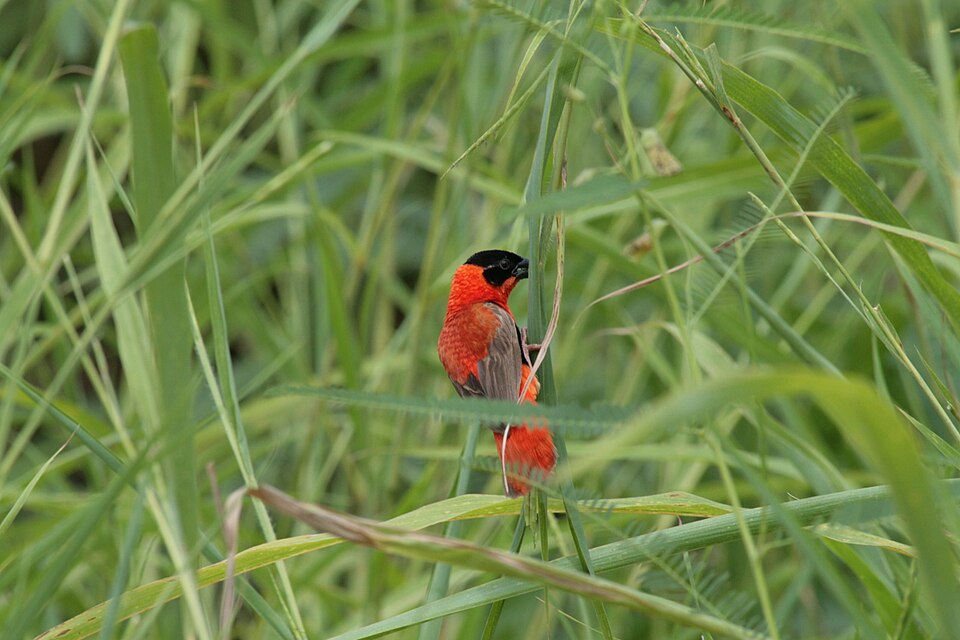
キタキンランチョウ (Euplectes franciscanus) キタキンランチョウ
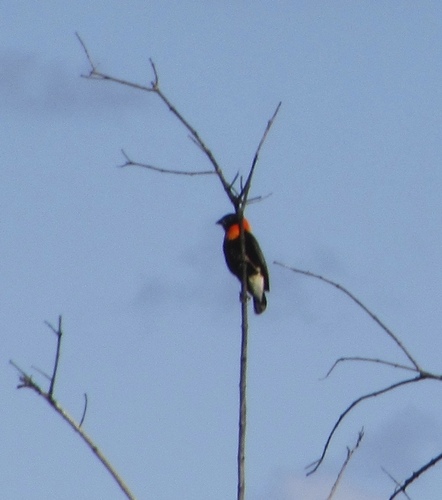
クロキンランチョウ (Euplectes gierowii) クロキンランチョウ

メディア

読み込み中…

要点

キタキンランチョウとクロキンランチョウを区別する最も信頼性の高いフィールドマークは、繁殖期のオスにおける黒と赤/オレンジの分布と範囲です:キタキンランチョウのオスは鮮やかな赤オレンジの体を持ち、はっきりとした黒い顔、頭頂部、腹部が特徴です。一方、クロキンランチョウのオスは主に黒で、対照的なオレンジまたは赤の襟と上背を持っています。両種の雌と非繁殖期のオスは地味ですが、クロキンランチョウの雌と幼鳥は全体的に暗く、下部により広範な暗い斑点を示します。クロキンランチョウはキタキンランチョウよりも明らかに大きく、体重も重いです。キタキンランチョウはコンパクトで短い尾を持っています。飛んでいる時や止まっている時は、頭、胸、背中の黒とオレンジ/赤のパターン、全体的なサイズと構造に注目してください。

識別のコツ

  1. Breeding male plumage: 黒と赤/オレンジの範囲と配置を探してください。キタキンランチョウのオスは鮮やかな赤オレンジの体を持ち、はっきりとした黒い顔、頭頂部、腹部が特徴です。一方、クロキンランチョウのオスは主に黒で、対照的なオレンジ/赤の襟と上背を持っています。これは繁殖期における最も信頼性の高いマークです。
  2. Face and crown: 繁殖羽毛では、キタキンランチョウのオスは赤オレンジに対して黒い頭頂部と顔を持ち、クロキンランチョウのオスは黒い顔を持っていますが、オレンジ/赤は襟と上背に制限されており、全体の体には広がっていません。
  3. Belly and flanks: キタキンランチョウのオスは赤オレンジの胸の下に黒い腹部と側面を示しますが、クロキンランチョウのオスはオレンジ/赤の襟と時には黒い筋のある淡いバフの下尾を除いて、下部は黒です。
  4. Upper back and rump: クロキンランチョウのオスは黄色またはオレンジの上背と茶色の尾羽(亜種による)を持ち、キタキンランチョウのオスは背中全体が赤オレンジです。
  5. Tail and wing color: キタキンランチョウは上羽と尾が茶色で、赤オレンジの体と対照的です;クロキンランチョウの羽と尾は黒で、羽毛の残りと一致しています。
  6. Female and non-breeding plumage: キタキンランチョウの雌と非繁殖期のオスは淡い茶色と白で、スズメのようなパターンを持ち、顔や下部にはあまり暗い部分がありません。クロキンランチョウの雌と幼鳥は暗く、顔の側面が黒っぽく、下尾に大胆な斑点があり、暗い胸の斑点があります。
  7. Juvenile pattern: クロキンランチョウの幼鳥は雌に似ていますが、胸の斑点が小さいです;キタキンランチョウの幼鳥は淡く、あまり斑点がなく、成鳥の雌に似ています。
  8. Size and structure: クロキンランチョウは非常に大きく、がっしりしており、尾が長く、体格が重いです。キタキンランチョウはコンパクトで短い尾を持ち、明らかに小さいです—両種が存在する場合、サイズは有用なチェックです。
  9. Bill color: 両種は繁殖羽毛で黒い円錐形のくちばしを持っています;これは強い区別要因ではありません。
  10. Leg color: キタキンランチョウは淡い脚を持ち、クロキンランチョウの脛は茶色ですが、これは微妙で、フィールドでは常に見えるわけではありません。
  11. Flight jizz: キタキンランチョウは飛んでいる時によりコンパクトで短い尾に見えることが多いです;クロキンランチョウは重く、尾が長いです。
  12. Habitat context: 両種は草地や湿地に生息しますが、クロキンランチョウは低木地を含むより広範な生息地から報告されています。生息地だけに頼らないでください。
  13. Display behavior: キタキンランチョウのオスは目立つディスプレイ飛行を行い、羽毛を膨らませます;クロキンランチョウは群れを成すことが少なく、ディスプレイではあまり派手ではありません。
  14. Vocalization: クロキンランチョウは多様なツイッター音を出します;キタキンランチョウの歌は単調で、繁殖期以外は存在しないことがあります。声はあくまで補助的な手がかりとして使用してください。
  15. Seasonal timing: 両種の繁殖期のオスだけが診断的な明るい羽毛を示します;繁殖期以外では、両性とも地味なので、サイズ、構造、微妙な羽毛の違いにもっと頼ってください。

大きさ

クロキンランチョウは明らかに大きく、全長14〜16 cm、体重約28 g [wikidata]であるのに対し、キタキンランチョウは約11 cm、12〜22 g [wikipedia]と非常に小さいです。フィールドでは、クロキンランチョウはがっしりしていて尾が長く、体格が重いように見えますが、キタキンランチョウはコンパクトで短い尾を持っています。このサイズの違いは、両種が同じエリアや群れで見られるときにしばしば明らかです。

羽色

行動

両種は一夫多妻制ですが、クロキンランチョウは特に巣作りの際に群れを成すことが少なく、通常は小さな群れまたは単独で見られます。キタキンランチョウのオスは、雌を引き寄せるために elaborateなディスプレイ飛行を行い、羽毛を膨らませることで知られています。両種のオスは繁殖期にテリトリーを守りますが、キタキンランチョウのオスはディスプレイがより目立ち、秘密主義ではありません。両種の雌はすべての親のケアを提供します。

生息環境

両種は草地や湿地を利用しますが、クロキンランチョウは低木地を含むより広範な生息地から報告されています。キタキンランチョウは繁殖期には特に湿った植生や葦に関連しています。生息地の重複は可能ですが、文脈だけでは常に診断的ではありません。

声

クロキンランチョウの鳴き声は控えめなツイッター音として記述されており、'see-zee see-zee see-zhe see-zhe SEE-ZHEE'や'hishaah, hishaah, SHAAAAAAH'のようなフレーズがあります。キタキンランチョウの歌は単調で、繁殖期以外は存在しないことがありますが、詳細な説明は提供されていません。鳴き声はフィールドでの最も信頼性の高い区別要因ではありませんが、クロキンランチョウはより多様に聞こえるかもしれません。

より良い説明を送る

比較と同じ項目を使ってください。文章はすぐに公開されます。

The most reliable field mark to separate Northern Red Bishop from Black Bishop is the distribution and extent of black and red/orange in breeding males: Northern Red Bishop males show a vivid red-orange body with a sharply defined black face, crown, and belly, while Black Bishop males are predominantly black with a contrasting orange or red collar and upper back. Females and non-breeding males of both species are drab, but Black Bishop females and immatures are darker overall and show more extensive dark spotting below. Black Bishop is also notably larger and heavier-bodied than Northern Red Bishop, which is compact and short-tailed. In flight or perched, focus on the pattern of black and orange/red on the head, breast, and back, and the overall size and structure.

  1. Breeding male plumage: Look for the extent and placement of black and red/orange. Northern Red Bishop males have a vivid red-orange body with a sharply defined black face, crown, and belly, while Black Bishop males are mostly black with a contrasting orange/red collar and upper back. This is the single most reliable mark in breeding season.
  2. Face and crown: In breeding plumage, Northern Red Bishop males have a black crown and face set off against red-orange, while Black Bishop males have a black face but the orange/red is restricted to the collar and upper back, not the whole body.
  3. Belly and flanks: Northern Red Bishop males show a black belly and flanks below the red-orange breast, whereas Black Bishop males are black across the underparts except for the orange/red collar and sometimes a pale buff undertail with black streaks.
  4. Upper back and rump: Black Bishop males have a yellow or orange upper back and brown rump (subspecies-dependent), while Northern Red Bishop males are red-orange across the back.
  5. Tail and wing color: Northern Red Bishop has brown upper wings and tail, contrasting with the red-orange body; Black Bishop's wings and tail are black, matching the rest of the plumage.
  6. Female and non-breeding plumage: Northern Red Bishop females and non-breeding males are pale brown and white, with a sparrow-like pattern and little dark on the face or underparts. Black Bishop females and immatures are darker, with blackish face sides, bold spotting on the undertail, and dark breast spots.
  7. Juvenile pattern: Black Bishop juveniles are similar to females but with smaller breast spots; Northern Red Bishop juveniles are pale and less marked, resembling the adult female.
  8. Size and structure: Black Bishop is much larger and bulkier, with a longer tail and heavier build. Northern Red Bishop is compact, short-tailed, and noticeably smaller—size is a useful check if both species are present.
  9. Bill color: Both species have a black conical bill in breeding plumage; this is not a strong separator.
  10. Leg color: Northern Red Bishop has pale legs; Black Bishop's tarsus is brown, but this is subtle and not always visible in the field.
  11. Flight jizz: Northern Red Bishop often appears more compact and short-tailed in flight; Black Bishop is heavier and longer-tailed.
  12. Habitat context: Both occur in grasslands and wetlands, but Black Bishop may be found in a wider range of habitats, including shrublands. Do not rely on habitat alone.
  13. Display behavior: Northern Red Bishop males perform conspicuous display flights and puff up their plumage; Black Bishop is less gregarious and less showy in display.
  14. Vocalization: Black Bishop gives varied twittering calls; Northern Red Bishop's song is monotonous and may be absent outside breeding season. Use voice only as a supporting clue.
  15. Seasonal timing: Only breeding males of both species show the diagnostic bright plumage; outside the breeding season, both sexes are drab, so rely more on size, structure, and subtle plumage differences.

Black Bishop is significantly larger, measuring 14–16 cm in length and weighing around 28 g [wikidata], while Northern Red Bishop is much smaller at about 11 cm and 12–22 g [wikipedia]. In the field, Black Bishop appears bulkier and longer-tailed, with a heavier build, whereas Northern Red Bishop is compact and short-tailed. This size difference is often apparent when both species are seen in the same area or flock.

  • Breeding males: Northern Red Bishop males are brilliant red-orange on the body, wrapping from the chin around the throat, breast, and back of the head, with a sharply defined black crown, forehead, face, flanks, and belly. The upper wings and tail are brown. In contrast, Black Bishop breeding males are mostly black on the wings, tail, chest, cheeks, and forehead, with a striking orange or orange-red collar (neck, back of the head, and breast band), and a yellow or orange upper back depending on subspecies. The undertail coverts are pale buff with black streaks. The throat color varies by subspecies (scarlet or black).
  • Females and non-breeding males: Northern Red Bishop females and non-breeding males are pale brown and white, with a pattern reminiscent of a song sparrow—generally paler and less marked. Black Bishop females are dark overall, including the sides of the face, and have boldly spotted undertail coverts and dark breast spots. Non-breeding Black Bishop males are black on the back, wings, and rump, with yellowish supercilia and chin, and tawny buff on the face and breast sides.
  • Juveniles: Black Bishop juveniles resemble the female but with smaller breast spots. No distinctive juvenile wing pattern is described for either species, but Black Bishop immatures are darker and more marked below than Northern Red Bishop.

Both species are polygynous, but Black Bishop is less gregarious, especially when nesting, and is typically found in small flocks or singly. Northern Red Bishop males are known for elaborate display flights and puffing up their plumage to attract females. Males of both species defend territories during breeding, but Northern Red Bishop males are more conspicuous in their display and less secretive. Females of both species provide all parental care.

Both species use grasslands and wetlands, but Black Bishop is reported from a broader range of habitats, including shrublands, across a wider area of sub-Saharan Africa. Northern Red Bishop is often associated with marshy vegetation and reeds, especially during the breeding season. Habitat overlap is possible, so context alone is not always diagnostic.

Black Bishop's calls are described as subdued twittering, with phrases like 'see-zee see-zee see-zhe see-zhe SEE-ZHEE' and 'hishaah, hishaah, SHAAAAAAH.' Northern Red Bishop's song is monotonous and may be absent outside the breeding season, but no detailed description is provided. Vocalizations are not the most reliable separation in the field, but Black Bishop may sound more varied.

変更を破棄しますか?

保存していない編集があります。今離れると失われます。

キタキンランチョウ · クロキンランチョウ · 苦手な鳥