

Motmot

キタベニハチクイ 対 ミナミベニハチクイ

Merops nubicus 対 Merops nubicoides

キタベニハチクイとミナミベニハチクイのクイズ
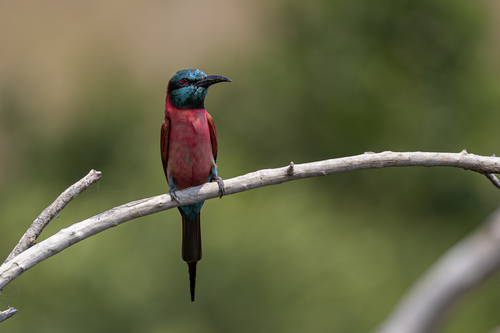
キタベニハチクイ (Merops nubicus) キタベニハチクイ
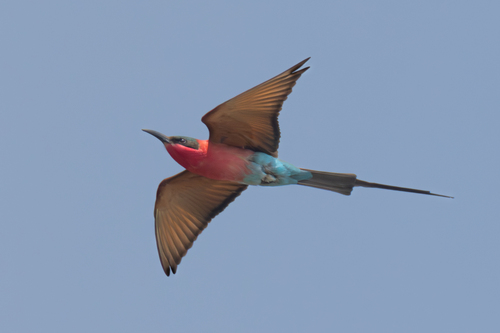
ミナミベニハチクイ (Merops nubicoides) ミナミベニハチクイ

メディア

読み込み中…

要点

キタベニハチクイとミナミベニハチクイを区別する最も信頼できるフィールドマークは喉の色です:キタベニハチクイは青い喉を持ち、ミナミベニハチクイはカーマイン(赤い)喉を示します。両者は全体的に鮮やかなカーマイン色で、青い冠と尾羽を持っていますが、この喉の色の違いは成鳥において一貫しており、良い光の下で見ることができます。幼鳥や未成熟の鳥はより難しいですが、両者は長い中央尾羽が欠けており、鈍い茶色の腹部を持っていますが、喉の色の違いは依然として最良の手がかりです。構造、行動、声は非常に似ているため、喉に焦点を当て、可能であれば範囲で確認してください。

識別のコツ

  1. 喉の色が主要なフィールドマーク:キタベニハチクイは青い喉を持ち、ミナミベニハチクイはカーマイン(赤い)喉を持っています。これは成鳥において信頼でき、良い光の下で見ることができます。
  2. 幼鳥と未成熟の鳥:両者は長い中央尾羽が欠けており、鈍いピンクがかった茶色の腹部を持っていますが、喉の色の違いはすべての年齢での区別において最良の手がかりです。
  3. 冠と尾羽:両種は青い冠と青い尾羽の覆いを持っているため、これらは区別には役立ちません。
  4. 全体的な体色:両者は主にカーマイン色であるため、全体的な色合いは診断的ではありません。
  5. 黒いマスク:両種は目の周りに黒いマスクを示しますが、これは区別にはなりません。
  6. 尾の形:両種の成鳥は長い中央尾羽を持っていますが、両者の幼鳥はこれを欠いているため、尾の形は区別には役立ちません。
  7. くちばしの色と形:両者はハチクイに典型的な黒く湾曲したくちばしを持っており、区別には役立ちません。
  8. 目の色:両者は赤い目を持っており、区別にはなりません。
  9. 声:両種の間に呼び声や歌の違いは文書化されておらず、フィールドでの区別には信頼できません。
  10. 行動:両種は似たような行動を示し、昆虫を捕まえるために止まり木から飛び出し、同じ止まり木に戻ることが多いです。彼らは川岸や崖にコロニーを作って巣を掘ります。フィールドでの区別に役立つ行動の違いは記載されていません。
  11. 生息地と範囲:重複ゾーンの外にいる場合、範囲は強力な手がかりとなります:キタベニハチクイは北部熱帯アフリカに、ミナミベニハチクイは赤道下アフリカに生息しています。
  12. 性差:両種は性別において単形であり、オスとメスは似ています。
  13. 季節的変化:同定に影響を与えるような重要な季節的羽毛の変化は両種において記載されていません。
  14. 落とし穴:光が悪い場合や距離がある場合、喉の色が見えにくいことがあります。幼鳥は特に難しいですが、喉の色が見える場合は依然として最良のマークです。
  15. 疑わしい場合:喉の色が見えず、両者が発生する可能性のある地域にいる場合、種レベルでの同定は不可能かもしれません。

大きさ

キタベニハチクイは体重が約54.4gで平均されており、提供された情報源にはミナミベニハチクイの公表された体重はありません。両種は全体的なサイズと構造が似ており、成鳥は長く細い体と長い中央尾羽を持っています。両者の間に信頼できるサイズの違いは記載されていません。

羽色

成鳥の場合、主要な違いは喉の色です:キタベニハチクイは青い喉を持ち、ミナミベニハチクイはカーマイン(赤い)喉を持っています。両者は青い冠と尾羽、カーマイン色の体、黒いマスクを持っています。両種の幼鳥は長い中央尾羽が欠けており、鈍いピンクがかった茶色の腹部を持っていますが、喉の色の違いは依然として存在し、この年齢での最良のフィールドマークです。提供された情報源には、両種の翼のパターン、上翼、または飛行マークにおける顕著な違いは記載されていません。

行動

両種は典型的なハチクイの行動を共有しており、飛んでいる昆虫を捕まえるために止まり木から飛び出し、同じ止まり木に戻ることが多いです。彼らは川岸や崖にコロニーを作り、水平なトンネルを掘ります。フィールドでの区別に役立つ行動の違いは記載されていません。

生息環境

キタベニハチクイは北部熱帯アフリカ全域に見られ、しばしば二次的な黄土堆積物や川岸に関連しています。ミナミベニハチクイは赤道下アフリカに生息しています。両者は水の近くの開けた土地を好み、特に巣作りのために大きなコロニーを形成することがあります。範囲が重複する地域では生息地は信頼できる区別にはなりませんが、重複の外では範囲が強力な手がかりとなります。

声

キタベニハチクイは飛行中に深い喉の「トゥンク」という音を出し、止まっているときには「リク」という音を連続して出します。提供された情報源には、両種の間に顕著な声の違いは記載されていません。

より良い説明を送る

比較と同じ項目を使ってください。文章はすぐに公開されます。

The most reliable field mark to separate Northern and Southern Carmine Bee-eaters is the color of the throat: Northern has a blue throat, while Southern shows a carmine (red) throat. Both are strikingly carmine overall with blue crowns and undertails, but this throat color difference is consistent in adults and visible in good light. Juvenile and immature birds are more challenging, as both lack the long central tail streamers and have duller, browner underparts, but the throat color difference remains the best clue. Structure, behavior, and voice are very similar, so focus on the throat and, if possible, confirm by range.

  1. Throat color is the primary field mark: Northern Carmine Bee-eater has a blue throat, Southern Carmine Bee-eater has a carmine (red) throat. This is reliable in adults and visible in good light.
  2. Juvenile and immature birds: Both lack long central tail feathers and have duller, pinkish-brown underparts, but the throat color difference remains the best clue for separation at all ages.
  3. Crown and undertail: Both species have blue crowns and blue undertail coverts, so these are not helpful for separation.
  4. Overall body color: Both are predominantly carmine, so overall coloration is not diagnostic.
  5. Black mask: Both species show a black mask through the eye; this is not a separator.
  6. Tail shape: Adults of both species have elongated central tail feathers; juveniles of both lack these, so tail shape is not useful for separating the two.
  7. Bill color and shape: Both have a black, decurved bill typical of bee-eaters; not useful for separation.
  8. Eye color: Both have red eyes; not a separator.
  9. Voice: No documented differences in calls or songs between the two species, so not reliable for field separation.
  10. Behavior: Both species behave similarly, sallying for insects and nesting colonially in riverbanks; not diagnostic.
  11. Habitat and range: If you are outside the overlap zone, range can be a strong clue: Northern in northern tropical Africa, Southern in sub-equatorial Africa.
  12. Sex differences: Both species are sexually monomorphic; males and females look alike.
  13. Seasonal variation: No significant seasonal plumage change noted for either species that would affect identification.
  14. Pitfalls: In poor light or at distance, the throat color may be hard to see. Juveniles can be especially tricky, but the throat color is still the best mark if visible.
  15. When in doubt: If the throat color cannot be seen and you are in a region where both could occur, identification may not be possible to species level.

Northern Carmine Bee-eater averages about 54.4g in body mass [wikidata], with no published mass for Southern Carmine Bee-eater in the sources provided. Both species are similar in overall size and structure, with long, slender bodies and elongated central tail feathers in adults. No reliable size difference is documented between the two.

For adults, the key difference is the throat color: Northern Carmine Bee-eater has a blue throat, while Southern Carmine Bee-eater has a carmine (red) throat. Both have a blue crown and undertail, carmine body, and a black mask. Juveniles of both species lack the long central tail feathers and have duller, pinkish-brown underparts, but the throat color difference is still present and is the best field mark at this age. No distinctive differences in wing pattern, upperwing, or flight marks are noted for either species in the sources provided.

Both species share typical bee-eater behaviors: sallying from perches to catch flying insects, often returning to the same perch. They nest colonially in riverbanks or cliffs, digging horizontal tunnels. No behavioral differences are noted that would help with field separation.

Northern Carmine Bee-eater is found across northern tropical Africa, often linked to secondary loess deposits and riverbanks. Southern Carmine Bee-eater occurs in sub-equatorial Africa. Both favor open country near water, especially for nesting, and both may form large colonies. In areas of range overlap, habitat is not a reliable separator, but outside the overlap, range can be a strong clue.

Northern Carmine Bee-eater gives a deep, throaty 'tunk' in flight and a series of 'rik' notes when perched. No distinctive vocal differences are described between the two species in the sources provided.

変更を破棄しますか?

保存していない編集があります。今離れると失われます。

キタベニハチクイ · ミナミベニハチクイ · 苦手な鳥