

Motmot

カレドニアオナガセッカ 対 フトオセッカ

Cincloramphus mariae 対 Schoenicola platyurus

カレドニアオナガセッカとフトオセッカのクイズ

カレドニアオナガセッカ (Cincloramphus mariae) カレドニアオナガセッカ
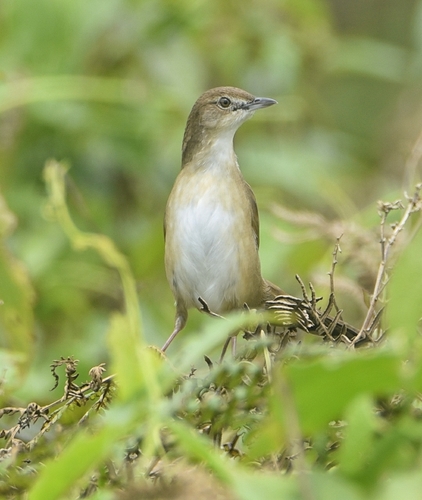
フトオセッカ (Schoenicola platyurus) フトオセッカ

メディア

読み込み中…

要点

ニューカレドニアオナガセッカとフトオセッカを区別する最も信頼できるフィールドマークはスーペリキウムです:オナガセッカは大胆な白いスーペリキウムを示し、フトオセッカはあまり目立たないバフ色のスーペリキウムを持っています。両者は長い尾を持つ茶色がかったウグイスですが、フトオセッカは薄暗いバーと白い先端を持つ広く丸い明らかなグラデーションのある尾で際立っています—オナガセッカには見られない詳細です。オナガセッカは上面と下面にストリークがなく、オリーブブラウンの上面とクリーミーな白い下面を持ち、フトオセッカの上面と側面は地域によって淡い灰褐色から豊かなルーファスブラウンまで変化します。生息地も強い手がかりです:オナガセッカはニューカレドニアの藪に特有であり、フトオセッカはインドの西ガーツの高い草原の丘に制限されています。

識別のコツ

  1. スーペリキウムの色: ニューカレドニアオナガセッカは常に大胆な白いスーペリキウムを示し、これはフトオセッカのバフ色のスーペリキウムよりもはるかに目立ちます。これはすべての年齢と季節で見ることができます。
  2. 尾の構造とパターン: フトオセッカは薄暗いバーと白い先端を持つ広く丸い強くグラデーションのある尾を持っています。これは止まっている鳥に見られ、特に尾がディスプレイ中に扇状に広がるときに目立ちます。オナガセッカの尾は長いですが、広く丸い形やストライプがありません。
  3. 飛行/ディスプレイ中の尾: 扇状に広がった広く丸い尾を持つ鳥がフラッタリングディスプレイフライトをしているのを見たら、それはフトオセッカです。オナガセッカはそのようなディスプレイを行わず、より地味な尾を持っています。
  4. 上面の色合い: オナガセッカは上面がオリーブブラウンでストリークがありません;フトオセッカは淡い灰褐色(北)から暗いルーファスブラウン(南)に変化しますが、常に均一でオリーブ色のトーンはありません。
  5. 下面: オナガセッカは下面がクリーミーな白です;フトオセッカはより変動があり、南部の鳥は胸と側面に明るいバフを示し、北部の鳥は砂色の側面を持っています。
  6. ストリーキング: 両種は上面と下面にストリークがないため、ストリーキングは区別要因ではありません。
  7. くちばし: フトオセッカはわずかに曲がったクルメンと2本のリクタルブリストルを持つ短く強いくちばしを持っていますが、これは微妙であり、通常は遠くからの識別には役立ちません。
  8. 性差: 両種は羽毛において性別が同形であり、識別に性別を頼らないでください。
  9. 幼鳥/未熟なマーク: どちらの種にも特定の年齢に特有の翼や飛行のマークは記載されていないため、若い鳥の上翼パターンに頼らないでください。
  10. 声: フトオセッカの歌のみが記載されています—飛行中のひばりのようなトリルです。これを聞いたら、それはフトオセッカの診断になります。オナガセッカの声は不明です。
  11. 行動: フトオセッカのオスは繁殖中に扇状の尾で飛行中にディスプレイを行います;オナガセッカは藪の中に隠れている可能性が高いです。
  12. 生息地: オナガセッカはニューカレドニアの藪にのみ生息し;フトオセッカはインド南西部の高地の草原の丘にのみ生息します。生息地は、あなたの位置を知っている場合に強い手がかりです。
  13. 地理: あなたがニューカレドニアや西ガーツにいない場合、どちらの種も可能性が低いです。もしあなたがこれらの地域のいずれかにいる場合、地元の特有種がデフォルトです。
  14. 止まっている時と飛行中: フトオセッカの尾の特徴(広く、丸く、ストライプがあり、白い先端がある)は、止まっている時またはディスプレイ飛行中に最もよく見られます。オナガセッカの尾は長いですが、地味です。
  15. 落とし穴: オナガセッカの大胆な白いスーペリキウムをフトオセッカのバフ色のスーペリキウムと混同しないでください、特に光が悪い時に。スーペリキウムの色が不明確な場合、尾の形とパターンが最良のバックアップです。

大きさ

両種は草ウグイスとして中型ですが、メモにはどちらの直接的な測定も提供されていません。フトオセッカは小さく、主に茶色の鳥として記載されており、ニューカレドニアオナガセッカは中型と呼ばれています。直接的な数値がないため、サイズはフィールドでの信頼できる区別要因ではありません。

羽色

行動

両種は隠れがちで密なカバーを好みますが、フトオセッカは繁殖シーズン外では特に秘密主義で、草や葦の中を素早く移動し、時折オープンに止まることがあります。繁殖中、フトオセッカのオスは扇状の尾でディスプレイフライトを行い、空中で目立って歌うことがよくあります。オナガセッカの行動は詳細には記載されていませんが、典型的な藪の住人であることが示唆されており、密な植生の中でより頻繁に見られ、オープンエアでディスプレイする可能性は低いです。

生息環境

生息地は強い区別要因です。ニューカレドニアオナガセッカはニューカレドニアに厳密に特有で、藪や密な下草に生息しています。フトオセッカはインド南部の西ガーツの湿った草の高地に特有で、スリランカにおける可能性のあるが未確認の存在があります。高地の開けた草原の丘にのみ生息し、藪にはめったに見られません。これらの地域の外にいる場合、どちらの種も可能性が低いです;それぞれの生息地にいる場合、これは重要な手がかりです。

声

フトオセッカの声のみが記載されています:オスの繁殖歌は繰り返されるひばりのようなトリルで、飛行中に発せられ、他の呼び声には「チャック」と「ジンク」の音が含まれます。ニューカレドニアオナガセッカの声は記載されていないため、声はフトオセッカの独特の歌や呼び声を聞いた場合にのみ診断的です。

より良い説明を送る

比較と同じ項目を使ってください。文章はすぐに公開されます。

The most reliable field mark to separate New Caledonian Thicketbird from Broad-tailed Grassbird is the supercilium: the thicketbird shows a bold white supercilium, while the grassbird has a buff supercilium that is less striking. Both are long-tailed, brownish warblers, but the Broad-tailed Grassbird stands out with its broad, rounded, and obviously graduated tail featuring thin dark bars and white tips below—details not seen in the thicketbird. The thicketbird is unstreaked above and below, with olive-brown upperparts and creamy white underparts, while the grassbird’s upperparts and flanks vary from pale grey-brown to rich rufous-brown depending on region. Habitat is also a strong clue: thicketbird is endemic to New Caledonia’s thickets, while grassbird is restricted to the high grassy hills of India’s Western Ghats.

  1. Supercilium color: The New Caledonian Thicketbird always shows a bold white supercilium, which is much more striking than the buff supercilium of the Broad-tailed Grassbird. This is visible in all ages and seasons.
  2. Tail structure and pattern: The Broad-tailed Grassbird has a broad, rounded, and strongly graduated tail with thin dark bars and white tips below. This is visible in perched birds, especially when the tail is fanned during display. The thicketbird’s tail is long but lacks the broad, rounded shape and barring.
  3. Tail in flight/display: If you see a bird with a fanned, broad, and rounded tail in a fluttering display flight, it is the grassbird. The thicketbird does not perform such displays and has a plainer tail.
  4. Upperparts coloration: Thicketbird is olive-brown above and unstreaked; grassbird varies from pale grey-brown (north) to dark rufous-brown (south), but is always uniform and lacks the olive tone.
  5. Underparts: Thicketbird is creamy white below; grassbird is more variable, with southern birds showing bright buff on the breast and flanks and northern birds sandy-brown flanks.
  6. Streaking: Both species are unstreaked above and below, so streaking is not a separator.
  7. Bill: Grassbird has a short, strong bill with a slightly curved culmen and two rictal bristles, but this is subtle and not usually diagnostic at a distance.
  8. Sex differences: Both species are sexually monomorphic in plumage; do not rely on sex for ID.
  9. Juvenile/immature marks: No distinctive age-specific wing or flight marks are described for either species, so do not rely on upperwing pattern in young birds.
  10. Voice: Only the Broad-tailed Grassbird’s song is described—a lark-like trill in flight. If you hear this, it is diagnostic for grassbird. Thicketbird’s voice is unknown.
  11. Behavior: Grassbird males display in flight with fanned tails during breeding; thicketbird is more likely to stay hidden in thickets.
  12. Habitat: Thicketbird is only in New Caledonian thickets; grassbird is only in high-altitude grassy hills of SW India. Habitat is a strong clue if you know your location.
  13. Geography: If you are not in New Caledonia or the Western Ghats, neither species is likely. If you are in one of these regions, the local endemic is the default.
  14. Perched vs. in flight: Grassbird’s tail features (broad, rounded, barred, white-tipped below) are best seen when perched or in display flight. Thicketbird’s tail is long but plain.
  15. Pitfalls: Do not confuse the bold white supercilium of thicketbird with the buff supercilium of grassbird, especially in poor light. Tail shape and pattern are the best backup if supercilium color is unclear.

Both species are medium-sized for grass warblers, but the notes do not provide direct measurements for either. The Broad-tailed Grassbird is described as a small, mostly brown bird, while the New Caledonian Thicketbird is called medium-sized. Without direct numbers, size is not a reliable separator in the field.

  • Juvenile/immature wing pattern: No age-specific upperwing or flight pattern marks are described for either species, so separation relies on overall plumage and tail features.
  • New Caledonian Thicketbird (all ages): Shows unstreaked olive-brown upperparts (including crown and wings) and creamy white underparts. The bold white supercilium is a standout feature. The tail is long but not described as especially broad, rounded, or patterned.
  • Broad-tailed Grassbird (all ages): Has uniform brown upperparts, but with significant regional variation: northern birds are paler and greyer above with sandy-brown flanks, while southern birds are darker rufous-brown above with bright buff on the breast/flanks and more whitish below. The supercilium is buff, not white. The tail is broad, rounded, and strongly graduated, with thin dark bars and white tips below—these tail features are unique and visible in perched or fanned-tail display. Underside of the tail is very dark with white tips. Males and females look alike.

Both species are skulking and prefer dense cover, but the Broad-tailed Grassbird is especially secretive outside the breeding season, moving rapidly through grass and reeds and only occasionally perching in the open. During breeding, grassbird males perform display flights with fanned tails and fluttering flight, often singing conspicuously in the air. The thicketbird’s behavior is not detailed, but it is implied to be a typical thicket-dweller, likely more often seen in dense vegetation and less likely to display in open air.

Habitat is a strong separator. The New Caledonian Thicketbird is strictly endemic to New Caledonia, found in thickets and dense undergrowth. The Broad-tailed Grassbird is endemic to the moist, grassy highlands of the Western Ghats in southern India, with a possible but unconfirmed presence in Sri Lanka. It is found only at higher altitudes in open grassy hills, rarely in thickets. If you are outside these regions, neither species is likely; if you are in their respective habitats, this is a key clue.

Only the Broad-tailed Grassbird’s voice is described: the male’s breeding song is a repeated, lark-like trill delivered in flight, and other calls include a 'chack' and 'zink' note. The New Caledonian Thicketbird’s vocalizations are not described, so voice is only diagnostic if you hear the grassbird’s distinctive song or calls.

変更を破棄しますか?

保存していない編集があります。今離れると失われます。

カレドニアオナガセッカ · フトオセッカ · 苦手な鳥