

Motmot

オーストラリアチョウゲンボウ 対 オーストラリアチゴハヤブサ

Falco cenchroides 対 Falco longipennis

オーストラリアチョウゲンボウとオーストラリアチゴハヤブサのクイズ
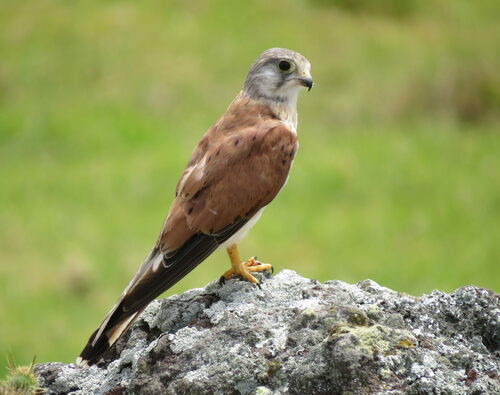
オーストラリアチョウゲンボウ (Falco cenchroides) オーストラリアチョウゲンボウ
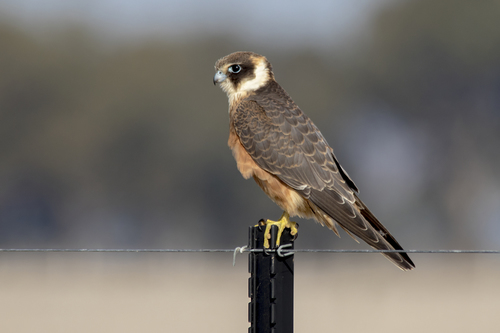
オーストラリアチゴハヤブサ (Falco longipennis) オーストラリアチゴハヤブサ

メディア

読み込み中…

要点

The most reliable field mark between Nankeen Kestrel and Australian Hobby is their flight style and structure: Nankeen Kestrel is a slim, pale, small falcon that often hovers with straight, pointed wings, while Australian Hobby is noticeably heavier, longer-winged, and rarely hovers, instead using rapid, flickering wingbeats and agile, low, fast flight. In perched birds, Nankeen Kestrel shows pale rufous upperparts and a pale face, while Australian Hobby is darker overall with a black cap and mask. Juvenile and female kestrels have rufous crowns and tails, unlike the hobby’s dark head. Both can appear in open country, but their behavior and build are usually clear with patience.

識別のコツ

  1. Flight style: Nankeen Kestrel often hovers with straight, pointed wings and a steady, motionless posture; Australian Hobby almost never hovers, instead using rapid, flickering wingbeats and agile, low, fast flight. This is the most reliable separation in the field.
  2. Wing shape in flight: Kestrel’s wings are straight-edged and relatively short; hobby’s wings are longer, narrower, and swept back, giving a more falcon-like silhouette.
  3. Upperwing pattern (all ages): Kestrel shows pale rufous upperwings with black flight feathers; hobby’s upperwings are darker overall, with less contrast between coverts and primaries.
  4. Tail shape and color: Kestrel’s tail is relatively long and square-tipped, pale grey (male) or rufous (female/juvenile) with fine barring; hobby’s tail is shorter relative to body, darker, and less obviously barred.
  5. Facial pattern: Kestrel has a pale face with a faint dark tear-mark (male) or pale rufous crown (female/juvenile); hobby has a bold black cap and mask, white forehead, and a half-collar, giving a more dramatic facial contrast.
  6. Underparts: Kestrel is finely streaked and pale below; hobby is more heavily streaked or marked, and can be blue-grey or rufous, but always darker and more patterned than kestrel.
  7. Perched jizz: Kestrel appears slim, upright, and delicate, often on wires or exposed perches; hobby is bulkier, more horizontal, and rarely perches as openly.
  8. Size impression: Hobby is larger and heavier, but overlap exists; use in combination with other marks.
  9. Behavior: Kestrel’s hovering is unique among small falcons in Australia; hobby’s hunting is more dynamic, with stoops and fast chases.
  10. Habitat context: Kestrel is common in open farmland and grassland, often visible; hobby is less common, more secretive, and often seen in flight rather than perched.
  11. Juvenile confusion: Juvenile kestrels are especially pale and rufous, with a rufous crown and tail; juvenile hobbies are darker, with a blackish cap and mask already present.
  12. Sex differences: Female and juvenile kestrels have more rufous on crown and tail; male kestrels have a grey crown and tail. Hobby’s sexual differences are mainly in size, not plumage.
  13. Vocalizations: Calls are similar, but hobby’s are higher-pitched and more rapid; not usually diagnostic unless heard well.
  14. Pitfalls: In poor light, hobby can look paler, and scruffy kestrels can appear darker; always check flight style and face pattern.
  15. Seasonal context: Both species are present year-round in much of Australia, but kestrel is more likely to be seen in open country at any time; hobby may be more visible during breeding or migration.

大きさ

Australian Hobby is distinctly heavier and bulkier, with an average body mass of about 246 g compared to the Nankeen Kestrel’s 172.5 g. Hobbies are also longer-winged (wingspan up to 87 cm vs. 78 cm for kestrel) and slightly longer overall (females 34–35.5 cm, males 30–32 cm, vs. kestrel’s 28–35 cm). In the field, the hobby appears more robust and powerful, while the kestrel is noticeably slim and delicate.

羽色

Juvenile and female Nankeen Kestrels are pale rufous above with a rufous crown and finely barred rufous tail, while adult males have a pale grey crown and tail. All ages show pale, finely streaked underparts and a generally pale, less patterned look. In contrast, Australian Hobby of all ages is darker, with a black cap and mask, whitish forehead, and a half-collar; underparts can be blue-grey or rufous but are always more heavily streaked or marked than kestrel. The hobby’s upperparts are darker, and the face is more contrasting. In flight, the kestrel’s upperwing is pale rufous with contrasting black flight feathers, while the hobby’s wings are longer, narrower, and darker, with less contrast between coverts and flight feathers. Juvenile kestrels are especially pale and rufous, while juvenile hobbies are darker and more patterned.

行動

Nankeen Kestrel is famous for its hovering: it frequently hangs motionless over fields and grasslands with straight wings, scanning for prey, and also perches in exposed spots like poles and wires. Australian Hobby rarely hovers; instead, it hunts with rapid, flickering wingbeats, often flying low and fast in zig-zags, and is more aggressive and agile in pursuit. Hobbies are solitary and may attack other raptors with stoops, while kestrels are more likely to be seen singly or in pairs, sometimes loosely flocking when food is abundant.

生息環境

Both species occur in open country, but Nankeen Kestrel is much more common and widespread in open grasslands, farmland, and lightly wooded areas, often seen perched on wires or hovering over fields. Australian Hobby also uses open habitats but is less likely to be seen hovering or perched in the open; it may be found near woodland edges, open forests, or even urban parks, but is generally less conspicuous than kestrel and more often seen in active flight.

声

Both species have similar alarm and contact calls, but the hobby’s calls are higher-pitched and include a rapid peevish chatter (kee-kee-kee-kee-kee) and a squeaky chittering, especially during breeding and food begging. Nankeen Kestrel’s calls are not detailed in the notes, but are described as similar to hobby’s. Vocalizations are not usually diagnostic at a distance, but the hobby’s calls are more piercing and rapid.

より良い説明を送る

比較と同じ項目を使ってください。文章はすぐに公開されます。

The most reliable field mark between Nankeen Kestrel and Australian Hobby is their flight style and structure: Nankeen Kestrel is a slim, pale, small falcon that often hovers with straight, pointed wings, while Australian Hobby is noticeably heavier, longer-winged, and rarely hovers, instead using rapid, flickering wingbeats and agile, low, fast flight. In perched birds, Nankeen Kestrel shows pale rufous upperparts and a pale face, while Australian Hobby is darker overall with a black cap and mask. Juvenile and female kestrels have rufous crowns and tails, unlike the hobby’s dark head. Both can appear in open country, but their behavior and build are usually clear with patience.

  1. Flight style: Nankeen Kestrel often hovers with straight, pointed wings and a steady, motionless posture; Australian Hobby almost never hovers, instead using rapid, flickering wingbeats and agile, low, fast flight. This is the most reliable separation in the field.
  2. Wing shape in flight: Kestrel’s wings are straight-edged and relatively short; hobby’s wings are longer, narrower, and swept back, giving a more falcon-like silhouette.
  3. Upperwing pattern (all ages): Kestrel shows pale rufous upperwings with black flight feathers; hobby’s upperwings are darker overall, with less contrast between coverts and primaries.
  4. Tail shape and color: Kestrel’s tail is relatively long and square-tipped, pale grey (male) or rufous (female/juvenile) with fine barring; hobby’s tail is shorter relative to body, darker, and less obviously barred.
  5. Facial pattern: Kestrel has a pale face with a faint dark tear-mark (male) or pale rufous crown (female/juvenile); hobby has a bold black cap and mask, white forehead, and a half-collar, giving a more dramatic facial contrast.
  6. Underparts: Kestrel is finely streaked and pale below; hobby is more heavily streaked or marked, and can be blue-grey or rufous, but always darker and more patterned than kestrel.
  7. Perched jizz: Kestrel appears slim, upright, and delicate, often on wires or exposed perches; hobby is bulkier, more horizontal, and rarely perches as openly.
  8. Size impression: Hobby is larger and heavier, but overlap exists; use in combination with other marks.
  9. Behavior: Kestrel’s hovering is unique among small falcons in Australia; hobby’s hunting is more dynamic, with stoops and fast chases.
  10. Habitat context: Kestrel is common in open farmland and grassland, often visible; hobby is less common, more secretive, and often seen in flight rather than perched.
  11. Juvenile confusion: Juvenile kestrels are especially pale and rufous, with a rufous crown and tail; juvenile hobbies are darker, with a blackish cap and mask already present.
  12. Sex differences: Female and juvenile kestrels have more rufous on crown and tail; male kestrels have a grey crown and tail. Hobby’s sexual differences are mainly in size, not plumage.
  13. Vocalizations: Calls are similar, but hobby’s are higher-pitched and more rapid; not usually diagnostic unless heard well.
  14. Pitfalls: In poor light, hobby can look paler, and scruffy kestrels can appear darker; always check flight style and face pattern.
  15. Seasonal context: Both species are present year-round in much of Australia, but kestrel is more likely to be seen in open country at any time; hobby may be more visible during breeding or migration.

Australian Hobby is distinctly heavier and bulkier, with an average body mass of about 246 g compared to the Nankeen Kestrel’s 172.5 g. Hobbies are also longer-winged (wingspan up to 87 cm vs. 78 cm for kestrel) and slightly longer overall (females 34–35.5 cm, males 30–32 cm, vs. kestrel’s 28–35 cm). In the field, the hobby appears more robust and powerful, while the kestrel is noticeably slim and delicate.

Juvenile and female Nankeen Kestrels are pale rufous above with a rufous crown and finely barred rufous tail, while adult males have a pale grey crown and tail. All ages show pale, finely streaked underparts and a generally pale, less patterned look. In contrast, Australian Hobby of all ages is darker, with a black cap and mask, whitish forehead, and a half-collar; underparts can be blue-grey or rufous but are always more heavily streaked or marked than kestrel. The hobby’s upperparts are darker, and the face is more contrasting. In flight, the kestrel’s upperwing is pale rufous with contrasting black flight feathers, while the hobby’s wings are longer, narrower, and darker, with less contrast between coverts and flight feathers. Juvenile kestrels are especially pale and rufous, while juvenile hobbies are darker and more patterned.

Nankeen Kestrel is famous for its hovering: it frequently hangs motionless over fields and grasslands with straight wings, scanning for prey, and also perches in exposed spots like poles and wires. Australian Hobby rarely hovers; instead, it hunts with rapid, flickering wingbeats, often flying low and fast in zig-zags, and is more aggressive and agile in pursuit. Hobbies are solitary and may attack other raptors with stoops, while kestrels are more likely to be seen singly or in pairs, sometimes loosely flocking when food is abundant.

Both species occur in open country, but Nankeen Kestrel is much more common and widespread in open grasslands, farmland, and lightly wooded areas, often seen perched on wires or hovering over fields. Australian Hobby also uses open habitats but is less likely to be seen hovering or perched in the open; it may be found near woodland edges, open forests, or even urban parks, but is generally less conspicuous than kestrel and more often seen in active flight.

Both species have similar alarm and contact calls, but the hobby’s calls are higher-pitched and include a rapid peevish chatter (kee-kee-kee-kee-kee) and a squeaky chittering, especially during breeding and food begging. Nankeen Kestrel’s calls are not detailed in the notes, but are described as similar to hobby’s. Vocalizations are not usually diagnostic at a distance, but the hobby’s calls are more piercing and rapid.

変更を破棄しますか?

保存していない編集があります。今離れると失われます。

オーストラリアチョウゲンボウ · オーストラリアチゴハヤブサ · 苦手な鳥