

Motmot

コブハクチョウ 対 オオハクチョウ

Cygnus olor 対 Cygnus cygnus

コブハクチョウとオオハクチョウのクイズ
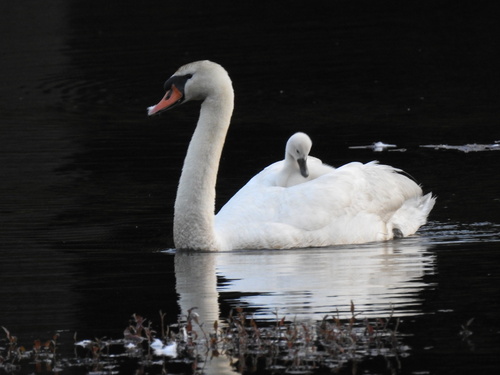
コブハクチョウ (Cygnus olor) コブハクチョウ
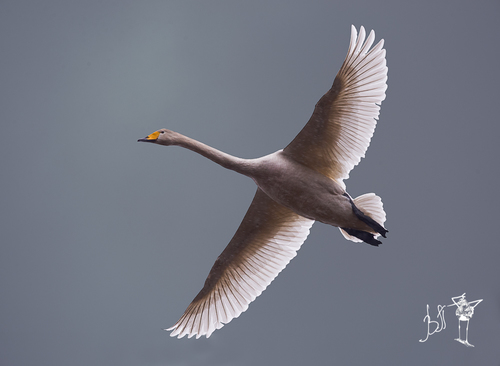
オオハクチョウ (Cygnus cygnus) オオハクチョウ

メディア

読み込み中…

要点

コブハクチョウとオオハクチョウの最も信頼できるフィールドマークは、くちばしの色とパターンです:成鳥のコブハクチョウは、基部に目立つ黒いノブがある明るいオレンジ色のくちばしを持ち、成鳥のオオハクチョウは、黄色と黒の間に直線的な境界があり、ノブがない主に黄色のくちばしを示します。幼鳥はより難しいですが、オオハクチョウのひなはより均一に淡い灰色であり、コブハクチョウのひなは通常、灰色またはバフと白の混合で、鈍い灰色がかった黒いくちばしを持っています。飛行中または水上では、尾の形と頭のプロファイルも役立ちます:コブハクチョウは長く尖った尾と緩やかに曲がった「S」字型の首を持ち、オオハクチョウは短く丸い尾とより直線的で角ばった頭と首を持っています。どちらも非常に大きな白い白鳥ですが、その構造とくちばしのパターンが最良のフィールドの手がかりです。

識別のコツ

  1. Bill color and pattern (adults): コブハクチョウは基部に大きな黒いノブがある明るいオレンジ色のくちばしを示し、オオハクチョウは黒い先端に直線的なエッジがあり、ノブがない主に黄色のくちばしを持っています。これは成鳥にとって最も信頼できるフィールドマークです。
  2. Bill shape and size: オオハクチョウのくちばしは長く、よりくさび形で、黄色と黒の間に直線があります;コブハクチョウのくちばしは短く、深く、基部に目立つノブがあります(特にオスの場合)。
  3. Head and neck profile: コブハクチョウは緩やかに曲がった「S」字型の首と丸い頭を持ち、しばしばアーチ状に保持されます;オオハクチョウはより直線的な首とより角ばったくさび形の頭を持ち、異なる印象を与えます。
  4. Tail shape: コブハクチョウは長く尖った(三角形の)尾を持ち、逆さまになったり飛行中に明らかになります;オオハクチョウの尾は短く丸いです。これはすべての年齢に役立ち、特に鳥が水中で頭を下げて餌を食べているときに有用です。
  5. Juvenile plumage: オオハクチョウの幼鳥は均一に淡い灰色から灰褐色で、ピンクがかった黒灰色のくちばしを持ち、オレンジやノブはありません;コブハクチョウの幼鳥は斑点のある灰色/バフと白で、時にはすべて白で、鈍い灰色がかった黒いくちばしを持っています。コブハクチョウの幼鳥は年齢とともにより茶色と白の外観を示し、オオハクチョウの幼鳥はより均一な色を保ちます。
  6. Adult plumage: どちらも白ですが、オオハクチョウは特定の水域で餌を食べることによる頭/首の錆びた汚れを示すことがあります。これは信頼できる区別ではありませんが、IDをサポートするのに役立つことがあります。
  7. Leg color: どちらも暗い脚を持っています;これは有用な区別ではありません。
  8. Flight jizz: コブハクチョウは緩やかな曲線を持つ長い首と尖った尾で飛び、オオハクチョウはより直線的な首と丸い尾で飛びます。どちらも強力で安定した羽ばたきを持っています。
  9. Vocalization: コブハクチョウは主に静かで、脅かされたときにのみ時折シューという音を出します;オオハクチョウは非常に声が大きく、特に群れや飛行中に大きなトランペットのような鳴き声を出します。
  10. Aggression: コブハクチョウは特に繁殖期に攻撃的であり、他の鳥や人を攻撃することがあります;オオハクチョウはそれほど攻撃的ではなく、より社交的です。
  11. Habitat context: コブハクチョウは都市公園や低地の湖で一般的ですが、オオハクチョウはより野生で開放的な湿地を好み、より移動性があり、冬には群れで見られることが多いです。
  12. Season and range: 北アメリカでは、コブハクチョウは一般的で、オオハクチョウは珍しい迷鳥です。ユーラシアでは、どちらも発生する可能性がありますが、オオハクチョウは特に冬に北部または野生の生息地で見られる可能性が高いです。
  13. Sex differences: オスのコブハクチョウはメスよりも大きなくちばしのノブを持っています;これはオオハクチョウには当てはまりません。
  14. Size: どちらも巨大な白鳥で、サイズ範囲が重なっています;サイズだけでは安全な区別にはなりません。
  15. Pitfalls: 鈍いくちばしと斑点のある羽毛を持つ若いコブハクチョウに注意してください。これは若いオオハクチョウに似て見えることがあります。最良の区別のために、くちばしの形/パターン、尾の形、頭/首のプロファイルに焦点を当ててください。

大きさ

どちらの種も最大の飛ぶ鳥の中にあり、そのサイズはかなり重なっています。成鳥のオオハクチョウはわずかに重い(平均体重約11,375 g対コブハクチョウの約10,735 g)ですが、この違いはフィールドでは信頼できません。長さと翼幅は似ており、オオハクチョウはわずかに長い翼幅を持つ可能性があります(205–275 cm対コブハクチョウの200–240 cm)。どちらの種のオスはメスよりも大きいです。サイズだけでは安全な区別にはなりません。

羽色

行動

コブハクチョウはしばしばより攻撃的で、特に巣や幼鳥を守るときに、他の水鳥や小型ボートを攻撃することがあります。オオハクチョウは社交的で、特に群れとして飛び立つ前に頭を上下させたり翼を羽ばたかせたりしてコミュニケーションを取ります。どちらの種も開放水域で泳いだり、餌を食べたり、飛んだりするのが見られますが、コブハクチョウは繁殖期には単独またはペアで見られることが多く、オオハクチョウは特に冬には家族グループや群れで見られることが多いです。

生息環境

どちらの種も湖、川、湿地を利用しますが、コブハクチョウは低地の人間によって改変された生息地(公園、都市湖)にいる可能性が高く、居住者または地域的に移動性があります。オオハクチョウは北ユーラシアで繁殖し、より自然で開放的な湿地で見られ、しばしば南の冬の訪問者として見られます。北アメリカでは、コブハクチョウは珍しい迷鳥のオオハクチョウを除いて唯一期待される種です。

声

コブハクチョウは主に静かで、脅かされたときにのみ時折シューという音やうめき声を出します。オオハクチョウは非常に声が大きく、特に群れや飛行中に聞かれることが多い、3または4のグループでの大きく共鳴するトランペットのような鳴き声("kloo-kloo-kloo")を持っています。声は、鳥が鳴いている場合の強力な区別要因です。

より良い説明を送る

比較と同じ項目を使ってください。文章はすぐに公開されます。

The most reliable field mark between Mute Swan and Whooper Swan is the bill color and pattern: adult Mute Swans have a bright orange bill with a prominent black knob at the base, while adult Whooper Swans show a mostly yellow bill with a straight border between yellow and black, lacking a knob. Juveniles are trickier, but Whooper Swan cygnets are more uniformly pale grey, while Mute Swan cygnets are usually a mix of grey or buff and white, with a dull greyish-black bill. In flight or on water, tail shape and head profile are also useful: Mute Swan has a longer, pointed tail and a gently curved 'S'-shaped neck, while Whooper Swan has a shorter, rounded tail and a straighter, more angular head and neck. Both are very large white swans, but their structure and bill pattern are the best field clues.

  1. Bill color and pattern (adults): Mute Swan shows a bright orange bill with a large black knob at the base; Whooper Swan has a mostly yellow bill with a straight edge to the black tip and no knob. This is the most reliable field mark for adults.
  2. Bill shape and size: Whooper Swan's bill is longer and more wedge-shaped, with a straight line between yellow and black; Mute Swan's bill is shorter, deeper, and has a pronounced knob at the base (especially in males).
  3. Head and neck profile: Mute Swan has a gently curved 'S'-shaped neck and a rounded head, often held arched; Whooper Swan has a straighter neck and a more angular, wedge-shaped head, giving a different jizz.
  4. Tail shape: Mute Swan has a long, pointed (triangular) tail, which is obvious when up-ended or in flight; Whooper Swan's tail is shorter and rounded. This is useful for all ages, especially when birds are feeding with their heads underwater.
  5. Juvenile plumage: Whooper Swan juveniles are uniform pale grey to greyish-brown, with pinkish and blackish-grey bills; Mute Swan juveniles are patchy grey/buff and white, sometimes all white, with a dull greyish-black bill. As Mute Swan juveniles age, they become more brown-and-white, while Whooper juveniles remain evenly colored.
  6. Adult plumage: Both are white, but Whooper Swan may show rusty staining on the head/neck from feeding in certain waters. This is not a reliable separator, but can help support an ID.
  7. Leg color: Both have dark legs; not a useful separator.
  8. Flight jizz: Mute Swan flies with a long neck held in a gentle curve and a pointed tail; Whooper Swan flies with a straighter neck and rounded tail. Both have powerful, steady wingbeats.
  9. Vocalization: Mute Swan is mostly silent or hisses; Whooper Swan is noisy, with loud trumpeting calls, especially in flocks or in flight.
  10. Aggression: Mute Swans are notably aggressive, especially in the breeding season, and may attack other birds or even people; Whooper Swans are less aggressive and more social.
  11. Habitat context: Mute Swans are common in urban parks and lowland lakes; Whooper Swans prefer wilder, open wetlands and are more migratory, often seen in flocks in winter.
  12. Season and range: In North America, Mute Swan is common and Whooper Swan is a rare vagrant. In Eurasia, both can occur, but Whooper Swan is more likely in northern or wild habitats, especially in winter.
  13. Sex differences: Male Mute Swans have a larger bill knob than females; this does not apply to Whooper Swan.
  14. Size: Both are huge swans, with overlapping size ranges; size is not a reliable separator unless birds are side-by-side.
  15. Pitfalls: Beware of young Mute Swans with dull bills and patchy plumage, which can look similar to young Whooper Swans. Focus on bill shape/pattern, tail shape, and head/neck profile for best separation.

Both species are among the largest flying birds, and their size overlaps considerably. Adult Whooper Swans average slightly heavier (mean body mass ~11,375 g vs. ~10,735 g for Mute Swan) [wikidata], but this difference is not reliable in the field. Length and wingspan are similar, with Whooper Swan possibly having a slightly longer wingspan (205–275 cm vs. 200–240 cm for Mute Swan) [wikipedia]. Males of both species are larger than females. Size alone is not a safe separator unless birds are side-by-side.

  • Juveniles (cygnets/first-year): Whooper Swan juveniles are uniform pale grey to greyish-brown all over, including the head and neck, and their bills are pinkish with blackish-grey, lacking any orange or knob. Mute Swan cygnets are typically a mix of grey or buff and white, sometimes all white (leucistic), and have a dull greyish-black bill. As they age, Mute Swan juveniles show a patchier brown-and-white appearance, while Whooper Swan juveniles remain more evenly colored.
  • Adults: Both are pure white overall. Mute Swan has a bright orange bill with a large black knob at the base and black around the nostrils; legs are dark grey. Whooper Swan has a mostly yellow bill with a straight border to the black tip and no knob; legs are also dark. Whooper Swan adults may show rusty staining on the head and neck from feeding in tannin-rich waters, but this is variable and not always present.
  • Tail: Mute Swan has a longer, pointed (triangular) tail, while Whooper Swan's tail is shorter and rounded—a useful mark when birds are up-ended feeding.

Mute Swans are often more aggressive, especially when defending nests or young, and may attack other waterbirds or even small boats. Whooper Swans are social and communicate with head bobs and wing flaps, especially before taking flight as a flock. Both species can be seen swimming, feeding, or flying in open water, but Mute Swans are more likely to be seen alone or in pairs during the breeding season, while Whooper Swans are often in family groups or flocks, especially in winter.

Both species use lakes, rivers, and wetlands, but Mute Swan is more likely in lowland, human-altered habitats (parks, urban lakes) and is resident or only locally migratory. Whooper Swan breeds in northern Eurasia and is seen in more natural, open wetlands, often as a winter visitor further south. In North America, Mute Swan is the only expected species outside rare vagrant Whooper Swans.

Mute Swan is mostly silent, giving only occasional hissing or grunting sounds, especially when threatened. Whooper Swan is very vocal, with loud, resonant trumpeting calls ("kloo-kloo-kloo") in groups of three or four, often heard in flight or when flocking. Voice is a strong separator if birds are calling.

変更を破棄しますか?

保存していない編集があります。今離れると失われます。

コブハクチョウ · オオハクチョウ · 苦手な鳥