

Motmot

コブハクチョウ 対 コハクチョウ

Cygnus olor 対 Cygnus columbianus

コブハクチョウとコハクチョウのクイズ
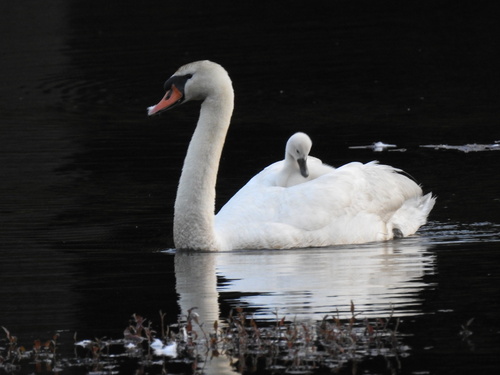
コブハクチョウ (Cygnus olor) コブハクチョウ
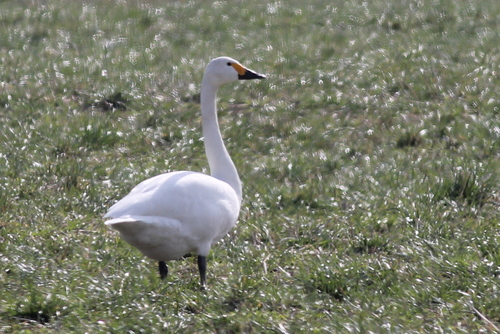
コハクチョウ (Cygnus columbianus) コハクチョウ

メディア

読み込み中…

要点

フィールドでコブハクチョウとコハクチョウを区別する最も信頼できる方法は、くちばしの色と構造によるものです:成鳥のコブハクチョウは、基部に目立つ黒いこぶのある明るいオレンジ色のくちばしを持ち、一方でコハクチョウは主に黒いくちばしを持ち、変動する黄色の斑点があり、こぶはありません。コブハクチョウはまた、はるかに大きく、ずっしりとしており、首が長く、体が重いのに対し、コハクチョウは明らかに小さく、首が短く、時には大きな白いガチョウを思い起こさせます。両種の幼鳥は鈍く、灰色がかっていますが、くちばしの色の違いは依然として有用です:若いコブハクチョウは灰色がかった黒いくちばしを持ち、若いコハクチョウは黄色のある黒いくちばしを示します。飛行中または水上では、最も信頼できる区別のために全体のサイズ、首の長さ、くちばしのパターンに注意を払ってください。

識別のコツ

  1. くちばしの色と構造(成鳥): コブハクチョウは基部に目立つ黒いこぶのある明るいオレンジ色のくちばしを持ち、コハクチョウは主に黒いくちばしを持ち、変動する黄色の斑点があり、こぶはありません。これは成鳥にとって最も信頼できるフィールドマークです。
  2. くちばしの色(幼鳥): 若いコブハクチョウは黄色のない鈍い灰色がかった黒いくちばしを持ち、若いコハクチョウは基部に黄色のある主に黒いくちばしを示します。
  3. サイズと体重: コブハクチョウはコハクチョウよりもはるかに大きく、重いです。一緒に見た場合、その違いは際立っています。単独で見た場合、コブハクチョウの長く太い首と巨大な体と、コハクチョウの短く、よりガチョウのようなプロポーションを探してください。
  4. 首の長さと姿勢: コブハクチョウは長く、しばしば弓なりの首を持ち、特に泳いでいるときにそうです。コハクチョウは短い首を持ち、通常はより真っ直ぐで直立しています。
  5. 頭とくちばしの形: コブハクチョウの頭は滑らかに丸みを帯びており、重いくちばしと目立つこぶがあります。コハクチョウはより丸い頭を持っていますが、より小さく、細いくちばしとこぶはありません。
  6. 足の色: コブハクチョウは暗い灰色の足を持ち、コハクチョウは真っ黒な足を持っています。これは近距離では役立ちますが、遠くではあまり有用ではありません。
  7. 羽毛(成鳥): 両者は白ですが、コブハクチョウは成鳥として常に純白であり、コハクチョウは鉄分の多い水では頭と首に錆びたまたは金色の洗いが見られることがあります。
  8. 羽毛(幼鳥): 幼いコブハクチョウは灰色からバフで、特に最初の年に鈍い灰色がかった黒いくちばしを持ち、完全な白い羽毛を得るのは最初の年の後です。幼いコハクチョウは頭と首に鈍い灰色が混ざった白ですが、若いコブハクチョウほど均一に灰色ではありません。
  9. 行動: コブハクチョウは非常に領土的で攻撃的であり、他の鳥を追いかけたり、弓なりの翼でディスプレイを行ったりすることがよくあります。コハクチョウはより社交的で攻撃的ではありません。
  10. 鳴き声: コブハクチョウは通常静かで、威嚇するときにシューという音を立てることがあります。コハクチョウは騒がしく、特に飛行中にバグリングやホンキングの呼び声を発します。
  11. 生息地: コブハクチョウは都市公園、装飾用の湖、緩やかな川で一般的です。コハクチョウはオープンな湿地、河口、洪水のある田んぼを好み、特に冬に見られます。
  12. 飛行の特徴: 飛行中、コブハクチョウは重く、遅く見え、深く力強い翼の拍動を持っています。コハクチョウは軽く、より敏捷で、より速い翼の拍動と、より軽快な飛行を持っています。
  13. 群れの構造: コブハクチョウは繁殖期には単独またはペアで見られることが多いです。コハクチョウは繁殖期以外では通常家族群や大きな群れで見られます。
  14. 季節的文脈: 西ヨーロッパの夏に見られた場合、大きな白い白鳥はほぼ確実にコブハクチョウです。コハクチョウは冬の訪問者であり、ほとんどの冬の生息地で夏には見られません。
  15. 落とし穴: 白化症または異常に淡い幼いコブハクチョウに注意してください。これらは通常よりも白く見えることがありますが、くちばしに黄色がなく、重い構造とこぶを持っています。

大きさ

コブハクチョウはコハクチョウよりもかなり大きく、重いです。コブハクチョウは平均約147.5 cmの長さと10,735 gの質量を持ち、最も重い飛ぶ鳥の一つです。コハクチョウははるかに小さく、平均6,781.5 gで、長さは115–140 cmです。このサイズの違いは、直接比較するか、両種に慣れている場合に明らかです:コブハクチョウはずっしりとしており、首が長く、水上や飛行中により印象的な存在感を持っています。コハクチョウはよりコンパクトで軽く、首が短く、体がそれほど大きくありません。

羽色

両種は成鳥として完全に白ですが、年齢に特有の違いが重要です。幼いコブハクチョウ(シグネット)は全体的に灰色からバフで、鈍い灰色がかった黒いくちばしを持ち、最初の年の後まで完全な白い羽毛を得ません。幼いコハクチョウも鈍い灰色が混ざった白ですが、特に頭と首において、若いときでも主に黒いくちばしに黄色があることが多いです。すべての年齢において、コブハクチョウはくちばしに黄色がなく、コハクチョウは常に少なくともくちばしの基部に黄色を示します。どちらの種にも年齢に関係なく特有の上翼パターンや飛行マークは記載されていないため、区別はくちばしと構造に依存し、翼のパターンには依存しません。両種は暗い足を持っていますが、コブハクチョウの足は暗い灰色で、コハクチョウの足は真っ黒です。一部の生息地では、コハクチョウは鉄分の多い水のために頭と首に錆びたまたは金色の洗いが見られることがありますが、これはコブハクチョウには見られません。

行動

コブハクチョウは特に巣や幼鳥を守るときに攻撃的であり、他の水鳥や小型ボートを追いかけたり攻撃したりすることがあります。彼らはしばしば首を弓なりにし、脅威のディスプレイで翼を上げて泳ぎます。コハクチョウは攻撃的ではなく、より社交的で、しばしば家族群や混合群れで見られ、同じ領土行動を示しません。両種は浅い水で餌を食べますが、コブハクチョウはシグネットを背中に乗せているのが見られることがありますが、これはコハクチョウには記載されていません。

生息環境

コブハクチョウはヨーロッパとアジアの一部に自生していますが、現在は広範囲に分布し、特に人間によって変化した風景の中で湖、緩やかな川、公園の池でよく見られます。コハクチョウは北極で繁殖し、ヨーロッパとアジアの温帯地域で冬を越し、移動中や冬に大きなオープンな湿地、河口、洪水のある田んぼを好みます。冬の生息地にはいくつかの重複がありますが、コブハクチョウは都市や郊外の環境で見られる可能性が高く、コハクチョウはより野生でオープンな生息地を好みます。

声

コブハクチョウはその名前が示すようにほとんど静かですが、脅威を感じたときにシューという音や鼻を鳴らす音を立てることがあります。コハクチョウははるかに声が大きく、特に飛行中や群れにいるときにバグリング、ホンキング、トランペットの呼び声の範囲を持っています。白鳥の群れから大きく音楽的な呼び声が聞こえた場合、あなたはコブハクチョウではなくコハクチョウを聞いている可能性が高いです。

より良い説明を送る

比較と同じ項目を使ってください。文章はすぐに公開されます。

The most reliable way to separate Mute Swan from Bewick's Swan in the field is by bill color and structure: adult Mute Swans have a bright orange bill with a prominent black knob at the base, while Bewick's Swans show a mostly black bill with a variable yellow patch and lack the knob. Mute Swans are also much larger and bulkier, with a longer neck and heavier build, whereas Bewick's Swans look noticeably smaller and shorter-necked, sometimes recalling a large white goose. Juvenile birds of both species are duller and greyer, but the bill color difference is still useful: young Mute Swans have a greyish-black bill, while young Bewick's Swans show a black bill with some yellow. In flight or on water, pay attention to the overall size, neck length, and bill pattern for the most reliable separation.

  1. Bill color and structure (adults): Mute Swan has a bright orange bill with a prominent black knob at the base; Bewick's Swan has a mostly black bill with a variable yellow patch and no knob. This is the single most reliable field mark for adults.
  2. Bill color (juveniles): Young Mute Swans have a dull greyish-black bill with no yellow; young Bewick's Swans show a mostly black bill with some yellow at the base, even before full adult plumage.
  3. Size and bulk: Mute Swan is much larger and heavier than Bewick's Swan. If seen together, the difference is striking. If alone, look for the long, thick neck and massive body of Mute Swan versus the shorter, more goose-like proportions of Bewick's Swan.
  4. Neck length and posture: Mute Swan has a long, often arched neck, especially when swimming. Bewick's Swan has a shorter neck, usually held straighter and more upright.
  5. Head and bill shape: Mute Swan's head is smoothly rounded with a heavy bill and prominent knob. Bewick's Swan has a more rounded head but with a smaller, finer bill and no knob.
  6. Leg color: Mute Swan has dark grey legs; Bewick's Swan has solid black legs. This can help at close range, but is less useful at a distance.
  7. Plumage (adults): Both are white, but Mute Swan is always pure white as an adult, while Bewick's Swan may show a rusty or golden wash on the head and neck in iron-rich waters.
  8. Plumage (immatures): Juvenile Mute Swans are grey to buff overall, especially in the first year. Juvenile Bewick's Swans are white with dull grey on the head and neck, but never as uniformly grey as young Mute Swans.
  9. Behavior: Mute Swan is highly territorial and aggressive, often seen chasing other birds or displaying with arched wings. Bewick's Swan is more social and less aggressive.
  10. Vocalization: Mute Swan is usually silent or hisses; Bewick's Swan is noisy, with bugling and honking calls, especially in flight.
  11. Habitat: Mute Swan is common in urban parks, ornamental lakes, and slow rivers. Bewick's Swan prefers open wetlands, estuaries, and flooded fields, especially in winter.
  12. Flight jizz: In flight, Mute Swan appears heavier and slower, with deep, powerful wingbeats. Bewick's Swan is lighter and more agile, with quicker wingbeats and a less ponderous flight.
  13. Group structure: Mute Swans are often seen singly or in pairs, especially in breeding season. Bewick's Swans are usually in family groups or larger flocks outside the breeding season.
  14. Seasonal context: If seen in summer in Western Europe, a large white swan is almost certainly a Mute Swan. Bewick's Swan is a winter visitor and absent in summer from most of its wintering range.
  15. Pitfalls: Beware of leucistic or unusually pale juvenile Mute Swans, which can appear whiter than normal, but will still lack yellow on the bill and show the heavy structure and knob.

Mute Swan is substantially larger and heavier than Bewick's Swan. Mute Swan averages about 147.5 cm in length and 10,735 g in mass, making it one of the heaviest flying birds. Bewick's Swan is much smaller, averaging 6,781.5 g, and measures 115–140 cm in length. This size difference is apparent in direct comparison or when familiar with both species: Mute Swan is bulkier, with a longer neck and a more imposing presence both on water and in flight. Bewick's Swan is more compact and lighter, with a shorter neck and a less massive body.

Both species are entirely white as adults, but age-specific differences are important. Juvenile Mute Swans (cygnets) are grey to buff overall, with a dull greyish-black bill, and do not attain full white plumage until after their first year. Juvenile Bewick's Swans are also white mixed with dull grey, especially on the head and neck, but their bill is mostly black with some yellow even when young. In all ages, Mute Swan lacks any yellow on the bill, while Bewick's Swan always shows at least some yellow at the bill base. No distinctive upperwing pattern or flight mark is described for either species at any age, so separation relies on bill and structure rather than wing pattern. Both species have dark legs, but Mute Swan's are dark grey and Bewick's Swan's are solid black. In some habitats, Bewick's Swan can show a rusty or golden wash on the head and neck due to iron-rich water, which is not seen in Mute Swan.

Mute Swans are notably aggressive, especially when defending nests or young, and may chase or attack other waterfowl or even small boats. They often swim with their necks arched and wings raised in a threat display. Bewick's Swans are less aggressive and more social, often seen in family groups or mixed flocks, and do not show the same territorial behavior. Both species feed in shallow water, but Mute Swans may be seen carrying cygnets on their backs, a behavior not described for Bewick's Swan.

Mute Swan is native to Europe and parts of Asia, but is now widespread and often found on lakes, slow rivers, and park ponds, especially in human-altered landscapes. Bewick's Swan breeds in the Arctic and winters in temperate regions of Europe and Asia, favoring large open wetlands, estuaries, and flooded fields during migration and winter. While there is some overlap in wintering areas, Mute Swan is more likely in urban or suburban settings, while Bewick's Swan prefers wilder, more open habitats.

Mute Swan is mostly silent, as its name suggests, but may hiss or make snorting noises when threatened. Bewick's Swan is much more vocal, with a range of bugling, honking, and trumpeting calls, especially in flight or when in flocks. If you hear loud, musical calls from a flock of swans, you are likely hearing Bewick's, not Mute Swan.

変更を破棄しますか?

保存していない編集があります。今離れると失われます。

コブハクチョウ · コハクチョウ · 苦手な鳥