

Motmot

ルリオタイヨウチョウ 対 ミドリオタイヨウチョウ

Aethopyga gouldiae 対 Aethopyga nipalensis

ルリオタイヨウチョウとミドリオタイヨウチョウのクイズ
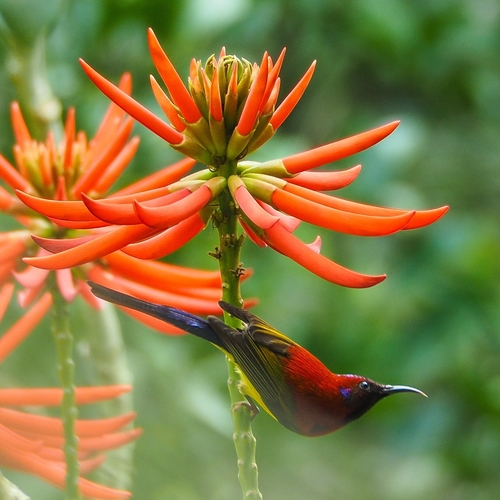
ルリオタイヨウチョウ (Aethopyga gouldiae) ルリオタイヨウチョウ
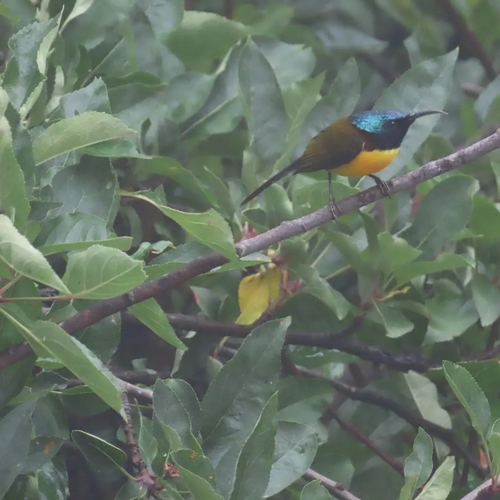
ミドリオタイヨウチョウ (Aethopyga nipalensis) ミドリオタイヨウチョウ

メディア

読み込み中…

要点

ルリオタイヨウチョウとミドリオタイヨウチョウを区別する最も信頼できる方法は、成鳥のオスの頭部と背中の色に注目することです:ルリオタイヨウチョウは、鮮やかな深い紫色の冠と喉、明るい赤からスカーレットのマントルを持っていますが、ミドリオタイヨウチョウのオスは黄色い背中と緑の尾を示し、紫色とスカーレットの組み合わせがありません。両種の雌はより地味ですが、ルリオタイヨウチョウは上面がより均一にオリーブグリーンで、下面が灰色がかった黄色であるのに対し、ミドリオタイヨウチョウの雌はより明確な黄色い背中と緑の尾を持っています。サイズと構造は似ていますので、羽毛、特にオスの場合が最良のフィールドの手がかりです。幼鳥や未熟な羽毛については情報が詳細に記載されていないため、非成鳥の鳥には注意が必要です。生息地の重複は広いですが、ミドリオタイヨウチョウはより高い山地の森林に結びついています。

識別のコツ

  1. 成鳥オスの頭部とマントルの色:ルリオタイヨウチョウのオスは、鮮やかな深い紫色の冠と喉、明るい赤からスカーレットのマントルと後頭部を示します—この組み合わせはユニークで、ミドリオタイヨウチョウのオスには見られません。ミドリオタイヨウチョウのオスは黄色い背中と緑の尾を持っています。
  2. オスの背中と尾の色:ミドリオタイヨウチョウのオスは黄色い背中と緑の尾を持ち、ルリオタイヨウチョウの紫色とスカーレットはありません;上からまたは後ろから見るときは、これらの色を常に確認してください。
  3. 雌の羽毛:雌のルリオタイヨウチョウは上面が深いオリーブグリーンで、下面が灰色がかった黄色ですが、ミドリオタイヨウチョウの雌はより黄色い背中と緑の尾を持っています—ミドリオタイヨウチョウの手がかりとして黄色い背中を探してください。
  4. ルリオタイヨウチョウの亜種の変異:一部のルリオタイヨウチョウの亜種(例:A. g. dabryii)はスカーレットの胸を持ち、他の亜種(A. g. gouldiae)は赤いストライプの有無にかかわらず黄色の胸を持っています—特に重複地域では胸の色だけに頼らないでください。
  5. くちばしの構造:両種は日光鳥に典型的な似たように下向きに曲がった尖ったくちばしを持っています;くちばしの形は信頼できる区別要因ではありません。
  6. サイズ:ルリオタイヨウチョウは平均してやや大きいですが、重複がかなりあり、フィールドでの区別には役立ちません。
  7. 尾のパターン:ルリオタイヨウチョウは明るい青の尾の覆い羽が先端で暗い紫色にフェードします;ミドリオタイヨウチョウの尾は緑です—これは良い光や近くの視界で役立つかもしれません。
  8. 虹彩と足の色:ルリオタイヨウチョウは深い茶色の虹彩と黒い足を持っています;これらは微妙で、フィールドでは診断的であることは稀です。
  9. 幼鳥/未熟な鳥:未熟または幼鳥の羽毛を区別するための詳細な情報はありません;注意が必要で、成鳥の羽毛の特徴がないと識別が不可能な場合があります。
  10. 生息地の文脈:高標高の苔むした森林(1800 m以上)にいる場合、ミドリオタイヨウチョウの可能性が高いですが、ルリオタイヨウチョウも同様の地域に出現することがあります—生息地だけに頼らないでください。
  11. 行動:両種は似たように行動し、積極的に蜜や昆虫を食べ、しばしば花にホバリングしたり、しがみついたりしています;行動は区別要因ではありません。
  12. 飛行の視界:どちらの種にも特有の翼や飛行パターンの違いは記載されていません;羽毛と構造に焦点を当ててください。
  13. 季節的変異:両種はその範囲の一部で常駐または高度移動性の移動者ですが、季節的な羽毛の変化は記載されていません;成鳥のオスが存在する場合は常に独特であると仮定してください。
  14. 声:情報源には声の違いは提供されていません;歌や鳴き声に頼って区別しないでください。
  15. 混合群:両種は特に重複する範囲で一緒に出現することがあります—常に複数のフィールドマークを確認し、単一の特徴に頼らないでください。

大きさ

両種は小型の日光鳥で、測定値が重なっていますが、ルリオタイヨウチョウは平均してやや大きいです。成鳥のオスのルリオタイヨウチョウは、長さ131–160 mm、翼の長さ51–58 mm、尾は64–88 mmで、雌は91–111 mmの長さで、翼は45–54 mm、尾は30.5–40 mmです。ミドリオタイヨウチョウの正確な測定値は示されていませんが、フィールドでの重要なサイズの違いの証拠はありません。くちばしの長さと構造は似ており(両方とも13–17 mm)、サイズは信頼できる区別要因ではありません。

羽色

成鳥のオスは最も容易に区別できます:ルリオタイヨウチョウは深い紫色の額、冠、眉、喉を持ち、顔、後頭部、マントルには明るい赤からスカーレットがあり、時には耳羽と側面に青が見られます。腹部は黄緑色で、尾の覆い羽は明るい青で、先端で暗い紫色にフェードします。それに対して、ミドリオタイヨウチョウのオス(ここでは詳細に記載されていませんが、名前と典型的なフィールドマークから暗示されています)は黄色い背中と緑の尾を持ち、ルリオタイヨウチョウの紫色とスカーレットの頭部とマントルが欠けています。雌のルリオタイヨウチョウは上面が深いオリーブグリーンで、下面が灰色がかった黄色ですが、ミドリオタイヨウチョウの雌はより黄色い背中と緑の尾を持っています。ルリオタイヨウチョウの亜種は胸の色の変異を示すことがあります(スカーレットまたは赤いストライプの有無にかかわらず黄色)、したがってオスの頭部とマントルで紫色とスカーレットを常に確認してください。幼鳥や未熟な羽毛については記載されていないため、その年齢での区別は不確かです。

行動

両種は活発な蜜の摂取者で、似たような摂食行動を持ち、しばしば花にホバリングしたり、しがみついたりしているのが見られます。フィールドで信頼できる区別をするための行動の違いは情報源には記載されていません。

生息環境

両種は南ヒマラヤから東南アジアまでの森林や低木地に生息していますが、ミドリオタイヨウチョウは特に高標高の温帯および山地の森林に密接に関連しています(四川省と雲南省で1825から3350メートルで確認されています)。ルリオタイヨウチョウも森林や低木地に生息していますが、そこまで厳密に山地ではありません。重複は広範囲にわたるため、生息地だけでは診断的ではありませんが、ミドリオタイヨウチョウは高標高や苔むした山の森でより期待されるかもしれません。

より良い説明を送る

比較と同じ項目を使ってください。文章はすぐに公開されます。

The most reliable way to separate Mrs. Gould's Sunbird from the Green-tailed Sunbird is by focusing on the adult male's head and back coloration: Mrs. Gould's has a striking deep violet crown and throat with a bright red to scarlet mantle, while Green-tailed Sunbird males show a yellow back and green tail, lacking the violet and scarlet combination. Females of both species are duller, but Mrs. Gould's is more uniformly olive-green above and greyish-yellow below, while Green-tailed Sunbird females have a more distinct yellow back and green tail. Size and structure are similar, so plumage—especially in males—is your best field clue. Juvenile and immature plumages are not detailed in the sources, so caution is needed with non-adult birds. Habitat overlap is broad, but Green-tailed Sunbird is more tied to higher montane forests.

  1. Adult male head and mantle coloration: Mrs. Gould's Sunbird males show a deep violet crown and throat with a bright red to scarlet mantle and nape—this combination is unique and not matched by Green-tailed Sunbird males, which have a yellow back and green tail.
  2. Back and tail color in males: Green-tailed Sunbird males have a yellow back and green tail, lacking the violet and scarlet of Mrs. Gould's; always check for these colors when viewing from above or behind.
  3. Female plumage: Female Mrs. Gould's is deep olive-green above and greyish-yellow below, while Green-tailed Sunbird females are more yellow-backed with a green tail—look for the yellow back as a clue for Green-tailed.
  4. Subspecies variation in Mrs. Gould's: Some Mrs. Gould's subspecies (e.g., A. g. dabryii) have a scarlet breast, while others (A. g. gouldiae) have a yellow breast with or without a red stripe—do not rely solely on breast color, especially in areas of overlap.
  5. Bill structure: Both species have similarly down-curved, pointed bills typical of sunbirds; bill shape is not a reliable separator.
  6. Size: Mrs. Gould's Sunbird is slightly larger on average, but overlap is considerable and not useful for field separation.
  7. Tail pattern: Mrs. Gould's has a bright blue tail covert fading to dark purple at the tip; Green-tailed Sunbird's tail is green—this may help in good light or close views.
  8. Iris and tarsus color: Mrs. Gould's has a deep brown iris and black tarsus; these are subtle and rarely diagnostic in the field.
  9. Juvenile/immature birds: No detailed information is available for separating immature or juvenile plumages; caution is advised, and identification may not be possible without adult plumage features.
  10. Habitat context: If in high-elevation mossy forests (above 1800 m), Green-tailed Sunbird is more likely, but Mrs. Gould's can also occur in similar areas—do not rely solely on habitat.
  11. Behavior: Both species behave similarly, actively feeding on nectar and insects, often hovering or clinging to flowers; behavior is not a separator.
  12. Flight views: No distinctive wing or flight pattern differences are described for either species; focus on plumage and structure.
  13. Seasonal variation: Both species are resident or altitudinal migrants in parts of their range, but seasonal plumage changes are not described; assume adult males are always distinctive if present.
  14. Voice: No vocal differences are provided in the sources; do not rely on song or call for separation.
  15. Mixed flocks: Both species may occur together, especially in overlapping ranges—always check multiple field marks and do not rely on a single feature.

Both species are small sunbirds with overlapping measurements, but Mrs. Gould's Sunbird is slightly larger on average. Adult male Mrs. Gould's measures 131–160 mm in length with a wing length of 51–58 mm and tail 64–88 mm, while females are 91–111 mm long with a wing of 45–54 mm and tail 30.5–40 mm. Green-tailed Sunbird's precise measurements are not given, but there is no evidence of a significant size difference in the field. Bill length and structure are similar (both 13–17 mm), so size is not a reliable separator.

Adult males are most easily separated: Mrs. Gould's Sunbird has a deep violet forehead, crown, supercilium, and throat, with bright red to scarlet on the face, nape, and mantle, sometimes with blue on the auriculars and sides. Its belly is yellowish-green and the tail covert is bright blue, fading to dark purple at the tip. In contrast, Green-tailed Sunbird males (not described in detail here, but implied by the name and typical field marks) have a yellow back and green tail, lacking the violet and scarlet head and mantle of Mrs. Gould's. Female Mrs. Gould's is deep olive-green above and greyish-yellow below, while Green-tailed Sunbird females are more yellow-backed with a green tail. Subspecies of Mrs. Gould's may show breast color variation (scarlet or yellow with/without a red stripe), so always check the head and mantle for violet and scarlet in males. Juvenile and immature plumages are not described, so separation in those ages is uncertain.

Both species are active nectar feeders with similar feeding behavior, often seen hovering or clinging to flowers. No behavioral differences are noted in the sources that would reliably separate them in the field.

Both species occur in forests and shrublands from the southern Himalayas to Southeast Asia, but Green-tailed Sunbird is more closely associated with temperate and montane forests, especially at higher elevations (noted from 1825 to 3350 meters in Szechwan and Yunnan). Mrs. Gould's Sunbird also occupies forests and shrublands but is not as strictly montane. Overlap is extensive, so habitat alone is not diagnostic, but Green-tailed Sunbird may be more expected at higher elevations and in mossy mountain woods.

変更を破棄しますか?

保存していない編集があります。今離れると失われます。

ルリオタイヨウチョウ · ミドリオタイヨウチョウ · 苦手な鳥