

Motmot

キタイワトビペンギン 対 ハシブトペンギン

Eudyptes moseleyi 対 Eudyptes robustus

キタイワトビペンギンとハシブトペンギンのクイズ

キタイワトビペンギン (Eudyptes moseleyi) キタイワトビペンギン
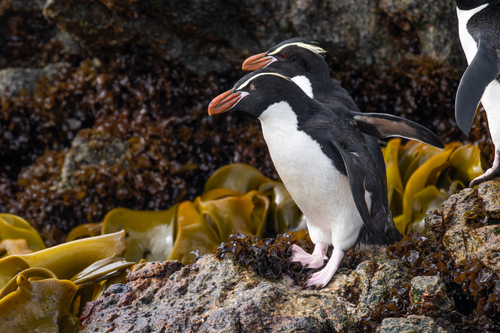
ハシブトペンギン (Eudyptes robustus) ハシブトペンギン

メディア

読み込み中…

要点

モズリーのイワトビペンギンとハシブトペンギンの最も信頼できるフィールドマークは、黄色い冠羽の長さと目立ち具合です。モズリーのイワトビペンギンは目の上に非常に長く、豪華な黄色のタッセルを持っていますが、ハシブトペンギンの冠羽は短く、くちばしの根元から始まります。近くで見ると、モズリーのイワトビペンギンの肉質の開口部の縁は大きく、よりカラフルですが、ハシブトペンギンはくちばしの根元に明確なピンクの皮膚の斑点を示します。どちらも印象的な黒と白のペンギンで黄色の冠羽を持っていますが、顔の皮膚、冠羽の形、微妙なサイズの違いが重要です。幼鳥や未成熟な羽毛については詳細に説明されていないため、大人の顔と冠羽の特徴に焦点を当てて区別します。

識別のコツ

  1. Crest length and shape: モズリーのイワトビペンギンは非常に長く、ふさふさした黄色の冠羽が頭の後ろまで伸びています。ハシブトペンギンの黄色の冠羽は短く、くちばしの根元から始まり、頭の後ろで終わります。これは大人の最も信頼できるフィールドマークです。
  2. Gape margin: くちばしの根元にある肉質の縁の大きさと色を見てください。モズリーのイワトビペンギンは大きく、よりカラフルな開口部の縁を示しますが、ハシブトペンギンはくちばしの根元に明確なピンクの皮膚の斑点があります。
  3. Superciliary stripe: 目の上の黄色い線はモズリーのイワトビペンギンではより目立ち、目の前方まで伸びていますが、ハシブトペンギンではあまり目立ちません。
  4. Bill structure and color: ハシブトペンギンのくちばしは厚く、赤褐色で、ピンクの根元がありますが、モズリーのイワトビペンギンのくちばしはそれほど頑丈ではなく、根元のピンクはあまり目立ちません。
  5. Facial skin: くちばしの根元にあるピンクの皮膚の斑点は、特に近距離でハシブトペンギンの良いマークです。
  6. Underwing pattern: これらの2種を区別するのには役立ちません。ハシブトペンギンは個体差を示し、モズリーのイワトビペンギンには診断パターンが記載されていません。
  7. Juvenile/immature plumage: どちらの種についても年齢特有の翼や飛行パターンは記載されていないため、これらに頼って区別しないでください。
  8. Behavior at colony: 両種は似たような直立した翼を羽ばたく行動を示しますが、ハシブトペンギンのオスは求愛時に胸を張るディスプレイが注目されています。モズリーのイワトビペンギンは異なる頭の装飾ディスプレイを使用しますが、これらは微妙で観察しにくいです。
  9. Geographic context: スナーレス諸島で見られた場合、それはハシブトペンギンです。南大西洋やインド洋の他の場所、特にトリスタンダクーニャやゴフ島では、モズリーのイワトビペンギンです。
  10. Size: 両方とも中型の冠羽のあるペンギンで、サイズはフィールドでの信頼できる区別にはなりません。
  11. Voice: 呼び声は、広範な経験なしにはフィールドでの区別に十分ではありません。
  12. Pitfalls: 両種は全体的に似たような色合い(黒い上面、白い下面、黄色の冠羽)を持っているため、距離がある場合や光が悪い場合に誤認識が容易です。冠羽の長さと顔の皮膚の詳細に焦点を当ててください。
  13. Season: 区別を助ける季節的な羽毛の違いは記載されていないため、両方とも年間を通じて冠羽を保持します。
  14. Sex: どちらの種についても羽毛や構造における性的二形性は記載されておらず、両方の性は似ています。
  15. Colony density: 両方とも密集したコロニーで繁殖するため、社会的文脈は区別には役立ちません。

大きさ

直接的なサイズ比較は利用可能なデータによって制限されています。ハシブトペンギンの平均体重は約323.5gと記録されていますが、これは誤りまたは外れ値である可能性が高く、典型的な成体のハシブトペンギンは2.5〜4kgの間で、長さは50〜70cmです。モズリーのイワトビペンギンは他のイワトビペンギンよりも大きいと記載されていますが、正確な体重や長さは示されていません。フィールドでは、サイズの違いは微妙で信頼できる区別にはなりません。両方とも中型の冠羽のあるペンギンで、見た目の体重や高さはかなり重なります。

羽色

どちらの種についても幼鳥や未成熟な翼のパターンに関する詳細な情報は利用できないため、区別は成鳥の羽毛に依存します。モズリーのイワトビペンギンは非常に長く、ふさふさした黄色の冠羽が頭の後ろまで伸びており、開口部には広く淡い肉質の縁があります。眉毛の線(目の上の黄色い線)も目の前でより大きく、目立ちます。ハシブトペンギンは、くちばしの根元から始まり目の上を走る明るい黄色の冠羽を持っていますが、短く、豪華さに欠け、頭の後ろで終わります。ハシブトペンギンのくちばしの根元にはピンクの皮膚の斑点があり、モズリーのイワトビペンギンではそれほど目立ちません。両種は黒い上面と白い下面を持っていますが、翼の下のパターンはハシブトペンギンで変動があり、識別には役立ちません。要約すると、黄色の冠羽の長さと形、開口部の縁の色とサイズ、くちばしの根元にあるピンクの皮膚の存在に焦点を当ててください。

行動

両種は密集したコロニーで繁殖し、似たような冠羽のあるペンギンの行動を示します:直立した姿勢、翼を羽ばたくディスプレイ、頭の動きや声を伴う複雑な求愛儀式。ハシブトペンギンのオスは翼を広げて直立し、胸を張ることでディスプレイしますが、モズリーのイワトビペンギンは求愛時に異なる歌や頭の装飾ディスプレイを使用します。これらの行動の違いは微妙で、繁殖ディスプレイを近くで目撃しない限り観察しにくいです。採餌やひなへの給餌戦略は大まかに似ており、両種とも季節ごとに食事を変えます。

生息環境

モズリーのイワトビペンギンは南大西洋とインド洋の島々で繁殖し、しばしば崖や内陸の斜面で見られます。ハシブトペンギンはニュージーランド南部のスナーレス諸島に限定され、森林や岩場の密集したコロニーで繁殖します。フィールドでは、場所が最良の手がかりとなることが多いです。ハシブトペンギンはスナーレス諸島でしか見られず、モズリーのイワトビペンギンはニュージーランドの水域には存在しません。野生では重複はほぼ不可能であるため、文脈と地理が強力な区別要因となります。

声

両種は特にコロニーで騒がしいですが、彼らの呼び声はフィールドでの区別のために詳細に記載されていません。ハシブトペンギンは、シューという音や爆発的な叫び声から、ブレーイングやトランペット音まで幅広い音を出しますが、経験なしには他の冠羽のあるペンギンとの区別は難しいです。モズリーのイワトビペンギンは求愛ディスプレイで異なる歌を使用しますが、具体的な情報はありません。声はこれらの2種を区別するための信頼できるフィールドマークではありません。

より良い説明を送る

比較と同じ項目を使ってください。文章はすぐに公開されます。

The most reliable field mark between Moseley's Rockhopper Penguin and Snares Penguin is the length and prominence of the yellow crest plumes: Moseley's Rockhopper has much longer, more extravagant yellow tassels above the eye, while Snares Penguin's crest is shorter and starts at the bill base. In close views, the fleshy gape margin is larger and more colorful in Moseley's Rockhopper, whereas Snares Penguin shows a distinct patch of pink skin at the bill base. Both are striking black-and-white penguins with yellow crests, but differences in facial skin, crest shape, and subtle size distinctions are key. Juvenile and immature plumages are not described in detail for either species, so focus on adult facial and crest features for separation.

  1. Crest length and shape: Moseley's Rockhopper Penguin has much longer, bushier yellow crest plumes extending well behind the head; Snares Penguin's yellow crest is shorter and starts at the bill base, ending at the back of the head. This is the most reliable field mark in adults.
  2. Gape margin: Look for the size and color of the fleshy margin at the base of the bill. Moseley's Rockhopper shows a larger, more colorful gape margin, while Snares Penguin has a distinct patch of pink skin at the bill base.
  3. Superciliary stripe: The yellow line above the eye is more prominent and extends further in front of the eye in Moseley's Rockhopper; in Snares Penguin, it is less pronounced.
  4. Bill structure and color: Snares Penguin's bill is thick and reddish-brown with a pink base, while Moseley's Rockhopper's bill is less robust and the pink at the base is less obvious.
  5. Facial skin: The pink skin patch at the base of the bill is a good mark for Snares Penguin, especially at close range.
  6. Underwing pattern: Not useful for separating these two species, as Snares Penguin shows individual variation and no diagnostic pattern is described for Moseley's Rockhopper.
  7. Juvenile/immature plumage: No distinctive age-specific wing or flight patterns are described for either species, so do not rely on these for separation.
  8. Behavior at colony: Both species display similar upright, wing-flapping behaviors, but Snares Penguin males are noted for chest-pumping displays during courtship. Moseley's Rockhopper uses different head ornament displays, but these are subtle and not easily observed.
  9. Geographic context: If seen on the Snares Islands, it is Snares Penguin; elsewhere in the southern Atlantic or Indian Oceans, especially on Tristan da Cunha or Gough Island, it is Moseley's Rockhopper.
  10. Size: Both are medium-sized crested penguins; size is not a reliable separator in the field.
  11. Voice: Calls are not distinctive enough for field separation without extensive experience.
  12. Pitfalls: Both species have similar overall coloration (black upperparts, white underparts, yellow crest), so misidentification is easy at a distance or in poor light. Focus on crest length and facial skin details.
  13. Season: No seasonal plumage differences are described that aid separation; both retain their crests year-round.
  14. Sex: No sexual dimorphism in plumage or structure is described for either species; both sexes look alike.
  15. Colony density: Both breed in dense colonies, so social context is not helpful for separation.

Direct size comparison is limited by available data. Snares Penguin has a documented average body mass of about 323.5 g [wikidata], but this is likely an error or an outlier, as typical adult Snares Penguins weigh between 2.5–4 kg and measure 50–70 cm in length [wikipedia]. Moseley's Rockhopper Penguin is described as larger than other rockhopper forms, but no precise mass or length is given. In the field, size difference is subtle and not a reliable separator; both are medium-sized crested penguins and overlap considerably in apparent bulk and height.

No detailed information is available on juvenile or immature wing patterns for either species, so separation relies on adult plumage. Moseley's Rockhopper Penguin shows very long, bushy yellow crest plumes that extend well past the back of the head, and a broad, pale fleshy margin at the gape. The superciliary stripe (the yellow line above the eye) is also larger and more prominent in front of the eye. Snares Penguin has a bright yellow crest that starts at the base of the bill and runs above the eye but is shorter and less extravagant, ending at the back of the head. The Snares Penguin's bill base is marked by a patch of pink skin, which is not as pronounced in Moseley's Rockhopper. Both species have black upperparts and white underparts, but the pattern under the wings is variable in Snares Penguin and not useful for identification. In summary, focus on the length and shape of the yellow crest, the color and size of the gape margin, and the presence of pink skin at the bill base.

Both species breed in dense colonies and show similar crested penguin behaviors: upright posture, wing-flapping displays, and elaborate courtship rituals involving head movements and vocalizations. Snares Penguin males display by standing erect with wings spread and pumping their chest, while Moseley's Rockhopper uses different songs and head ornament displays during courtship. These behavioral differences are subtle and not easily observed unless witnessing breeding displays up close. Foraging and chick-feeding strategies are broadly similar, with both species shifting diet seasonally.

Moseley's Rockhopper Penguin breeds on islands in the southern Atlantic and Indian Oceans, often on cliffs or inland slopes. Snares Penguin is restricted to the Snares Islands off southern New Zealand, breeding in dense colonies on forested or rocky terrain. In the field, the location is often the best clue: Snares Penguin is only found on the Snares Islands, while Moseley's Rockhopper is absent from New Zealand waters. Overlap is virtually impossible in the wild, so context and geography are strong separators.

Both species are noisy, especially at colonies, but their calls are not described in detail for field separation. Snares Penguin produces a wide range of sounds, from hisses and explosive cries to braying and trumpeting, but these are difficult to distinguish from other crested penguins without experience. Moseley's Rockhopper uses different songs in its mating displays, but no specifics are given. Vocalizations are not a reliable field mark for separating these two species.

変更を破棄しますか?

保存していない編集があります。今離れると失われます。

キタイワトビペンギン · ハシブトペンギン · 苦手な鳥