

Motmot

シロボシコサイチョウ 対 ミナミアカハシコサイチョウ

Tockus monteiri 対 Tockus rufirostris

シロボシコサイチョウとミナミアカハシコサイチョウのクイズ
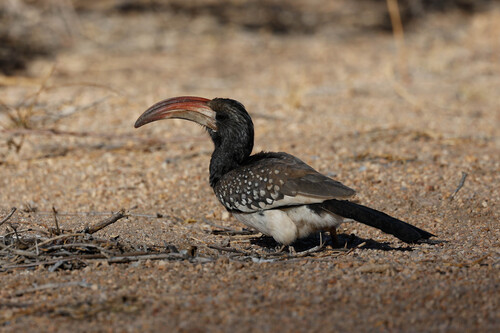
シロボシコサイチョウ (Tockus monteiri) シロボシコサイチョウ
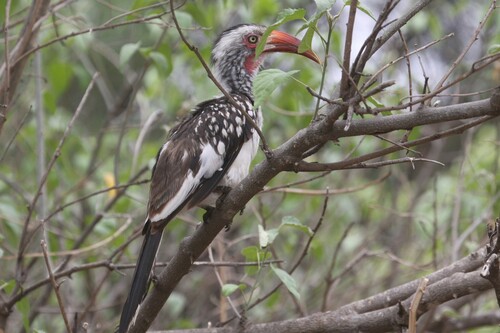
ミナミアカハシコサイチョウ (Tockus rufirostris) ミナミアカハシコサイチョウ

メディア

読み込み中…

要点

モンテイロコサイチョウとミナミアカハシコサイチョウを区別する最も信頼できるフィールドマークは、顔の皮膚の色と虹彩の組み合わせです:モンテイロの雌はターコイズ色の顔の皮膚を示しますが、ミナミアカハシコサイチョウは淡い眼窩の皮膚(ピンクから灰色)と黄色の虹彩を持っています。モンテイロはまた、明らかに大きくてがっしりしており、尾が長く、くちばしが重いです。両種は斑点のある翼と白い腹部を持っていますが、モンテイロは目を引くほど白い腹部と尾により広範囲な白を持っています。頭部と首の模様、ならびにくちばしの色の微妙な違いが、よく見たときのIDを確定するのに役立ちます。未熟な鳥と成鳥は、これらの顔の特徴と構造的特徴によって最もよく区別されますが、翼の模様は似ています。

識別のコツ

  1. Facial skin and iris color: 雌のモンテイロコサイチョウはターコイズ色の顔の皮膚を示しますが、ミナミアカハシコサイチョウは淡い(ピンクから灰色の)眼窩の皮膚と黄色の虹彩を持っています。これは、頭がよく見える場合に彼らを区別する最も迅速な方法です。雄のモンテイロはターコイズ色がないため、その場合は他のマークを使用してください。
  2. Eye color: モンテイロコサイチョウは黒い目を持っています;ミナミアカハシコサイチョウは黄色の虹彩を持っています。これは良い光と近くの視点で見ることができます。
  3. Bill structure and color: 両種は赤いくちばしを持っていますが、ミナミアカハシコサイチョウの下顎は変動的に黒っぽいです、特に雄では。モンテイロのくちばしはすべて赤く、特に雄では重いです。くちばしのサイズは、並べて見たり経験がある場合に良い手がかりです。
  4. Size and structure: モンテイロははるかに大きくてがっしりしており、尾が長く、体格が重いです。ミナミアカハシは全体的により細身で小さいです。混合群れの中や他のコサイチョウと一緒に見た場合、モンテイロはサイズと印象で際立ちます。
  5. Tail pattern: モンテイロは白い外尾羽を持ち、飛行中または扇状に広げたときに尾に強い白いエッジを与えます。ミナミアカハシの尾はそれほど白くはありませんが、両方ともいくらかの白を示します。
  6. Belly and underparts: モンテイロは目を引くほど白い腹部を持ち、黒い背中と対照的です。ミナミアカハシも白い腹部を持っていますが、首のストリーキングが多く、全体的にコントラストが少ないため、効果はあまり際立っていません。
  7. Neck and head streaking: ミナミアカハシコサイチョウは耳羽から首の側面にかけて豊富な黒っぽいストリーキングを示しますが、モンテイロにはそれがありません。これは微妙ですが、近距離で役立ちます。
  8. Wing spotting: 両種は翼に白い斑点と白い二次飛行羽を持っています。これは信頼できる区別にはなりません。
  9. Sexual dimorphism: 雌のモンテイロは小さく、ターコイズ色の顔の皮膚を示します。ミナミアカハシは、わずかに大きな雄と長いくちばしを除いて、あまり性的二形性を示しません。
  10. Habitat and range: 乾燥した岩の多い中央西ナミビアにいる場合、モンテイロがはるかに可能性が高いです。ブッシュヴェルド、サバンナ、またはナミビアの外では、ミナミアカハシが期待されます。重複は北ナミビアを除いて最小限です。
  11. Behavior: モンテイロは昆虫だけを食べ、めったに飲みませんが、ミナミアカハシはより一般的です。フィールドでの診断には通常役立ちません。
  12. Display: ミナミアカハシはディスプレイで翼を上げませんが、これは求愛を観察しない限り信頼できるフィールドマークではありません。
  13. Voice: ミナミアカハシの加速するkuk kuk kuk...の呼び声は役立つかもしれませんが、モンテイロの鳴き声はここでは説明されていません。
  14. Immature birds: どちらの種にも特徴的な未熟な翼や尾の模様は説明されていません;顔の皮膚、虹彩、構造を使用して区別してください。
  15. Pitfalls: 両種は赤いくちばしと斑点のある翼を持っているため、これらだけに頼らないでください。可能な限り、顔の皮膚、虹彩、全体のサイズ/構造を常に確認してください。

大きさ

モンテイロコサイチョウはTockus属の中で最大のメンバーで、長さ54〜58 cm、体重210〜400 gで、明らかにミナミアカハシコサイチョウよりも大きくて重いです。ミナミアカハシコサイチョウは全体的に小さく、雄は雌よりも大きいですが、モンテイロの体格や長さには及びません。フィールドでは、モンテイロは尾が長く、特に止まっているときや飛んでいるときに頑丈に見えます。

羽色

行動

モンテイロコサイチョウは完全に昆虫食性で、しばしば節足動物を探し、めったに飲む必要がなく、乾燥した環境への適応を反映しています。ミナミアカハシコサイチョウはより一般的な食性を持ち、そのディスプレイ行動は異なります:他の赤いくちばしのコサイチョウとは異なり、ディスプレイで翼を上げません。モンテイロは良い雨の後に繁殖のために局所的に移動しますが、ミナミアカハシコサイチョウはその範囲内でより定住しています。

生息環境

モンテイロコサイチョウはナミビアにほぼ特有で、特に南西部の乾燥した森林や乾燥した岩の多い地域を好みます。ミナミアカハシコサイチョウは南アフリカ全体のサバンナや乾燥したブッシュランドに生息していますが、最も乾燥した西ナミビアの森林ではダマラアカハシコサイチョウに置き換えられます。したがって、モンテイロは岩の多い乾燥した中央西ナミビアでより可能性が高く、ミナミアカハシはブッシュヴェルドやサバンナに広く分布していますが、一般的に最も乾燥した地域には存在しません。

声

ミナミアカハシコサイチョウは、kuk kuk kukの音を加速させてkuk-we kuk-weのクレッシェンドで終わる一連の音を出します。提供されたメモにはモンテイロコサイチョウの特徴的な鳴き声は説明されていないため、利用可能な情報に基づいて声は信頼できる区別にはなりません。

より良い説明を送る

比較と同じ項目を使ってください。文章はすぐに公開されます。

The most reliable field mark to separate Monteiro's Hornbill from Southern Red-billed Hornbill is the combination of facial skin color and iris: Monteiro's females show turquoise facial skin, while Southern Red-billed Hornbill has pale orbital skin (pink to greyish) and a yellow iris. Monteiro's is also notably larger and bulkier, with a longer tail and heavier bill. Both species have spotted wings and white underparts, but Monteiro's has a strikingly white belly and more extensive white in the tail. Subtle differences in head and neck pattern, as well as bill coloration, help clinch the ID when seen well. Immature and adult birds are best separated by these facial and structural features, as wing pattern is similar.

  1. Facial skin and iris color: Female Monteiro's Hornbill shows turquoise facial skin, while Southern Red-billed Hornbill has pale (pink to greyish) orbital skin and a yellow iris. This is often the quickest way to separate them if the head is seen well. Male Monteiro's lacks the turquoise, so use other marks in that case.
  2. Eye color: Monteiro's Hornbill has black eyes; Southern Red-billed Hornbill has yellow irises. This is visible in good light and close views.
  3. Bill structure and color: Both species have a red bill, but Southern Red-billed Hornbill's lower mandible is variably blackish, especially in males. Monteiro's bill is all red and heavier, especially in males. Bill size is a good clue when seen side-by-side or with experience.
  4. Size and structure: Monteiro's is much larger and bulkier, with a longer tail and heavier build. Southern Red-billed is more slender and smaller overall. In mixed flocks or when seen with other hornbills, Monteiro's stands out by size and jizz.
  5. Tail pattern: Monteiro's has white outer tail feathers, giving a strong white edge to the tail in flight or when fanned. Southern Red-billed's tail is less extensively white, though both show some white.
  6. Belly and underparts: Monteiro's has a strikingly white belly, contrasting with its black back. Southern Red-billed also has white underparts, but the effect is less bold due to more streaking on the neck and less contrast overall.
  7. Neck and head streaking: Southern Red-billed Hornbill shows ample blackish streaking from the ear coverts down the side of the neck, which Monteiro's lacks. This is subtle but useful at close range.
  8. Wing spotting: Both species have white spots on the wings and white secondary flight feathers. This is not a reliable separator.
  9. Sexual dimorphism: Female Monteiro's is smaller and shows turquoise facial skin. Southern Red-billed shows little sexual dimorphism except for slightly larger males and longer bills.
  10. Habitat and range: If in arid, rocky, central-western Namibia, Monteiro's is much more likely. In bushveld, savanna, or outside Namibia, Southern Red-billed is expected. Overlap is minimal except in northern Namibia.
  11. Behavior: Monteiro's feeds exclusively on insects and rarely drinks, while Southern Red-billed is more generalist. Not usually diagnostic in the field.
  12. Display: Southern Red-billed does not raise its wings in display, but this is not a reliable field mark unless observing courtship.
  13. Voice: Southern Red-billed's accelerating kuk kuk kuk... call may help, but Monteiro's vocalizations are not described here.
  14. Immature birds: No distinctive immature wing or tail pattern is described for either species; use facial skin, iris, and structure for separation.
  15. Pitfalls: Both species have red bills and spotted wings, so do not rely on these alone. Always check facial skin, iris, and overall size/structure when possible.

Monteiro's Hornbill is the largest member of the Tockus genus, measuring 54–58 cm in length and weighing 210–400 g, making it noticeably bigger and heavier than Southern Red-billed Hornbill. Southern Red-billed Hornbill is smaller overall, with males being larger than females but still not approaching the bulk or length of Monteiro's. In the field, Monteiro's appears longer-tailed and more robust, especially when perched or in flight.

  • Juveniles/Immatures: No distinctive age-specific upperwing pattern is described for either species; both show white spots on the wings and white secondary flight feathers from a young age.
  • Adults: Monteiro's Hornbill has a white belly, black back, white-spotted wings, and white secondary flight feathers. The outer tail feathers are white, giving a strong white tail edge in flight. Females have turquoise facial skin, while both sexes have black eyes and a red bill. Southern Red-billed Hornbill also has spotted wing coverts and white underparts, but is best told by its yellow iris, pale orbital skin (pink to greyish), and blackish streaking from ear coverts down the side of the neck. Its bill is red, with the lower mandible variably blackish, and the throat is white. Both species have similar wing spotting, but Monteiro's shows a more solidly white belly and more extensive white in the tail.

Monteiro's Hornbill is exclusively insectivorous, often foraging for arthropods and rarely needing to drink, reflecting its adaptation to arid environments. Southern Red-billed Hornbill is more generalist in feeding, and its display behavior differs: it does not raise its wings in display, unlike some other red-billed hornbills. Monteiro's migrates locally to breed after good rains, while Southern Red-billed Hornbill is more sedentary within its range.

Monteiro's Hornbill is near-endemic to Namibia, favoring dry woodlands and arid rocky areas, especially in the southwest. Southern Red-billed Hornbill occupies savannas and drier bushlands across southern Africa, but is replaced by Damara Red-billed Hornbill in the most arid western Namibian woodlands. Thus, Monteiro's is more likely in rocky, arid, central-western Namibia, while Southern Red-billed is widespread in bushveld and savanna but generally absent from the driest zones.

Southern Red-billed Hornbill gives an accelerating series of kuk kuk kuk notes ending in a kuk-we kuk-we crescendo. No distinctive vocalization is described for Monteiro's Hornbill in the provided notes, so voice is not a reliable separator based on available information.

変更を破棄しますか?

保存していない編集があります。今離れると失われます。

シロボシコサイチョウ · ミナミアカハシコサイチョウ · 苦手な鳥