

Motmot

ヒメハイイロチュウヒ 対 アカトビ

Circus pygargus 対 Milvus milvus

ヒメハイイロチュウヒとアカトビのクイズ
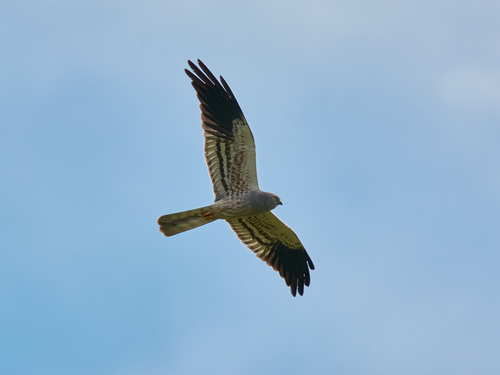
ヒメハイイロチュウヒ (Circus pygargus) ヒメハイイロチュウヒ
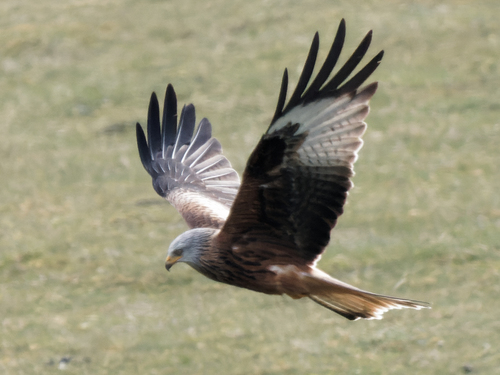
アカトビ (Milvus milvus) アカトビ

メディア

読み込み中…

要点

モンタギューのハイイロチュウヒとアカトビを区別する最も信頼できるフィールドマークは尾です:モンタギューのハイイロチュウヒ(すべての年齢)は長く、直線的な尾を持ち、アカトビは特に成鳥で明らかな深く分かれた尾を示します。幼鳥のアカトビは尾があまり分かれていませんが、それでもハイイロチュウヒよりは多くの切れ込みがあります。飛行中、モンタギューのハイイロチュウヒは特にスリムで、長く狭い尖った翼と、浮遊感のある弾力的な飛行スタイルを持ち、アカトビの幅広い指状の翼や緩慢な滑空と比較されます。羽毛の違いも強いです:アカトビの成鳥と幼鳥は赤褐色で、淡い頭と一次羽に対比する白い斑点がありますが、モンタギューのハイイロチュウヒの雌と幼鳥は上面が茶色がかり、下面が淡く、赤褐色のトーンや白い翼のパネルがありません。サイズは大きな手がかりです:アカトビはモンタギューのハイイロチュウヒよりもはるかに大きく、重いです。

識別のコツ

  1. 尾の形は最も信頼できるマークです: アカトビ(すべての年齢)は長く、深く分かれた尾を持ち(幼鳥ではあまり分かれていませんが、まだ四角ではありません)、モンタギューのハイイロチュウヒはわずかな切れ込みのある長く直線的な尾を持っています。これは飛行中や止まっているときに明らかです。
  2. 翼の形と飛行スタイル: モンタギューのハイイロチュウヒは長く狭い尖った翼を持ち、飛行中は非常にスリムで浮遊感のある外観を持ち、弾力のある、アジサシのような翼の打撃をします。アカトビの翼は広く、長い「指」(一次羽の先端)を持ち、緩慢で安定した滑空をし、しばしば尾をひねります。
  3. 幼鳥の上面模様: 幼鳥のアカトビは上面と下面の両方の大覆羽に淡い線を示し、切れ込みのある尾には暗い亜終端帯があります。幼鳥のモンタギューのハイイロチュウヒはこれらの淡い線がなく、均一に赤褐色の下面の覆羽を持っています。
  4. 成鳥の羽毛: 成鳥のアカトビは全体的に赤褐色で、淡い頭、黒い胸の筋、白い一次羽のパネル、深く分かれた尾を持っています。成鳥のモンタギューのハイイロチュウヒのオスは淡い灰色で、黒い翼の先端と黒い二次羽の帯を持ち、雌は上面が茶色、下面が淡い黄褐色で筋や斑点があり、両方とも白い尾羽を持っています。
  5. 幼鳥の羽毛: 幼鳥のモンタギューのハイイロチュウヒは均一に赤褐色の下面を持ち、斑点や赤褐色のトーンがなく、淡い翼の線や白い一次羽のパネルもありません。幼鳥のアカトビはより淡く、淡褐色の胸と腹を持ち、常にいくらかの赤褐色と淡い頭を示します。
  6. 赤褐色のトーン: アカトビ(すべての年齢)のみが上面と下面で赤褐色です;モンタギューのハイイロチュウヒは決して赤褐色ではなく、上面は灰色または茶色で、下面は淡いです。
  7. 白い翼のパネル: アカトビ(特に成鳥)は一次羽に明らかな白い斑点を示し、黒い翼の先端と暗い二次羽と対比します。モンタギューのハイイロチュウヒはこのパターンを決して示しません。
  8. 白い尾羽: モンタギューのハイイロチュウヒ(すべての年齢)は白い上尾羽(「尾羽」)を持ち、飛行中に見えます。アカトビは白い尾羽を持ちません。
  9. 頭の色: アカトビ(すべての年齢)は淡い、しばしば銀色の頭を持ち、特に成鳥で顕著です。モンタギューのハイイロチュウヒは茶色または灰色の頭を持ち、決して淡いまたは銀色ではありません。
  10. サイズ: アカトビはモンタギューのハイイロチュウヒよりもはるかに大きく、重いです。一緒に見られたり、他の猛禽類と一緒に見られたりすると、アカトビはより大きく、長い翼を持っているように見えます。
  11. 止まっている姿勢: 止まっているアカトビは大きく、長い尾を持ち、しばしば丸まって座ります。モンタギューのハイイロチュウヒはスリムで、直立しており、より繊細です。
  12. 飛行行動: モンタギューのハイイロチュウヒは浮遊感のある弾力的な翼の打撃で低く狩りをし、アカトビは高く滑空し、ハイイロチュウヒのように低くフィールドを四分することはほとんどありません。
  13. 生息地: モンタギューのハイイロチュウヒはオープンカントリーの鳥であり、アカトビは混合農地や森林を好み、しばしば村の近くにいます。
  14. メラニスティックな形態: メラニスティックなモンタギューのハイイロチュウヒは非常に暗いですが、アカトビの赤褐色と白のパターンは欠けています。アカトビは白い鳥(白化症)を示すことはまれですが、これらは非常に珍しいです。
  15. 声: アカトビは細いピーピー音を出しますが、声はフィールドでのモンタギューのハイイロチュウヒとの区別にはあまり役立ちません。

大きさ

アカトビはモンタギューのハイイロチュウヒよりもはるかに大きく、重いです。アカトビは長さ60〜70 cm、翼幅175〜195 cm、体重800〜1300 g(平均1122 g)で、モンタギューのハイイロチュウヒは長さ43〜47 cm、翼幅97〜115 cm、体重265〜345 g(平均315.5 g)です。アカトビの尾だけでもハイイロチュウヒの全体の体長にほぼ匹敵します。フィールドでは、このサイズの違いは際立っており、アカトビははるかに大きく、長い翼を持っているように見え、モンタギューのハイイロチュウヒはスリムで繊細です。

羽色

幼鳥と未成熟のアカトビは、全体的な赤褐色の色合い、淡い頭、および上面と下面の両方の大覆羽の淡い先端によって形成された長く狭い淡い線によってモンタギューのハイイロチュウヒから区別できます。幼鳥のアカトビは、暗い亜終端帯と淡い胸と腹を持つあまり深く分かれた尾も示しますが、それでも幼鳥のモンタギューのハイイロチュウヒよりも暖かく、より模様があるように見えます。成鳥のアカトビはさらに赤褐色で、黒い胸の筋、白い一次羽のパネル、深く分かれた尾を持っています。成鳥のモンタギューのハイイロチュウヒのオスは淡い灰色で、黒い翼の先端と黒い二次羽の帯を持ち、雌は上面が茶色、下面が淡い黄褐色で筋や斑点があり、両性とも白い尾羽を示します。モンタギューのハイイロチュウヒはアカトビの赤褐色のトーンや白い一次羽のパネルを決して示しません。雌/幼鳥のウスハイイロチュウヒの淡い襟はモンタギューのハイイロチュウヒにはありません。メラニスティックなモンタギューのハイイロチュウヒは非常に暗いですが、アカトビの赤褐色と白のパターンは依然として欠けています。

行動

モンタギューのハイイロチュウヒは、オープンカントリーで低く、浮遊感のある弾力的な翼の打撃で狩りをし、しばしば翼を顕著な二等辺三角形に保ち、アジサシのような優雅さで滑空します。アカトビは長く角度のある翼で滑空し、しばしば深く分かれた尾をひねって操縦し、高く旋回したり、最小限の翼の打撃で滑空するのがより一般的です。止まっているとき、アカトビは大きく長い尾を持っているように見え、モンタギューのハイイロチュウヒはより細く直立しています。モンタギューのハイイロチュウヒは長距離の渡り鳥ですが、アカトビは主に定住しているか、地域的にのみ渡りを行います。

生息環境

モンタギューのハイイロチュウヒは、ユーラシアの草原や農地などの広いオープンエリアで繁殖し、アフリカやアジアの一部で冬を越します。アカトビはヨーロッパに限定され、オープンな森林、農地、混合した田舎を好み、人間の居住地の近くにしばしば見られます。両者はオープンカントリーで見られることがありますが、アカトビは森林や混合した風景にいる可能性が高く、モンタギューのハイイロチュウヒは厳密にオープンで無木の生息地の鳥です。

声

アカトビは細いピーピー音を出しますが、声はモンタギューのハイイロチュウヒとのフィールドでの区別には信頼できません。モンタギューのハイイロチュウヒは一般的に静かで、弱い呼び声しか出しません。

より良い説明を送る

比較と同じ項目を使ってください。文章はすぐに公開されます。

The most reliable field mark to separate Montagu's Harrier from Red Kite is the tail: Montagu's Harrier (all ages) has a long, straight-edged tail, while Red Kite shows a deeply forked tail, especially obvious in adults. Juvenile Red Kites have a less forked tail, but still more notched than the harrier. In flight, Montagu's Harrier is notably slimmer, with long, narrow, pointed wings, and a buoyant, elastic flight style, compared to the broader, fingered wings and languid soaring of the Red Kite. Plumage differences are also strong: Red Kite adults and juveniles are rufous with pale head and contrasting white patches in the primaries, while Montagu's Harrier females and juveniles are brownish above and paler below, lacking rufous tones and white wing panels. Size is a major clue: Red Kite is much larger and heavier than Montagu's Harrier.

  1. Tail shape is the most reliable mark: Red Kite (all ages) has a long, deeply forked tail (less forked in juveniles, but still not square), while Montagu's Harrier has a long, straight-edged tail with only a slight notch. This is obvious in flight and when perched.
  2. Wing shape and flight style: Montagu's Harrier has long, narrow, pointed wings and a very slim, buoyant appearance in flight, with elastic, tern-like wingbeats. Red Kite's wings are broad, with long 'fingers' (primary tips), and it soars with languid, steady glides, often twisting its tail.
  3. Upperwing pattern in juveniles: Juvenile Red Kite shows a pale line across the greater coverts on both upper- and underwing, and a dark subterminal band on a notched tail. Juvenile Montagu's Harrier lacks these pale lines and has uniformly red-brown underwing coverts.
  4. Adult plumage: Adult Red Kite is rufous overall, with a pale head, black breast streaks, white primary panels, and a deeply forked tail. Adult Montagu's Harrier male is pale grey with black wingtips and black secondary bands; female is brown above, pale yellow-brown below with streaks and spots, and both have a white rump.
  5. Juvenile plumage: Juvenile Montagu's Harrier is uniformly red-brown below, lacking spots or rufous tones, and has no pale wing lines or white primary panels. Juvenile Red Kite is paler, with a buff breast and belly, and always shows some rufous and a pale head.
  6. Rufous tones: Only Red Kite (all ages) is rufous above and below; Montagu's Harrier is never rufous, being grey or brown above and pale below.
  7. White wing panels: Red Kite (especially adult) shows obvious white patches in the primaries, contrasting with black wingtips and dark secondaries. Montagu's Harrier never shows this pattern.
  8. White rump: Montagu's Harrier (all ages) has a white upper tail coverts ('rump'), visible in flight. Red Kite lacks a white rump.
  9. Head color: Red Kite (all ages) has a pale, often silvery head, especially in adults. Montagu's Harrier has a brown or grey head, never pale or silvery.
  10. Size: Red Kite is much larger and heavier than Montagu's Harrier. If seen together or with other raptors, Red Kite will appear bulkier and longer-winged.
  11. Perched jizz: Perched Red Kite is large, long-tailed, and often sits hunched. Montagu's Harrier is slimmer, upright, and more delicate.
  12. Flight behavior: Montagu's Harrier hunts low over fields with buoyant, elastic wingbeats; Red Kite soars high, rarely quarters low over fields like a harrier.
  13. Habitat: Montagu's Harrier is strictly a bird of open country; Red Kite prefers mixed farmland and woodland, often near villages.
  14. Melanistic forms: Melanistic Montagu's Harrier is very dark, but still lacks the rufous and white pattern of Red Kite. Red Kite rarely shows leucism (white birds), but these are extremely rare.
  15. Voice: Red Kite gives a thin piping call, but vocalizations are rarely helpful for separation in the field.

Red Kite is substantially larger and heavier than Montagu's Harrier. Red Kite measures 60–70 cm in length with a 175–195 cm wingspan and weighs 800–1300 g (average 1122 g), while Montagu's Harrier is 43–47 cm long with a 97–115 cm wingspan and weighs 265–345 g (average 315.5 g). The Red Kite's tail alone is nearly as long as the harrier's entire body. In the field, this size difference is striking: Red Kite appears much bulkier and longer-winged, while Montagu's Harrier is slim and delicate.

Juvenile and immature Red Kites can be separated from Montagu's Harrier by their overall rufous coloration, pale head, and a long, narrow pale line formed by pale tips to all greater coverts on both upper- and underwing. Juvenile Red Kites also show a less deeply forked tail with a dark subterminal band and pale breast and belly, but still appear warmer and more patterned than juvenile Montagu's Harrier, which is uniformly red-brown below and lacks spots or rufous tones. Adult Red Kites are even more rufous, with black breast streaks, white primary panels, and a deeply forked tail. Adult Montagu's Harrier males are pale grey with black wingtips and black secondary bands, while females are brown above, pale yellow-brown below with streaks and spots, and both sexes show a white rump. Montagu's Harrier never shows the rufous tones or white primary panels of Red Kite. The pale collar of female/juvenile Pallid Harrier (not Red Kite) is absent in Montagu's. Melanistic Montagu's Harriers are very dark, but still lack the rufous and white pattern of Red Kite.

Montagu's Harrier hunts with low, buoyant, elastic wingbeats over open country, often holding its wings in a marked dihedral and gliding with a tern-like elegance. Red Kite soars on long, angled wings, often twisting its deeply forked tail to steer, and is more likely to be seen circling high or gliding with minimal wingbeats. Perched, Red Kite appears large and long-tailed, while Montagu's Harrier is more slender and upright. Montagu's Harrier is a long-distance migrant, while Red Kite is mostly resident or only locally migratory.

Montagu's Harrier breeds in large open areas such as grasslands and agricultural fields across the Palearctic, and winters in Africa and parts of Asia. Red Kite is restricted to Europe, favoring open woodland, farmland, and mixed countryside, often near human habitation. While both can be seen over open country, Red Kite is more likely in wooded or mixed landscapes, and Montagu's Harrier is strictly a bird of open, treeless habitats.

Red Kite gives a thin piping call, less mewling than a buzzard, but vocalizations are not a reliable field separation from Montagu's Harrier, which is generally silent or gives only weak calls.

変更を破棄しますか?

保存していない編集があります。今離れると失われます。

ヒメハイイロチュウヒ · アカトビ · 苦手な鳥