

Motmot

アコウザンムシクイ 対 ニシアコウザンムシクイ

Curruca subalpina 対 Curruca iberiae

アコウザンムシクイとニシアコウザンムシクイのクイズ
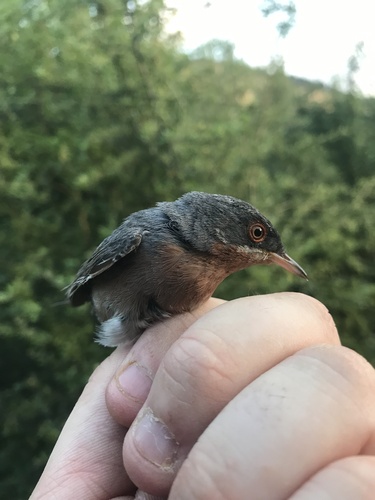
アコウザンムシクイ (Curruca subalpina) アコウザンムシクイ
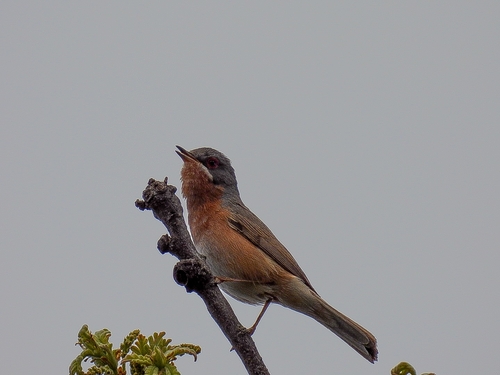
ニシアコウザンムシクイ (Curruca iberiae) ニシアコウザンムシクイ

メディア

読み込み中…

要点

モルトニのウグイスとニシアコウザンウグイスを区別する最も信頼できるフィールドマークは、成鳥オスの腹部の色です:モルトニはサーモンピンクの洗い色を示し、ニシアコウザンウグイスのオスは明確にオレンジまたはレンガ色の腹部を持っています。両種の雌と幼鳥は非常に似ており、羽毛だけではほとんど区別できないため、これらの年齢での識別は音声の手がかりなしでは困難です。音声は重要な区別要因です:モルトニはニシアコウザンの速く、ガラガラした、しかし低音の歌に比べて、より速く、高音で昆虫のような歌を持っています。分布も役立つことがあります。モルトニはイタリアと近隣の島々に限定されているのに対し、ニシアコウザンウグイスはヨーロッパ本土の最南端と北西アフリカに生息しています。これら二種の間で診断的な構造的違いは文書化されていません。

識別のコツ

  1. 成鳥オスの腹部の色:春と夏には、腹部の色を確認してください。サーモンピンク(モルトニ)対オレンジ/レンガ色(ニシアコウザン)。これは成鳥オスにとって最も信頼できる視覚的マークです。
  2. 白いマラーストリーク(「口ひげ」):両種の成鳥オスはこの特徴を示すため、区別には診断的ではありません。
  3. 背中と頭の色:両者は成鳥オスで灰色の背中と頭を持っています;これを区別に使用しないでください。
  4. 雌と幼鳥:これらは両種でほぼ同一です—上面は茶色がかり、頭は灰色、下面は白っぽく、時にはピンクのフラッシュがあります。これらの年齢での区別には羽毛に頼らないでください。
  5. 上翼/飛行パターン:いかなる年齢においても翼のパターンや飛行マークに知られている違いはありません;この特徴を使用しないでください。
  6. 歌:速く、高音で昆虫のような歌を聞いた場合、モルトニを疑ってください。歌が速く、ガラガラしていて、コノドジロムシクイを思わせるものであれば、ニシアコウザンを疑ってください。これは特に雌と幼鳥にとって重要です。
  7. 呼び声:乾いた「トリルゼール」はモルトニの歌に含まれていますが、両種は似たような乾いた呼び声を出すことがあります;注意して使用してください。
  8. 分布:イタリアまたはティレニア海の島々にいる場合、モルトニの可能性が高いです。ヨーロッパ本土の最南端または北西アフリカでは、ニシアコウザンが期待されます。常に漂流や重複を考慮してください。
  9. 生息地:両種は類似の地中海の低木や茂みの生息地を利用します;生息地だけでは診断的ではありません。
  10. 季節:移動中、両種はコアの繁殖範囲外に出現することがあり、特に未熟な個体の間で混乱のリスクが高まります。
  11. 構造的特徴:くちばしの形、尾の長さ、または主翼の突出に関する文書化された違いはありません;構造を区別に使用しないでください。
  12. 混合群れ:いずれかの種のコア範囲外で「アコウザンウグイス」の群れに出会った場合、歌または成鳥オスの腹部の色に頼って識別してください。
  13. 換羽と摩耗:換羽のタイミングや摩耗した羽毛に関する情報は、区別を助ける違いを示唆していません。
  14. 落とし穴:雌や幼鳥を羽毛だけで区別しようとしないでください;歌や分布の文脈なしでは誤認識の可能性が高いです。
  15. 写真:写真識別のために、腹部の色が照明によって歪められていないことを確認してください—サーモンピンクは強い光の中でオレンジに見えることがあり、その逆もあります。

大きさ

両種はCurruca属の小型ウグイスであり、利用可能な情報源はモルトニとニシアコウザンウグイスの間に意味のあるサイズや質量の違いを示していません。フィールドでは、彼らの比率と全体的なサイズは本質的に同一であり、区別には役立ちません。

羽色

行動

これら二種をフィールドで信頼できるように区別する行動の違いは文書化されていません。両者は典型的な小型ウグイスであり、低い低木や茂みを活発に移動し、飛行スタイル、尾の動き、または採餌行動において知られている違いを示しません。

生息環境

モルトニのウグイスはイタリアとティレニア海の島々に限定されているのに対し、ニシアコウザンウグイスはヨーロッパ本土の最南端と北西アフリカに見られます。両種は類似の生息地を占有します:低木、低い茂み、地中海型の植生。重複する地域では、生息地は信頼できる区別要因ではありませんが、分布はしばしば役立ちます。

声

音声は主なフィールドの区別要因です。モルトニのウグイスはニシアコウザンウグイスよりも速いペースで高音の歌を持ち、昆虫のような音の急速な連続として説明され、しばしば乾いた「トリルゼール」の呼び声を含みます。ニシアコウザンウグイスの歌は速くてガラガラしていますが、低音でコノドジロムシクイにより似ています。呼び声と歌は、外見がほぼ同一の雌と幼鳥を区別するために最も効果的です。

より良い説明を送る

比較と同じ項目を使ってください。文章はすぐに公開されます。

The most reliable field mark to separate Moltoni's Warbler from Western Subalpine Warbler is the color of the adult male's underparts: Moltoni's shows a salmon-pink wash, while Western Subalpine Warbler males have distinctly orange or brick-red underparts. Females and juveniles of both species are extremely similar and nearly indistinguishable by plumage alone, making identification in these ages challenging without vocal cues. Vocalizations are a key separator: Moltoni's has a faster, higher-pitched, insect-like song compared to the Western's fast, rattling, but lower-pitched song. Range can also help, as Moltoni's is restricted to Italy and nearby islands, while Western Subalpine Warbler occurs in southernmost mainland Europe and northwest Africa. Structural differences are not documented as diagnostic between these two.

  1. Adult male underparts color: In spring and summer, check the color of the underparts. Salmon-pink (Moltoni's) vs. orange/brick-red (Western Subalpine). This is the single most reliable visual mark for adult males.
  2. White malar streaks ('moustaches'): Both species' adult males show this feature, so it is not diagnostic for separation.
  3. Back and head color: Both have grey backs and heads in adult males; do not use this for separation.
  4. Females and juveniles: These are nearly identical in both species—brownish above, greyer head, whitish below with possible pink flush. Do not rely on plumage for separation in these ages.
  5. Upperwing/flight pattern: No known differences in wing pattern or flight marks for any age; do not use this feature.
  6. Song: If you hear a fast, high-pitched, insect-like song with a dry 'trill zerr', suspect Moltoni's. If the song is fast, rattling, and more reminiscent of Lesser Whitethroat, suspect Western Subalpine. This is especially important for females and juveniles.
  7. Call notes: The dry 'trill zerr' is included in Moltoni's song, but both species may give similar dry calls; use with caution.
  8. Range: If you are in Italy or the Tyrrhenian islands, Moltoni's is likely. In southernmost mainland Europe or northwest Africa, Western Subalpine is expected. Always consider vagrancy and overlap.
  9. Habitat: Both species use similar Mediterranean scrub and bushy habitats; habitat alone is not diagnostic.
  10. Season: During migration, both species may occur outside their core breeding ranges, increasing the risk of confusion, especially among immatures.
  11. Structural features: No documented differences in bill shape, tail length, or primary projection; do not use structure for separation.
  12. Mixed flocks: If you encounter a group of 'subalpine warblers' outside the core range of either species, rely on song or adult male underparts color for identification.
  13. Moult and wear: No information suggests differences in moult timing or worn plumage that would aid separation.
  14. Pitfalls: Do not attempt to separate females or juveniles by plumage alone; misidentification is likely without song or range context.
  15. Photographs: For photo ID, ensure underpart color is not distorted by lighting—salmon-pink can appear orange in strong light, and vice versa.

Both species are small warblers of the genus Curruca, and the available sources do not indicate any meaningful difference in size or mass between Moltoni's and Western Subalpine Warbler. In the field, their proportions and overall size are essentially identical and not useful for separation.

  • Adult males: The key difference is underpart color. Moltoni's Warbler males have salmon-pink underparts, while Western Subalpine Warbler males show orange to brick-red underparts. Both have grey backs and heads, and white malar streaks ('moustaches').
  • Females and juveniles: Both are brownish above with a greyer head and whitish below, sometimes with a pink flush. No reliable plumage differences are described for these ages; they are essentially indistinguishable in the field by plumage alone.
  • Upperwing/flight pattern: No distinctive juvenile or immature wing pattern differences are documented between these two species; both lack unique upperwing marks that would allow separation in flight at younger ages.

No behavioral differences are documented that would reliably separate these two species in the field. Both are typical small warblers, moving actively through low shrubs and bushes, and do not show any known differences in flight style, tail movement, or feeding behavior.

Moltoni's Warbler is restricted to Italy and the islands of the Tyrrhenian Sea, while Western Subalpine Warbler is found in southernmost mainland Europe and northwest Africa. Both species occupy similar habitats: scrub, low bushes, and Mediterranean-type vegetation. In overlapping regions, habitat is not a reliable separator, but range is often helpful.

Vocalizations are a primary field separator. Moltoni's Warbler has a song that is faster-paced and higher-pitched than Western Subalpine Warbler, described as a rapid succession of insect-like notes, often including a dry 'trill zerr' call. Western Subalpine Warbler's song is fast and rattling, but lower-pitched and more similar to Lesser Whitethroat. Calls and songs are best used to separate females and juveniles, which are otherwise nearly identical in appearance.

変更を破棄しますか?

保存していない編集があります。今離れると失われます。

アコウザンムシクイ · ニシアコウザンムシクイ · 苦手な鳥