

Motmot

コチョウゲンボウ 対 ソウゲンハヤブサ

Falco columbarius 対 Falco mexicanus

コチョウゲンボウとソウゲンハヤブサのクイズ
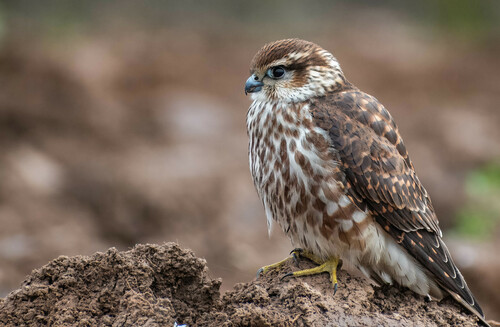
コチョウゲンボウ (Falco columbarius) コチョウゲンボウ
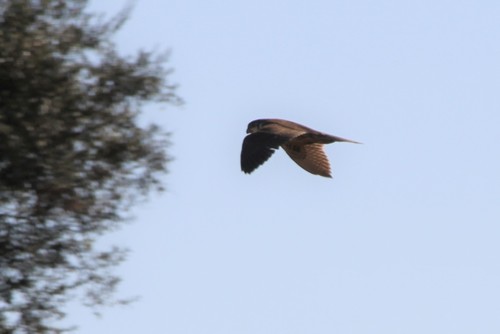
ソウゲンハヤブサ (Falco mexicanus) ソウゲンハヤブサ

メディア

読み込み中…

要点

コチョウゲンボウとソウゲンハヤブサを区別する最も信頼できるフィールドマークは、飛行中のアンダーウィングパターンです:すべての年齢のソウゲンハヤブサは、目立つ暗褐色の「脇の下」(腋窩部とアンダーウィングカバー)があり、淡いアンダーウィングの残り部分と強いコントラストを形成しますが、コチョウゲンボウのアンダーウィングはこの暗い斑点がなく均一な色合いです。幼鳥のソウゲンハヤブサは遠くからコチョウゲンボウと混同されることがありますが、ソウゲンハヤブサの大きなサイズ、長い翼、特徴的なアンダーウィングの「ストラット」が診断的です。コチョウゲンボウはコンパクトで、しっかりとした小型のハヤブサで、比較的短い尾と翼を持ち、一方でソウゲンハヤブサははるかに大きく、細長い、長い翼と長い尾の外観を持っています。羽毛の違いは静止時には微妙ですが、構造的および飛行マークは決定的です。

識別のコツ

  1. Underwing pattern in flight (all ages): ソウゲンハヤブサは、体からアンダーウィングに沿って強い暗いバーを形成する目立つ暗褐色の腋窩部とアンダーウィングカバーを示します。コチョウゲンボウはこれを決して示さず、そのアンダーウィングは均一なパターンです。これは、特に距離がある場合や光が悪い場合に最も信頼できるフィールドマークです。
  2. Size and structure: ソウゲンハヤブサははるかに大きく、長い尾と長く尖った翼を持ち、細長く、ほぼ痩せた外観を与えます。コチョウゲンボウはコンパクトで、短い翼と尾を持ち、より筋肉質でバレルチェストに見えます。
  3. Flight style: コチョウゲンボウは、迅速で力強い翼の打撃と直接的で目的のある動きで飛び、しばしば地面に近いところを飛びます。ソウゲンハヤブサは、より多くの滑空や浮遊をする傾向があり、遅く、深い翼の打撃とより浮遊感のある開けた国の飛行を持っています。
  4. Upperparts color (adult males): コチョウゲンボウのオスは上面が青灰色で、ソウゲンハヤブサでは決して見られず、常に灰褐色(「砂色」)です。
  5. Upperparts color (females/immatures): 両者は褐色がかることがありますが、コチョウゲンボウはより暗く均一で、ソウゲンハヤブサはより淡く温かみのある褐色で、特に背中や肩により多くのバリングがあります。
  6. Tail pattern: コチョウゲンボウは3〜4本の太く黒っぽい尾帯と、狭い白い端帯を持ち、飛行中および静止時に見えます。ソウゲンハヤブサの尾はあまり明確にマークされておらず、コチョウゲンボウの鮮明な白い先端が欠けています。
  7. Head pattern: ソウゲンハヤブサは薄い暗いマラーストライプと白い眉(スーペリシリウム)を持ち、どちらもコチョウゲンボウのかすかな、しばしばほとんど見えない顔のマークよりも明確です。
  8. Underparts: コチョウゲンボウはバフからオレンジがかった下部を示し、重いストリーキングまたはスポッティングがあります;ソウゲンハヤブサは下部がより淡く、暗い斑点があり、成鳥では上胸部により垂直のストリーキングがあります。
  9. Leg and cere color (age-related): ソウゲンハヤブサの成鳥は脚とセレに黄色の皮膚を持ち、時にはオレンジまたは緑がかることがあります;幼鳥は灰色の皮膚を持ちますが、これは変動があり、常に信頼できるわけではありません。コチョウゲンボウは成鳥では常に黄色の足とセレを持ちます。
  10. Habitat context: ソウゲンハヤブサは乾燥した開けた西部の風景に見られ、コチョウゲンボウはより広範囲に分布し、都市、森林の端、開けた国に見られることができます、特に乾燥した西部の外側で。
  11. Perched jizz: コチョウゲンボウは直立して止まり、しばしば露出した枝やワイヤーの上でコンパクトで警戒しているように見えます。ソウゲンハヤブサは止まっているときにより大きく、長い尾を持ち、より細長く見えます。
  12. Feeding behavior: コチョウゲンボウはしばしば小さな鳥を迅速に直接追いかけて狩ります;ソウゲンハヤブサはより大きな獲物を捕らえることがあり、開けた地形で浮遊したり狩ったりしているのが見られる可能性が高いです。
  13. Juvenile confusion: 幼鳥のソウゲンハヤブサは上面がより均一に褐色で、強いバリングが欠けていることがありますが、それでも飛行中にアンダーウィングの「ストラット」を示します;コチョウゲンボウの幼鳥は上面がより暗く、アンダーウィングのコントラストが欠けています。
  14. Sexual dimorphism: 両種は雌が雄よりもはるかに大きいことを示しますが、雌のコチョウゲンボウでさえ雄のソウゲンハヤブサよりもはるかに小さいです。
  15. When marks fail: 遠くからまたは光が悪い場合、サイズと構造、さらにアンダーウィングパターンが最も信頼できるものであり、羽毛の詳細は二次的であり、特に幼鳥や摩耗した鳥では誤解を招く可能性があります。

大きさ

コチョウゲンボウは小型のハヤブサ(体重約187g)で、ソウゲンハヤブサよりも明らかに小さく、コンパクトです。ソウゲンハヤブサのオスは約2倍の長さ(37〜38 cm対コチョウゲンボウの24〜33 cm)で、はるかに重い(オスは500〜635g、雌は762〜970g)で、翼幅は最大1.1メートル(3.5フィート)で、コチョウゲンボウの50〜73 cmと比較されます。雌のコチョウゲンボウでさえ雄のソウゲンハヤブサに比べて小さく見えます。フィールドでは、ソウゲンハヤブサは長い翼を持ち、細長く見え、コチョウゲンボウは比較的ずんぐりしていて短い尾を持っています。

羽色

行動

コチョウゲンボウは頑丈で攻撃的な小型のハヤブサで、しばしば地面の低いところを迅速に直接飛ぶか、小さな鳥を追いかけるのが見られます。サイズに対してよりしっかりとした構造を持ち、飛行中に筋肉質で目的を持ったように見えることがあります。ソウゲンハヤブサは開けた乾燥した風景に適応しており、しばしば長く尖った翼で浮遊または滑空し、より浮遊感のある細長い飛行を持っています。より大きな獲物を狩ることがあり、コチョウゲンボウに比べて都市や森林の環境で見られる可能性は低いです。

生息環境

コチョウゲンボウは北ホラルクティック全体で繁殖し、都市部、草原、森林の端など、さまざまな開けた生息地で冬を越します。ソウゲンハヤブサは北アメリカの乾燥した開けた国に制限されており、草原、砂漠、峡谷に生息しています。もしあなたが西部の乾燥した開けた風景にいるなら、ソウゲンハヤブサの方がはるかに見られる可能性が高いです;コチョウゲンボウはより広範囲に分布し、特に乾燥した西部の外側で、より広い範囲の生息地に出現することがあります。

より良い説明を送る

比較と同じ項目を使ってください。文章はすぐに公開されます。

The most reliable field mark to separate Merlin from Prairie Falcon is the underwing pattern in flight: Prairie Falcon of all ages shows strikingly dark brown 'armpits' (axillars and underwing coverts), forming a bold contrast with the rest of the pale underwing, while Merlin's underwing is evenly colored without this dark patch. Juvenile Prairie Falcons can be confused with Merlins at a distance, but the Prairie Falcon's larger size, longer wings, and distinctive underwing 'struts' are diagnostic. Merlins are compact, heavily built small falcons with relatively short tails and wings, while Prairie Falcons are much larger, with a rangy, long-winged, long-tailed look. Plumage differences are subtle at rest, but structural and flight marks are decisive.

  1. Underwing pattern in flight (all ages): Prairie Falcon shows bold, dark brown axillars and underwing coverts ('armpits'), forming a strong dark bar from the body along the underwing. Merlin never shows this; its underwing is evenly patterned. This is the single most reliable field mark, especially at a distance or in poor light.
  2. Size and structure: Prairie Falcon is much larger, with a long tail and long, pointed wings, giving a rangy, almost lanky look. Merlin is compact, with shorter wings and tail, and appears more muscular and barrel-chested.
  3. Flight style: Merlin flies with rapid, powerful wingbeats and direct, purposeful movements, often low to the ground. Prairie Falcon tends to soar or glide more, with slower, deeper wingbeats and a more buoyant, open-country flight.
  4. Upperparts color (adult males): Merlin males are blue-gray above, never seen in Prairie Falcon, which is always gray-brown ('sandy').
  5. Upperparts color (females/immatures): Both can be brownish, but Merlin is darker and more uniform, while Prairie Falcon is paler and warmer brown, especially in adults with more barring on the back and shoulders.
  6. Tail pattern: Merlin has 3–4 bold, blackish tail bands and a black tip with a narrow white terminal band, visible in flight and at rest. Prairie Falcon's tail is less distinctly marked and lacks the crisp white tip.
  7. Head pattern: Prairie Falcon has a thin, dark malar stripe and a white eyebrow (supercilium), both more distinct than Merlin's faint, often barely visible, facial markings.
  8. Underparts: Merlin shows buff to orange-tinted underparts with heavy streaking or spotting; Prairie Falcon is paler below, with dark mottling and, in adults, more vertical streaking on the upper breast.
  9. Leg and cere color (age-related): Prairie Falcon adults have yellow skin on the legs and cere, sometimes tinged orange or green; juveniles have gray skin, but this is variable and not always reliable. Merlin always has yellow feet and cere in adults.
  10. Habitat context: Prairie Falcon is found in dry, open western landscapes; Merlin is more widespread and can be found in urban, forest edge, and open country, especially outside the arid west.
  11. Perched jizz: Merlin perches upright, often on exposed branches or wires, looking compact and alert. Prairie Falcon appears larger, longer-tailed, and more elongated when perched.
  12. Feeding behavior: Merlin often hunts small birds in fast, direct pursuit; Prairie Falcon may take larger prey and is more likely to be seen soaring or hunting over open terrain.
  13. Juvenile confusion: Juvenile Prairie Falcons are more uniformly brown above and may lack strong barring, but still show the underwing 'strut' in flight; Merlin juveniles are darker above and lack any underwing contrast.
  14. Sexual dimorphism: Both species show females much larger than males, but even a female Merlin is much smaller than a male Prairie Falcon.
  15. When marks fail: At great distance or in poor light, size and structure plus the underwing pattern are the most reliable; plumage details are secondary and can be misleading, especially in juveniles or worn birds.

Merlin is a small falcon (body mass ~187g), noticeably smaller and more compact than Prairie Falcon. Prairie Falcon males are about twice as long (37–38 cm vs. 24–33 cm for Merlin) and much heavier (500–635g for males, 762–970g for females), with a wingspan up to 1.1 meters (3.5 feet), compared to Merlin's 50–73 cm. Even a female Merlin is dwarfed by a male Prairie Falcon. In the field, Prairie Falcon appears long-winged and rangy, while Merlin is stocky and short-tailed by comparison.

  • Juvenile/immature birds in flight: Prairie Falcon of all ages (including juveniles) shows very dark brown axillars and underwing coverts, forming a 'strut' or bar along the underwing from the body outward. Merlin never shows this; its underwing is evenly patterned, lacking any dark 'armpit' patch.
  • Upperparts: Merlin adult males are blue-gray above; females and immatures are brownish-gray to dark brown. Prairie Falcon is always warm gray-brown ('sandy') above, never blue-gray. Juvenile Prairie Falcons are more uniformly brown above, while adults have more barred backs and shoulders.
  • Underparts: Merlin is buff to orange-tinted below with heavy streaking (males) or brown spotting (females/immatures). Prairie Falcon is pale with dark mottling below; adults show more vertical streaking on the upper breast, while juveniles are more uniform.
  • Head pattern: Prairie Falcon has a thin dark malar stripe and a white supercilium (eyebrow), both more distinct than Merlin's weak, often barely visible, facial markings.
  • Tail: Merlin's tail has 3–4 wide, blackish bands and a black tip with a narrow white terminal band. Prairie Falcon's tail pattern is less distinct and lacks the strong banding and white tip of Merlin.

Merlin is a robust, aggressive small falcon, often seen making rapid, direct flights low over the ground or in fast pursuits of small birds. It is more heavily built for its size and can appear muscular and purposeful in flight. Prairie Falcon is adapted to open, arid landscapes, often soaring or gliding with long, pointed wings and a more buoyant, rangy flight. It may hunt larger prey and is less likely to be seen in urban or forested settings compared to Merlin.

Merlin breeds across the northern Holarctic and winters in a wide range of open habitats, including urban areas, grasslands, and forest edges. Prairie Falcon is restricted to arid, open country of western North America—grasslands, deserts, and canyons. If you are in a dry, open landscape in the western US, Prairie Falcon is much more likely; Merlins are more widespread and can occur in a broader range of habitats, especially outside the arid west.

変更を破棄しますか?

保存していない編集があります。今離れると失われます。

コチョウゲンボウ · ソウゲンハヤブサ · 苦手な鳥