

Motmot

モーリシャスチョウゲンボウ 対 クロハヤブサ

Falco punctatus 対 Falco subniger

モーリシャスチョウゲンボウとクロハヤブサのクイズ
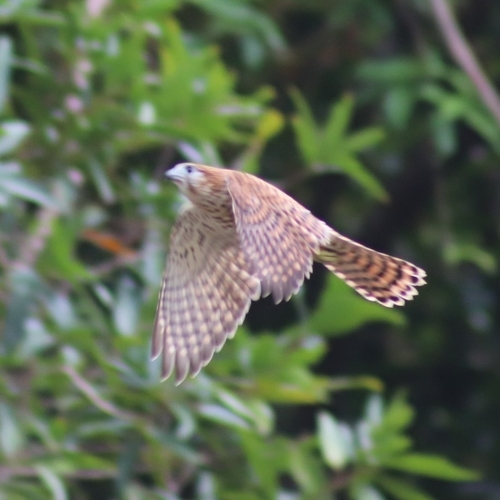
モーリシャスチョウゲンボウ (Falco punctatus) モーリシャスチョウゲンボウ
クロハヤブサ (Falco subniger) クロハヤブサ

メディア

読み込み中…

要点

モーリシャスチョウゲンボウとクロハヤブサを分ける最も信頼できる方法は、サイズと構造によるものです:クロハヤブサははるかに大きく、長く尖った翼と長い尾を持っていますが、モーリシャスチョウゲンボウは小さく、短く丸い翼を持っています。飛行中、クロハヤブサは流線型でスリムなシルエットとすすけた暗い色合いを示し、一方でモーリシャスチョウゲンボウはコンパクトで通常はより明るいです。幼鳥特有の翼の模様はどちらの種にも記載されていないため、全体的な形状と色に注目してください。生息地も強力な手がかりです:モーリシャスチョウゲンボウはモーリシャスの森林にある渓谷に限定されており、クロハヤブサはオーストラリアの開けた風景に見られます。

識別のコツ

  1. Size is the first check: クロハヤブサはモーリシャスチョウゲンボウよりもはるかに大きいです—ほぼ2倍の長さと4倍の重さです。もしその鳥がカラスサイズかそれ以上に見えるなら、それはモーリシャスチョウゲンボウではありません。
  2. Wing shape: クロハヤブサは先端に向かって細くなる長く尖った翼を持っています;モーリシャスチョウゲンボウの翼は短く丸いです。これは特に飛行中に明らかです。
  3. Tail length and shape: クロハヤブサの尾は長く(体長の約半分)、通常は折りたたまれており、扇状に広げたときに切れ込みのある角を持っています。モーリシャスチョウゲンボウの尾は短く、目立ちません。
  4. Overall coloration: クロハヤブサはすべての年齢で均一に暗褐色からすすけた黒で、時には淡い顎や翼の下の斑点が見られます。モーリシャスチョウゲンボウはより明るく、模様があり、決してすすけた黒ではありません。
  5. Underwing pattern: クロハヤブサは二色の翼の下(暗いカバーと、やや明るい飛行羽)を示しますが、はっきりした縞模様はありません。モーリシャスチョウゲンボウはこの二色効果がなく、一般的に下側はより明るいです。
  6. Facial markings: 成熟したクロハヤブサは目の下に暗いストライプを示すことがあります;モーリシャスチョウゲンボウにはこの特徴はありません。
  7. Legs and feet: クロハヤブサは淡い灰色または青灰色の嘴、目のリング、足を持っています;モーリシャスチョウゲンボウの裸の部分は診断的とは記載されていないため、他の特徴に注目してください。
  8. Perched posture: クロハヤブサの翼先は尾に届かず、足は短く見えます;モーリシャスチョウゲンボウはよりコンパクトで直立しているように見えます。
  9. Flight style: クロハヤブサはやや垂れ下がったまたは水平な翼で長時間滑空し、時には長い間飛び続けます;モーリシャスチョウゲンボウはよりフラッターして敏捷で、木々や崖の間を巧みに移動します。
  10. Habitat context: モーリシャスチョウゲンボウはモーリシャスの森林と渓谷にのみ見られ、クロハヤブサはオーストラリアの開けた生息地にのみいます。場所だけでしばしば識別が確定します。
  11. Juvenile confusion: どちらの種にも特有の幼鳥の翼のパネルや後縁は記載されていないため、幼鳥の識別にはサイズ、構造、全体的な色に依存してください。
  12. Sexual dimorphism: 両種とも雌は雄より大きいですが、種間のサイズ差は性差よりもはるかに大きいです。
  13. Confusion with other falcons: クロハヤブサはオーストラリアでチャイロハヤブサと混同されることがありますが、モーリシャスチョウゲンボウはモーリシャスの他の地元の種と間違われることは非常に少ないです。
  14. Voice: 分離のための診断的な鳴き声は記載されていないため、鳴き声に依存しないでください。
  15. Seasonal variation: どちらの種にも強い季節的な羽毛の違いは記載されていないため、年間を通じて構造的および生息地の手がかりを使用してください。

大きさ

クロハヤブサはモーリシャスチョウゲンボウよりも劇的に大きいです。成鳥のクロハヤブサは平均して720〜830g(雌はより重い)、長さは45〜56cm、翼幅は95〜115cmです。それに対して、モーリシャスチョウゲンボウははるかに小さく、平均約170g、長さは26〜30.5cm、翼幅は約45cmです。距離があっても、その違いは際立っています:クロハヤブサはモーリシャスチョウゲンボウのほぼ2倍の長さで、4倍の重さです。

羽色

羽毛の違いは成鳥で明確で、すべての年齢で一般的に信頼できます。モーリシャスチョウゲンボウはより明るく、模様のある外観を持ち、丸い翼を持っていますが、クロハヤブサは均一に暗褐色からすすけた黒で、幼鳥は成鳥よりもさらに暗いです。クロハヤブサの翼の下は二色で(飛行羽はカバーよりやや明るい)、成鳥は暗い眼下のストライプを示すことがあります。モーリシャスチョウゲンボウは固体の暗い色合いがなく、代わりにより明るく、まだらに見えます。どちらの種にも特有の幼鳥の翼の模様(パネルや後縁など)は報告されていないため、すべての年齢で全体的な色合いと翼の形に注目してください。

行動

クロハヤブサは通常、長く尖った翼と長い尾で滑空またはグライドし、リラックスしたカラスのような羽ばたきや長時間の滑空を行います。その飛行は力強く、協力して狩りをしたり、単独で狩りをしたりし、時には長距離にわたって獲物を追いかけることがあります。モーリシャスチョウゲンボウははるかに小さく、丸い翼を持っているため、よりフラッターして敏捷な飛行スタイルを持ち、森林の渓谷を巧みに移動するのがよく見られます。止まっているとき、クロハヤブサの翼先は尾の先に届かず、足は短く見えます;モーリシャスチョウゲンボウはコンパクトに見え、密な森林や崖に止まります。

生息環境

生息地は強力な分離要因です。モーリシャスチョウゲンボウはモーリシャスの南西部の森林、崖、渓谷に特有であり、この制限された島の生息地の外には決して見られません。クロハヤブサはオーストラリア本土に特有で、開けた国、森林、農業地域を好み、密な森林には存在しません。もしモーリシャスの森林の渓谷でハヤブサを見たら、それはほぼ確実にモーリシャスチョウゲンボウです;オーストラリアの開けた風景では、クロハヤブサが可能です。

より良い説明を送る

比較と同じ項目を使ってください。文章はすぐに公開されます。

The most reliable way to separate Mauritius Kestrel from Black Falcon is by size and structure: Black Falcon is much larger, with long, pointed wings and a long tail, while Mauritius Kestrel is small, with short, rounded wings. In flight, Black Falcon shows a streamlined, slim silhouette and sooty dark coloration, whereas Mauritius Kestrel is compact and typically paler. Juvenile-specific wing patterns are not described for either species, so focus on overall shape and color. Habitat is also a strong clue: Mauritius Kestrel is restricted to forested ravines in Mauritius, while Black Falcon is found in open Australian landscapes.

  1. Size is the first check: Black Falcon is much larger than Mauritius Kestrel—nearly twice as long and four times as heavy. If the bird looks crow-sized or larger, it's not a Mauritius Kestrel.
  2. Wing shape: Black Falcon has long, pointed wings that taper toward the tip; Mauritius Kestrel's wings are short and rounded. This is especially obvious in flight.
  3. Tail length and shape: Black Falcon's tail is long (about half its body length) and usually folded, with notched corners when fanned. Mauritius Kestrel's tail is shorter and less prominent.
  4. Overall coloration: Black Falcon is uniformly dark brown to sooty black at all ages, sometimes with a faint pale chin or underwing spots. Mauritius Kestrel is paler and more patterned, never sooty black.
  5. Underwing pattern: Black Falcon shows two-tone underwings (darker coverts, slightly paler flight feathers), but no bold barring. Mauritius Kestrel lacks this two-tone effect and is generally lighter below.
  6. Facial markings: Adult Black Falcon may show a dark stripe below the eye; Mauritius Kestrel does not have this feature.
  7. Legs and feet: Black Falcon has pale grey or blue-grey cere, eye ring, and feet; Mauritius Kestrel's bare parts are not described as diagnostic, so focus on other features.
  8. Perched posture: Black Falcon's wingtips fall short of the tail and its legs look short; Mauritius Kestrel appears more compact and upright.
  9. Flight style: Black Falcon soars and glides with slightly drooped or horizontal wings, often for long periods; Mauritius Kestrel is more fluttery and agile, maneuvering through trees and cliffs.
  10. Habitat context: Mauritius Kestrel is only found in Mauritius forests and ravines; Black Falcon is only in open Australian habitats. Location alone can often clinch the ID.
  11. Juvenile confusion: No distinctive juvenile wing panels or trailing edges are described for either species, so rely on size, structure, and overall color for immatures.
  12. Sexual dimorphism: Both species have females larger than males, but the size gap between species is much greater than any sex difference.
  13. Confusion with other falcons: Black Falcon is sometimes confused with Brown Falcon in Australia, but Mauritius Kestrel is very unlikely to be mistaken for any other local species in Mauritius.
  14. Voice: No diagnostic vocalizations are described for separation, so do not rely on calls.
  15. Seasonal variation: No strong seasonal plumage differences are noted for either species; use structural and habitat clues year-round.

Black Falcon is dramatically larger than Mauritius Kestrel. Adult Black Falcons average around 720–830 g (females heavier), with a length of 45–56 cm and a wingspan of 95–115 cm. In contrast, Mauritius Kestrel is much smaller, averaging about 170 g, 26–30.5 cm in length, and a wingspan of about 45 cm. Even at a distance, the difference is striking: Black Falcon is nearly twice as long and four times as heavy as Mauritius Kestrel.

Plumage differences are clear in adults and generally reliable at all ages. Mauritius Kestrel has a paler, more patterned appearance with rounded wings, while Black Falcon is uniformly dark brown to sooty black, with juveniles even darker than adults. Black Falcon's underwing is two-toned (flight feathers slightly paler than coverts), and adults may show a dark subocular stripe. Mauritius Kestrel lacks the solid dark coloration and instead appears lighter and more mottled. No distinctive juvenile wing patterns (such as panels or trailing edges) are reported for either species, so focus on overall coloration and wing shape for all ages.

Black Falcon typically soars or glides with long, pointed wings and a long tail, often using relaxed, crow-like wingbeats or soaring for extended periods. Its flight is powerful, and it may hunt cooperatively or alone, sometimes tail-chasing prey over long distances. Mauritius Kestrel, being much smaller and with rounded wings, has a more fluttery, agile flight style, often seen maneuvering through forested ravines. When perched, Black Falcon's wingtips do not reach the tail tip and its legs look short; Mauritius Kestrel appears compact and perches in dense forest or on cliffs.

Habitat is a strong separator. Mauritius Kestrel is endemic to the forests, cliffs, and ravines of southwestern Mauritius and is never found outside this restricted island habitat. Black Falcon is endemic to mainland Australia, favoring open country, woodlands, and agricultural areas, and is absent from dense forests. If you see a falcon in a forested ravine on Mauritius, it is almost certainly Mauritius Kestrel; in open Australian landscapes, Black Falcon is possible.

変更を破棄しますか?

保存していない編集があります。今離れると失われます。

モーリシャスチョウゲンボウ · クロハヤブサ · 苦手な鳥