

Motmot

Mauritius Kestrel vs Black Falcon

Falco punctatus contro Falco subniger

Fai un quiz con Mauritius Kestrel e Black Falcon
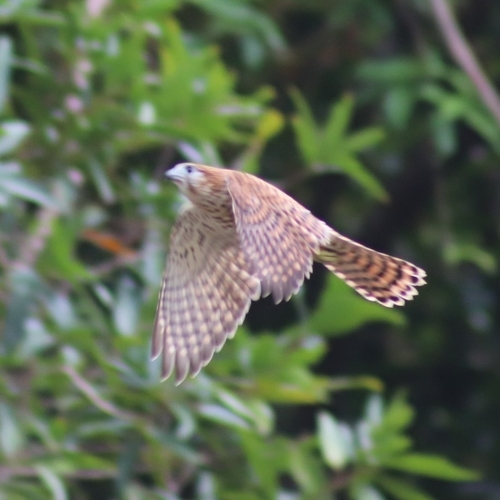
Mauritius Kestrel (Falco punctatus) Mauritius Kestrel
Black Falcon (Falco subniger) Black Falcon

Media

Caricamento…

In breve

The most reliable way to separate Mauritius Kestrel from Black Falcon is by size and structure: Black Falcon is much larger, with long, pointed wings and a long tail, while Mauritius Kestrel is small, with short, rounded wings. In flight, Black Falcon shows a streamlined, slim silhouette and sooty dark coloration, whereas Mauritius Kestrel is compact and typically paler. Juvenile-specific wing patterns are not described for either species, so focus on overall shape and color. Habitat is also a strong clue: Mauritius Kestrel is restricted to forested ravines in Mauritius, while Black Falcon is found in open Australian landscapes.

Consigli di identificazione

  1. Size is the first check: Black Falcon is much larger than Mauritius Kestrel—nearly twice as long and four times as heavy. If the bird looks crow-sized or larger, it's not a Mauritius Kestrel.
  2. Wing shape: Black Falcon has long, pointed wings that taper toward the tip; Mauritius Kestrel's wings are short and rounded. This is especially obvious in flight.
  3. Tail length and shape: Black Falcon's tail is long (about half its body length) and usually folded, with notched corners when fanned. Mauritius Kestrel's tail is shorter and less prominent.
  4. Overall coloration: Black Falcon is uniformly dark brown to sooty black at all ages, sometimes with a faint pale chin or underwing spots. Mauritius Kestrel is paler and more patterned, never sooty black.
  5. Underwing pattern: Black Falcon shows two-tone underwings (darker coverts, slightly paler flight feathers), but no bold barring. Mauritius Kestrel lacks this two-tone effect and is generally lighter below.
  6. Facial markings: Adult Black Falcon may show a dark stripe below the eye; Mauritius Kestrel does not have this feature.
  7. Legs and feet: Black Falcon has pale grey or blue-grey cere, eye ring, and feet; Mauritius Kestrel's bare parts are not described as diagnostic, so focus on other features.
  8. Perched posture: Black Falcon's wingtips fall short of the tail and its legs look short; Mauritius Kestrel appears more compact and upright.
  9. Flight style: Black Falcon soars and glides with slightly drooped or horizontal wings, often for long periods; Mauritius Kestrel is more fluttery and agile, maneuvering through trees and cliffs.
  10. Habitat context: Mauritius Kestrel is only found in Mauritius forests and ravines; Black Falcon is only in open Australian habitats. Location alone can often clinch the ID.
  11. Juvenile confusion: No distinctive juvenile wing panels or trailing edges are described for either species, so rely on size, structure, and overall color for immatures.
  12. Sexual dimorphism: Both species have females larger than males, but the size gap between species is much greater than any sex difference.
  13. Confusion with other falcons: Black Falcon is sometimes confused with Brown Falcon in Australia, but Mauritius Kestrel is very unlikely to be mistaken for any other local species in Mauritius.
  14. Voice: No diagnostic vocalizations are described for separation, so do not rely on calls.
  15. Seasonal variation: No strong seasonal plumage differences are noted for either species; use structural and habitat clues year-round.

Taglia

Black Falcon is dramatically larger than Mauritius Kestrel. Adult Black Falcons average around 720–830 g (females heavier), with a length of 45–56 cm and a wingspan of 95–115 cm. In contrast, Mauritius Kestrel is much smaller, averaging about 170 g, 26–30.5 cm in length, and a wingspan of about 45 cm. Even at a distance, the difference is striking: Black Falcon is nearly twice as long and four times as heavy as Mauritius Kestrel.

Piumaggio

Plumage differences are clear in adults and generally reliable at all ages. Mauritius Kestrel has a paler, more patterned appearance with rounded wings, while Black Falcon is uniformly dark brown to sooty black, with juveniles even darker than adults. Black Falcon's underwing is two-toned (flight feathers slightly paler than coverts), and adults may show a dark subocular stripe. Mauritius Kestrel lacks the solid dark coloration and instead appears lighter and more mottled. No distinctive juvenile wing patterns (such as panels or trailing edges) are reported for either species, so focus on overall coloration and wing shape for all ages.

Comportamento

Black Falcon typically soars or glides with long, pointed wings and a long tail, often using relaxed, crow-like wingbeats or soaring for extended periods. Its flight is powerful, and it may hunt cooperatively or alone, sometimes tail-chasing prey over long distances. Mauritius Kestrel, being much smaller and with rounded wings, has a more fluttery, agile flight style, often seen maneuvering through forested ravines. When perched, Black Falcon's wingtips do not reach the tail tip and its legs look short; Mauritius Kestrel appears compact and perches in dense forest or on cliffs.

Habitat

Habitat is a strong separator. Mauritius Kestrel is endemic to the forests, cliffs, and ravines of southwestern Mauritius and is never found outside this restricted island habitat. Black Falcon is endemic to mainland Australia, favoring open country, woodlands, and agricultural areas, and is absent from dense forests. If you see a falcon in a forested ravine on Mauritius, it is almost certainly Mauritius Kestrel; in open Australian landscapes, Black Falcon is possible.

Invia una descrizione migliore

Usa le stesse sezioni del confronto. Il testo viene pubblicato subito.

The most reliable way to separate Mauritius Kestrel from Black Falcon is by size and structure: Black Falcon is much larger, with long, pointed wings and a long tail, while Mauritius Kestrel is small, with short, rounded wings. In flight, Black Falcon shows a streamlined, slim silhouette and sooty dark coloration, whereas Mauritius Kestrel is compact and typically paler. Juvenile-specific wing patterns are not described for either species, so focus on overall shape and color. Habitat is also a strong clue: Mauritius Kestrel is restricted to forested ravines in Mauritius, while Black Falcon is found in open Australian landscapes.

  1. Size is the first check: Black Falcon is much larger than Mauritius Kestrel—nearly twice as long and four times as heavy. If the bird looks crow-sized or larger, it's not a Mauritius Kestrel.
  2. Wing shape: Black Falcon has long, pointed wings that taper toward the tip; Mauritius Kestrel's wings are short and rounded. This is especially obvious in flight.
  3. Tail length and shape: Black Falcon's tail is long (about half its body length) and usually folded, with notched corners when fanned. Mauritius Kestrel's tail is shorter and less prominent.
  4. Overall coloration: Black Falcon is uniformly dark brown to sooty black at all ages, sometimes with a faint pale chin or underwing spots. Mauritius Kestrel is paler and more patterned, never sooty black.
  5. Underwing pattern: Black Falcon shows two-tone underwings (darker coverts, slightly paler flight feathers), but no bold barring. Mauritius Kestrel lacks this two-tone effect and is generally lighter below.
  6. Facial markings: Adult Black Falcon may show a dark stripe below the eye; Mauritius Kestrel does not have this feature.
  7. Legs and feet: Black Falcon has pale grey or blue-grey cere, eye ring, and feet; Mauritius Kestrel's bare parts are not described as diagnostic, so focus on other features.
  8. Perched posture: Black Falcon's wingtips fall short of the tail and its legs look short; Mauritius Kestrel appears more compact and upright.
  9. Flight style: Black Falcon soars and glides with slightly drooped or horizontal wings, often for long periods; Mauritius Kestrel is more fluttery and agile, maneuvering through trees and cliffs.
  10. Habitat context: Mauritius Kestrel is only found in Mauritius forests and ravines; Black Falcon is only in open Australian habitats. Location alone can often clinch the ID.
  11. Juvenile confusion: No distinctive juvenile wing panels or trailing edges are described for either species, so rely on size, structure, and overall color for immatures.
  12. Sexual dimorphism: Both species have females larger than males, but the size gap between species is much greater than any sex difference.
  13. Confusion with other falcons: Black Falcon is sometimes confused with Brown Falcon in Australia, but Mauritius Kestrel is very unlikely to be mistaken for any other local species in Mauritius.
  14. Voice: No diagnostic vocalizations are described for separation, so do not rely on calls.
  15. Seasonal variation: No strong seasonal plumage differences are noted for either species; use structural and habitat clues year-round.

Black Falcon is dramatically larger than Mauritius Kestrel. Adult Black Falcons average around 720–830 g (females heavier), with a length of 45–56 cm and a wingspan of 95–115 cm. In contrast, Mauritius Kestrel is much smaller, averaging about 170 g, 26–30.5 cm in length, and a wingspan of about 45 cm. Even at a distance, the difference is striking: Black Falcon is nearly twice as long and four times as heavy as Mauritius Kestrel.

Plumage differences are clear in adults and generally reliable at all ages. Mauritius Kestrel has a paler, more patterned appearance with rounded wings, while Black Falcon is uniformly dark brown to sooty black, with juveniles even darker than adults. Black Falcon's underwing is two-toned (flight feathers slightly paler than coverts), and adults may show a dark subocular stripe. Mauritius Kestrel lacks the solid dark coloration and instead appears lighter and more mottled. No distinctive juvenile wing patterns (such as panels or trailing edges) are reported for either species, so focus on overall coloration and wing shape for all ages.

Black Falcon typically soars or glides with long, pointed wings and a long tail, often using relaxed, crow-like wingbeats or soaring for extended periods. Its flight is powerful, and it may hunt cooperatively or alone, sometimes tail-chasing prey over long distances. Mauritius Kestrel, being much smaller and with rounded wings, has a more fluttery, agile flight style, often seen maneuvering through forested ravines. When perched, Black Falcon's wingtips do not reach the tail tip and its legs look short; Mauritius Kestrel appears compact and perches in dense forest or on cliffs.

Habitat is a strong separator. Mauritius Kestrel is endemic to the forests, cliffs, and ravines of southwestern Mauritius and is never found outside this restricted island habitat. Black Falcon is endemic to mainland Australia, favoring open country, woodlands, and agricultural areas, and is absent from dense forests. If you see a falcon in a forested ravine on Mauritius, it is almost certainly Mauritius Kestrel; in open Australian landscapes, Black Falcon is possible.

Scartare le modifiche?

Hai modifiche non salvate. Se esci ora, andranno perse.

Mauritius Kestrel · Black Falcon · I miei uccelli difficili