

Motmot

ショクヨウアナツバメ 対 オナガミズナギドリ

Aerodramus francicus 対 Ardenna pacifica

ショクヨウアナツバメとオナガミズナギドリのクイズ
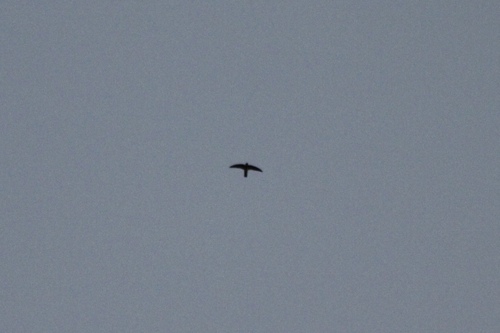
ショクヨウアナツバメ (Aerodramus francicus) ショクヨウアナツバメ
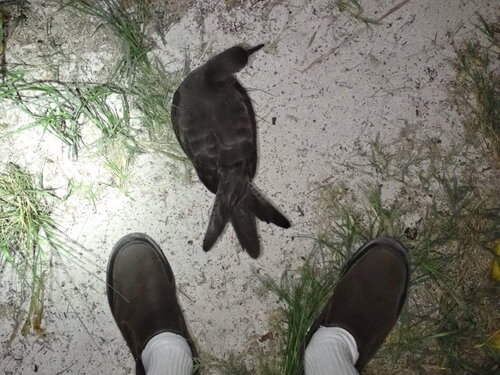
オナガミズナギドリ (Ardenna pacifica) オナガミズナギドリ

メディア

読み込み中…

要点

ショクヨウアナツバメとオナガミズナギドリを区別する最も信頼できるフィールドマークは、全体のサイズと構造です:スウィフトレットは小さく、速く飛ぶ空中昆虫食者であり、一方シアウォーターは大きく、重い体を持つ海鳥で、特徴的なくさび形の尾を持っています。飛行中、スウィフトレットはコンパクトで鎌形の翼と迅速でひらひらした飛行を示し、シアウォーターは長く広い翼と緩やかで滑空する飛行スタイルを持っています。羽毛の違いも明確です:スウィフトレットは上面が均一に暗く、下面が淡いのに対し、シアウォーターは全体が暗いものから下面が淡いものまで変化しますが、常により大きな見た目と比例的に大きなくちばしを持っています。生息地も強い手がかりです—スウィフトレットはモーリシャスとレユニオンの陸上で見られ、シアウォーターは厳密に海洋性で、内陸ではめったに見られません。

識別のコツ

  1. Size is the fastest check: オナガミズナギドリはショクヨウアナツバメに比べて巨大です。もしハトのサイズかそれ以上の鳥を見たら、それはスウィフトレットではありません。
  2. Tail shape: シアウォーターは飛行中と静止中に見える長く尖ったくさび形の尾を持っています;スウィフトレットの尾は短く、四角形か少し分かれた形で、決してくさび形ではありません。
  3. Flight style: スウィフトレットは迅速でひらひらした翼の羽ばたきと方向転換を素早く行います;シアウォーターは長く硬い翼で水面を滑空し、深く安定した羽ばたきを持っています。
  4. Wing shape: スウィフトレットの翼は狭く、鎌形で、比例的にずっと短いです;シアウォーターの翼は長く広く、ダイナミックな滑空に適しています。
  5. Bill: シアウォーターは遠くからでも簡単に見える厚く長い暗いくちばしを持っています;スウィフトレットのくちばしは小さく、フィールドではほとんど見えません。
  6. Plumage: スウィフトレットは上面が暗く、下面が淡い、強いパターンはありません;シアウォーターは全体が暗いか、下面が淡いですが、常により大きく、スウィフトレットほど鋭く二色にはなりません。
  7. Color morphs: シアウォーターだけが暗いと淡い形態を示します;スウィフトレットは変化しません。
  8. Leg color: シアウォーターはサーモンピンクの脚を持っていますが、これらは鳥が静止していない限りめったに見えません;実用的なフィールドマークではありません。
  9. Habitat: スウィフトレットはモーリシャスとレユニオンの陸上でのみ見られます;シアウォーターは海洋性で、海や沿岸の繁殖地で見られます。
  10. Behavior at rest: シアウォーターはコロニーの地面にいるのが見られるかもしれません;スウィフトレットはほとんど開けた場所に止まることはありません。
  11. Vocalizations: シアウォーターのうめき声はコロニーで特徴的です;スウィフトレットの声は高音でツイッター音が多く、主に飛行中に聞かれます。
  12. Context: 内陸や森林でバードウォッチングをしている場合はスウィフトレットを期待してください;海や遠隔の島にいる場合はシアウォーターを期待してください。
  13. Association: スウィフトレットは他のスウィフトやツバメと群れで見られることが多いですが、シアウォーターは通常、海で単独または緩いグループで見られます。
  14. Confusion risk: 淡い、速く飛ぶ鳥が遠くにいる場合の混乱のリスクは唯一の実際のリスクですが、サイズと飛行スタイルですぐに区別できます。
  15. Juvenile/immature marks: どちらの種にも特有の幼鳥の翼のパターンは記載されていないため、すべての年齢に対して構造と文脈に依存してください。

大きさ

オナガミズナギドリは非常に大きく、成鳥の質量は約465グラムです [wikidata]。これに対し、はるかに小さいショクヨウアナツバメ(質量は記載されていませんが、すべてのスウィフトレットは比較すると小さいです)。シアウォーターは中型から大型の海鳥で、スウィフトレットを簡単に圧倒し、スウィフトレットはその範囲で最も小さな鳥の一つです。フィールドでは、サイズだけで混乱を排除するのに十分なことが多いです。

羽色

どちらの種にも年齢特有の上翼パターンは記載されていませんが、全体の羽毛は非常に特徴的です。ショクヨウアナツバメ(すべての年齢)は上面が暗く、下面が淡く、強いパターンや色の変異はありません。オナガミズナギドリは2つの形態があります:淡い(上面が灰褐色、下面が白)と暗い(均一に暗い灰褐色)。両方の形態はくさび形の尾を持ち、すべての羽毛においてスウィフトレットよりもずっと大きな見た目を持っています。スウィフトレットは尾にくさびがなく、はるかに短く、四角形か少し分かれた尾を持っています。シアウォーターのくちばしは常に暗くて厚いですが、スウィフトレットのくちばしは小さく、遠くからはほとんど見えません。脚の色は、鳥が扱われるか静止しているときでない限り、役に立つフィールドマークではありません。

行動

ショクヨウアナツバメはほぼ常に迅速で機敏な飛行で見られ、陸上や森林の高いところで昆虫を捕まえます。開けた場所に着陸することはほとんどありません。オナガミズナギドリは強力な滑空飛行者で、ほとんどの生活を海上で過ごし、波の上を低く滑空したり、硬い翼で滑空したりするのがよく見られます。陸上では、シアウォーターは不器用で、繁殖コロニーや海でしかめったに見られません。スウィフトレットの飛行はひらひらして不規則ですが、シアウォーターの飛行は力強く、深い羽ばたきと長い滑空を持っています。

生息環境

ショクヨウアナツバメはモーリシャスとレユニオンに限定され、陸上、森林、時には崖の近くで餌を探します。海の遠くでは決して見られません。オナガミズナギドリは厳密に海洋性で、熱帯太平洋とインド洋全体に分布し、繁殖のために陸に来るのは通常、遠隔の島や沿岸のコロニーです。開けた海上でスウィフトレットを見たり、内陸でシアウォーターを見ることは非常に考えにくいです。

声

オナガミズナギドリはコロニーで非常に声が大きく、長い、うめき声の呼びかけを行い、吸い込む音と吐き出す音(「OOO...err」と表現される)を特に夜に発します。ショクヨウアナツバメの声はノートには記載されていませんが、一般的にスウィフトレットは高音でツイッター音を出し、主に飛行中に聞かれます。声はよく聞こえれば混乱することはほとんどありませんが、海や飛行中では診断的ではありません。

より良い説明を送る

比較と同じ項目を使ってください。文章はすぐに公開されます。

The most reliable field mark to separate Mascarene Swiftlet from Wedge-tailed Shearwater is overall size and structure: the swiftlet is a tiny, fast-flying aerial insectivore, while the shearwater is a large, heavy-bodied seabird with a distinctive wedge-shaped tail. In flight, the swiftlet shows compact, scythe-shaped wings and rapid, fluttery flight, whereas the shearwater has long, broad wings and a languid, gliding flight style. Plumage differences are also stark: the swiftlet is uniformly dark above and pale below, while the shearwater varies from all-dark to pale below, but always has a bulkier look and a proportionally massive bill. Habitat is a strong clue—swiftlets are seen over land on Mauritius and Réunion, while shearwaters are strictly pelagic, rarely seen inland.

  1. Size is the fastest check: Wedge-tailed Shearwater is enormous compared to Mascarene Swiftlet; if you see a bird the size of a pigeon or larger, it cannot be a swiftlet.
  2. Tail shape: Shearwater has a long, pointed, wedge-shaped tail visible in flight and at rest; swiftlet’s tail is short and square or slightly forked, never wedge-shaped.
  3. Flight style: Swiftlet flies with rapid, fluttery wingbeats and quick changes of direction; shearwater glides and shears over the water with long, stiff wings and deep, steady wingbeats.
  4. Wing shape: Swiftlet’s wings are narrow, sickle-shaped, and proportionally much shorter; shearwater’s wings are long, broad, and suited for dynamic soaring.
  5. Bill: Shearwater has a thick, long, dark bill easily seen at a distance; swiftlet’s bill is tiny and almost invisible in the field.
  6. Plumage: Swiftlet is dark above and pale below, with no strong pattern; shearwater is either all dark or pale below, but always bulkier and never as sharply two-toned as the swiftlet.
  7. Color morphs: Only shearwater shows dark and pale morphs; swiftlet does not vary.
  8. Leg color: Shearwater has salmon-pink legs, but these are rarely visible unless the bird is at rest; not a practical field mark.
  9. Habitat: Swiftlet is only seen over land on Mauritius and Réunion; shearwater is marine, seen at sea or at coastal breeding sites.
  10. Behavior at rest: Shearwater may be seen on the ground at colonies; swiftlet almost never perches in the open.
  11. Vocalizations: Shearwater’s moaning calls are distinctive at colonies; swiftlet’s calls are high-pitched and twittering, mostly heard in flight.
  12. Context: If you are birding inland or over forest, expect swiftlet; if you are at sea or on a remote island, expect shearwater.
  13. Association: Swiftlets often occur in flocks with other swifts or swallows; shearwaters are usually alone or in loose groups at sea.
  14. Confusion risk: The only real risk of confusion is a distant, fast-flying bird over the ocean, but size and flight style will quickly separate them.
  15. Juvenile/immature marks: No distinctive juvenile wing patterns are described for either species, so rely on structure and context for all ages.

Wedge-tailed Shearwater is vastly larger, with an adult mass of about 465 grams [wikidata], compared to the much smaller Mascarene Swiftlet (no mass given, but all swiftlets are tiny by comparison). The shearwater is a medium-large seabird, easily dwarfing the swiftlet, which is among the smallest birds in its range. In the field, size alone is often enough to rule out confusion if both species are seen together or with known reference birds.

No age-specific upperwing patterns are described for either species, but overall plumage is highly distinctive. Mascarene Swiftlet (all ages) is dark above with paler underparts, lacking any strong pattern or color morphs. Wedge-tailed Shearwater comes in two morphs: pale (grey-brown above, white below) and dark (uniformly dark grey-brown). Both morphs have a wedge-shaped tail and, in all plumages, a much bulkier look than the swiftlet. The swiftlet lacks any wedge in the tail and has a much shorter, squared or slightly forked tail. The shearwater’s bill is always dark and thick, while the swiftlet’s bill is tiny and barely visible at a distance. Leg color is not a useful field mark unless the bird is handled or seen at rest, which is rare for both.

Mascarene Swiftlet is almost always seen in rapid, agile flight, catching insects high over land or forest. It rarely lands in the open. Wedge-tailed Shearwater is a strong, gliding flier, spending most of its life over the ocean, often seen shearing low over waves or gliding with stiff wings. On land, shearwaters are clumsy and rarely seen except at breeding colonies or at sea. The swiftlet’s flight is fluttery and erratic, while the shearwater’s is powerful, with deep wingbeats and long glides.

Mascarene Swiftlet is restricted to Mauritius and Réunion, foraging over land, forest, and sometimes near cliffs. It is never seen far out to sea. Wedge-tailed Shearwater is strictly marine, found throughout the tropical Pacific and Indian Oceans, and only comes to land to breed, typically on remote islands or coastal colonies. Seeing a swiftlet over the open ocean or a shearwater inland is extremely unlikely.

Wedge-tailed Shearwater is highly vocal at colonies, giving long, moaning calls with inhaling and exhaling notes (described as 'OOO...err'), especially at night. Mascarene Swiftlet’s calls are not described in the notes, but swiftlets in general give high-pitched, twittering calls, mostly in flight. Vocalizations are unlikely to be confused if heard well, but are rarely diagnostic at sea or in flight.

変更を破棄しますか?

保存していない編集があります。今離れると失われます。

ショクヨウアナツバメ · オナガミズナギドリ · 苦手な鳥