

Motmot

カササギフウキンチョウ 対 ズキンフウキンチョウ

Cissopis leverianus 対 Nemosia pileata

カササギフウキンチョウとズキンフウキンチョウのクイズ
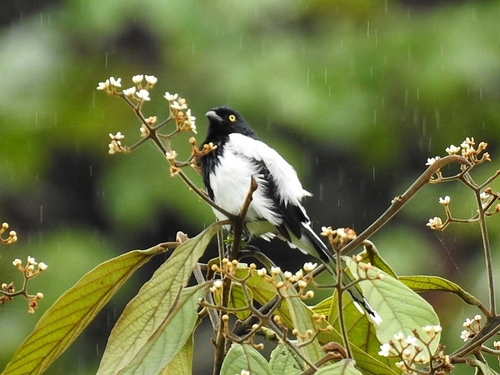
カササギフウキンチョウ (Cissopis leverianus) カササギフウキンチョウ
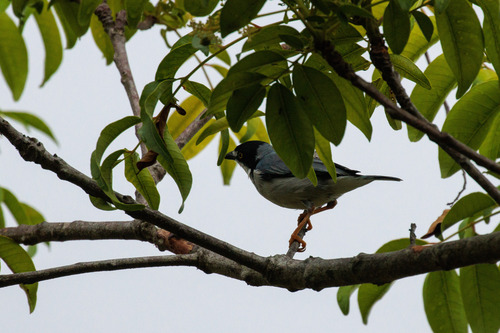
ズキンフウキンチョウ (Nemosia pileata) ズキンフウキンチョウ

メディア

読み込み中…

要点

カササギフウキンチョウとズキンフウキンチョウを区別する最も信頼できる方法は、全体のサイズと尾の長さです:カササギフウキンチョウははるかに大きく、劇的に長い尾を持っていますが、ズキンフウキンチョウは小さくてコンパクトです。フィールドでは、カササギフウキンチョウの目を引く黒と白のパターンとカササギのような姿勢が際立ち、ズキンフウキンチョウのオスは黒いフードと青灰色の上面を示し、メスは黒いフードを完全に欠いています。幼鳥のズキンフウキンチョウは上面が淡い青で、下面が青灰色であり、カササギフウキンチョウのどの個体とも大胆で鮮明な黒と白を示すことはありません。両種は似たような生息地に生息しますが、カササギフウキンチョウはしばしば大きくて騒がしい群れで見られ、はるかに目立ちます。

識別のコツ

  1. Size and Tail Length: カササギフウキンチョウはズキンフウキンチョウよりもはるかに大きく、体とほぼ同じ長さの劇的に長い尾を持っています。ズキンフウキンチョウは小さくてコンパクトで、相対的に短い尾を持っています。これは、距離があっても飛行中でも最も迅速なフィールドチェックです。
  2. Group Behavior: カササギフウキンチョウはしばしば騒がしく目立つ最大10羽の群れで見られ、混合フロックに参加することがよくあります。ズキンフウキンチョウは通常、単独またはペアで見られ、目立たないことが多いです。
  3. Adult Male Head Pattern: ズキンフウキンチョウのオスは、白いロアと喉の側面を持つ固体の黒いフード(頭と喉)を持っています。カササギフウキンチョウは黒いフードを示すことはなく、その頭は青黒く、背中と混ざり合い、顔は白で隔てられていません。
  4. Adult Female Head Pattern: メスのズキンフウキンチョウは黒いフードを欠いており、頭は背中と同じ青灰色です。カササギフウキンチョウのメスは性別による二形性がなく、常に大胆な黒と白のパターンを示します。
  5. Juvenile Plumage: 幼鳥のズキンフウキンチョウは上面が淡い青で、下面が青灰色であり、バラオレンジ色の脚と足を持っています。彼らは決してカササギフウキンチョウの幼鳥や成鳥の鮮明な黒と白や長い尾を示すことはありません。
  6. Body Pattern: カササギフウキンチョウは上面が鋭い黒で、下面が白であり、広い白い翼の斑点と白い縁のある尾を持っています。ズキンフウキンチョウは上面が青灰色で、下面が白であり、オスは黒いフードを示し、メスは下面にバフの洗いを持っています。
  7. Tail Pattern: カササギフウキンチョウの尾は非常に長く、白い縁があり、しばしば上下に振られます。ズキンフウキンチョウの尾は短く、明らかな白い縁が欠けています。
  8. Leg Color: ズキンフウキンチョウの成鳥は黄色または黄褐色の脚と足を持ち、幼鳥はバラオレンジ色の脚を持っています。カササギフウキンチョウの脚の色は特に特徴的とはされていないため、これはわずかなチェックに過ぎません。
  9. Bill Color: ズキンフウキンチョウのオスは黒いくちばしを持ち、メスは黒い上顎と淡い下顎を持っています。カササギフウキンチョウのくちばしの色はフィールドマークとして強調されていません。
  10. Underpart Color: カササギフウキンチョウは常に下面が鮮明な白であり、ズキンフウキンチョウのメスと幼鳥は下面にバフまたは灰色の洗いを持っています。
  11. Jizz: カササギフウキンチョウのカササギのような姿勢、長い尾、直立した姿勢は、フウキンチョウの中で独特です。ズキンフウキンチョウは形や姿勢がより一般的です。
  12. Flight Style: カササギフウキンチョウの長い尾は飛行中に明らかで、しばしば振られます。ズキンフウキンチョウの飛行は小さなフウキンチョウの典型的なもので、尾を振ることはありません。
  13. Habitat Context: 両種は似たような生息地に生息することができますが、カササギフウキンチョウは特に群れで開けた、エッジ、または河川地域にいる可能性が高いです。
  14. Vocalization: これらのメモでは信頼できる区別として説明されていません。
  15. Range: 両種は南アメリカ全体に広く分布していますが、チリ、エクアドル、ウルグアイにいる場合、カササギフウキンチョウのみが可能です。

大きさ

カササギフウキンチョウはフウキンチョウの中で巨大で、約76gの重さがあり、長さは25〜30cmで、そのほとんどが長い尾です。ズキンフウキンチョウははるかに小さく、重さはわずか16gで、長さは12〜13.5cmです。距離があっても混合フロックの中でも、カササギフウキンチョウのサイズと尾の長さはすぐに明らかであり、ズキンフウキンチョウはスズメサイズで、はるかに繊細な体型です。

羽色

どちらの種についても年齢特有の上翼や飛行パターンのマークは説明されていないため、体の羽毛に焦点を当てます。成鳥のカササギフウキンチョウは大胆なパターンを持ち、上面は光沢のある青黒で、下面は白で、広い白い翼の斑点と非常に長い白い縁のある尾を持っています。ズキンフウキンチョウの成鳥のオスは、白いロアと喉の側面を持つ黒いフード(頭と喉)を持ち、青灰色の上面と尾、そして淡い灰色の側面を持つ白い下面を持っています。成鳥のメスは黒いフードを欠いており、頭と上面は青灰色で、下面はバフの色合いを持つ白です。幼鳥のズキンフウキンチョウは上面が淡い青で、下面が青灰色であり、黒や鮮明な白を欠いています。すべての年齢のカササギフウキンチョウは、青灰色のトーンやバフの下面がなく、はるかに鋭いパターンを持っています。

行動

カササギフウキンチョウは通常、騒がしく目立つ群れやペアで見られ、しばしば長い尾を上下に振り、混合種のフロックに参加します。彼らの行動は大胆で活発で、しばしば開けた場所に止まります。ズキンフウキンチョウは目立たず、通常は単独またはペアで見られ、カササギフウキンチョウの誇張された尾の動きを示しません。カササギフウキンチョウのカササギのような姿勢は、長い尾と直立した姿勢で独特です。

生息環境

両種は南アメリカの広範囲にわたる森林や半開放的な生息地に見られますが、カササギフウキンチョウは特に開けた地域、エッジ、河川の近くの湿った低地や山麓の森林に結びついています。森林伐採と共に広がっています。ズキンフウキンチョウは似たような生息地に広く分布していますが、チリ、エクアドル、ウルグアイには存在しません。生息地だけでは診断的ではありませんが、カササギフウキンチョウはより大きく開放的な群れで見られる可能性が高いです。

より良い説明を送る

比較と同じ項目を使ってください。文章はすぐに公開されます。

The most reliable way to separate Magpie Tanager from Hooded Tanager is by overall size and tail length: Magpie Tanager is much larger and has a dramatically long tail, while Hooded Tanager is small and compact. In the field, Magpie Tanager’s striking black-and-white pattern and magpie-like jizz stand out, while Hooded Tanager males show a black hood and blue-gray upperparts, and females lack the black hood entirely. Juvenile Hooded Tanagers are pale blue above and bluish gray below, never showing the bold, crisp black-and-white of any Magpie Tanager. Both species occur in similar habitats, but Magpie Tanager is often in larger, noisy groups and is much more conspicuous.

  1. Size and Tail Length: Magpie Tanager is much larger than Hooded Tanager, with a dramatically long tail that is nearly as long as its body. Hooded Tanager is small and compact, with a proportionally short tail. This is the quickest field check, even at a distance or in flight.
  2. Group Behavior: Magpie Tanagers are often in noisy, conspicuous groups of up to 10, frequently participating in mixed flocks. Hooded Tanagers are usually alone or in pairs and are less conspicuous.
  3. Adult Male Head Pattern: Hooded Tanager males have a solid black hood (head and throat) with white lores and throat sides. Magpie Tanager never shows a black hood; its head is blue-black, blending with the back, and the face is not isolated by white.
  4. Adult Female Head Pattern: Female Hooded Tanagers lack the black hood; their head is blue-gray like the back. Magpie Tanager females are not sexually dimorphic and always show the bold black-and-white pattern.
  5. Juvenile Plumage: Juvenile Hooded Tanagers are pale blue above and bluish gray below, with rose-orange legs and feet. They never show the crisp black-and-white or the long tail of Magpie Tanager juveniles or adults.
  6. Body Pattern: Magpie Tanager is sharply black above and white below, with a broad white wing patch and white-edged tail. Hooded Tanager is blue-gray above and white below, with males showing a black hood and females a buff wash on the underparts.
  7. Tail Pattern: Magpie Tanager’s tail is very long and white-edged, often wagged up and down. Hooded Tanager’s tail is short and lacks obvious white edges.
  8. Leg Color: Hooded Tanager adults have yellow or yellow-brown legs and feet; juveniles have rose-orange legs. Magpie Tanager’s leg color is not described as distinctive, so this is only a minor check.
  9. Bill Color: Male Hooded Tanager has a black bill; female has a black upper mandible and pale lower mandible. Magpie Tanager’s bill color is not highlighted as a field mark.
  10. Underpart Color: Magpie Tanager is always sharply white below; Hooded Tanager females and juveniles have a buff or grayish wash on the underparts.
  11. Jizz: Magpie Tanager’s magpie-like stance, long tail, and upright posture are unique among tanagers. Hooded Tanager is more generic in shape and posture.
  12. Flight Style: Magpie Tanager’s long tail is obvious in flight, often wagged. Hooded Tanager’s flight is more typical of small tanagers, with no tail wagging.
  13. Habitat Context: Both can occur in similar habitats, but Magpie Tanager is more likely in open, edge, or riverine areas, especially in groups.
  14. Vocalization: Not described as a reliable separator in these notes.
  15. Range: Both are widespread in South America, but if you are in Chile, Ecuador, or Uruguay, only Magpie Tanager is possible.

Magpie Tanager is a giant among tanagers, weighing about 76 g and measuring 25–30 cm in length, most of which is its long tail. Hooded Tanager is much smaller, weighing only 16 g and measuring 12–13.5 cm. Even at a distance or in mixed flocks, Magpie Tanager’s size and tail length are immediately obvious, while Hooded Tanager is sparrow-sized and much more delicate in build.

No age-specific upperwing or flight pattern marks are described for either species, so focus on body plumage. Adult Magpie Tanager is boldly patterned: glossy blue-black above and white below, with a broad white wing patch and a very long, white-edged tail. Hooded Tanager adult males have a black hood (head and throat) with white lores and throat sides, blue-gray upperparts and tail, and white underparts with pale gray flanks. Adult females lack the black hood; their entire head and upperparts are blue-gray, and their underparts are white with a buff tinge. Juvenile Hooded Tanagers are pale blue above and bluish gray below, lacking any black or crisp white. Magpie Tanager of all ages is much more sharply patterned, with no blue-gray tones or buffy underparts.

Magpie Tanagers are usually seen in noisy, conspicuous groups or pairs, often wagging their long tails up and down and joining mixed-species flocks. Their behavior is bold and active, often perching in the open. Hooded Tanagers are less conspicuous, typically seen singly or in pairs, and do not show the exaggerated tail movements of Magpie Tanager. Magpie Tanager’s magpie-like jizz, with a long tail and upright posture, is distinctive.

Both species can be found in a wide range of wooded and semi-open habitats across much of South America, but Magpie Tanager is more tied to humid lowland and foothill forests, especially in open areas, edges, and near rivers. It is spreading with deforestation. Hooded Tanager is widespread in similar habitats but is absent from Chile, Ecuador, and Uruguay. Habitat alone is not diagnostic, but Magpie Tanager is more likely in larger, open groups.

変更を破棄しますか?

保存していない編集があります。今離れると失われます。

カササギフウキンチョウ · ズキンフウキンチョウ · 苦手な鳥