

Motmot

オオシチチョウ 対 クロシチホウ

Spermestes fringilloides 対 Spermestes bicolor

オオシチチョウとクロシチホウのクイズ
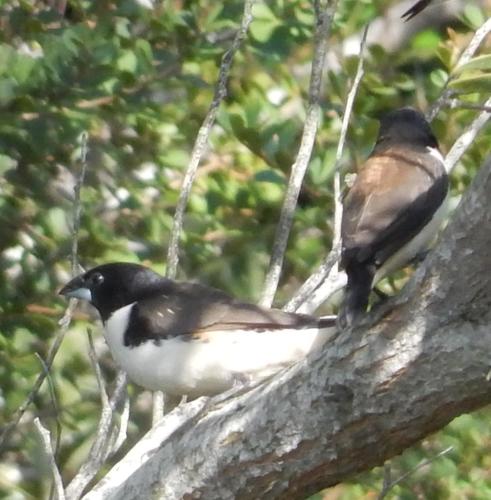
オオシチチョウ (Spermestes fringilloides) オオシチチョウ
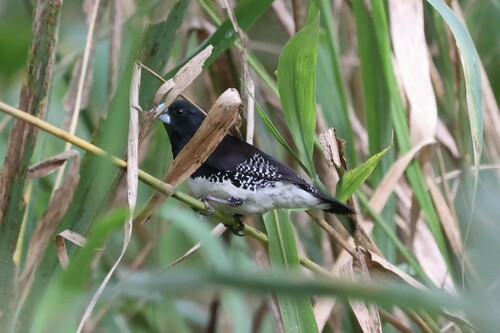
クロシチホウ (Spermestes bicolor) クロシチホウ

メディア

読み込み中…

要点

オオシチチョウとクロシチホウはどちらもサハラ以南のアフリカに生息する小型の黒と白のエストリルダスフィンチですが、個体数、微妙な羽毛の詳細、および好まれる生息地において異なります。オオシチチョウははるかに広範囲には分布せず、乾燥した草原や低木地を好むのに対し、クロシチホウは湿ったサバンナや森林で一般的です。フィールドでは、サイズと全体的なパターンが似ているため、区別が難しいですが、生息地と地域の豊富さが強い手がかりとなることがあります。利用可能な情報源には年齢特有の翼や飛行パターンの違いは記載されていないため、文脈と微妙な羽毛の違いに焦点を当ててください。

識別のコツ

  1. 生息地は最も有用な手がかりであることが多い: オオシチチョウは乾燥した草原や低木地を好むのに対し、クロシチホウは湿ったサバンナや森林に豊富に生息しています。IDを決定する前に、常に地元の生息地に注意してください。
  2. 個体数と分布: クロシチホウははるかに広範囲に分布し、サハラ以南のアフリカで遭遇する可能性が高いです。典型的な地域でマンニキンの群れを見た場合、オオシチチョウの生息地でない限り、クロシチホウの可能性が高いです。
  3. 羽毛のコントラスト: オオシチチョウはより鮮明で明確に定義された黒と白のパターンを示す傾向がありますが、クロシチホウは特に背中でやや鈍いまたは茶色っぽく見えることがあります(時には「赤背」と呼ばれます)。これは微妙で、光や摩耗の影響を受けることがあります。
  4. 背中の色: 背中に茶色または赤みがかった洗いが見られる場合、これはクロシチホウを示唆しますが、個体差や羽毛の摩耗に注意してください。
  5. 幼鳥: 幼鳥を区別するための明確なフィールドマークは記載されていないため、若いまたは換羽中の鳥には注意が必要です。
  6. くちばしの形状と構造: 信頼できる違いは記載されていません。どちらも典型的な厚く円錐形のマンニキンのくちばしを持っています。
  7. 飛行と翼のパターン: どちらの種にも特有の年齢に基づく翼や飛行マークは記載されていないため、飛行中のパターンに頼らないでください。
  8. 群れの構成: 両種は他のマンニキンと混ざることがありますが、混合群れは一般的なクロシチホウが支配する可能性が高いです。
  9. 止まり姿勢と印象: 両種は直立して止まり、似たような比率を持っています。姿勢は信頼できる区別要因ではありません。
  10. 声: 利用可能な情報源には診断的な声の違いは記載されていません。区別のために呼び声に頼らないでください。
  11. 季節と性別: これらの2種を区別するのに役立つ季節的または性的な羽毛の違いは記載されていません。
  12. 地理的文脈: オオシチチョウが珍しいまたは存在しない地域でバードウォッチングをしている場合、強い証拠がない限り、クロシチホウをデフォルトとしてください。
  13. 文書化: クロシチホウが支配する地域でオオシチチョウを疑う場合、コントラストの鋭さや生息地の文脈に焦点を当てて、注意深くメモや写真を取ってください。
  14. 落とし穴: 分布の境界で生息地や範囲の重複が発生することがあります。常に複数の特徴と文脈を使用して、確信を持ったIDを行ってください。
  15. 要約: 実際には、ほとんどのフィールドでの区別は生息地と豊富さに依存し、微妙な羽毛の違いが補足的な証拠となります。疑わしい場合は、徹底的に文書化し、地元の専門家に相談してください。

大きさ

両種は小型のエストリルダスフィンチであり、利用可能な情報源には信頼できるサイズや質量の違いは記載されていません。フィールドでは似たような比率と印象を期待してくださいので、サイズに頼って区別しないでください。

羽色

利用可能な情報源には、どちらの種についても年齢特有の翼や飛行パターンの詳細な違いは記載されていません。両者はSpermestesマンニキンに典型的な黒と白のパターンを示します。成鳥の羽毛は似ていますが、オオシチチョウはより鮮明な黒と白のコントラストを持つと言われており、クロシチホウは特に背中で鈍いまたは茶色っぽい洗いを示すことがあります(時には「赤背」と呼ばれます)。幼鳥や未熟な羽毛は詳細に記載されていないため、若い鳥には注意が必要です。

行動

両種は典型的なマンニキンであり、小さな群れで見られ、草の種を食べることがよくあります。利用可能な情報源には、フィールドで信頼できる区別を行うための行動の違いは記載されていません。

生息環境

生息地は重要な区別要因です: オオシチチョウはまばらに存在し、亜熱帯または熱帯の湿った低木地、森林、特に乾燥した草原を好みます。対照的に、クロシチホウははるかに広範囲に分布し、湿ったサバンナや低地の森林を好みます。乾燥した草原や低木地でマンニキンを見つけた場合はオオシチチョウを考慮してください; 湿ったサバンナや森林では、クロシチホウの可能性がはるかに高いです。

より良い説明を送る

比較と同じ項目を使ってください。文章はすぐに公開されます。

Magpie Mannikin and Black-and-white Mannikin are both small, black-and-white estrildid finches of sub-Saharan Africa, but they differ in abundance, subtle plumage details, and preferred habitats. The Magpie Mannikin is much less widespread and favors drier grassland and shrubland, while the Black-and-white Mannikin is common in moist savanna and forest. In the field, separation is challenging due to their similar size and overall pattern, but habitat and local abundance can be strong clues. No age-specific wing or flight pattern differences are documented in the available sources, so focus on context and subtle plumage distinctions.

  1. Habitat is often the most useful clue: Magpie Mannikin prefers drier grasslands and shrubland, while Black-and-white Mannikin is abundant in moist savanna and forest. Always note the local habitat before making an ID.
  2. Abundance and range: Black-and-white Mannikin is much more widespread and likely to be encountered across sub-Saharan Africa. If you see a flock of mannikins in a typical area, odds favor Black-and-white Mannikin unless you are in a known Magpie Mannikin locality.
  3. Plumage contrast: Magpie Mannikin tends to show a crisper, more sharply defined black-and-white pattern, while Black-and-white Mannikin may appear slightly duller or browner, especially on the back (sometimes called 'red-backed'). This is subtle and may be affected by light and wear.
  4. Back color: If you notice a brownish or reddish wash on the back, this favors Black-and-white Mannikin, but beware of individual variation and feather wear.
  5. Juvenile birds: No clear field marks are described for separating juveniles, so be cautious with young or molting birds.
  6. Bill shape and structure: No reliable differences are documented; both have the typical thick, conical mannikin bill.
  7. Flight and wing pattern: No distinctive age-specific wing or flight marks are described for either species, so do not rely on in-flight pattern for separation.
  8. Flock composition: Both species may mix with other mannikins, but mixed flocks are more likely to be dominated by the common Black-and-white Mannikin.
  9. Perched posture and jizz: Both species perch upright and have similar proportions; posture is not a reliable separator.
  10. Voice: No diagnostic vocal differences are described in the available sources; do not rely on calls for separation.
  11. Season and sex: No seasonal or sexual plumage differences are described that would help in separating these two species.
  12. Geographic context: If birding in an area where Magpie Mannikin is known to be rare or absent, default to Black-and-white Mannikin unless you have strong evidence otherwise.
  13. Documentation: If you suspect Magpie Mannikin in an area dominated by Black-and-white Mannikin, take careful notes and photos, focusing on any sharpness of contrast and habitat context.
  14. Pitfalls: Overlap in range and habitat can occur, especially at edges of distribution; always use multiple features and context for a confident ID.
  15. Summary: In practice, most field separations rely on habitat and abundance, with subtle plumage differences as supporting evidence. When in doubt, document thoroughly and consult local experts.

Both species are small estrildid finches, and no reliable size or mass differences are documented in the available sources. Expect similar proportions and jizz in the field, so do not rely on size for separation.

No detailed age-specific wing or flight pattern differences are described in the available sources for either species. Both show a black-and-white pattern typical of Spermestes mannikins. Adult plumage is similar, but the Magpie Mannikin is said to have a more sharply contrasting black-and-white pattern, while the Black-and-white Mannikin may show a duller or browner wash, especially on the back (sometimes called 'red-backed'). Juvenile and immature plumages are not described in detail, so caution is needed with young birds.

Both species are typical mannikins, often seen in small flocks and feeding on grass seeds. No behavioral differences are described in the available sources that would reliably separate them in the field.

Habitat is a key separator: Magpie Mannikin is sparsely present and favors subtropical or tropical moist shrubland, forest, and especially dry grassland. In contrast, Black-and-white Mannikin is much more widespread and common, preferring moist savanna and lowland forest. If you find a mannikin in a dry grassland or shrubland, consider Magpie Mannikin; in moist savanna or forest, Black-and-white Mannikin is far more likely.

変更を破棄しますか?

保存していない編集があります。今離れると失われます。

オオシチチョウ · クロシチホウ · 苦手な鳥