

Motmot

マカロニペンギン 対 ハシブトペンギン

Eudyptes chrysolophus 対 Eudyptes robustus

マカロニペンギンとハシブトペンギンのクイズ
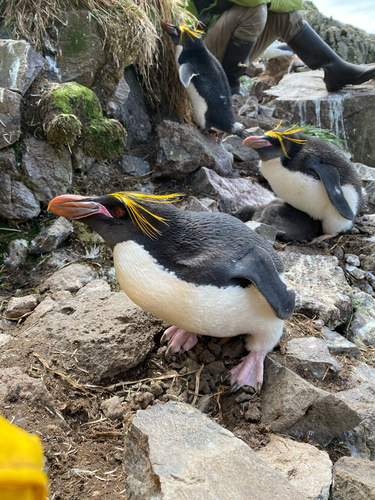
マカロニペンギン (Eudyptes chrysolophus) マカロニペンギン
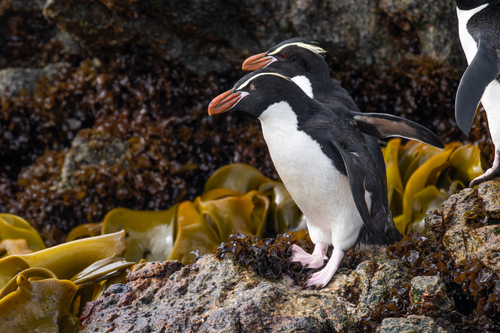
ハシブトペンギン (Eudyptes robustus) ハシブトペンギン

メディア

読み込み中…

要点

マカロニペンギンとハシブトペンギンを区別する最も信頼できるフィールドマークは、黄色い冠の位置と形状です:マカロニの冠は額の中心から出て真っ直ぐ後ろに流れ、ハシブトの冠はくちばしの基部から始まり、頭の側面に沿って伸びます。マカロニはまた、著しくがっしりとしており、体重が重く、オレンジ褐色の大きなくちばしを持っています。幼鳥のマカロニペンギンは完全な冠を欠き、鈍い色の小さなくちばしを持っており、これがハシブトと混同されることがありますが、ハシブトの幼鳥はくちばしの基部から始まる冠を示します。両種は似たような黒と白の体模様を持っているため、冠の起源とくちばしの構造に細心の注意を払うことが重要です。フィールドでは、サイズとくちばしの色/形は二次的ですが、特に近距離では役立つ手がかりです。

識別のコツ

  1. Crest origin and shape: マカロニペンギンの黄色い冠は額の中心から始まり真っ直ぐ後ろに流れます;ハシブトペンギンの冠はくちばしの基部から始まり、目の上を薄い線のように走ります。これは非常に若い幼鳥を除いて、すべての年齢で最も信頼できるマークです。
  2. Bill color and structure: マカロニは大きく、膨らんだオレンジ褐色のくちばしを持ち、くちばしの基部から目までピンク色の裸の皮膚の斑点があります;ハシブトは厚く、赤褐色のくちばしを持ち、基部に明確な薄いピンクの皮膚の斑点があります。くちばしのサイズは特に成鳥のオスにおいて有用です。
  3. Crest development in immatures: 幼鳥のマカロニペンギンは完全な冠を欠くか、散発的な黄色い羽毛しか持たないことがありますが、存在する場合でも、少数の黄色い羽毛は額から起こります、くちばしの基部からではありません。ハシブトの幼鳥は、発達が不十分でもくちばしの基部からの起源を保持します。
  4. Chin and throat color in immatures: 幼鳥のマカロニは暗い灰色のあごと喉を持ち、ハシブトは成鳥に似た黒いあごと喉を示します。
  5. Body structure: マカロニはがっしりとしており、バレル型の胸を持っていますが、ハシブトはスリムで頑丈さが少ないです。これは横に並んだビューやコロニーで最も明らかです。
  6. Flipper pattern: マカロニのひれは上面が青黒く、白い後縁があり、下面は主に白で黒い先端と前縁があります;ハシブトの下翼模様は変動があり、診断には役立ちません。
  7. Iris color: マカロニの虹彩は深い赤色ですが、ハシブトの虹彩は明るい赤褐色で、照明によっては明るく見えることがあります。これは小さなマークであり、常に信頼できるわけではありません。
  8. Leg and foot color: 両種はピンク色の脚と足を持ち、区別には役立ちません。
  9. Location: Snares Islandsで観察された場合、その鳥はほぼ確実にハシブトペンギンです;南極圏や南極の他の場所では、マカロニの方がはるかに可能性が高いです。
  10. Behavior: マカロニはコロニー内の相互作用でより攻撃的であり、頻繁にくちばしの戦いやひれの打撃を行いますが、これは微妙で主要なフィールドマークではありません。
  11. Sexual dimorphism: 両種は性別間で似ていますが、マカロニのオスはわずかに大きなくちばしを持っています;これは経験があり、性別が知られている場合にのみ有用です。
  12. Vocalizations: 鳴き声は詳細な研究なしにはフィールドで信頼できる区別ができません。
  13. Seasonal context: 両種は南半球の夏に繁殖しますが、ハシブトの繁殖期はニュージーランドの夏(9月〜1月)に結びついており、マカロニのタイミングは緯度によって異なります。
  14. Pitfalls: 完全な冠を欠く幼鳥のマカロニペンギンはハシブトと間違われることがありますが、冠の起源(額対くちばしの基部)とくちばしのサイズ/色を確認してください。ハシブトは決して額から起こる冠を示しません。
  15. Group composition: 混合群で見られた場合(野生ではありそうにありませんが)、サイズと冠の起源を直接比較してください;マカロニは額から起こる冠を持つ、より大きく、頑丈な鳥です。

大きさ

マカロニペンギンはハシブトペンギンよりもかなり重く、頑丈です。マカロニは平均してほぼ5 kg(4985 g)ですが、ハシブトははるかに軽いです(出典におけるデータエラーの可能性に注意が必要ですが、ハシブトは一貫して小さく軽いと説明されており、他の参考文献では通常2.5〜4 kgです)。マカロニは最大70 cmの長さに達しますが、ハシブトは50〜70 cmの範囲で、一般的にはよりスリムで頑丈さが少ないです。混合または遠くの群れでは、マカロニの大きく、バレル型の外観が際立ち、特に鳥が並んでいるときに目立ちます。

羽色

幼鳥のマカロニペンギンは小さく、鈍い色の茶色いくちばしと暗い灰色のあごと喉を持ち、完全な冠の羽毛を欠くか、わずかにしか持っていません。成鳥のマカロニの黄色い冠は厚く、ふさふさしており、中央の額の斑点から生じ、目の上から後頭部に水平に伸びます。それに対して、ハシブトペンギンの冠はくちばしの基部から始まり、目の上を薄い明るい黄色の線で走り、頭の後ろで終わります。両者は黒い上面と白い下面を持っていますが、ハシブトのくちばしは赤褐色で、基部に明確なピンク色の皮膚の斑点があり、その冠はくちばしの基部でより明確に定義されています。ハシブトの下翼模様は変動があり、IDには役立ちません。マカロニのひれは上面が青黒く、白い後縁があり、下面は主に白で黒い先端と前縁があります。両種は赤から赤褐色の虹彩を持っていますが、マカロニの虹彩はより一貫して深い赤色で、ハシブトの虹彩は照明によっては明るく見えることがあります。未熟なハシブトペンギンは、発達が不十分でもくちばしの基部から始まる冠を保持します。

行動

両種は非常に社交的で、密集したコロニーで繁殖しますが、マカロニペンギンは特に活発な視覚的および音声的なディスプレイで知られており、くちばしの戦いや劇的な頭の振りを含みます。マカロニのオスは、くちばしのロックやひれの打撃などの攻撃的なディスプレイに関与する可能性が高いです。ハシブトペンギンもディスプレイを行いますが、彼らの求愛行動は翼を広げて胸を膨らませて直立することを含み、ペアは相互にお辞儀をし、トランペットを鳴らして絆を強化します。これらの違いは微妙で、繁殖期に最も目立ちます。

生息環境

マカロニペンギンは亜南極から南極半島まで繁殖しますが、ハシブトペンギンはニュージーランド南部のスナーズ諸島に特有です。フィールドでは、場所が強い手がかりとなります:ハシブトペンギンはスナーズ諸島の上または近くでのみ見られ、マカロニははるかに広い南の分布を持っています。重複は、飼育下または迷子でない限り、非常にありそうにありません。

声

両種は一連の鳴き声やトランペット音を持っていますが、音の違いは診断的なものではありません。マカロニの興奮したディスプレイには大きな鼓動音や鳴き声が含まれ、ハシブトの呼び声はシューという音、爆発的な叫び声、リズミカルな鳴き声として説明されています。実際には、鳴き声は広範な経験なしには分離するための信頼できるものではありません。

より良い説明を送る

比較と同じ項目を使ってください。文章はすぐに公開されます。

The most reliable field mark to separate Macaroni Penguin from Snares Penguin is the position and shape of the yellow crest: Macaroni's crest emerges from the center of the forehead and sweeps straight back, while Snares' crest starts at the base of the bill and runs along the sides of the head. Macaroni is also notably bulkier, with a heavier build and a larger, orange-brown bill. Juvenile Macaroni Penguins lack a full crest and have a duller, smaller bill, which can cause confusion with Snares, but Snares juveniles still show the crest starting at the bill base. Both species have similar black-and-white body patterns, so careful attention to crest origin and bill structure is essential. In the field, size and bill color/shape are secondary but helpful clues, especially at close range.

  1. Crest origin and shape: Macaroni Penguin's yellow crest starts from the center of the forehead and sweeps straight back; Snares Penguin's crest begins at the base of the bill and runs as a thin line above the eye. This is the single most reliable mark in all ages except very young juveniles.
  2. Bill color and structure: Macaroni has a large, bulbous, orange-brown bill with a pinkish bare skin patch from the bill base to the eye; Snares has a thick, reddish-brown bill with a distinct light pink skin patch at the base. Bill size is especially useful in adult males.
  3. Crest development in immatures: Juvenile Macaroni Penguins may lack a full crest or show only scattered yellow feathers, but the few yellow feathers, if present, still originate from the forehead, not the bill base. Snares juveniles retain the bill-base origin even with a less developed crest.
  4. Chin and throat color in immatures: Juvenile Macaroni has a dark grey chin and throat, while Snares shows a black chin and throat similar to adults.
  5. Body structure: Macaroni is bulkier and more barrel-chested, while Snares is slimmer and less robust. This is most apparent in side-by-side views or in colonies.
  6. Flipper pattern: Macaroni's flippers are blue-black above with a white trailing edge, and mostly white below with a black tip and leading edge; Snares' underwing pattern is variable and not diagnostic.
  7. Iris color: Macaroni's iris is deep red, while Snares' is bright red-brown but can appear lighter depending on lighting. This is a minor mark and not always reliable.
  8. Leg and foot color: Both species have pink legs and feet, not useful for separation.
  9. Location: If observed on the Snares Islands, the bird is almost certainly Snares Penguin; elsewhere in the Subantarctic or Antarctic, Macaroni is far more likely.
  10. Behavior: Macaroni is more aggressive in colony interactions, with frequent bill-jousting and flipper strikes, but this is subtle and not a primary field mark.
  11. Sexual dimorphism: Both species are similar between sexes, but Macaroni males have a slightly larger bill; this is only useful with experience and when sex is known.
  12. Vocalizations: Calls are not reliably separable in the field without detailed study.
  13. Seasonal context: Both species breed in the southern summer, but Snares' season is tied to New Zealand's summer (September–January), while Macaroni's timing varies with latitude.
  14. Pitfalls: Immature Macaroni Penguins lacking a full crest can be mistaken for Snares, but check for crest origin (forehead vs bill base) and bill size/color. Snares never shows a forehead-origin crest.
  15. Group composition: If seen in a mixed group (unlikely in the wild), compare size and crest origin directly; Macaroni will be the larger, more robust bird with a forehead-origin crest.

Macaroni Penguin is substantially heavier and more robust than Snares Penguin. Macaroni averages nearly 5 kg (4985 g), while Snares is much lighter (noting a likely data error in the source, but Snares is consistently described as smaller and lighter, typically 2.5–4 kg in other references). Macaroni also reaches up to 70 cm in length, while Snares ranges from 50–70 cm, but is generally more slender and less bulky. In mixed or distant groups, Macaroni's larger, more barrel-chested appearance stands out, especially when birds are side by side.

Juvenile Macaroni Penguins are smaller, with a duller brown bill and a dark grey chin and throat, and they lack or have only a few yellow crest feathers. The adult Macaroni's yellow crest is thick, bushy, and arises from a central forehead patch, extending horizontally back above the eye to the nape. In contrast, Snares Penguin's crest starts at the base of the bill and runs in a thin, bright-yellow line above the eye, ending at the back of the head. Both have black upperparts and white underparts, but Snares' bill is reddish-brown with a distinct pinkish skin patch at the base, and its crest is more sharply defined at the bill base. The underwing patterns are variable in Snares and not useful for ID. Macaroni's flippers are blue-black above with a white trailing edge, and mostly white below with a black tip and leading edge. Both species have red to reddish-brown irises, but Macaroni's are more consistently deep red, and Snares' can appear lighter or variable depending on light. Immature Snares Penguins retain the crest starting at the bill base, even if less developed.

Both species are highly social and breed in dense colonies, but Macaroni Penguins are known for especially vigorous visual and vocal displays, including bill-jousting and dramatic head waving. Macaroni males are more likely to engage in aggressive displays such as bill-locking and flipper batting. Snares Penguins also display, but their courtship involves standing erect with wings spread and chest pumping, and pairs reinforce their bond with mutual bowing and trumpeting. These differences are subtle and most visible during the breeding season.

Macaroni Penguins breed from the Subantarctic to the Antarctic Peninsula, while Snares Penguins are endemic to the Snares Islands off southern New Zealand. In the field, location is a strong clue: Snares Penguins are only found on or near the Snares Islands, whereas Macaroni has a much broader southern distribution. Overlap is extremely unlikely except in captivity or vagrancy.

Both species have a range of braying and trumpeting calls, but the notes do not provide diagnostic differences in voice. Macaroni's ecstatic display includes loud throbbing and braying, while Snares' calls are described as hisses, explosive cries, and rhythmical braying. In practice, vocalizations are not reliable for separation without extensive experience.

変更を破棄しますか?

保存していない編集があります。今離れると失われます。

マカロニペンギン · ハシブトペンギン · 苦手な鳥